
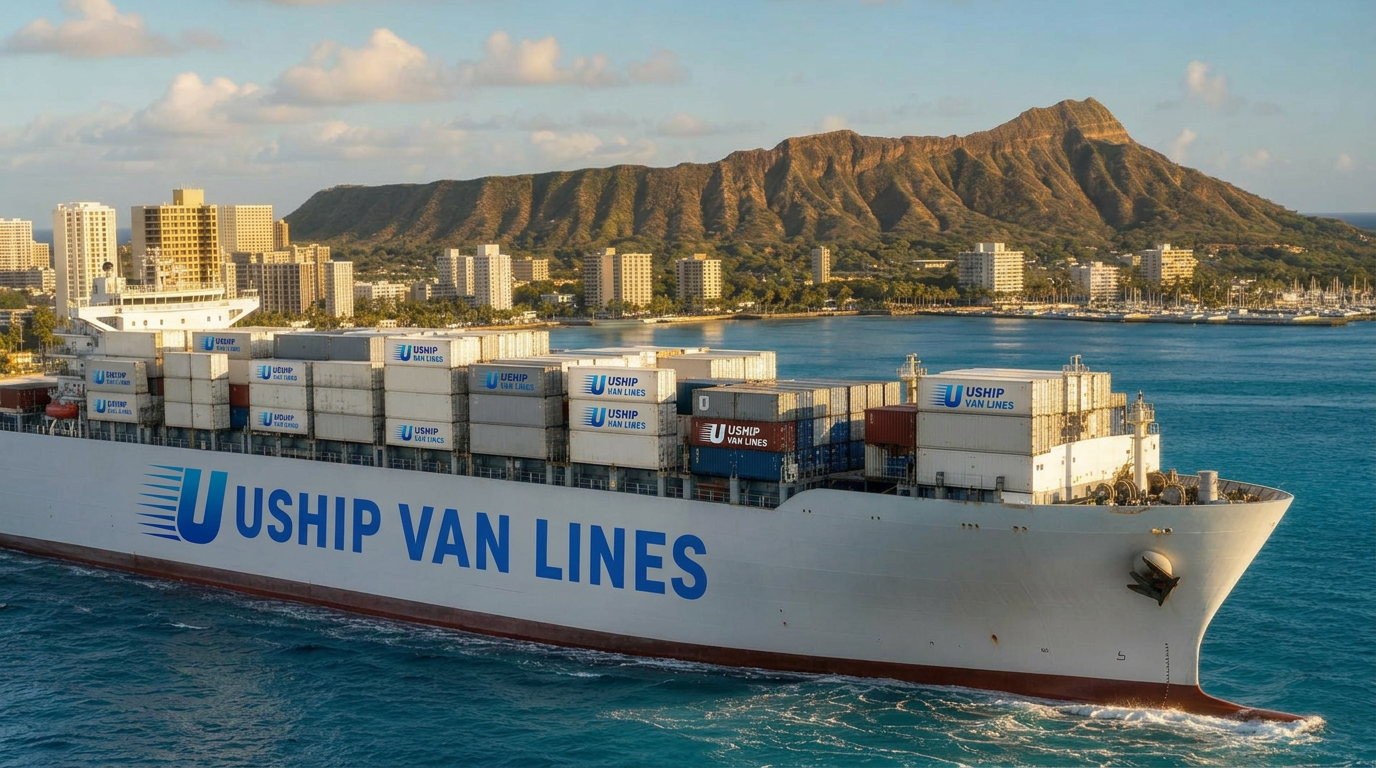
Moving from Hawaii to Milwaukee, WI
Moving from Hawaii to Milwaukee, WI means trading tropical beaches for Midwestern seasons—and navigating one of the most logistically complex moves in the continental United States. Your household goods will travel by ocean container from Hawaii to the West Coast, then overland nearly 2,000 miles to Wisconsin's largest city.
Best Alaska & Hawaii Movers, powered by UShip Van Lines, specializes in these multi-modal Hawaii-to-mainland relocations. We coordinate every leg—island pickup, port delivery, ocean freight, mainland receiving, and final delivery to your Milwaukee doorstep. Ready to start planning? Request a free, no-obligation quote tailored to your timeline and inventory.
Route overview
Moving from Hawaii to Milwaukee: Route Overview
Your move from Hawaii to Milwaukee involves ocean shipping to Long Beach or Oakland, followed by transcontinental ground transport across seven states. If you're leaving from Oahu, your container departs Honolulu Harbor; neighbor island moves (Maui, Kauai, Big Island) require an additional inter-island barge leg to Honolulu before the main ocean voyage. Once your container arrives at a West Coast port, it's unloaded, cleared through customs and agriculture inspection, and transferred to a long-haul truck.
The overland leg covers roughly 1,950–2,100 miles depending on routing—typically I-80 through Nevada, Wyoming, and Iowa, or I-90 through South Dakota. Milwaukee's position on Lake Michigan and its robust freight infrastructure make it a straightforward final destination, though winter weather can impact scheduling between November and March.
This route demands careful coordination between steamship lines (Matson or Pasha Hawaii), port terminals, trucking carriers, and destination delivery teams. Best Alaska & Hawaii Movers manages every handoff, ensuring your belongings arrive intact and on schedule in Milwaukee's diverse neighborhoods—from Bay View and Riverwest to Wauwatosa and the North Shore suburbs.
How the moving process works
How Your Hawaii-to-Milwaukee Move Works: Step-by-Step
-
Free quote and planning consultation. Share your origin island, Milwaukee destination ZIP, inventory list, and preferred move dates. We'll provide a detailed estimate covering ocean freight, mainland transport, and any add-ons like vehicle shipping or storage.
-
Pre-move survey and prohibited items review. Hawaii enforces strict agriculture export rules; we'll guide you on what cannot be shipped (soil, certain plants, fresh foods). We also discuss container size (20' or 40') and whether you need exclusive use or can share space in a consolidated shipment.
-
Island pickup and container loading. Our Hawaii partner team packs and loads your belongings at your residence, apartment, or condo. On neighbor islands, goods are barged to Honolulu; Oahu shipments proceed directly to the port for ocean loading.
-
Ocean transit to the West Coast (7–14 days). Your container sails aboard Matson or Pasha vessels to Long Beach or Oakland. Transit time varies by vessel schedule and whether the ship makes intermediate stops.
-
Port unloading and customs clearance (1–3 days). At the mainland port, your container is offloaded, inspected by USDA for agriculture compliance, and cleared for domestic transport. Any delays here are usually weather- or inspection-related.
-
Transcontinental trucking to Milwaukee (3–5 days). Your container or transferred goods travel via long-haul truck across the Rockies, Great Plains, and into Wisconsin. We track the shipment in real time and keep you updated on ETA.
-
Final delivery and unpacking in Milwaukee. Our Milwaukee delivery team schedules a convenient window, unloads at your new home, and places items in designated rooms. Optional unpacking services are available if you want help settling in quickly.
Estimated moving costs
What Does It Cost to Move from Hawaii to Milwaukee?
A 2-bedroom household (approximately 5,000–7,000 lbs) typically costs $6,800–$10,500 for a full-service move from Hawaii to Milwaukee. A 3-bedroom home (8,000–12,000 lbs) generally ranges $10,000–$15,500, depending on container size, packing services, and seasonality.
Key cost drivers include:
- Container type and exclusivity: Sharing a 40' container (consolidated shipping) is more economical than an exclusive 20' container. Exclusive use offers faster transit and less handling.
- Origin island: Maui, Kauai, and Big Island moves incur an additional inter-island barge fee ($800–$1,400) to reach Honolulu Harbor.
- Packing and crating: Full-service packing adds $800–$2,000; specialty crating for artwork, antiques, or fragile electronics increases costs.
- Vehicle shipping: Transporting a car from Hawaii to Milwaukee runs $1,400–$2,200 via roll-on/roll-off (RoRo) vessel and mainland auto transport.
- Storage: If your Milwaukee home isn't ready, we offer short-term warehousing in California or Wisconsin ($150–$300/month for a small bedroom's worth of goods).
- Peak season: Summer months (June–August) and early fall see higher demand and slightly elevated rates due to military PCS moves and families relocating before the school year.
We never guarantee prices without a formal survey. Ocean freight rates, fuel surcharges, and port fees fluctuate. Request a detailed quote to lock in your estimate and understand every line item.
Estimated transit times
How Long Does a Hawaii-to-Milwaukee Move Take?
Door-to-door transit typically spans 12–21 days, broken down as follows:
- Island pickup to Honolulu port (neighbor islands only): 1–3 days for inter-island barge.
- Honolulu to West Coast port: 7–14 days ocean transit, depending on vessel schedule and whether the ship makes port calls en route.
- Port unloading and clearance: 1–3 days for container offload, USDA inspection, and domestic release.
- West Coast to Milwaukee overland: 3–5 days for long-haul trucking, weather permitting.
Oahu-origin moves (no inter-island leg) can complete in as few as 11–13 days under ideal conditions. Neighbor island moves add 2–4 days at the front end. Peak summer season and winter weather in the Midwest can extend timelines by 3–7 days.
We provide milestone tracking—you'll know when your container is loaded, when it departs Hawaii, when it arrives at the West Coast, and when your truck departs for Milwaukee. If you have a firm move-in date, we recommend booking 6–8 weeks in advance to secure optimal vessel and trucking slots.
Regional logistics
Hawaii-to-Milwaukee Logistics: What You Need to Know
Ports and shipping lines: Your goods depart Honolulu Harbor (Sand Island) aboard Matson or Pasha Hawaii vessels. These carriers offer weekly or bi-weekly sailings to Long Beach and Oakland. Neighbor island shipments are barged to Honolulu via Young Brothers inter-island service before ocean loading.
Container options: Most residential moves use a 20-foot container (holds a 2–3 bedroom home) or share space in a 40-foot container (consolidated shipping for smaller loads). Exclusive containers offer faster transit and fewer touchpoints; consolidated shipping is more economical but may add 3–5 days for deconsolidation at the mainland port.
Prohibited and restricted items: Hawaii and USDA regulations prohibit shipping soil, potted plants with soil, fresh fruits/vegetables, firewood, and certain agricultural products. Propane tanks, ammunition, and hazardous materials are also banned. We'll provide a detailed checklist during your quote consultation.
Vehicle shipping: Cars, trucks, and motorcycles are shipped separately via RoRo vessel (Matson or Pasha auto service) from Honolulu to Long Beach/Oakland, then transported overland to Milwaukee. Total transit: 14–21 days. Vehicles must be operable, clean, and contain no personal items (USDA rule).
Milwaukee delivery: Milwaukee's urban and suburban layout is truck-friendly, but narrow historic streets in neighborhoods like Walker's Point or Brady Street may require smaller shuttle trucks for final delivery. High-rise condos downtown (e.g., Third Ward) may have freight elevator reservations and COI (certificate of insurance) requirements—we handle all building coordination.
Storage solutions: If your Milwaukee home isn't ready or you need to stage your move, we offer short- and long-term storage at secure facilities in California (near the ports) or in the Milwaukee metro area. Climate-controlled options are available for sensitive items.
Insurance: We provide basic valuation coverage (60¢/lb/article) at no extra charge. Full replacement value insurance is strongly recommended for Hawaii-to-mainland moves due to multiple handling points; premiums typically run 1–3% of declared inventory value.
Seasonal considerations
Best Times to Move from Hawaii to Milwaukee (and When to Avoid)
Summer (June–August): Peak moving season. Demand is highest due to military transfers, student relocations, and families coordinating with school calendars. Expect premium pricing and longer lead times (book 8–10 weeks out). Weather is ideal on both ends—warm in Hawaii, pleasant in Milwaukee—but port congestion can add 2–4 days.
Fall (September–November): Excellent shoulder season. Ocean and trucking capacity opens up post-summer rush, rates moderate, and Hawaii's hurricane season (June–November) winds down by October. Milwaukee weather remains mild through early October; November brings cooler temps and occasional snow, which can delay final delivery by 1–2 days.
Winter (December–February): Off-peak rates and ample availability make winter attractive for budget-conscious movers. However, Milwaukee winters are harsh—snow, ice, and sub-zero temperatures can complicate final delivery and increase the risk of delays. If your move lands in January or February, plan for flexible delivery windows and ensure your new home's driveway and walkways are accessible for large trucks.
Spring (March–May): Another ideal window. Rates remain reasonable, port and trucking schedules are reliable, and Milwaukee's spring thaw makes delivery straightforward. Early hurricane season (June 1 start) doesn't impact May moves, and you'll avoid summer crowds. Book 6–8 weeks ahead to lock in spring dates.
Hurricane considerations: Hawaii's hurricane season runs June through November, peaking August–September. While direct hits are rare, tropical storms can delay vessel departures by 3–7 days. If booking a summer or early fall move, ask about our weather delay policies and consider travel insurance for your personal flights.
Why choose Best Alaska & Hawaii Movers
Why Choose Best Alaska & Hawaii Movers for Your Hawaii-to-Milwaukee Move
-
Hawaii specialists, mainland experts. We exclusively serve Alaska and Hawaii relocations, so we know every nuance of inter-island barges, USDA agriculture rules, and ocean carrier schedules. Our mainland partners are vetted, licensed interstate carriers experienced in long-haul Midwest deliveries.
-
End-to-end coordination, single point of contact. You won't juggle multiple vendors. We manage the steamship line, port terminals, trucking companies, and destination delivery—one contract, one team, one smooth move.
-
Transparent pricing, no hidden fees. Our quotes itemize ocean freight, port charges, mainland transport, fuel surcharges, and any optional services. What you see is what you pay (barring unforeseen surcharges like emergency port fees).
-
Real-time tracking and proactive communication. Receive milestone updates via email and text—container loaded, vessel departed, port arrival, truck dispatched, delivery day confirmed. If weather or port delays arise, we notify you immediately with revised ETAs.
-
Flexible solutions for every budget. Whether you need white-glove packing and exclusive container service or economical consolidated shipping with self-pack options, we tailor solutions to your timeline and budget. Military and senior discounts available.
-
Powered by UShip Van Lines' trusted network. Our backing by UShip Van Lines gives you access to a nationwide carrier network, robust insurance options, and customer support that extends from your Hawaii doorstep to your Milwaukee front porch.