
Moving from Michigan to Alaska
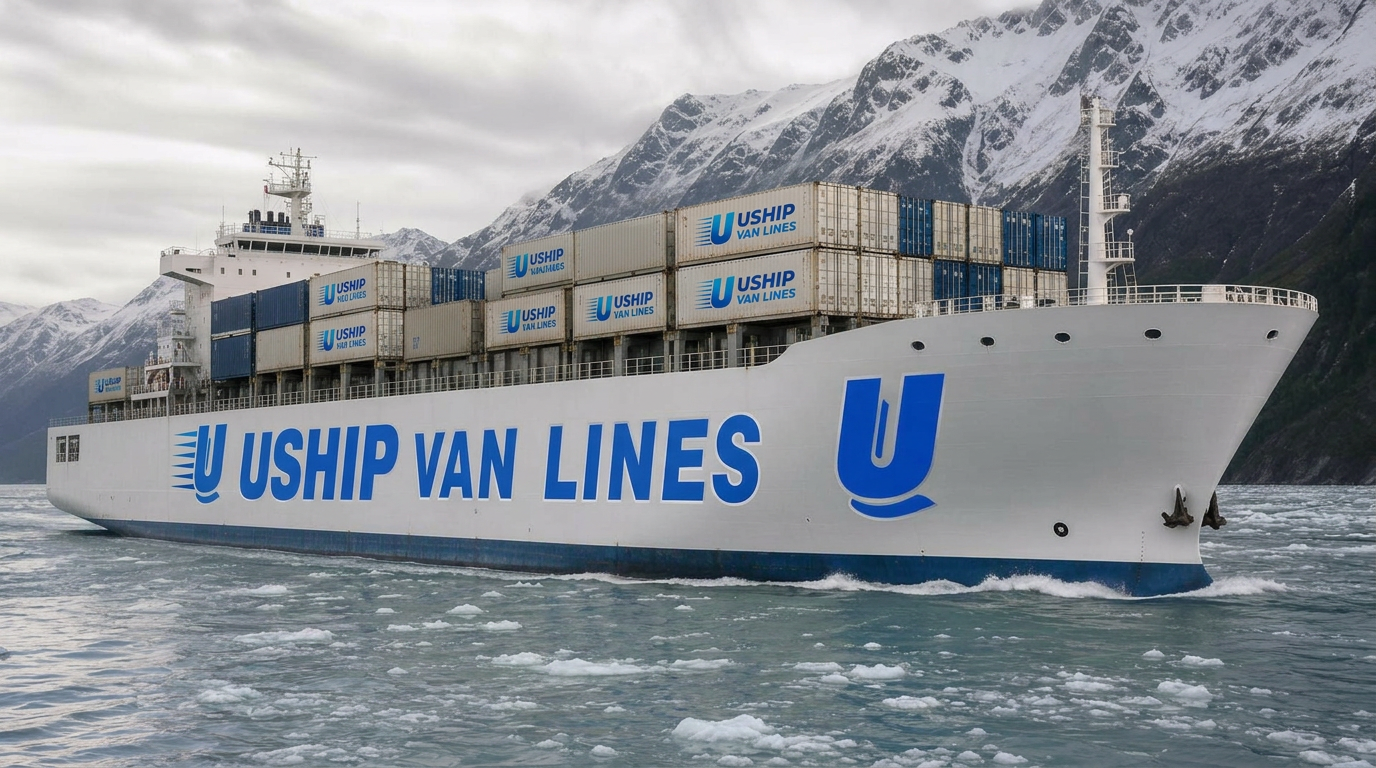
Moving from Michigan to Alaska is one of the most unique long-distance relocations in North America. Unlike a typical cross-country move, your household goods will travel by truck through the Midwest and Pacific Northwest, then load onto a marine barge in Tacoma, Washington, before sailing to the Port of Anchorage. The journey spans roughly 3,500 miles and combines overland freight, ocean shipping, and Alaska last-mile delivery—requiring specialized logistics expertise that most moving companies simply don't have.
Best Alaska & Hawaii Movers, powered by UShip Van Lines, manages the entire multimodal chain from your Michigan doorstep to your new Alaska home. Whether you're relocating to Anchorage, Fairbanks, the Matanuska-Susitna Valley, the Kenai Peninsula, or even remote bush communities, our carrier network handles barge bookings, port coordination, customs paperwork, and final delivery across Alaska's challenging terrain. Ready to start planning your move? Request your free, no-obligation quote today and speak with a logistics specialist who understands the Michigan-to-Alaska route.
Route overview
Route Overview: Michigan to Alaska
Your household goods depart Michigan—whether from Detroit, Grand Rapids, Ann Arbor, Lansing, or smaller communities—and travel west via interstate truck carrier to the Pacific Northwest. The shipment consolidates at a regional hub before loading onto a barge-bound container in Tacoma, Washington. This overland leg typically takes 5–7 days depending on your exact pickup location and carrier schedule.
From Tacoma, ocean freight departs weekly during peak season (May–September) and every 10–14 days in winter. The barge voyage to Anchorage takes 6–8 days under normal sea conditions, though storm delays can add 1–2 days during fall and winter months. Once the container clears the Port of Anchorage, Alaska-based carriers handle last-mile delivery to your final destination—Anchorage metro addresses typically receive shipments within 1–2 days of port arrival, while Fairbanks, Mat-Su, and Kenai deliveries add 2–4 days. Remote or off-road-system communities require bush plane, winter ice-road, or seasonal barge connections, extending timelines by 1–3 weeks.
This multimodal process demands careful coordination: truck scheduling, barge space reservations, port inspections, and Alaska delivery logistics all must align. Best Alaska & Hawaii Movers orchestrates every handoff, so you never chase multiple carriers or handle port paperwork yourself.
How the moving process works
How the Michigan-to-Alaska Moving Process Works
-
Free In-Home or Virtual Survey – A moving specialist reviews your household inventory via video call or in-person visit (in metro Detroit, Grand Rapids, and select Michigan cities). We calculate cubic footage, identify fragile or high-value items, and explain barge weight restrictions (no propane tanks, aerosols, or hazardous materials).
-
Custom Quote & Barge Reservation – You receive a detailed estimate covering Michigan pickup, overland transport, barge freight, port fees, and Alaska delivery. Once you approve, we reserve your space on the next available Tacoma–Anchorage sailing—critical during summer peak season when barges book out 2–4 weeks in advance.
-
Michigan Pickup & Packing – Professional movers arrive at your Michigan residence, pack and load your belongings into a climate-controlled container or shared truckload. You can choose full-service packing, partial packing (fragile items only), or self-pack to reduce costs. The truck departs for the Pacific Northwest the same day or next morning.
-
Overland Transit to Tacoma – Your shipment travels I-90 or I-94 west through Wisconsin, Minnesota, Montana, and Washington. Carriers typically stop for DOT-required rest breaks and refueling; transit takes 5–7 days. The container arrives at the Tacoma barge terminal and undergoes USDA inspection for invasive species (required for all Alaska-bound cargo).
-
Barge Loading & Ocean Voyage – Your container loads onto a commercial barge operated by TOTE Maritime, Matson, or similar carriers. The 1,400-nautical-mile voyage to Anchorage takes 6–8 days. You receive a bill of lading and can track the vessel via marine traffic systems.
-
Port of Anchorage Clearance – Upon arrival, the container clears U.S. Customs and undergoes Alaska Department of Natural Resources inspection (plant material, firewood, and soil restrictions apply). Port dwell time is typically 1–2 business days.
-
Alaska Last-Mile Delivery – A local Alaska carrier picks up your container and delivers to your final address. Anchorage metro deliveries happen within 1–2 days. Fairbanks (358 miles north) and Kenai Peninsula (130 miles south) require 2–4 additional days. Remote locations like Bethel, Nome, or Southeast Alaska communities need air freight, seasonal barge, or winter ice-road transport arranged separately.
-
Unpacking & Inspection – Movers unload at your Alaska home. Inspect all items immediately and note any damage on the delivery receipt—marine cargo insurance claims must be filed within 48 hours for concealed damage.
Estimated moving costs
Cost Estimates for Moving from Michigan to Alaska
A typical 2-bedroom household (approximately 7,000–10,000 pounds or 800–1,200 cubic feet) moving from Michigan to Anchorage generally costs $6,500–$11,000 door-to-door. A 3-bedroom home (10,000–14,000 pounds or 1,200–1,800 cubic feet) typically ranges $10,000–$16,500. These estimates include Michigan pickup, overland truck transport, Tacoma barge fees, port handling, and Anchorage metro delivery.
Key cost drivers:
- Shipment volume and weight – Barge freight prices by cubic foot and weight. Downsizing before the move saves significantly.
- Seasonal demand – Summer months (May–September) see 20–30% higher rates due to peak Alaska relocation season and limited barge capacity. Winter moves (October–April) offer lower pricing but longer transit times.
- Packing services – Full-service packing (movers pack everything) adds $800–$2,000. Partial packing (fragile items, artwork, electronics) costs $300–$800. Self-pack is the most economical.
- Insurance coverage – Basic released-value coverage (60 cents per pound) is included. Full-value replacement insurance adds 1–3% of the declared value (recommended for Alaska moves due to multimodal handling).
- Final destination – Fairbanks delivery adds $800–$1,500 versus Anchorage. Kenai Peninsula adds $400–$800. Remote bush locations require custom quotes and can double the base cost.
- Vehicle shipping – Cars, trucks, and ATVs ship separately via roll-on/roll-off barge service. Expect $1,200–$2,200 per vehicle Tacoma to Anchorage, plus Michigan-to-Tacoma overland auto transport ($800–$1,400).
- Storage – If your Alaska home isn't ready, Anchorage-area storage runs $150–$350/month for a 10×15 unit.
These are estimates, not guarantees. Every move is unique. Request a detailed quote based on your exact inventory, pickup address in Michigan (Detroit metro versus Upper Peninsula affects overland costs), and final Alaska destination.
Estimated transit times
Transit Time: Michigan to Alaska Door-to-Door
Total door-to-door transit from Michigan to Anchorage typically takes 14–21 days during peak summer season and 21–28 days in winter. Here's the breakdown:
- Michigan pickup to Tacoma terminal: 5–7 days overland truck transit. Detroit and Grand Rapids pickups move faster; Upper Peninsula and rural northern Michigan add 1–2 days.
- Tacoma terminal dwell & barge loading: 1–3 days. Summer sailings depart weekly; winter sailings every 10–14 days, so containers may wait at the terminal.
- Barge voyage Tacoma to Anchorage: 6–8 days under normal conditions. Fall and winter storms (October–March) can add 1–2 days due to rough seas in the Gulf of Alaska.
- Port of Anchorage clearance: 1–2 business days for USDA and customs inspections.
- Anchorage metro final delivery: 1–2 days after port release.
- Fairbanks or Mat-Su Valley delivery: Add 2–4 days for the 300+ mile overland haul.
- Kenai Peninsula delivery: Add 1–3 days depending on exact community (Soldotna, Homer, Seward).
Plan for variability. Weather (Great Lakes winter storms, Pacific Northwest snow, Alaska ice), barge mechanical issues, and port congestion all impact schedules. Always allow a 5–7 day buffer before your Alaska move-in date. If you need faster service, air freight partial shipments (essential items, high-value goods) arrive in 3–5 days but cost 4–6× more per pound.
Regional logistics
Alaska-Specific Moving Logistics from Michigan
Barge Terminals & Ports: All Michigan-to-Alaska household goods ship through the Port of Tacoma (Terminal 7 or TOTE facility). Your Michigan-based carrier delivers to the terminal; Alaska-bound containers undergo mandatory USDA inspection for invasive species—no firewood, potted plants with soil, or fresh produce allowed. The barge arrives at the Port of Anchorage (POA), Alaska's primary deep-water cargo port. Containers clear U.S. Customs (even though Alaska is a U.S. state, maritime arrivals require documentation) and Alaska DNR inspection (strict rules against non-native plants, seeds, and untreated wood).
Vehicle Shipping: Cars and trucks cannot travel inside household goods containers due to fuel and battery regulations. Book separate roll-on/roll-off (RoRo) barge service. Drive your vehicle to Tacoma (or arrange overland auto transport from Michigan), deliver it to the RoRo terminal 3–5 days before sailing, and retrieve it in Anchorage 7–10 days after the barge arrives. Fuel must be below 1/4 tank; remove all personal items (insurance doesn't cover cargo inside vehicles). Cost: $1,200–$2,200 per vehicle Tacoma–Anchorage, plus $800–$1,400 Michigan-to-Tacoma overland auto shipping.
Weight & Volume Limits: Standard 20-foot ocean containers hold approximately 1,200 cubic feet and 10,000 pounds. 40-foot containers hold 2,400 cubic feet and 20,000 pounds. Barge carriers charge by both dimensions and weight—whichever is greater. Overweight shipments incur surcharges ($0.50–$1.50/pound over limit). Oversized items (pianos, gun safes, large furniture) may require custom crating, adding $200–$600.
Restricted & Prohibited Items: Alaska and maritime law ban propane tanks, aerosol cans, gasoline, ammunition, fireworks, paint, cleaning solvents, car batteries, and all hazardous materials. Houseplants must be bare-root (soil removed) and certified pest-free—many movers refuse plants entirely due to USDA rejection risk. Firearms are legal to ship but must be declared, unloaded, and packed separately per ATF regulations.
Last-Mile Alaska Delivery Challenges:
- Anchorage metro (Anchorage, Eagle River, Girdwood): Paved roads, year-round access, straightforward delivery.
- Fairbanks & Interior Alaska: 358 miles north via the Parks Highway. Winter ice fog, moose collisions, and -40°F cold require experienced Alaska carriers. Allow 2–4 days after Anchorage port clearance.
- Mat-Su Valley (Wasilla, Palmer): 40–50 miles north via the Glenn Highway. Winter avalanche risk and ice; add 1–2 days.
- Kenai Peninsula (Soldotna, Kenai, Homer, Seward): 130–220 miles south via the Seward Highway (coastal, avalanche zones) and Sterling Highway. Add 2–3 days.
- Southeast Alaska (Juneau, Ketchikan, Sitka): No road connection to Anchorage. Requires separate barge or air freight from Anchorage or Seattle—plan an entirely different logistics chain.
- Bush Alaska (Bethel, Nome, Kotzebue, Barrow/Utqiaġvik, Dillingham): No road access. Requires air freight (cargo plane, 3–7 days, $2–$5/pound) or seasonal barge (summer only, 2–6 weeks). Some villages accessible via winter ice roads (January–March).
Paperwork & Documentation: You'll receive a Bill of Lading (BOL) when your shipment loads in Michigan, a second BOL when it loads onto the Tacoma barge, and a final delivery receipt in Alaska. Keep all documents—marine cargo insurance claims require the chain of custody. If you're a military service member, provide PCS orders for potential tax exemptions and priority barge booking.
Seasonal considerations
Seasonal Considerations for Michigan-to-Alaska Moves
Spring (April–May): Peak season begins as Alaskans return from winter Lower 48 stays and new residents move for summer jobs. Barge space books quickly—reserve 3–4 weeks ahead. Michigan weather is unpredictable (late snow, spring rain), so schedule pickup flexibility. Alaska daylight hours increase rapidly, making delivery and unpacking easier. Expect moderate pricing and 14–18 day transit.
Summer (June–August): Highest demand period. Military PCS moves, university relocations, and tourism-industry workers all compete for barge slots. Prices peak 20–30% above winter baseline. Book 4–6 weeks in advance. Michigan weather is ideal for packing and loading. Alaska enjoys 18–22 hours of daylight, extending delivery windows. Barges run weekly; transit times are most predictable (14–21 days). Road construction on the Parks Highway (Anchorage–Fairbanks) can delay last-mile delivery 1–2 days.
Fall (September–October): Demand drops after Labor Day; prices decrease 10–20%. Barge frequency reduces to every 7–10 days. Fall storms in the Gulf of Alaska become more common, adding 1–3 days to ocean transit. Michigan weather turns cold and wet, complicating loading (snow by late October in the Upper Peninsula). Alaska snow arrives in Fairbanks and Mat-Su by late September, requiring winterized last-mile delivery. Budget 18–24 days door-to-door.
Winter (November–March): Lowest prices—30–40% below summer peak. Barge sailings run every 10–14 days. Ocean transit is slowest (7–10 days) due to storms and reduced vessel speed in rough seas. Michigan blizzards and icy roads can delay pickup by 1–4 days. Alaska experiences extreme cold (Fairbanks -20°F to -40°F), shortened daylight (4–6 hours in December), and hazardous road conditions (black ice on the Glenn Highway, avalanche closures on the Seward Highway). Many bush Alaska destinations are inaccessible until spring thaw or winter ice roads form. Allow 21–28 days minimum, and consider January–February for the best pricing if you can tolerate cold-weather delivery logistics.
Why choose Best Alaska & Hawaii Movers
Why Choose Best Alaska & Hawaii Movers for Your Michigan-to-Alaska Move
-
Alaska & Hawaii Specialists Since Day One: Unlike national van lines that treat Alaska as an afterthought, Best Alaska & Hawaii Movers (powered by UShip Van Lines) focuses exclusively on non-contiguous state relocations. We manage the Michigan-to-Tacoma truck leg, barge reservations, port coordination, and Alaska last-mile delivery as a single integrated service—no handoffs to carriers who don't understand Alaska logistics.
-
Transparent Multimodal Pricing: You receive one comprehensive quote covering every leg: Michigan pickup, overland transport, Tacoma barge freight, port fees, and Alaska delivery. No surprise fuel surcharges, no hidden port dwell fees, no "we don't deliver past Anchorage" problems at the last minute.
-
Year-Round Barge Access & Backup Routes: We maintain relationships with TOTE Maritime, Matson, and regional Alaska barge operators. If one sailing is full or delayed, we reroute your shipment to the next available vessel. During winter storms or port strikes, we explore Seattle-to-Whittier or air freight alternatives for time-sensitive cargo.
-
Alaska-Experienced Last-Mile Carriers: Our Anchorage, Fairbanks, and Mat-Su delivery partners operate year-round in sub-zero temperatures, handle icy roads, navigate remote addresses, and understand Alaska building access challenges (no elevators, narrow staircases in older homes, seasonal beach access on the Kenai Peninsula). They carry tire chains, emergency supplies, and satellite phones for Interior and bush deliveries.
-
White-Glove Support from Michigan to Alaska: You're assigned a dedicated move coordinator who tracks your shipment from Detroit (or Grand Rapids, Lansing, Ann Arbor, Marquette) to Anchorage (or Fairbanks, Wasilla, Homer). You receive proactive updates when the truck leaves Michigan, when the container loads in Tacoma, when the barge departs, when it clears Anchorage port, and when the Alaska carrier is en route to your home. Questions? Call, text, or email your coordinator directly—no phone trees, no outsourced call centers.