
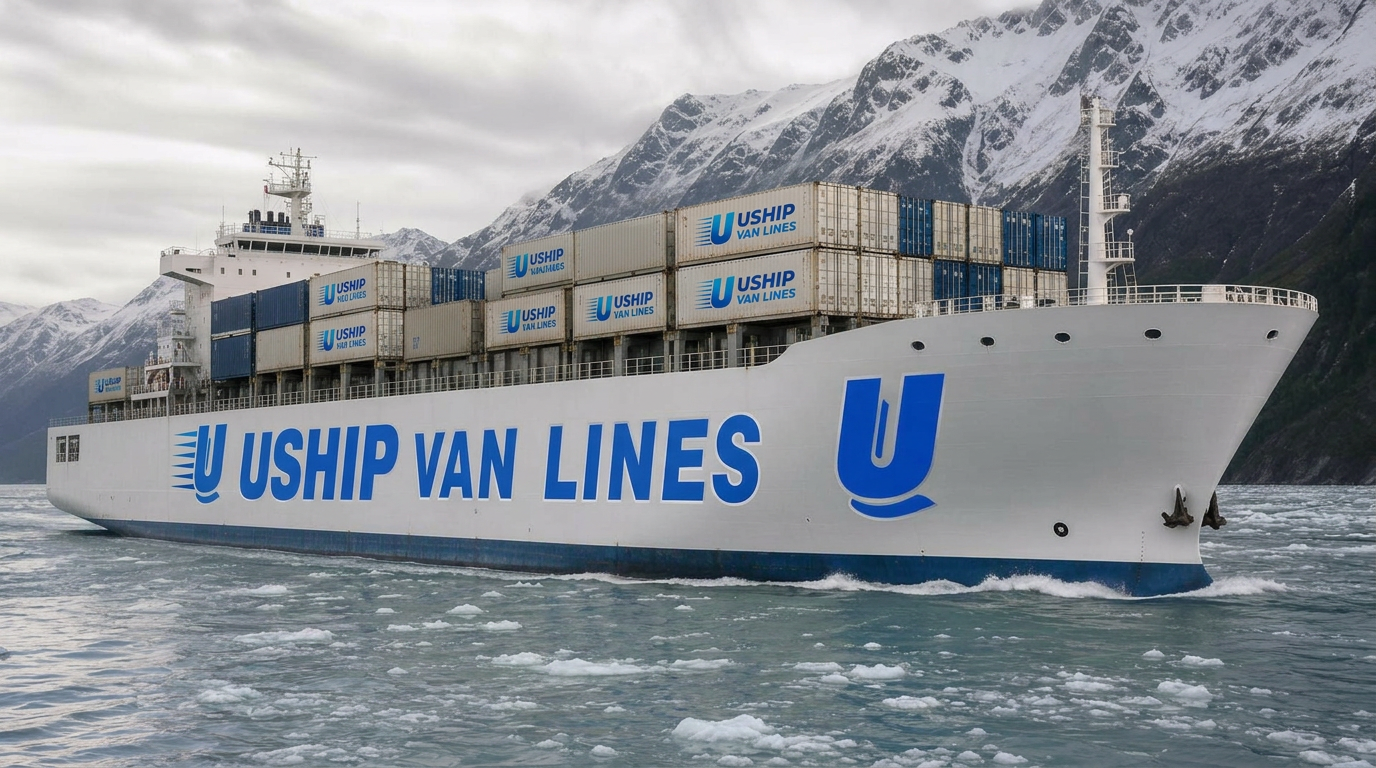
Moving from Alaska to Michigan
Moving from Alaska to Michigan means navigating one of the most complex domestic relocations in the United States. Your household goods will travel by barge from Anchorage to the Port of Tacoma, transfer to overland freight, then cross nearly 2,000 miles through the northern tier states to reach Michigan's Lower or Upper Peninsula. Unlike a typical interstate move, this route requires specialized logistics coordination, careful scheduling around Alaska Marine Highway sailings, and realistic expectations about transit times.
Best Alaska & Hawaii Movers, powered by UShip Van Lines, has spent years perfecting the Alaska-to-Lower-48 corridor. We handle every phase—from your door in Anchorage, Fairbanks, Mat-Su Valley, or the Kenai Peninsula, through Tacoma consolidation, to final delivery in Detroit, Grand Rapids, Lansing, or Michigan's rural communities. Ready to simplify your cross-country barge move? Request a detailed quote online and speak with our Alaska logistics specialists today.
Route overview
The Alaska to Michigan Route: What Makes It Unique
Your move from Alaska to Michigan isn't a simple point-to-point truck haul. It's a multimodal journey that begins with ground transport within Alaska, transitions to ocean freight via barge from the Port of Anchorage to Tacoma, Washington, then continues overland across Idaho, Montana, North Dakota, and into Michigan. Total distance from Anchorage to Detroit exceeds 3,400 miles when you account for the marine leg, making careful logistics planning essential.
Michigan's geography adds another layer of consideration. If you're relocating to the Lower Peninsula—metro Detroit, Ann Arbor, Grand Rapids, Kalamazoo, or Traverse City—your goods follow I-90 and I-94 corridors with straightforward final delivery. Moving to Michigan's Upper Peninsula (Marquette, Houghton, Sault Ste. Marie) requires crossing the Mackinac Bridge and navigating winter road conditions that can impact delivery windows from November through March. Both scenarios demand movers who understand Great Lakes region weather patterns and Alaska's unique marine shipping schedules.
Best Alaska & Hawaii Movers coordinates the entire chain. We manage Alaska last-mile pickup, container loading and barge booking through our Tacoma partners, overland transit with experienced carriers, and white-glove delivery to your new Michigan home—all under one service umbrella with transparent communication at every handoff point.
How the moving process works
How Your Alaska to Michigan Move Works: Step by Step
-
Free Consultation and Route Planning – Contact us with your origin city (Anchorage, Fairbanks, Wasilla, Soldotna, Juneau) and Michigan destination. We'll assess volume, provide a detailed cost estimate, and propose a realistic timeline based on current barge schedules and road conditions. You'll receive a transparent breakdown of marine freight, overland miles, and any seasonal surcharges.
-
Alaska Pickup and Container Loading – Our Alaska-based crew arrives at your home for a full-service pack (or to load your self-packed boxes). We inventory every item, wrap furniture with marine-grade padding, and load your belongings into a weatherproof container or shared trailer space. If you're in a remote area like Kenai or the Mat-Su Valley, we coordinate last-mile pickup well in advance.
-
Barge Transit to Tacoma – Your container is transported to the Port of Anchorage and loaded onto a southbound barge. Sailing time to Tacoma averages 4–6 days depending on weather and the carrier's schedule. We track the shipment in real time and notify you when it clears customs inspection and arrives at our Tacoma consolidation facility.
-
Overland Transfer and Cross-Country Haul – In Tacoma, your goods transfer to a long-haul truck. The driver follows I-90 through Spokane, Missoula, and Billings, then picks up I-94 east through Bismarck and Fargo before entering Michigan via the western border. This leg typically takes 4–7 days, depending on weather, hours-of-service rules, and delivery scheduling.
-
Michigan Delivery and Unloading – Our Michigan delivery partner contacts you 24–48 hours before arrival to confirm your delivery window. The crew unloads, places furniture in designated rooms, and completes a final inventory check. We reassemble any items disassembled for the barge journey and remove all packing materials if you've selected full-service unpacking.
-
Vehicle Shipping (Optional but Common) – Most Alaska-to-Michigan movers also ship at least one vehicle. We arrange roll-on/roll-off auto transport via the same Tacoma barge, then overland car carrier to Michigan. Vehicle-only transit often runs parallel to your household goods, arriving within the same week.
-
Final Walkthrough and Claim Window – Once everything is unloaded, conduct a thorough walkthrough. Note any concerns on the delivery receipt. You'll have a clearly defined claims window (typically 30–90 days) to report damage, and our insurance partners handle claims efficiently with documented inventories from pickup.
Estimated moving costs
What Does an Alaska to Michigan Move Cost?
A typical 2-bedroom move (approximately 5,000–7,000 lbs) from Anchorage to Michigan averages $6,500–$10,500, while a 3-bedroom household (8,000–12,000 lbs) generally runs $10,000–$16,000. These ranges reflect full-service packing, barge freight, overland trucking, basic valuation coverage, and standard delivery. Your final quote depends on seven primary cost drivers:
- Volume and Weight – Alaska barge freight is priced per cubic foot or per hundredweight. A densely packed 1,200-cubic-foot load costs significantly less than a loosely packed 1,800-cubic-foot shipment of the same weight.
- Origin and Destination Specificity – Moves from Anchorage or Fairbanks to metro Detroit cost less than moves from bush communities (requiring small-plane or ferry access) to Michigan's Upper Peninsula.
- Season and Barge Availability – Peak summer months (May–August) see higher demand and occasional surcharges. Off-peak winter moves (November–February) may offer modest discounts but face weather delays.
- Packing Services – Self-pack and load-only service can save $1,200–$2,500. Full-service packing with custom crating for fragile items adds to the total but dramatically reduces damage risk on a multimodal journey.
- Insurance and Valuation – Basic carrier liability covers $0.60/lb per article. Full-value replacement protection costs 1–3% of declared value but ensures comprehensive coverage for high-value furniture, electronics, and heirlooms.
- Vehicle Shipping – Adding a sedan or SUV via barge and overland car carrier typically costs $1,800–$3,200. Larger trucks or RVs may incur oversized surcharges.
- Storage and Timing Flexibility – If your Michigan home isn't ready, we offer climate-controlled storage in Tacoma or Michigan for $150–$350/month. Flexible delivery windows can also reduce costs compared to guaranteed-date delivery.
We never quote guaranteed flat rates over the phone. Every Alaska move is custom-priced after a detailed inventory. Request your free, obligation-free estimate online to see transparent line-item pricing for your specific route and household size.
Estimated transit times
Realistic Transit Times: Alaska to Michigan Door-to-Door
Plan for 3–5 weeks total transit time from your Alaska pickup date to Michigan delivery. This timeline breaks down into distinct legs, each with its own variables:
Alaska Last-Mile Pickup (1–3 days) – If you're in Anchorage or the Mat-Su Valley, pickup happens quickly. Remote locations (Kenai Peninsula, Fairbanks, Southeast Alaska) may require 2–3 days for crew travel and loading.
Port Staging and Barge Departure (3–7 days) – Your container is transported to the Port of Anchorage and staged for the next available southbound barge. Barges sail 1–2 times per week in summer, less frequently in winter. Scheduling around sailings is the single biggest timeline variable.
Barge Transit to Tacoma (4–6 days) – Typical sailing time from Anchorage to the Port of Tacoma. Rough weather in the Gulf of Alaska or North Pacific can add 1–2 days. Winter sailings (November–March) are more prone to weather delays.
Tacoma Offloading and Overland Transfer (2–4 days) – Once the barge docks, containers clear customs inspection, offload, and transfer to our consolidation warehouse. Your goods are reloaded onto a long-haul truck bound for Michigan.
Cross-Country Trucking (4–7 days) – The overland leg from Tacoma to Michigan covers roughly 2,000 miles. Drivers follow I-90/I-94, obeying federal hours-of-service regulations (11 hours driving per day maximum). Winter weather in Montana, North Dakota, or Michigan can add 1–2 days.
Final Delivery Scheduling (1–2 days) – Once the truck reaches Michigan, our delivery partner schedules your delivery window, typically within 24–48 hours.
Expedited options exist but add significant cost. If you need faster transit, consider flying essentials and shipping only non-urgent household goods, or explore dedicated container service with priority barge booking—expect to pay 30–50% more for expedited logistics.
Regional logistics
Alaska-Michigan Logistics: What You Must Know
Barge Ports and Scheduling – Nearly all Alaska-to-Lower-48 household goods move through the Port of Anchorage to Tacoma. Barge lines (TOTE Maritime, Span Alaska) operate on fixed schedules; delays in booking can push your entire move back a week. We maintain strong carrier relationships to secure space even during peak season.
Container vs. Shared Load – Exclusive-use containers (20' or 40') offer maximum protection and faster handling but cost more. Shared loads (your goods consolidated with other shipments) reduce costs by 20–30% but require flexible delivery windows. For Michigan moves, shared loads are popular and efficient.
Vehicle Shipping Integration – If you're driving the Alaska Highway to Michigan, plan 7–10 days of challenging winter or wilderness driving. Most clients ship at least one vehicle via barge. Roll-on/roll-off auto transport is straightforward: you drop the car at the port, it rides the same barge as your household goods, then transfers to a car carrier in Tacoma. Vehicles typically arrive within 3–5 days of your household shipment.
Customs and Documentation – Alaska-to-Michigan is domestic, so no international customs. However, you'll still complete a detailed household goods inventory for carrier liability and insurance purposes. Keep copies of high-value item receipts (electronics, jewelry, art) for claims documentation.
Remote Alaska Origins – Moving from Fairbanks, the Kenai Peninsula, or bush communities requires last-mile coordination. We arrange pickup via smaller trucks or, in rare cases, small-plane cargo to a hub like Anchorage. These last-mile services add cost and time but are routine for our Alaska specialists.
Michigan Delivery Challenges – Michigan's Lower Peninsula has excellent highway access, but the Upper Peninsula (west of the Mackinac Bridge) is more remote. If you're moving to Marquette, Houghton, or Sault Ste. Marie, confirm your mover has UP-experienced carriers. Winter UP deliveries may require tire chains and flexible scheduling.
Storage Options – If your Michigan home isn't ready or you're relocating temporarily, we offer secure storage at our Tacoma facility or Michigan-based partner warehouses. Climate-controlled units protect against humidity and temperature swings, critical for electronics, wood furniture, and musical instruments.
Seasonal considerations
Best (and Toughest) Times to Move from Alaska to Michigan
Spring (April–May): Ideal for Alaska departures as winter snow clears and barge schedules ramp up. Roads in Alaska and Michigan are passable, and you'll avoid peak summer demand. Book early—spring is popular with military families and seasonal workers relocating before summer.
Summer (June–August): Peak moving season on both ends. Barge sailings are most frequent, weather is favorable across the entire route, and delivery in Michigan is straightforward. Expect higher pricing and less scheduling flexibility. If you're moving kids before the school year, book your July/August move by early May.
Fall (September–October): Another excellent window. Barge schedules remain robust through September, and Michigan's fall weather is generally cooperative. Rates soften slightly after Labor Day. However, early snow in Montana or Michigan's Upper Peninsula can begin affecting delivery by late October.
Winter (November–March): The most challenging season for Alaska-to-Michigan moves. Barge sailings decrease in frequency, and severe weather can delay both marine transit (Gulf of Alaska storms) and overland delivery (blizzards across the northern plains and Michigan). If your move must happen in winter, add 1–2 weeks to standard timelines and budget for potential weather-related storage. Upside: off-peak pricing and greater scheduling availability for non-urgent relocations.
Alaska-specific considerations: The Iditarod (early March) and summer fishing season (June–July) create local demand spikes. Michigan's "Snowbelt" along Lake Michigan and the Upper Peninsula can see heavy lake-effect snow November through March, impacting final delivery. Always discuss seasonal risks transparently with your move coordinator.
Why choose Best Alaska & Hawaii Movers
Why Best Alaska & Hawaii Movers for Your Alaska-Michigan Relocation
-
Alaska Specialists, Not Generalists – We've refined the Alaska-to-Lower-48 barge route for years. Our team understands Port of Anchorage operations, Tacoma transfer logistics, and the seasonal realities of northern-tier overland freight. You won't get generic moving advice; you'll get Alaska-specific expertise.
-
Single-Point Accountability – Even though your move involves barge, truck, and possibly vehicle transport, you have one dedicated move coordinator and one contract. We manage all handoffs, tracking, and communication—no finger-pointing between multiple vendors.
-
Transparent Pricing and Realistic Timelines – We'll never promise a 10-day Alaska-to-Michigan move or quote a price without understanding your inventory. You'll receive a detailed, line-item estimate and a realistic timeline that accounts for barge schedules, road conditions, and seasonal variables.
-
Full-Service or Flexible DIY Options – Need white-glove packing, custom crating, and unpacking in Michigan? We offer it. Prefer to pack yourself and save money? We'll deliver materials, load professionally, and handle the complex logistics. You choose your service level.
-
Powered by UShip Van Lines' Nationwide Network – Best Alaska & Hawaii Movers leverages UShip Van Lines' extensive carrier relationships, technology platform, and claims support infrastructure. You get boutique Alaska expertise backed by enterprise-grade logistics and customer service.
-
Proactive Communication – We notify you at every major milestone: barge departure, Tacoma arrival, truck dispatch, and 24-hour delivery alert. You'll never wonder where your belongings are or when they'll arrive.