
Moving from Atlantic City, NJ to Alaska
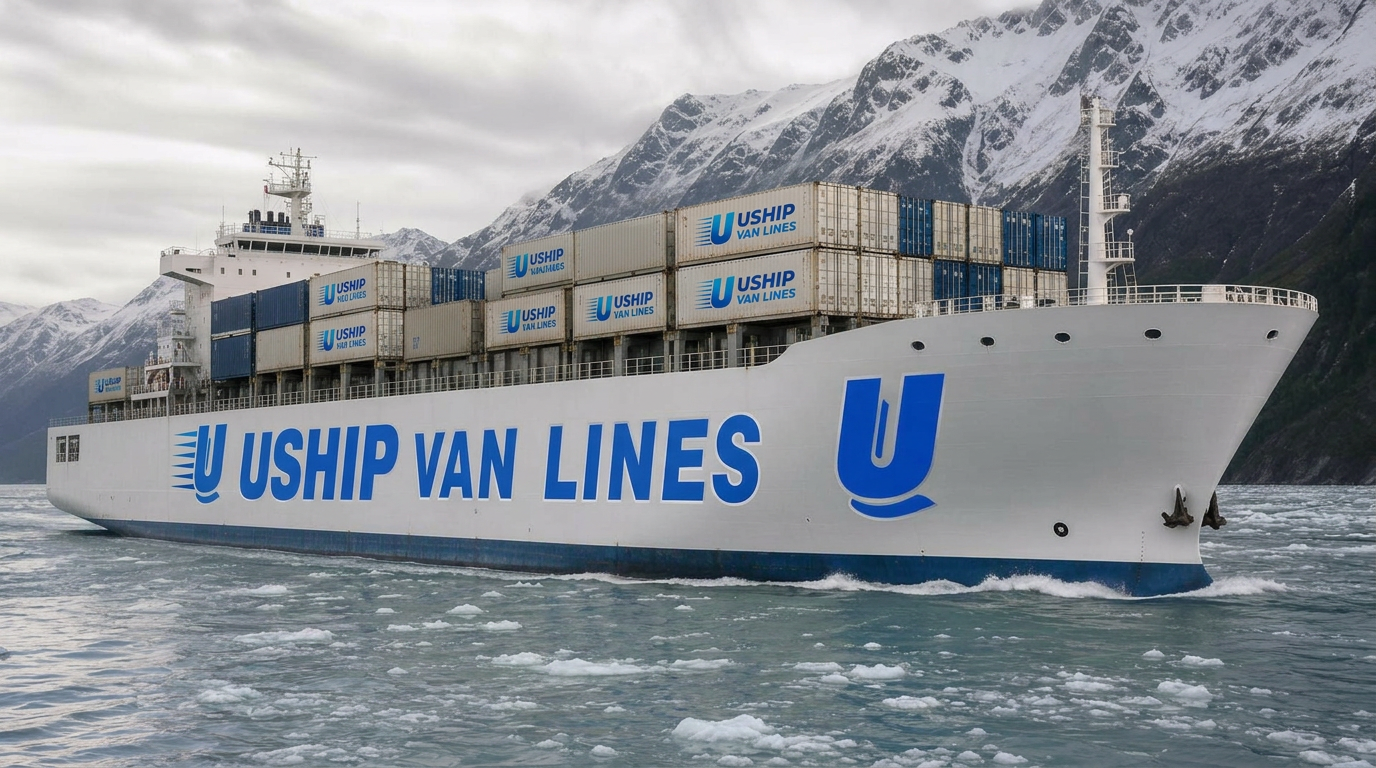
Moving from Atlantic City, New Jersey to Alaska represents one of the most ambitious relocations in the United States—combining cross-country ground transport with specialized maritime shipping. Your belongings will travel approximately 3,800 miles overland to the Port of Tacoma, then voyage by barge across the Gulf of Alaska to reach Anchorage, Fairbanks, the Mat-Su Valley, or beyond.
Best Alaska & Hawaii Movers, powered by UShip Van Lines, coordinates every phase of this complex journey. From packing your Atlantic City home to final delivery in the Last Frontier, we manage the logistics so you can focus on your new Alaskan adventure. Request a free, no-obligation quote to start planning your move with confidence.
Route overview
Atlantic City to Alaska: The Route
Your move from Atlantic City follows a carefully orchestrated path across North America. A long-haul truck departs the Atlantic City metro area, traveling west through Pennsylvania, across the Midwest, and over the Rocky Mountains to reach the Port of Tacoma in Washington State—typically a 6–8 day journey covering roughly 3,000 miles. At Tacoma, your household goods transfer to a secure barge facility where they're loaded into ocean-worthy containers.
The maritime leg crosses the Gulf of Alaska, with barges departing weekly during peak season (May–September) and less frequently in winter months. After 4–7 days at sea, your shipment arrives at the Port of Anchorage, Alaska's primary freight gateway. From there, cargo is either delivered directly within the Anchorage bowl or transferred to specialized Alaska carriers for final delivery to Fairbanks (360 miles north), the Mat-Su Valley, Kenai Peninsula communities, or even remote bush locations requiring air or winter ice-road access.
This route requires coordination between three distinct transportation modes—ground, maritime, and Alaska last-mile—each with unique scheduling, weather dependencies, and regulatory requirements. Professional coordination is essential to avoid costly delays or storage fees.
How the moving process works
How Your Atlantic City to Alaska Move Works
-
Free In-Home or Virtual Survey — A moving specialist assesses your Atlantic City home's contents, discusses Alaska-specific concerns (firearms, hazardous materials, vehicle shipping), and provides a detailed written estimate based on cubic feet and services required.
-
Pre-Move Preparation & Packing — Professional packers arrive 1–3 days before pickup, using specialized materials for the multi-mode journey. Items requiring climate protection, disassembly of furniture, and proper documentation for customs-like Port of Anchorage inspections are handled systematically.
-
Atlantic City Pickup & Cross-Country Transit — A full-size moving truck loads your belongings and departs for Tacoma, Washington. Transit takes 6–8 days depending on weather and routing. You'll receive tracking updates as the truck crosses state lines.
-
Port of Tacoma Containerization — At the barge facility, your goods transfer into 20-foot or 40-foot maritime containers. This typically occurs within 24–48 hours of truck arrival. Containers are sealed and manifested for Alaska Marine Highway or commercial barge lines.
-
Barge Voyage to Anchorage — The container boards a barge for the 1,400-mile Gulf of Alaska crossing. Transit takes 4–7 days depending on weather, route (some barges make intermediate stops), and sea conditions. Barges operate year-round but with reduced frequency November–March.
-
Port of Anchorage Clearance & Unloading — Upon arrival, containers undergo standard port inspections. Clearance typically takes 1–2 business days. Your goods are then either delivered directly (Anchorage area) or transferred to Alaska-based carriers.
-
Alaska Last-Mile Delivery & Unpacking — For Anchorage deliveries, final placement usually occurs within 2–3 days of port clearance. Fairbanks, Mat-Su, and Kenai destinations add 1–3 days. Remote locations may require additional coordination for air freight or seasonal road access. Unpacking services are available upon request.
Estimated moving costs
What Atlantic City to Alaska Moves Cost
A typical 2–3 bedroom household moving from Atlantic City to Alaska ranges between $8,500 and $16,000 for full-service door-to-door relocation. Studio or 1-bedroom moves may cost $5,000–$8,000, while larger 4+ bedroom homes can exceed $18,000–$25,000 depending on volume and destination.
Primary cost drivers include:
- Cubic feet or weight — Alaska moves are typically priced by cubic feet (not weight), with rates around $180–$280 per cubic foot including all transportation legs
- Destination within Alaska — Anchorage is least expensive; Fairbanks adds $1,200–$2,000; Kenai/Soldotna adds $800–$1,500; remote bush locations require custom quotes
- Packing services — Professional packing adds $800–$2,000 for a typical home; Alaska moves benefit from expert packing due to the multi-mode journey
- Season — Summer peak (May–August) carries 15–25% premiums due to high demand and optimal barge schedules; winter moves (November–February) may offer discounts but face longer transit times
- Vehicle shipping — Adding a vehicle to the same barge costs $1,800–$3,200 Tacoma-to-Anchorage; motorcycles/ATVs run $800–$1,400
- Storage — If your Alaska home isn't ready, Anchorage storage costs $150–$300/month for a typical household
- Specialty items — Pianos, safes, hot tubs, and workshop equipment may incur additional handling fees of $200–$800 per item
These estimates reflect full-service moves including packing materials, loading, all transportation, unloading, and basic liability coverage. Actual costs vary based on your specific inventory, services selected, and current fuel surcharges. Best Alaska & Hawaii Movers provides transparent, written estimates with no hidden fees—request your personalized quote to get exact pricing for your move.
Estimated transit times
Atlantic City to Alaska Transit Timeline
Door-to-door transit from Atlantic City to Alaska typically requires 18–28 days under normal conditions, broken down as follows:
Atlantic City to Tacoma (Ground): 6–8 days for the 3,000-mile truck journey across the continental U.S. Winter weather in the Rockies or Midwest can add 1–2 days during severe storms.
Tacoma Port Processing: 1–3 days for containerization, documentation, and barge loading. Most efficient during peak season (May–September) when volume is high and processes are streamlined.
Tacoma to Anchorage (Barge): 4–7 days for the Gulf of Alaska crossing. Direct routes take 4–5 days; barges making intermediate stops in Kodiak or other ports may take 6–7 days. Severe weather can delay departures by 1–3 days.
Port of Anchorage Clearance: 1–2 business days for inspections and cargo release.
Alaska Last-Mile Delivery: Anchorage-area delivery typically occurs within 2–3 days of port clearance. Fairbanks adds 2–4 days (including the 6–7 hour drive north). Kenai Peninsula destinations add 1–2 days. Remote locations requiring air freight or winter ice-road access may add 1–3 weeks depending on weather and logistics.
Seasonal variations: Summer moves (May–September) average 18–22 days due to frequent barge schedules and optimal weather. Winter moves (November–March) average 24–35 days due to reduced barge frequency, potential weather delays, and longer port processing times. Spring and fall transitions (April, October) fall in between at 20–26 days.
For time-sensitive relocations, we recommend booking 6–8 weeks in advance during summer, 8–12 weeks in advance for winter moves. Express services with dedicated trucks and priority barge space can reduce total transit by 3–5 days but typically cost 20–30% more.
Regional logistics
Alaska-Specific Moving Logistics
Port of Anchorage Operations: Alaska's primary freight gateway handles 90% of consumer goods entering the state. Your shipment clears through standard inspections—not customs (Alaska is a U.S. state), but security screenings similar to port operations nationwide. Certain items draw scrutiny: firearms must be declared and properly packed (disassembled, ammunition separate), and hazardous materials (propane, gasoline, certain cleaning chemicals) are prohibited on barges.
Vehicle Shipping Coordination: Most Alaska-bound families ship one or two vehicles on the same barge as household goods. Vehicles must arrive at Tacoma 2–3 days before barge departure with 1/4 tank or less of fuel. Personal items can be packed inside (up to the window line) but are not insured. The vehicle is driven onto the barge, secured, and off-loaded in Anchorage. You'll need to arrange either to pick it up at the port or have it delivered to your Alaska address (delivery adds $150–$400 depending on distance). Coordinate vehicle shipment during your initial quote to ensure container and vehicle are on the same barge.
Last-Mile Alaska Delivery Challenges: Anchorage, Fairbanks, and major Mat-Su communities (Wasilla, Palmer) have paved road access and standard delivery procedures. However, roughly 85% of Alaska is roadless. If you're moving to Juneau, Sitka, Kodiak, Bethel, Nome, Barrow, or any of hundreds of smaller communities, understand that "last-mile" may involve:
- Secondary barge from Anchorage to your coastal community (adds 5–14 days and $1,500–$4,000)
- Air freight for smaller loads (extremely expensive: $2–$4 per pound)
- Winter ice road for certain Interior villages (December–March only)
- Combination approaches (barge to hub, then air to final village)
Discuss your exact Alaska destination during your quote. If you're moving off the road system, we'll coordinate with Alaska Native-owned logistics companies and bush carriers who specialize in remote delivery.
Documentation & Paperwork: Alaska moves require detailed inventories for port processing. Best Alaska & Hawaii Movers handles all manifests, but you should maintain copies of:
- Complete room-by-room inventory with declared values
- Vehicle titles and registration (if shipping vehicles)
- Firearms documentation (ATF Form 4473 not required for intra-U.S. moves, but serial numbers should be recorded)
- Any specialty item documentation (antiques, artwork, collectibles)
Cold-Weather Considerations: Even summer moves should prepare for temperature swings. Electronics, musical instruments, and antiques benefit from climate-controlled containerization (available at modest surcharge). If your delivery occurs in winter, ensure someone is present—many Alaska homes have vestibules or mudrooms where frozen items should be moved quickly to warm interior spaces.
Alaska Address Quirks: Many Alaska locations don't use standard street addresses—instead, they use mile markers ("Mile 42 Sterling Highway"), lot numbers, or P.O. boxes with descriptor directions. When booking, provide the most detailed location information possible, including GPS coordinates for very remote properties. Your moving coordinator will verify the address is accessible by the planned delivery method.
Seasonal considerations
Best Times to Move from Atlantic City to Alaska
Summer Peak (May–August): The most popular season for Atlantic City to Alaska moves offers the most reliable service. Barge schedules run weekly with minimal weather delays, and Alaska road conditions are optimal for last-mile delivery to remote areas. The Parks Highway to Fairbanks and Sterling Highway to Kenai are fully accessible. However, demand drives prices 15–25% higher, and booking 8–10 weeks ahead is essential. Temperatures in Anchorage range from 55–70°F, making unloading and settling comfortable.
Fall Transition (September–October): An excellent compromise period with moderate pricing and still-favorable weather. Barge frequency begins to decrease in late October, but September offers near-summer reliability at 10–15% lower costs. Early snow in Fairbanks and Mat-Su may begin in October. This is ideal for retirees or remote workers with flexible timelines who want to avoid peak pricing.
Winter (November–March): The most economical season with discounts of 15–30% off summer rates, but comes with challenges. Barge schedules reduce to 1–2 departures per week (sometimes less in January–February). Gulf of Alaska storms can delay departures by 3–7 days. Ground transport through Montana and Wyoming may face winter road closures. Alaska deliveries to Fairbanks and remote areas may be delayed by sub-zero temperatures, ice fog, or impassable roads. However, for Anchorage-area moves with flexible timelines, winter can offer significant savings. Anchorage itself remains accessible year-round with temperatures typically 10–30°F.
Spring Thaw (April): Avoid if possible. Alaska experiences "breakup"—when winter ice melts and unpaved roads become impassable mud. Many remote communities are inaccessible by ground. Barge schedules increase from winter lows but aren't yet at summer frequency. If moving in April, target Anchorage, Fairbanks, or major highway-accessible towns only.
Pro tip: Book summer moves by March for best pricing and dates. Winter moves can often be booked with just 3–4 weeks' notice due to lower demand.
Why choose Best Alaska & Hawaii Movers
Why Choose Best Alaska & Hawaii Movers for Your Atlantic City to Alaska Relocation
-
Specialized Alaska Expertise — Unlike general long-distance movers, we exclusively focus on Alaska and Hawaii relocations. We maintain direct relationships with Alaska-based carriers, understand Port of Anchorage procedures, and coordinate all three transportation legs—ground, maritime, and Alaska last-mile—as a single seamless service.
-
Transparent, All-Inclusive Pricing — Your written estimate includes all anticipated costs: packing materials, ground transport, barge fees, port charges, Alaska delivery, and basic liability coverage. No surprise fuel surcharges, port fees, or "destination charges" added later. You'll know your total cost before signing.
-
Flexible Scheduling Around Barge Departures — We monitor Tacoma-Anchorage barge schedules in real-time and coordinate your Atlantic City pickup to ensure optimal connections. If a barge is delayed by weather, we provide free temporary storage in Tacoma rather than rushing your shipment onto a less-ideal departure.
-
Powered by UShip Van Lines' Network — Our partnership with UShip Van Lines gives you access to vetted, professional carriers across all 50 states and specialized Alaska operators. This means reliable service whether you're moving to downtown Anchorage or a remote Kenai Peninsula cabin.
-
Real-Time Tracking & Communication — You'll receive updates at every major milestone: truck departure from Atlantic City, arrival in Tacoma, barge loading, departure from Tacoma, arrival in Anchorage, and Alaska delivery scheduling. Your dedicated move coordinator is available by phone and email throughout the journey.
-
Alaska Delivery Problem-Solving — From coordinating winter ice-road access to arranging secondary barges for off-road-system communities, we handle the logistics challenges that surprise general movers. Our Alaska partners know how to deliver in all conditions and locations.