
Moving from Aurora, CO to Alaska
Moving from Aurora, Colorado to Alaska is a unique long-distance relocation that requires specialized logistics and planning. Unlike a typical interstate move, your household goods will travel by truck to the Pacific Northwest, then cross the Gulf of Alaska by barge before reaching their final destination in Anchorage, Fairbanks, or beyond.
Best Alaska & Hawaii Movers, powered by UShip Van Lines, coordinates every step of your Aurora-to-Alaska move—from careful packing in the Mile High City through barge transit and last-mile delivery across the Last Frontier. Request your free quote today to compare rates and lock in your moving timeline.
Route overview
The Aurora, CO to Alaska Moving Route
Your belongings begin their journey in Aurora, departing the Denver metro area westbound toward the Pacific coast. The truck route typically follows I-70 west through the Rockies, then I-84 or I-90 through Idaho and Washington to the Seattle-Tacoma corridor—a 1,200–1,400 mile overland leg.
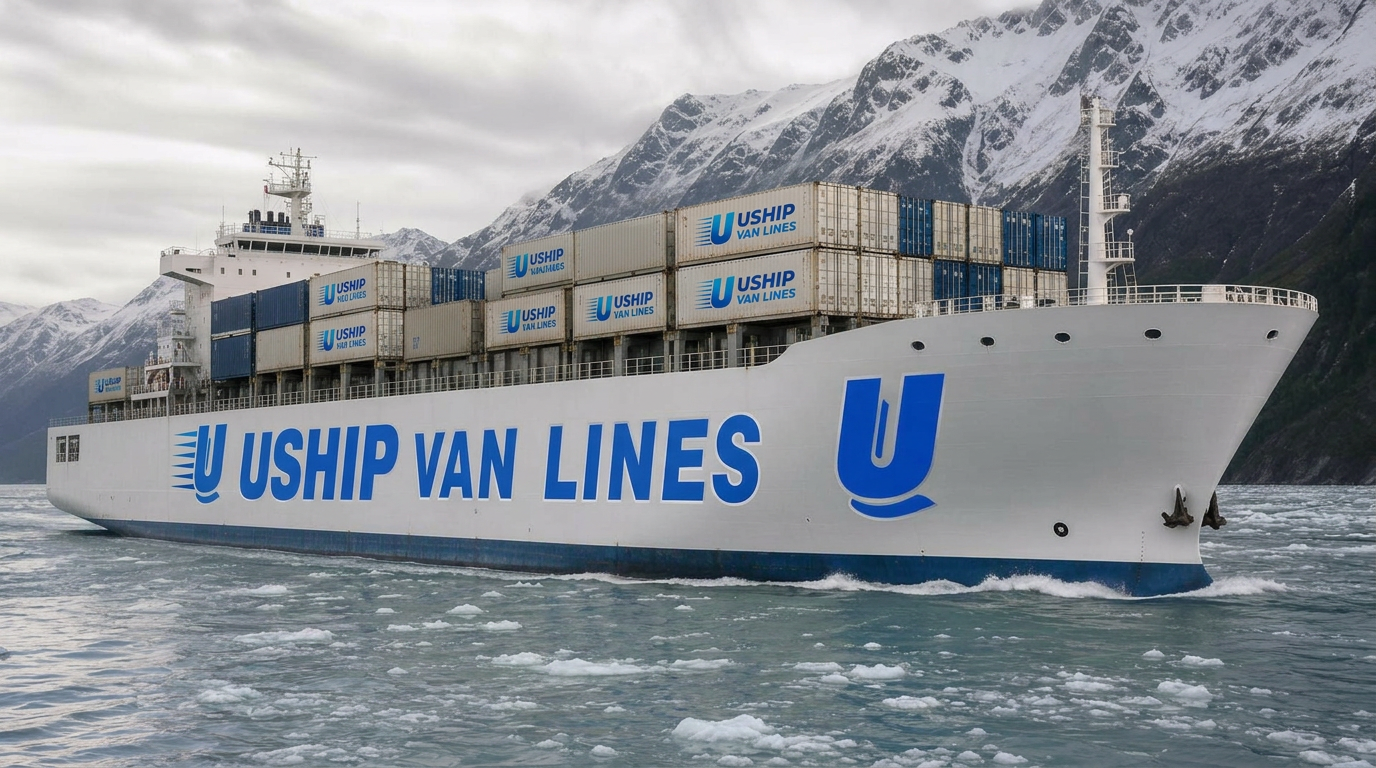
From Tacoma or Seattle, your shipment transfers to a dedicated Alaska barge operated by carriers such as Lynden Transport or TOTE Maritime. The vessel crosses approximately 1,450 nautical miles of the Gulf of Alaska to the Port of Anchorage or Port of Whittier, a voyage lasting 5–7 days depending on weather and sailing schedules.
Once the barge docks in Alaska, your goods clear customs inspection (if applicable) and reload onto Alaska-based trucks for final delivery. Whether you're moving to Anchorage, the Matanuska-Susitna Valley, Fairbanks via the Parks Highway, or communities on the Kenai Peninsula, last-mile carriers navigate Alaska's unique road network to complete your door-to-door move.
How the moving process works
Step-by-Step: How Your Aurora to Alaska Move Works
-
Free Quote & Planning Consultation – Share your inventory, origin address in Aurora, and exact Alaska destination. Our team provides a detailed estimate covering truck, barge, and last-mile costs, plus a realistic transit timeline based on current sailing schedules.
-
Pre-Move Survey & Booking – Schedule an in-home or virtual survey to confirm cubic footage and identify any special-handling items (firearms, oversized furniture, temperature-sensitive goods). Book your departure window and reserve barge space, especially critical during summer peak season.
-
Professional Packing & Loading in Aurora – Experienced movers arrive at your Colorado home to pack, pad, and load your belongings into a climate-controlled truck. Fragile items receive extra cushioning for the cross-country haul and ocean voyage.
-
Overland Transit to Pacific Northwest Port – Your truck travels 1,200+ miles to the Seattle-Tacoma port terminal, typically a 2–3 day drive. Shipments consolidate at the port facility and transfer into ocean-worthy containers or trailers.
-
Barge Voyage Across the Gulf of Alaska – Your container boards a weekly or bi-weekly Alaska barge. The 1,450-nautical-mile crossing takes 5–7 days. Sailing schedules are more frequent May–September; winter sailings may be spaced 10–14 days apart.
-
Alaska Port Arrival & Customs Clearance – The barge docks at Anchorage or Whittier. If you're transporting firearms, certain electronics, or high-value items, customs may inspect the container. Most household shipments clear within 24 hours.
-
Last-Mile Delivery to Your Alaska Address – Alaska-based trucks reload your goods and complete the final leg. Anchorage deliveries may happen same-day or next-day; Fairbanks, Mat-Su, and Kenai destinations add 1–3 days. Remote or off-road-system locations require advance coordination.
Estimated moving costs
What Does It Cost to Move from Aurora, CO to Alaska?
A typical 2-bedroom move (approximately 7,000–9,000 lbs) from Aurora to Anchorage runs $6,500–$9,500 door-to-door. Three-bedroom homes (10,000–14,000 lbs) generally cost $9,000–$13,500. These ranges include packing materials, truck transport to the Pacific port, barge freight, and last-mile delivery within the Anchorage bowl.
Key cost drivers:
- Shipment weight and volume – Barge freight is priced per cubic foot or per pound; heavier loads increase costs proportionally.
- Destination within Alaska – Anchorage is the baseline. Add $800–$1,500 for Fairbanks (358 miles north), $500–$900 for Mat-Su communities (Wasilla, Palmer), or $600–$1,200 for Kenai Peninsula towns (Soldotna, Homer).
- Barge sailing frequency – Peak-season summer sailings (May–September) offer more schedule flexibility but may carry premium rates. Off-season winter moves (October–April) can save 10–15% but require longer lead times.
- Packing services – Full-service packing adds $800–$1,800 depending on household size and fragile inventory.
- Vehicle shipping – Sending a car or truck on the same barge costs $1,200–$2,200 per vehicle (Aurora to Anchorage).
- Storage – If your Alaska housing isn't ready, short-term warehouse storage in Tacoma or Anchorage runs $150–$300/month for a typical household.
These are estimates, not guaranteed quotes. Actual costs depend on exact weight, services selected, and current barge schedules. Request a personalized quote to lock in your rate.
Estimated transit times
How Long Does Aurora, CO to Alaska Moving Take?
Plan for 14–21 days door-to-door from your Aurora pickup to final delivery in Alaska, broken down by leg:
- Aurora to Pacific port (Tacoma/Seattle): 2–3 days overland truck transit.
- Port consolidation & container loading: 1–3 days, depending on arrival timing and sailing schedule.
- Barge voyage to Alaska: 5–7 days at sea. Summer sailings (May–September) depart 1–2 times per week; winter sailings may be spaced 10–14 days apart.
- Port unloading & customs clearance: 1–2 days. Most household shipments clear quickly unless flagged for inspection.
- Last-mile delivery in Alaska: Same-day to 3 days. Anchorage deliveries are fastest; Fairbanks, Wasilla, Palmer, Kenai, Soldotna, or Homer add 1–3 days depending on truck availability and road conditions.
Winter moves (November–March) can extend to 21–28 days due to reduced barge frequency and weather-related delays. Summer moves (June–August) enjoy the most predictable schedules but require booking 4–6 weeks in advance as barge capacity fills quickly. Always build a buffer into your Alaska arrival plans—rent-back agreements or temporary lodging can ease the transition if your shipment is delayed.
Regional logistics
Alaska-Specific Moving Logistics from Aurora, CO
Ports & Barge Terminals: Your shipment typically sails from the Port of Tacoma (Sitcum Waterway terminal) or Seattle. The Port of Anchorage (POA) handles the vast majority of Alaska-bound freight; the Port of Whittier serves as an alternative for Southcentral Alaska and connects to the road system via the Anton Anderson Memorial Tunnel.
Customs & Inspections: Alaska is a U.S. state, so no international customs clearance is required for household goods. However, firearms must be declared and may require ATF documentation; certain plants are restricted by Alaska Department of Natural Resources regulations; pets traveling separately need health certificates. If you're shipping a vehicle, ensure the gas tank is under ¼ full per barge safety rules.
Vehicle Shipping: Most movers offer vehicle transport on the same barge. Your car is driven onto the vessel in Tacoma and driven off in Anchorage (roll-on/roll-off service). Cost is typically $1,200–$2,200 per vehicle. Ensure personal belongings are removed from the car; only a spare tire, jack, and floor mats are allowed inside.
Last-Mile Challenges: Alaska's road system is limited. Anchorage, the Matanuska-Susitna Valley, Kenai Peninsula, and Fairbanks are connected by paved highways. Off-road-system communities (Bethel, Nome, Kodiak, Southeast Alaska towns) require additional barge or air freight—coordinate these specialized moves well in advance. Winter ice roads (Dalton Highway to Prudhoe Bay, for example) operate seasonally and require expert drivers.
Storage Options: If your Alaska home isn't ready, ask about storage at the Tacoma port warehouse (pre-barge) or Anchorage-area storage (post-barge). Rates run $150–$300/month. Climate-controlled storage is available but adds cost—important if you're storing electronics, artwork, or sensitive items through an Alaska winter.
Partial Loads & Consolidation: Sharing container space with another shipment (LTL = less-than-truckload) can reduce costs by 15–25%. Your goods share a barge container but are inventoried and separated. Transit times may extend 3–5 days as the carrier coordinates multiple pickups and deliveries.
Seasonal considerations
Best Time to Move from Aurora to Alaska: Season-by-Season
Spring (April–May): Barge schedules ramp up as winter ice clears. Rates begin climbing toward summer peaks. Aurora weather is mild for packing; Alaska roads transition from winter to spring breakup (muddy, rough conditions on unpaved routes). Book early to secure Memorial Day weekend delivery slots.
Summer (June–August): Peak moving season. Barge sailings are most frequent (sometimes twice weekly), and Alaska's 20+ hour daylight makes delivery logistics easier. Expect highest rates and 4–6 week booking lead times. Ideal if you need predictable schedules and fastest transit. Watch for wildfire smoke in the Pacific Northwest, which rarely delays barge operations but may affect overland trucking.
Fall (September–October): Shoulder season offers moderate rates and reliable weekly sailings through early October. Aurora's mild autumn weather is excellent for packing. Alaska sees first snow in higher elevations (Fairbanks, Denali corridor) by late September; last-mile deliveries to remote areas may face early winter road closures.
Winter (November–March): Off-peak season with the lowest rates—save 10–20% compared to summer. Barge sailings drop to every 10–14 days, and weather-related delays are more common. Aurora winters are dry and cold (ideal for packing), but Alaska's extreme cold, shortened daylight, and icy roads complicate last-mile delivery. Not recommended for time-sensitive moves, but budget-conscious relocators benefit from significant savings. Bush Alaska and off-road-system communities may be inaccessible until spring thaw.
Why choose Best Alaska & Hawaii Movers
Why Choose Best Alaska & Hawaii Movers for Your Aurora to Alaska Move?
- Alaska Barge Expertise – We coordinate weekly sailings with Lynden, TOTE, and other Alaska Marine Lines partners, ensuring your shipment books the fastest available vessel and avoiding costly delays.
- Single-Source Accountability – One team manages your entire move from Aurora packing through Anchorage (or Fairbanks, Mat-Su, Kenai) delivery. No handoffs, no confusion—just clear communication at every stage.
- Transparent Pricing & No Hidden Fees – Our quotes include truck, barge, port fees, and last-mile delivery. You'll know exactly what you're paying before you commit, with no surprise fuel surcharges or