
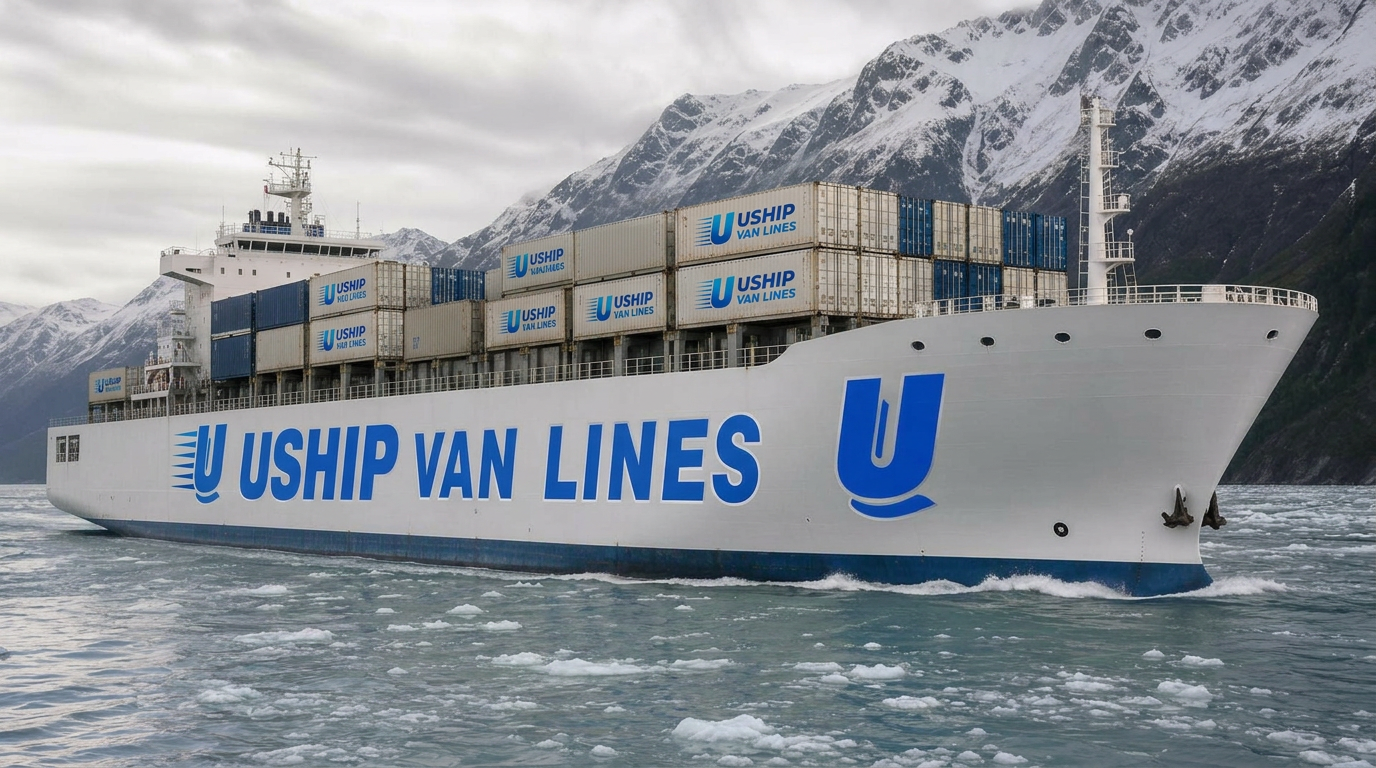
Moving from Petersburg, VA to Alaska
Moving from Petersburg, Virginia to Alaska represents one of the longest domestic relocations possible—roughly 3,800 miles separating the historic Appomattox River region from the Last Frontier. This move requires specialized logistics: your belongings travel by truck across the Lower 48 to the Pacific Northwest, then transfer to container barge service through Tacoma or Seattle, arriving at the Port of Anchorage before final delivery to your new Alaskan home.
Best Alaska & Hawaii Movers, powered by UShip Van Lines, coordinates every phase of this complex journey—from professional packing in Petersburg through barge transit and last-mile delivery across Alaska's unique terrain. Request your free, no-obligation quote today to start planning your relocation with confidence.
Route overview
Understanding the Petersburg, VA to Alaska Moving Route
Your household goods depart Petersburg by long-haul truck, traveling approximately 2,800 miles west through Tennessee, Missouri, Montana, and Idaho to reach Pacific port facilities in Tacoma or Seattle, Washington. This overland leg typically takes 5–7 days depending on scheduling and weather conditions.
From the Pacific Northwest port, your shipment loads onto Alaska Marine Highway System barges or dedicated freight vessels for the 1,500-nautical-mile voyage through the Inside Passage to Anchorage. This water transit adds 7–14 days depending on vessel schedules, seasonal demand, and weather windows in the Gulf of Alaska. Container consolidation at the port may add 2–4 days to your timeline.
Upon arrival at the Port of Anchorage, containers clear customs inspection (standard for Alaska shipments), then transfer to local carriers for final delivery throughout Southcentral Alaska—including Anchorage, Eagle River, Wasilla, Palmer, the Kenai Peninsula, or even bush communities requiring additional air freight or winter ice-road transport.
How the moving process works
Your Step-by-Step Moving Process from Petersburg to Alaska
-
Initial Planning & Survey (6–8 Weeks Before) – Contact Best Alaska & Hawaii Movers for a detailed inventory assessment. We'll conduct a virtual or in-home survey of your Petersburg residence, noting items requiring special handling (firearms, hunting equipment, outdoor gear) and discussing Alaska-specific restrictions (no soil on boots, plant quarantine rules).
-
Pre-Move Preparation (4–6 Weeks Before) – Begin purging items that cost more to ship than replace. Book your moving date, ideally allowing 4–6 weeks lead time during peak summer season (May–September). Arrange vehicle shipping separately if needed—most customers drive the ALCAN Highway or ship vehicles via dedicated auto carriers.
-
Professional Packing & Loading (1–2 Days) – Our Petersburg-area crew arrives to pack and load your household goods into a 53-foot trailer. We use reinforced containers rated for marine transport, with extra cushioning for the barge leg. All items receive detailed inventory documentation required for Alaska freight manifests.
-
Overland Transit to Pacific Port (5–7 Days) – Your shipment travels cross-country to Tacoma, where our port partners transfer containers to the staging yard. We coordinate with barge lines to secure space on the next available sailing—typically weekly departures during peak season, every 10–14 days in winter.
-
Barge Loading & Marine Transit (7–14 Days) – Containers load onto northbound barges for the Inside Passage journey. GPS tracking updates available; expect limited contact during the water leg. Weather delays of 1–3 days are common during winter storm season (October–March).
-
Port of Anchorage Processing (1–3 Days) – Upon arrival, containers undergo USDA inspection for prohibited items (potting soil, fresh produce, certain woods). Our Anchorage team coordinates customs clearance and schedules final delivery based on your availability.
-
Final Delivery & Setup – Local Anchorage-area carriers complete delivery to your new address. For remote locations beyond the road system (Kodiak, Dutch Harbor, Nome), we arrange secondary barge or air freight service, adding 1–2 weeks and significant cost.
Estimated moving costs
Realistic Cost Expectations for Your Alaska Move
A typical 2-bedroom move (approximately 5,000–7,000 pounds) from Petersburg, VA to Anchorage ranges from $8,500 to $14,000, while a 3-bedroom household (8,000–12,000 pounds) typically costs $13,000 to $22,000. These estimates reflect the full door-to-door service including overland truck, barge freight, and Anchorage-area delivery.
Key cost drivers include:
- Shipment weight and cubic volume – Alaska freight prices by the pound, with container space at a premium during summer peak season
- Barge sailing schedule – Peak-season surcharges (May–September) add 15–25% versus winter rates; dedicated container service costs more than consolidated (LCL) freight
- Final destination – Anchorage delivery is baseline; Mat-Su Valley adds $200–400, Kenai Peninsula $500–800, Fairbanks $1,200–2,000, and bush communities $3,000+ for secondary transport
- Packing services – Full-service packing adds $1,200–2,500 depending on home size and fragile inventory
- Insurance coverage – Basic liability (60¢/lb) included; full replacement value coverage adds 1–3% of declared goods value
- Vehicle shipping – Cars ship separately via dedicated auto carriers ($2,500–4,000 per vehicle) or you can drive the ALCAN yourself
Request a detailed written estimate from Best Alaska & Hawaii Movers to understand your specific costs. We never advertise guaranteed prices—every move is custom-quoted based on actual inventory, services, and current barge rates.
Estimated transit times
How Long Does Moving to Alaska Actually Take?
Door-to-door transit from Petersburg, VA to Anchorage typically requires 18–28 days during peak season (May–September), with winter moves extending to 25–35 days due to reduced barge frequency and weather delays.
Timeline breakdown by segment:
- Petersburg loading: 1 day for typical households, 2 days for 4+ bedrooms
- Overland truck to Tacoma: 5–7 days including required driver rest stops
- Port consolidation/staging: 2–4 days waiting for next available barge sailing
- Barge transit to Anchorage: 7–10 days during calm summer conditions, 10–14 days during winter storm season
- Port processing & customs: 1–3 days for USDA inspection and container offload
- Final Anchorage delivery: Same-day to 2-day delivery window once cleared
Add extra time for:
- Remote Alaska destinations – Fairbanks adds 3–5 days for interior trucking; Kenai Peninsula 1–2 days; bush communities 7–21 days for secondary barge/air freight
- Winter weather delays – Ice conditions in the Gulf of Alaska can delay barges 2–5 days; interior Alaska road closures during extreme cold (-40°F+)
- Peak season congestion – July–August barge space books out 4–6 weeks in advance; last-minute bookings may wait for next sailing (adding 7–14 days)
Plan for the upper end of these ranges when coordinating your departure from Petersburg and arrival housing in Alaska. Most customers rent temporary lodging or stay with family while awaiting their household goods.
Regional logistics
Alaska-Specific Moving Logistics You Need to Know
Barge Port Operations – Your shipment routes through the Port of Tacoma or Seattle, where specialized Alaska freight terminals handle consolidation. Containers meet strict Alaska Marine Highway System requirements: sealed, manifested, and compliant with USDA agricultural regulations. Best Alaska & Hawaii Movers maintains daily communication with port partners to track your shipment's barge assignment.
USDA Agricultural Inspection – All Alaska-bound freight undergoes mandatory inspection at the Port of Anchorage. Prohibited items include: potting soil, houseplants with soil, fresh fruits/vegetables, firewood, wooden pallets, and uncleaned outdoor equipment (lawnmowers, boots with dirt). Violations cause delays and disposal fees. Our team provides a detailed checklist during your pre-move survey.
Vehicle Shipping Coordination – Most customers ship vehicles separately via specialized auto carriers (Matson, TOTE Maritime) that offer roll-on/roll-off service from Tacoma to Anchorage. Cost: $2,500–4,000 per vehicle, 10–14 day transit. Alternative: Drive the Alaska-Canada Highway (ALCAN)—a 2,300-mile adventure from the Canadian border taking 4–6 days, best completed May–September when services are open and roads maintained.
Firearms & Ammunition – Legal to transport but must be declared on your inventory and packed according to federal regulations (unloaded, separated from ammunition, in locked hard-case containers). Alaska has firearm-friendly laws, but proper documentation prevents port delays.
Last-Mile Alaska Delivery – Anchorage and Mat-Su Valley receive standard truck delivery. Kenai Peninsula requires ferry or winter ice-road access. Fairbanks delivery adds 350+ miles of interior highway transit. Bush communities (Bethel, Kotzebue, Nome, Kodiak Island) require secondary barge or air freight—coordinate these arrangements during initial planning, as costs are substantial.
Storage Options – Short-term storage at our Anchorage facility available if your housing isn't ready ($150–300/month for typical household). Useful for military families awaiting base housing or home buyers in competitive markets.
Seasonal considerations
Timing Your Move: Alaska's Seasonal Realities
Summer Peak Season (May–September) – Ideal weather and weekly barge sailings make this the preferred moving window, but expect premium pricing (15–25% surcharges) and booking competition. Reserve your spot 6–8 weeks in advance during July–August when military PCS moves and college relocations peak. Pros: fastest transit, best road conditions, easiest setup in your new Alaska home. Cons: highest costs, limited last-minute availability.
Shoulder Seasons (April & October) – The sweet spot for value-conscious movers. Barge frequency reduces to every 10 days but weather remains manageable. Early April risks late-winter storms; late October brings first significant snowfall to interior Alaska. Expect moderate pricing and better availability than summer. Book 4–5 weeks ahead for optimal scheduling.
Winter Off-Season (November–March) – Lowest rates (20–30% below summer) but significant challenges. Barge sailings drop to every 14 days; Gulf of Alaska storms routinely delay departures 2–5 days. Interior Alaska temperatures reach -20°F to -40°F, complicating unloading and setup. Virginia snowstorms can delay initial pickup in Petersburg. Best for flexible timelines and budget-focused moves—many Alaska residents actually prefer winter arrival to avoid peak-season chaos. Book 3–4 weeks ahead; weather delays are standard.
Alaska-specific timing considerations: Fish processing season (June–September) fills barge capacity with commercial freight. Military PCS moves (May–June and August–September) create booking bottlenecks. Plan around these windows or expect extended transit times.
Why choose Best Alaska & Hawaii Movers
Why Best Alaska & Hawaii Movers for Your Petersburg to Alaska Relocation
-
Alaska Logistics Expertise – Powered by UShip Van Lines, we specialize exclusively in Alaska and Hawaii moves, managing the complex barge coordination, port relationships, and customs paperwork that general movers fumble. We've shipped thousands of households to the Last Frontier and understand Alaska's unique challenges.
-
Full-Service Transparency – Detailed written estimates with line-item breakdowns, no hidden barge surcharges or surprise fees. We explain every cost driver and timeline variable upfront, so you can plan your Petersburg departure and Alaska arrival with confidence.
-
Comprehensive Tracking & Communication – Real-time updates from Petersburg pickup through Tacoma port staging, barge transit, and Anchorage delivery. Dedicated move coordinator assigned to your shipment, providing GPS tracking links and proactive delay notifications.
-
Insurance & Liability Options – Basic carrier liability included; optional full replacement value coverage available for high-value shipments. We guide you through appropriate protection for your specific inventory and budget.
-
End-to-End Service Network – Trusted Petersburg-area packing crews, established Pacific port partners, Anchorage delivery teams, and connections for remote Alaska destinations. One contract, one point of contact, seamless execution across 4,000 miles.