
Moving from Alaska to Petersburg, VA
Relocating from Alaska to Petersburg, Virginia requires specialized logistics that few moving companies understand. This 3,700-mile journey combines barge transit from Alaska ports through Tacoma or Seattle, cross-country transportation, and final delivery to your Petersburg home—a complex process that demands experienced coordination and transparent communication.
Best Alaska & Hawaii Movers, powered by UShip Van Lines, streamlines this intricate route with comprehensive door-to-door service. Whether you're leaving Anchorage, Fairbanks, or the Kenai Peninsula, our team manages every leg of your move with precision. Request your free, detailed quote today to see how straightforward moving from the Last Frontier to Virginia can be.
Route overview
Understanding Your Alaska to Petersburg Move
The Alaska-to-Petersburg corridor represents one of the more logistically demanding domestic moving routes. Your household goods will travel by barge from Alaska ports (typically Anchorage, Whittier, or Tacoma consolidation) to the Lower 48, then overland approximately 2,800 miles through the western and central United States before reaching Petersburg, Virginia—a historic city situated along Interstate 95 between Richmond and the North Carolina border.
Petersburg's location in the Richmond-Petersburg metropolitan area offers considerably lower living costs than Alaska while maintaining access to urban amenities. The climate shift is dramatic: expect humid subtropical weather with hot summers and mild winters, a stark contrast to Alaska's subarctic conditions. Most relocations to this area involve military families (Fort Gregg-Adams is nearby), federal employees, or professionals seeking lower costs and easier access to East Coast opportunities.
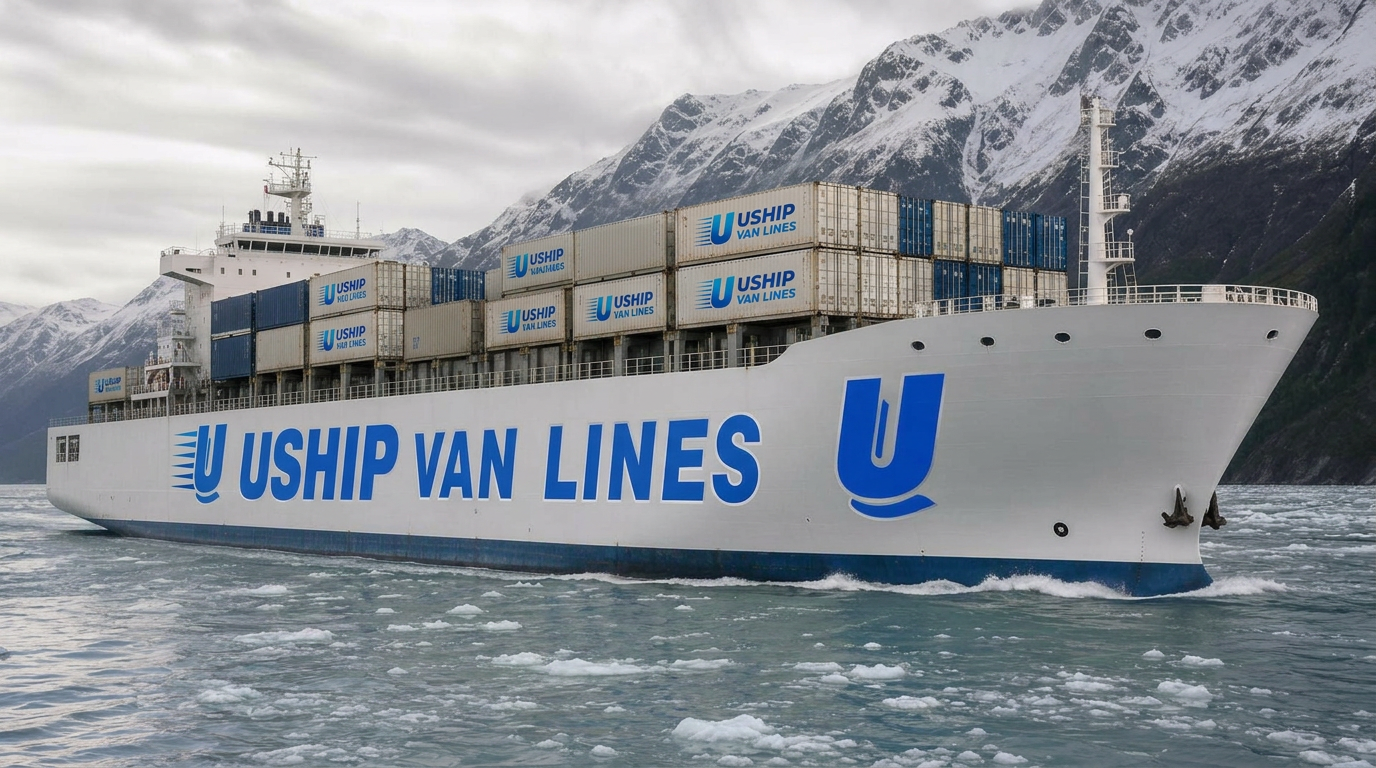
This route requires careful planning around barge sailing schedules, which operate with limited frequency—particularly during Alaska's winter months when ice conditions affect port operations. The entire journey demands coordination between maritime carriers, long-haul trucking companies, and local delivery teams, making experienced logistics management essential for a successful outcome.
How the moving process works
Your Step-by-Step Moving Process
-
Initial consultation and route assessment – We evaluate your inventory, departure location within Alaska, and specific Petersburg delivery address. Our team identifies the optimal port routing (direct from Alaska or via Tacoma consolidation) and provides a detailed timeline based on current barge schedules.
-
Pre-barge preparation and packing – Professional packing occurs at your Alaska residence, with special attention to maritime shipping requirements. Items are containerized or secured in trailer vans designed for barge transit, protecting belongings from salt air and movement during the ocean leg.
-
Alaska port delivery and barge loading – Your goods are transported to the departure port (Anchorage, Whittier, or occasionally Kodiak) and loaded onto southbound barges. Sailing frequency varies by season; summer offers weekly departures while winter may extend to bi-weekly schedules.
-
Ocean transit to Pacific Northwest – The barge journey to Tacoma or Seattle typically requires 5-7 days depending on weather conditions and intermediate port calls. Your shipment remains secure in sealed containers or trailer vans throughout this leg.
-
Port unloading and cross-country dispatch – Upon arrival at the Lower 48 port, containers are unloaded, inspected, and transferred to long-haul trucks. The overland journey begins immediately, routing through Idaho, Wyoming or Montana, across the Plains states, and into the Mid-Atlantic corridor.
-
Cross-country transportation – The 2,800-mile drive typically requires 4-6 days of transit, depending on weather, driver hours-of-service regulations, and routing. Real-time tracking keeps you informed throughout this phase.
-
Petersburg delivery and unpacking – Our delivery team coordinates a specific arrival window at your Petersburg address. White-glove unloading, furniture placement, and optional unpacking services complete your move. We perform a final walkthrough to ensure satisfaction before departure.
Estimated moving costs
Moving Cost Expectations
A typical 2-3 bedroom household move from Alaska to Petersburg, VA generally ranges from $6,800 to $12,500 for full-service door-to-door transport. Studio or 1-bedroom moves may cost $4,200-$6,500, while larger 4-bedroom homes can reach $13,000-$18,000 depending on volume and services selected.
Several factors significantly influence your final cost. Volume and weight drive base pricing—Alaska moves are calculated by cubic footage and total weight due to barge capacity constraints. Departure location matters considerably; Anchorage and Mat-Su Valley offer the most efficient port access, while Fairbanks, Kenai, or bush communities add substantial last-mile costs for getting goods to the port. Barge sailing schedules affect pricing seasonally, with peak summer months (May-September) commanding premium rates due to high demand.
Packing services add $800-$2,200 for professional materials and labor, though this investment significantly reduces damage risk during the complex multi-modal journey. Vehicle shipping costs $2,100-$3,400 per car when added to household goods shipments; many customers find this more economical than driving the Alaska Highway. Storage fees apply if barge schedules require warehousing between legs—typically $150-$300 per month if needed. Insurance coverage beyond basic carrier liability runs $200-$500 for full-replacement protection on a typical household.
Request a detailed quote to receive accurate pricing based on your specific inventory, dates, and service preferences. We never provide guaranteed prices without a proper assessment, but our quotes are comprehensive and transparent with no hidden fees.
Estimated transit times
Realistic Transit Timelines
Door-to-door delivery from Alaska to Petersburg typically requires 18-28 days from your pack date to final delivery. This timeline accounts for all phases of the multi-modal journey and builds in reasonable buffers for weather and logistics coordination.
Breaking down the timeline by leg: Alaska collection and port delivery takes 1-3 days depending on your departure location—Anchorage is quickest while remote areas require additional time. Barge transit from Alaska ports to Tacoma/Seattle consumes 5-8 days; summer sailings trend faster while winter weather can extend this leg. Port processing and cross-country dispatch adds 2-4 days for unloading, customs paperwork (if applicable), and truck assignment.
The overland transportation phase requires 4-6 days for the 2,800-mile journey across seven to nine states. Finally, Petersburg local delivery is scheduled within a specific window coordinated with your availability. Most customers receive 48-72 hours advance notice of the exact delivery date.
Winter moves (November-March) should plan for the upper end of these ranges due to reduced barge frequency and potential weather delays along both the Alaska and eastern seaboard portions of the route. Summer relocations (May-September) typically hit the faster end of estimates, though this is also peak moving season with higher demand. Always build extra time into your plans rather than scheduling tight commitments around estimated delivery dates.
Regional logistics
Alaska-Specific Moving Logistics
Alaska's geographic isolation creates unique logistical requirements that differentiate these moves from standard long-distance relocations. Port access is the primary consideration—most household goods flow through the Port of Anchorage or are trucked to Whittier before barge loading. Customers in Fairbanks face a 360-mile haul to Anchorage; Kenai Peninsula residents travel 100-150 miles; and those in bush communities may require air freight for initial transport to the road system, adding substantial cost.
Vehicle transportation deserves special attention. Driving the Alaska Highway to Petersburg is theoretically possible but represents a grueling 4,000+ mile journey through remote Canadian territory, often costing more in fuel, lodging, and vehicle wear than professional shipping. Most customers choose to ship vehicles alongside household goods; cars are driven onto barge vessels or transported in enclosed carriers. Winter self-drives face extreme weather risks and limited services along northern routes.
Barge scheduling requires advance coordination. Unlike Lower 48 moves where trucks depart on-demand, Alaska barges operate on published schedules with specific cutoff dates for booking. Missing a sailing can delay your move by 1-2 weeks. We manage these schedules proactively, but customers should finalize plans 4-8 weeks before desired departure dates, especially during peak season.
Customs and documentation typically don't apply for Alaska-to-Lower-48 moves (both are U.S. domestic), but the Port of Anchorage requires specific shipping documentation and itemized inventories for cargo tracking. We handle all paperwork, though customers should maintain copies of their inventory lists for insurance purposes.
Partial loads and consolidation offer cost savings for smaller moves (studio to 1-bedroom). Your goods share barge and truck space with other shipments, reducing costs by 20-40% but adding 3-7 days to transit time for consolidation and distribution. Full-service exclusive loads provide faster, more direct service for larger households.
Storage solutions become relevant when barge schedules don't align perfectly with your move-out and move-in dates. We offer climate-controlled warehousing in both Alaska and Petersburg if temporary storage bridges timing gaps. Many customers departing Alaska store items for 2-4 weeks while finalizing housing arrangements in Petersburg.
Seasonal considerations
Planning Around Alaska Seasons
Summer (May-September) represents peak moving season with the most frequent barge sailings—often weekly departures from Anchorage. Weather is most cooperative for both ocean transit and cross-country trucking, making this the most reliable period for predictable timelines. However, demand drives prices 15-25% higher than winter rates, and booking 6-8 weeks ahead is essential. Petersburg summers are hot and humid, so plan your arrival accordingly.
Fall (October-November) offers a sweet spot of moderate pricing and still-reasonable barge frequency. Early October maintains near-summer schedules, while late November begins transitioning to winter routing. Alaska weather becomes more variable, and early winter storms can occasionally affect barge schedules. This is an excellent time for budget-conscious moves with flexible timelines.
Winter (December-March) brings the lowest pricing—sometimes 20-30% below peak rates—but also the most constrained schedules. Barge sailings may drop to bi-weekly or face delays due to ice conditions at Alaska ports. The overland leg faces potential weather delays in mountain passes and Plains states. Winter moves require maximum flexibility; budget an extra 5-7 days beyond standard estimates. However, for cost-sensitive relocations with timing flexibility, winter offers significant savings.
Spring (April-early May) sees schedules ramping back up as ice clears and demand increases. Pricing sits between winter lows and summer peaks. This shoulder season can deliver good value, though April weather in Alaska and along the northern trucking routes remains unpredictable. Barge space fills quickly as people prepare for summer relocations, so book early.
Regardless of season, Alaska moves require more advance planning than typical long-distance relocations. The limited barge infrastructure and long distances mean last-minute moves are rarely feasible.
Why choose Best Alaska & Hawaii Movers
Why Best Alaska & Hawaii Movers for Your Petersburg Relocation
-
Alaska-specific expertise – We specialize exclusively in Alaska and Hawaii relocations, understanding the barge logistics, port procedures, and seasonal considerations that general moving companies simply don't encounter. Our team has managed thousands of Last Frontier moves and knows how to navigate the unique challenges.
-
True door-to-door service – Unlike brokers who hand off your shipment multiple times, we coordinate the entire journey from your Alaska residence through barge transit, cross-country trucking, and final Petersburg delivery. One point of contact manages all phases, eliminating communication gaps and finger-pointing.
-
Transparent pricing and realistic timelines – We provide detailed quotes that account for Alaska's unique costs, and we set realistic expectations about transit times rather than making promises we can't keep. Our estimates include all fees—no surprise charges upon delivery.
-
Comprehensive cargo protection – Multi-modal moves face more handling than standard relocations. We use reinforced packing materials designed for barge transit, secure containerization, and offer multiple insurance tiers to protect your belongings throughout the complex journey.
-
Powered by UShip Van Lines' network – Our partnership with UShip Van Lines provides access to nationwide carrier capacity, advanced tracking technology, and competitive pricing while maintaining our specialized Alaska and Hawaii focus. You get boutique expertise backed by enterprise-level resources.