
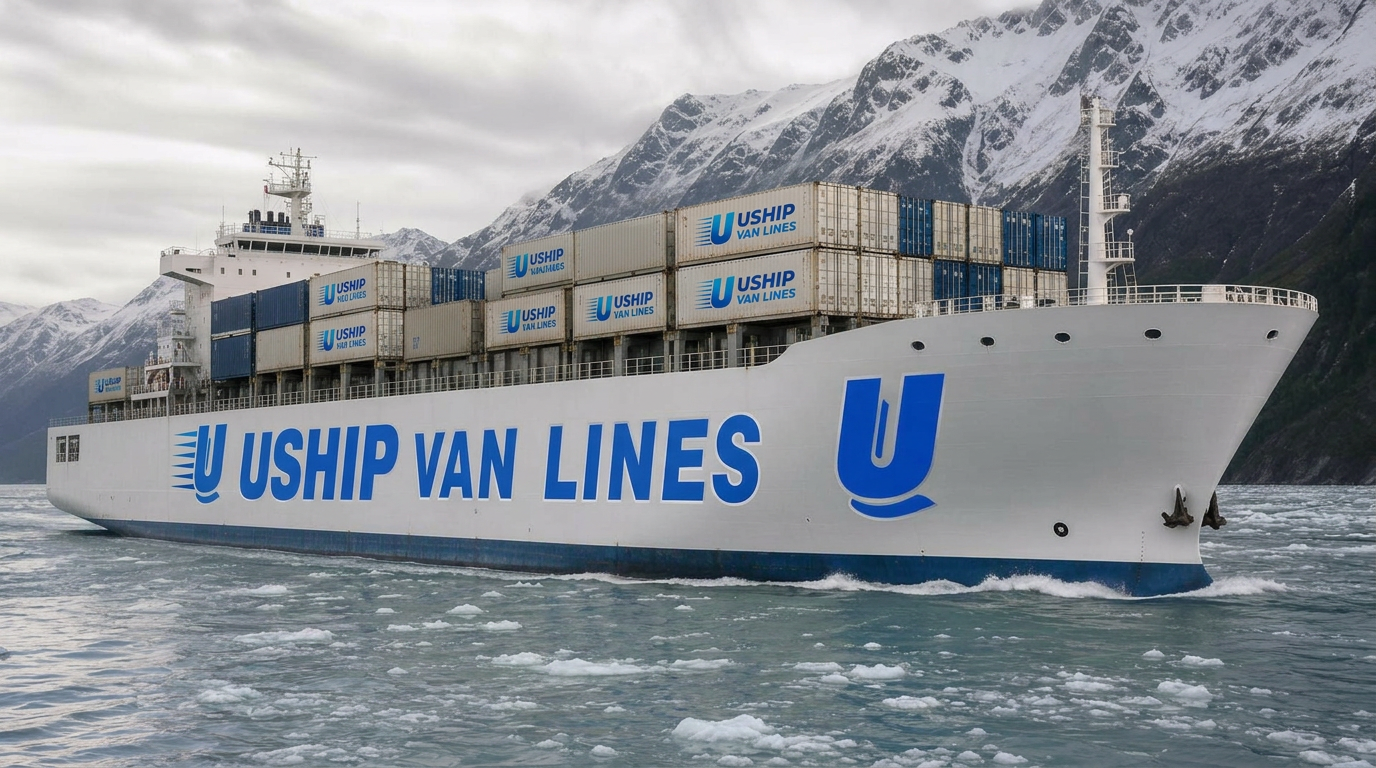
Moving from Alaska to Aurora, CO
Moving from Alaska to Aurora, CO requires specialized logistics that combine marine barge shipping with long-haul ground transportation. Whether you're relocating from Anchorage, Fairbanks, the Mat-Su Valley, or remote communities, your household goods will travel by barge to the Port of Tacoma before continuing overland to Colorado's Front Range.
Best Alaska & Hawaii Movers, powered by UShip Van Lines, coordinates every step of this complex journey—from Alaska pickup through Tacoma port handling to final delivery in Aurora. Request your free quote today to get a personalized timeline and cost estimate for your unique move.
Route overview
Your Alaska to Aurora Moving Route
The Alaska to Aurora corridor is a multi-modal route spanning approximately 2,400 road miles after initial barge transport. Your belongings will be loaded in Alaska, transported via barge from either Anchorage or Whittier to the Port of Tacoma (typically a 3–5 day sailing), then transferred to a long-haul truck for the 1,300-mile drive through Washington, Idaho, Wyoming, and into Colorado's Front Range.
Aurora sits immediately east of Denver at roughly 5,470 feet elevation, offering easy highway access via I-70 and I-225. The city's proximity to Denver International Airport and excellent road infrastructure makes final delivery straightforward once your shipment clears the Rocky Mountain passes. Most moves follow I-90 east from Tacoma to Spokane, then I-84/I-25 south through Wyoming, entering Colorado near Fort Collins or Cheyenne before the final approach to Aurora.
Timing depends heavily on barge sailing schedules, which run weekly during peak season (May–September) but may be less frequent in winter months. Door-to-door transit typically ranges from 12–21 days, with consolidated shipments sometimes requiring additional terminal time in Tacoma for load optimization.
How the moving process works
How Your Alaska to Aurora Move Works
-
Initial Survey & Inventory: A moving coordinator conducts a virtual or in-person walkthrough of your Alaska residence, documenting your household goods and identifying items requiring special handling (vehicles, boats, ATVs, fragile antiques).
-
Alaska Pickup & Loading: Professional movers pack and load your belongings into a shipping container or onto pallets at your Alaska address. Remote locations may require scheduling around bush plane access, barge feeder services, or seasonal road conditions.
-
Transport to Alaska Port: Your shipment travels by truck to either the Port of Anchorage, Port of Whittier, or another departure point. Container loads are staged for the next available southbound sailing, typically departing weekly during peak months.
-
Barge Transit to Tacoma: Marine carriers like TOTE Maritime or Alaska Marine Lines transport your goods on a 3–5 day voyage through the Inside Passage to Washington State. Containers remain sealed throughout the ocean leg.
-
Tacoma Port Processing & Transfer: At the Port of Tacoma, your shipment clears the marine terminal, undergoes any necessary customs documentation (even for domestic moves, Alaska shipments may require additional paperwork), and is transferred to a 53-foot dry van for overland transport.
-
Overland Haul to Colorado: A long-haul carrier moves your goods via I-90 and I-25, covering approximately 1,300 miles over 2–4 days of driving time, with potential weather delays crossing the Rocky Mountains during winter.
-
Delivery in Aurora: Your driver contacts you 24–48 hours before arrival to schedule delivery. The crew unloads at your Aurora residence, placing boxes and furniture according to your floor plan. You inspect and sign the final inventory.
-
Vehicle Shipping (if applicable): Cars, trucks, and recreational vehicles can ship via Roll-on/Roll-off (RoRo) barge service or enclosed transport. Vehicles must be prepped (quarter-tank fuel, no personal items) and may arrive on a separate timeline from household goods.
Estimated moving costs
What Does an Alaska to Aurora Move Cost?
A typical 2–3 bedroom household moving from Alaska to Aurora, CO ranges from $6,800 to $13,500, depending on volume, services, and timing. Studio or 1-bedroom apartments may cost $4,200–$6,500, while larger 4+ bedroom homes can exceed $15,000.
Key cost drivers include:
- Shipment volume: Charges are typically based on linear feet of truck space or container size (20-foot vs. 40-foot).
- Alaska origin logistics: Anchorage and Mat-Su Valley pickups are most economical; remote bush communities requiring barge feeder service or air freight add $1,500–$5,000+.
- Barge vs. air freight: Standard barge service is cost-effective but slower; expedited air freight to Seattle costs 3–5× more.
- Packing services: Professional full-pack services add $800–$2,200 for a 3-bedroom home; partial packing or DIY reduces costs.
- Vehicle transport: Adding a car or truck via RoRo barge runs $1,200–$2,100; enclosed auto transport costs $1,800–$3,200.
- Insurance & valuation: Basic coverage (60¢/lb per article) is included; full-value protection typically adds 1–2% of declared value.
- Seasonal demand: Summer moves (May–August) cost 15–25% more due to peak Alaska relocation season; winter discounts are common but weather risks increase.
- Storage: If barge/truck schedules don't align, temporary warehousing in Tacoma or Denver costs $75–$200 per month for a typical load.
We never quote guaranteed prices online—every move is unique. Request a free, binding estimate based on your actual inventory, dates, and service preferences.
Estimated transit times
How Long Does Alaska to Aurora Moving Take?
Door-to-door transit from Alaska to Aurora typically requires 12–21 days, broken down as follows:
- Alaska pickup to port: 1–3 days (same-day in Anchorage; up to a week for remote locations requiring barge feeder service).
- Barge sailing to Tacoma: 3–5 days on the water, depending on route and weather. Weekly sailings mean you may wait up to 7 days for the next departure if you miss a cutoff.
- Tacoma port dwell & transfer: 1–4 days for container unloading, customs clearance (if required), and loading onto overland truck. Consolidated shipments may wait for a full truckload.
- Overland haul to Aurora: 2–4 days of driving time via I-90/I-25, with potential weather delays November–March when crossing mountain passes.
- Final delivery window: Drivers typically provide 24–48 hour notice and offer morning/afternoon windows.
Expedited options exist for time-sensitive moves—air freight to SeaTac followed by expedited trucking can reduce total transit to 5–8 days, but costs increase significantly. Off-season moves (October–April) may experience slower barge schedules, adding 3–7 days to the marine leg.
Always build in buffer time: starting a new job or lease in Aurora? Plan for your goods to arrive 5–7 days after your own travel to account for weather, mechanical delays, or customs holds.
Regional logistics
Alaska-Specific Moving Logistics
Ports & Barge Services: Most Alaska-to-Lower 48 moves depart from the Port of Anchorage or Port of Whittier. If you're in Southeast Alaska (Juneau, Ketchikan, Sitka), you'll use Alaska Marine Highway feeder barges to connect to mainline southbound sailings. Interior and remote locations (Fairbanks, Kenai, Kodiak, Nome, Bethel) require trucking or small-plane transport to a barge-accessible port—add 2–7 days and $800–$3,000.
Container vs. Consolidated Shipping: Exclusive-use 20-foot or 40-foot containers offer faster transit and less handling but cost more. Consolidated (shared) shipments combine multiple customers' goods on pallets or in vaults, reducing cost by 20–35% but adding 3–7 days for load assembly in Tacoma.
Vehicle Shipping: Cars and trucks travel via Roll-on/Roll-off barge service, typically on the same sailing as your household goods or within a week. Vehicles must be clean (Alaska agriculture inspection), operable (or declared inoperable with surcharge), and contain no personal items. Enclosed auto carriers are available for high-value or classic vehicles but require overland-only routing (no barge) at premium cost.
Customs & Documentation: Even though Alaska is a U.S. state, marine shipments may require USDA inspection for plant/soil materials and TSA-compliant documentation. Your mover handles this, but expect to provide inventory lists and declare any firearms, alcohol, or restricted items.
Hazardous Materials: Propane tanks, gasoline cans, ammunition, lithium batteries, and certain cleaning chemicals cannot travel via barge or moving truck. Plan to dispose of or transport separately.
Last-Mile Challenges: Aurora delivery is straightforward with excellent road access, but if you're storing items temporarily in Denver-area warehouses (common if your Aurora home isn't ready), confirm per-diem rates and access hours. Winter deliveries may require driveway snow removal for the moving truck.
Seasonal considerations
Best Times to Move from Alaska to Aurora
Summer (May–September): Peak moving season offers the most frequent barge sailings (often 2–3 per week) and the most reliable weather. Roads in Alaska are fully accessible, and Rocky Mountain passes are clear. Expect premium pricing—book 6–8 weeks in advance. This is ideal for families moving before the school year.
Fall (October–November): Barge schedules begin to thin (often weekly or bi-weekly), and early winter storms can impact both Alaska pickups and Colorado deliveries. Pricing drops 10–15%, but weather contingencies increase. Good for flexible timelines and budget-conscious movers.
Winter (December–March): The most challenging season. Barge sailings may run only 1–2 times per month, and severe weather can delay pickups in Alaska, port operations in Tacoma, and mountain crossings into Colorado. However, rates can be 20–30% lower. Remote Alaska locations may be inaccessible until spring thaw. Only recommended if you can tolerate 3–4 week windows.
Spring (April–May): Shoulder season with improving barge frequency and melting snow in Alaska. Rates are moderate, and you avoid both peak-season premiums and winter weather risks. Ice breakup and mud season can still impact remote Alaska pickups. Excellent value for those with mid-range flexibility.
Pro tip: If you're moving from Fairbanks or Interior Alaska in winter, coordinate your packing and loading during the limited daylight hours and ensure your access road is plowed. Aurora itself is mild compared to Alaska, but March snowstorms along I-25 can delay final delivery by 1–3 days.
Why choose Best Alaska & Hawaii Movers
Why Choose Best Alaska & Hawaii Movers for Your Alaska to Aurora Move
- Alaska & Hawaii Specialists: We focus exclusively on non-contiguous moves, meaning we understand barge schedules, port logistics, and multi-modal coordination better than general long-distance carriers.
- Transparent, Binding Estimates: Receive a detailed quote with no hidden fees—what we estimate is what you pay, barring changes to your inventory or services.
- Single-Point Coordination: One team manages your entire move from Alaska pickup through Tacoma transfer to Aurora delivery—no handoffs between unrelated vendors.
- Flexible Shipping Options: Choose between cost-effective consolidated service or faster exclusive-use containers; add vehicle transport, full-pack services, or storage as needed.
- Real-Time Tracking: Monitor your shipment's barge voyage and overland progress via our customer portal and proactive status updates.
- Powered by UShip Van Lines: Backed by a network of vetted, licensed interstate carriers and marine partners, ensuring reliability and accountability every mile of the journey.