
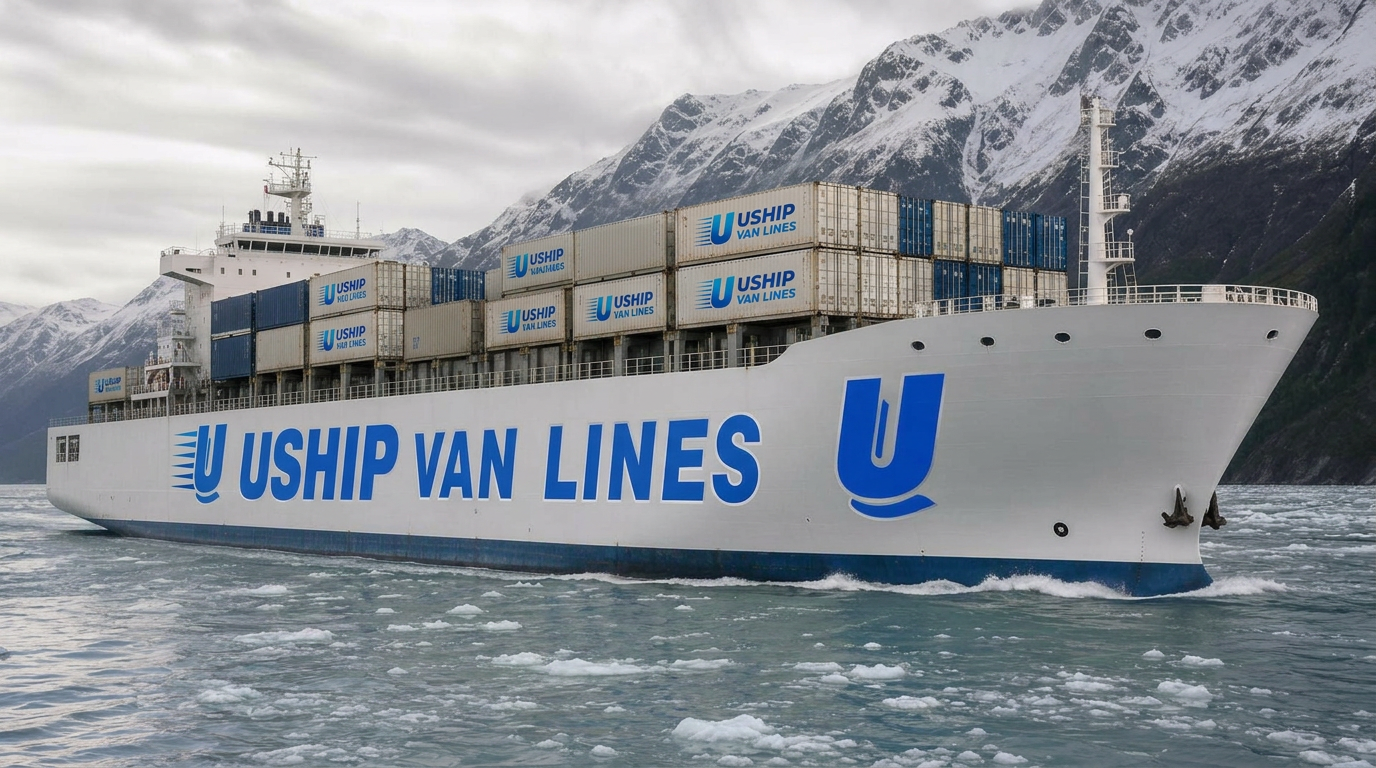
Moving from Santa Ana, CA to Alaska
Relocating from Santa Ana's sunny Orange County to Alaska is one of the most dramatic climate and lifestyle shifts you can make—and one of the most logistically complex moves in North America. Whether you're headed to Anchorage, Fairbanks, the Mat-Su Valley, or beyond, your household goods will travel by truck from Southern California to a Pacific Northwest port, cross the Gulf of Alaska by barge, and complete the final leg to your new Alaskan home.
Best Alaska & Hawaii Movers, powered by UShip Van Lines, specializes in this exact route. We coordinate every leg—land transport, barge booking, customs clearance, and last-mile delivery—so you can focus on your new adventure. Ready to start? Request a free, no-obligation quote today and let our Alaska moving experts guide you through every step.
Route overview
Route Overview: Santa Ana, CA to Alaska
Your belongings will depart Santa Ana and travel north via Interstate 5 to the Pacific Northwest—typically to the Port of Tacoma, Washington, the primary barge gateway for Alaska freight. From Tacoma, your shipment boards a commercial container barge operated by carriers like TOTE Maritime or Alaska Marine Lines, crossing roughly 1,400 nautical miles through the Inside Passage and Gulf of Alaska to the Port of Anchorage.
Once your container clears customs and port handling in Anchorage, it's loaded onto trucks for final delivery. If you're moving to Anchorage or the Mat-Su Valley (Wasilla, Palmer), delivery is straightforward. Fairbanks and interior destinations require an additional 350+ mile haul up the Parks Highway. Remote communities—Kenai Peninsula, Kodiak, Southeast Alaska, or bush locations—may involve secondary barge legs, air freight, or specialized last-mile carriers.
This is not a simple point-to-point move. Alaska-bound shipments require customs documentation (even though Alaska is a U.S. state, barge freight is treated similarly to international moves), strict packing standards to withstand ocean transit, and coordination across multiple carriers. Best Alaska & Hawaii Movers manages these handoffs, ensuring your shipment stays on schedule and arrives intact.
How the moving process works
How Your Santa Ana to Alaska Move Works: Step-by-Step
-
Free Quote & Route Planning
Contact us with your inventory, destination ZIP, and preferred move dates. We'll provide a detailed estimate covering truck transport, barge fees, port handling, and last-mile delivery. We'll also confirm your destination is accessible year-round or identify any seasonal constraints. -
Pre-Move Consultation & Documentation
You'll receive a checklist covering Alaska customs forms (including declarations for food, plants, and certain household items), vehicle shipping paperwork if applicable, and packing guidelines for ocean transit. We'll schedule your Santa Ana pickup and reserve barge space—critical during peak summer months. -
Packing & Pickup in Santa Ana
Our crew arrives at your Orange County home, carefully packs and loads your belongings into a climate-controlled moving container or trailer. Everything is inventoried and secured for the 1,100-mile truck journey to Tacoma. If you're shipping a vehicle, it's processed separately through the same port. -
Land Transport to Port of Tacoma
Your shipment travels north on I-5, typically arriving in Tacoma within 1–3 days. It's staged at the port facility, where it's inspected, documented, and loaded into a weatherproof shipping container for the barge crossing. -
Barge Transit to Port of Anchorage
The ocean leg takes 4–7 days depending on weather, route, and vessel schedule. TOTE Maritime runs weekly sailings year-round; Alaska Marine Lines operates seasonally with more frequent summer departures. Your container is sealed and secured for the Gulf of Alaska crossing. -
Port Clearance & Customs in Anchorage
Upon arrival, your shipment clears U.S. Customs (a formality for domestic moves, but still required). Port workers offload your container, and it's staged for final delivery. This can take 1–3 days depending on port congestion and inspection schedules. -
Final Delivery to Your Alaska Address
A local Alaska carrier completes the last mile—whether that's downtown Anchorage, a homestead in the Mat-Su Valley, or a cabin outside Fairbanks. Our crew unloads, places furniture, and completes a final inventory check. You sign off, and your Santa Ana to Alaska move is complete.
Estimated moving costs
What Does a Santa Ana to Alaska Move Cost?
For a typical 2–3 bedroom household (7,000–10,000 lbs), expect to invest $8,500–$16,000 for a full-service door-to-door move from Santa Ana to Anchorage or the Mat-Su Valley. Fairbanks and interior destinations typically add $1,200–$2,500 due to the additional 350+ mile overland leg. Remote or off-road-system locations can push costs significantly higher due to secondary barge, air freight, or specialized transport.
Key Cost Drivers:
- Volume & Weight: Alaska movers charge by cubic feet or pounds. A studio apartment might run $4,500–$7,000; a 4-bedroom home can exceed $20,000.
- Barge Fees: Port handling, container rental, and ocean freight are substantial. Summer peak season (May–September) commands premium rates.
- Distance from Port: Anchorage and Mat-Su are most economical. Fairbanks, Kenai Peninsula, and Southeast Alaska incur additional trucking or barge costs.
- Packing Services: Full-service packing adds $800–$2,500 but is highly recommended for ocean transit to prevent damage.
- Vehicle Shipping: Adding a car or truck runs $1,800–$3,200 for the same Tacoma-Anchorage barge route.
- Timing: Off-season moves (October–April) can save 15–25%, but weather delays are more common and some remote routes are inaccessible.
- Insurance: Full-value protection is strongly advised for Alaska moves. Budget 1–3% of shipment value.
We never guarantee prices without a formal survey. Request your free quote to get an accurate, binding estimate tailored to your specific inventory and destination.
Estimated transit times
How Long Does a Santa Ana to Alaska Move Take?
Door-to-door transit from Santa Ana to Anchorage or Mat-Su typically runs 10–18 days under normal conditions. Fairbanks and interior Alaska add 2–4 days. Remote destinations can extend timelines to 3–5 weeks or more, especially if secondary barge or air freight is required.
Breakdown by Leg:
- Santa Ana to Port of Tacoma (Truck): 1–3 days, depending on scheduling and I-5 traffic.
- Port Staging & Container Loading: 1–3 days; can stretch during peak season or if customs pre-clearance is required.
- Barge Crossing (Tacoma to Anchorage): 4–7 days on the water. Weekly sailings in peak season; less frequent October–April.
- Port of Anchorage Clearance & Offload: 1–3 days for customs, inspection, and drayage to final carrier.
- Last-Mile Delivery (Anchorage/Mat-Su): Same day to 2 days. Fairbanks: add 1–2 days for the Parks Highway haul.
Variables That Affect Timing:
- Weather: Gulf of Alaska storms (especially September–March) can delay sailings by 1–5 days.
- Barge Schedule: TOTE runs year-round; Alaska Marine Lines is seasonal. Missing a departure can add a full week.
- Port Congestion: Summer peak (June–August) sees the highest volume, sometimes causing clearance delays.
- Road Conditions: Winter ice and snow can slow final delivery, especially to Fairbanks or rural roads.
We provide real-time tracking and proactive updates throughout your move. Build in buffer time if you have firm occupancy dates—Alaska moves rarely go faster than estimated, but delays are common.
Regional logistics
Alaska-Specific Moving Logistics You Need to Know
Ports & Barge Carriers:
Nearly all Santa Ana to Alaska household goods move through the Port of Tacoma. TOTE Maritime operates year-round container service with weekly sailings to Anchorage. Alaska Marine Lines offers seasonal service (typically April–October) with higher frequency in summer. Your shipment goes into a 20' or 40' container, sealed and secured for ocean transit. Vehicle shipping uses the same port and carriers, processed through roll-on/roll-off (RoRo) or container depending on vehicle type.
Customs & Documentation:
Alaska is a U.S. state, but barge freight requires customs declarations similar to international moves. You'll complete forms listing your household goods, declare any restricted items (certain foods, plants, firearms), and provide proof of residence. We handle the paperwork, but you must provide accurate inventories. Prohibited items include fresh produce, soil-based plants, and untreated wood. Firearms and alcohol have quantity and declaration requirements.
Vehicle Shipping:
If you're shipping a car or truck, it's often more economical to include it with your household goods on the same barge. Expect $1,800–$3,200 Tacoma to Anchorage. Vehicles must be clean (Alaska agriculture inspection requires no dirt or seeds), have less than ¼ tank of fuel, and be in running condition or declared inoperable. No personal items allowed inside the vehicle during transit.
Last-Mile Challenges:
Anchorage, Mat-Su Valley, and Fairbanks have paved, year-round access. Kenai Peninsula and most of Southcentral Alaska are road-accessible but may require scheduling around weather. Southeast Alaska (Juneau, Ketchikan, Sitka) requires secondary barge from Anchorage or direct sailings from Tacoma—plan for longer timelines and higher costs. Bush communities (Bethel, Nome, Kotzebue, Barrow) require air freight or seasonal barge, often doubling or tripling costs and extending timelines to 4–8 weeks.
Storage Options:
If your Alaska home isn't ready or you're staged in temporary housing, we offer short-term and long-term storage in climate-controlled Anchorage facilities. Useful if you're waiting for breakup season to end, coordinating a construction completion, or phasing your move.
Packing for Ocean Transit:
Alaska barge shipments face rougher handling and ocean conditions than Lower 48 moves. We use heavy-duty boxes, double-wrap fragile items, and secure loads with extra blocking and bracing. Mattresses go in plastic, electronics in padded crates, and furniture is blanket-wrapped and strapped. DIY packing is possible but risky—ocean transit amplifies any packing flaws.
Seasonal considerations
Best Time to Move from Santa Ana to Alaska: Seasonal Factors
Summer Peak (May–September):
This is prime moving season for Alaska. Barge capacity is highest, weather is most predictable, and road access is unrestricted statewide. Expect premium pricing—demand is intense, and you must book 4–8 weeks ahead to secure your preferred dates. June and July see the heaviest volume. If you're moving to Fairbanks or the Interior, summer is ideal: 20+ hours of daylight, dry roads, and no ice. Downside: costs are 20–30% higher than off-season, and port congestion can add delays.
Fall Transition (September–October):
Prices begin to drop as demand tapers. Weather is still reasonable—early fall storms are possible but less severe than winter. Barge schedules start to thin; Alaska Marine Lines wraps seasonal service by late October. Good window for cost savings if you can handle potential weather delays and are moving to a road-accessible location. Avoid if you're headed to remote or off-grid sites that become inaccessible by November.
Winter (November–March):
The cheapest time to move, with discounts of 15–25% common. TOTE Maritime maintains year-round service, but frequencies drop. Gulf of Alaska winter storms are frequent and severe—expect delays of 3–7 days or more. Roads to Fairbanks and rural areas require winter tires, chains, and careful scheduling. Last-mile delivery can be hampered by ice, snow, and short daylight hours. Not recommended for remote destinations or if you need guaranteed timing. Best for flexible schedules and road-system locations like Anchorage or Wasilla.
Spring (April–May):
Shoulder season: prices rise as demand picks up, but you avoid peak summer premiums. Barge schedules increase. Breakup season (late April–May) can make rural roads impassable due to mud and melt. Anchorage and Fairbanks are fine, but off-road destinations may require waiting until June. Good compromise if you want moderate pricing and better weather than winter but aren't locked into peak-season costs.
Why choose Best Alaska & Hawaii Movers
Why Move from Santa Ana to Alaska with Best Alaska & Hawaii Movers?
-
Alaska Specialists, Not Generalists: We focus exclusively on Alaska and Hawaii long-distance moves. We know the barge schedules, the carriers, the ports, and the pitfalls. Your move isn't a side project—it's what we do every day.
-
Single-Point Coordination Across All Legs: You deal with one team from quote to final delivery. We manage the Santa Ana pickup crew, the Tacoma port logistics, the barge booking, the Anchorage customs clearance, and the Alaska delivery driver. No finger-pointing between vendors.
-
Transparent Pricing, No Hidden Fees: Our quotes include all legs—truck, barge, port handling, and delivery. We disclose fuel surcharges, peak-season adjustments, and optional services upfront. You know what you're paying before you commit.
-
Real-Time Tracking & Proactive Communication: We provide milestone updates—pickup complete, shipment at port, barge departed, arrived Anchorage, out for delivery. If weather delays a sailing or port congestion pushes timelines, you hear from us first.
-
Powered by UShip Van Lines' Network: Our technology platform connects you with vetted, licensed carriers while our Alaska expertise ensures your move is handled correctly. You get competitive pricing with specialized service—best of both worlds.
-
Flexible Timing & Storage Solutions: Need to store in Anchorage while you close on your home? Moving in winter and want to stage your load? We accommodate complex timelines and offer climate-controlled storage at both ends.