
Moving from Alaska to Santa Ana, CA
Relocating from Alaska to Santa Ana, California requires careful coordination of barge shipping, overland freight, and last-mile delivery across two distinct environments. Whether you're leaving Anchorage, Fairbanks, Mat-Su, or Kenai Peninsula communities, your household goods will travel south via container barge through Tacoma or Seattle, then overland through California to Orange County's bustling urban center.
Best Alaska & Hawaii Movers, powered by UShip Van Lines, specializes in this unique logistics chain—managing port paperwork, container booking, customs clearance, and final delivery to Santa Ana neighborhoods like Downtown, Floral Park, and French Park. Ready to simplify your interstate move? Request a free quote today and let our team handle every mile from the Last Frontier to Southern California.
Route overview
The Alaska to Santa Ana Route
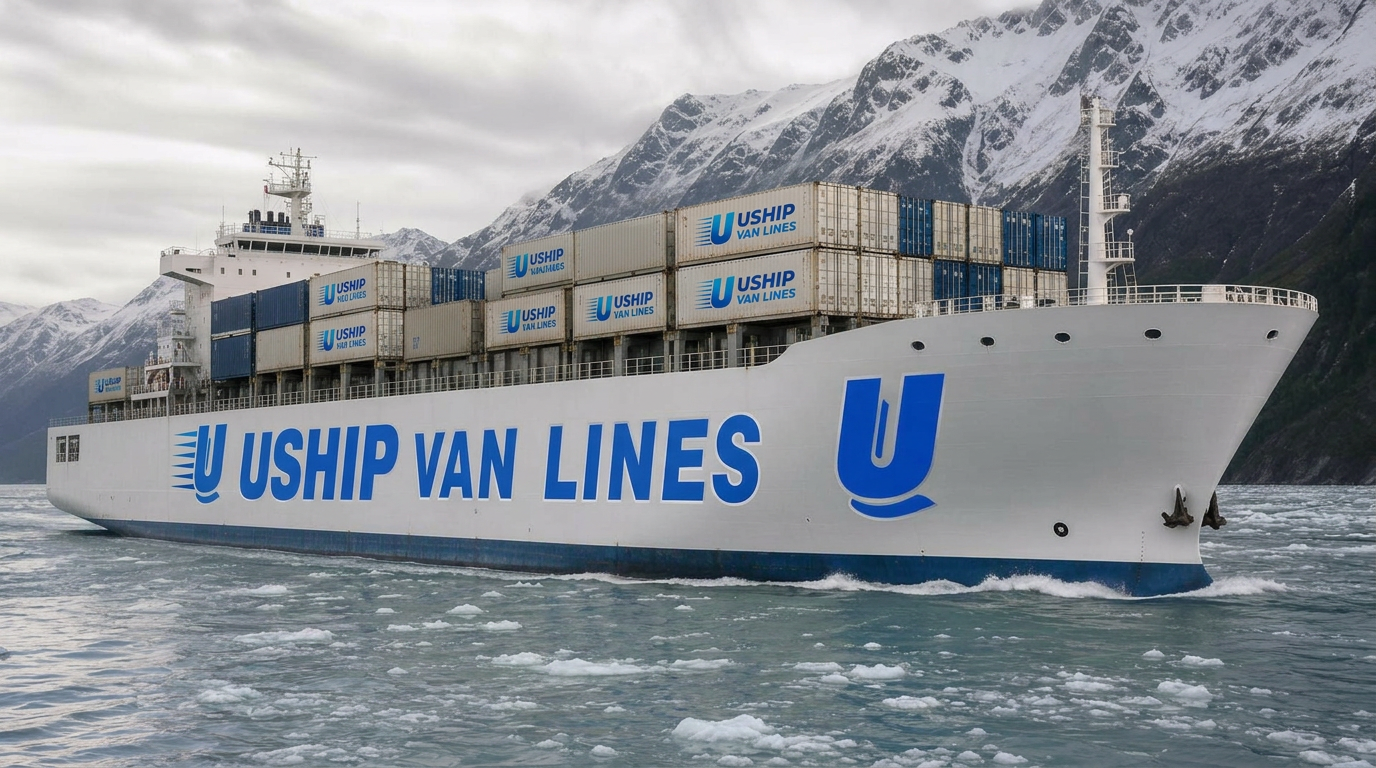
Moving from Alaska to Santa Ana spans approximately 2,400 miles and crosses dramatically different climates—from sub-arctic tundra and coastal rainforests to arid high desert and Mediterranean coastal plains. Your belongings depart Alaska via container barge from the Port of Anchorage, Whittier, or Kodiak, sailing south through the Inside Passage and Gulf of Alaska to Tacoma or Seattle. From Pacific Northwest ports, consolidated overland freight travels Interstate 5 south through Oregon, past Sacramento and the Central Valley, arriving in Orange County.
Santa Ana itself sits in the heart of Orange County, roughly 10 miles inland from the Pacific coast and 35 miles southeast of downtown Los Angeles. The city's dense urban fabric, historic neighborhoods, and proximity to John Wayne Airport make it a popular destination for professionals, families, and retirees seeking Southern California's climate without LA's congestion. Understanding the multi-modal nature of this route—barge legs, port dwell time, overland linehaul, and urban delivery windows—is essential for realistic scheduling and budgeting.
Weather windows matter: Alaska barge schedules run year-round but face winter storm delays and ice conditions. Southern California's stable climate means predictable delivery conditions, though summer heat requires climate considerations for temperature-sensitive items during the final legs of transit.
How the moving process works
Step-by-Step: Your Alaska to Santa Ana Move
-
Free Quote & Survey – Contact Best Alaska & Hawaii Movers for a detailed inventory assessment. We'll evaluate your home size, special items (vehicles, boats, ATVs), pickup location accessibility, and preferred delivery timeline to build a custom estimate.
-
Book Your Barge Slot – Alaska container barge schedules fill quickly, especially April–September. We reserve your container space 4–8 weeks in advance, coordinating pickup dates with weekly or bi-weekly sailings from Anchorage, Whittier, or other Alaska ports.
-
Pre-Move Preparation – Pack or schedule professional packing services. Alaska's climate means addressing moisture concerns—silica packs, wrapped electronics, and sealed boxes protect against humidity during barge transit. We provide packing materials and guidance for fragile, high-value, or bulky items.
-
Alaska Pickup & Container Loading – Our Alaska-based crews load your household goods into weatherproof containers at your residence or a nearby consolidation warehouse. Containers are sealed, documented, and transported to the departure port (Anchorage is most common; Mat-Su and Kenai Peninsula moves may stage through Anchorage or Whittier).
-
Barge Transit to Tacoma/Seattle – Your container sails south, typically 3–6 days at sea depending on weather and port calls. Upon arrival at Tacoma or Seattle, containers clear customs (for Alaska-origin goods, this is often streamlined but still required) and transfer to overland trucking partners.
-
Overland Freight to Southern California – Consolidated LTL or dedicated truck service moves your container south on I-5, passing through Portland, Sacramento, and the Central Valley. This leg typically takes 2–4 days, with real-time tracking available.
-
Final Delivery in Santa Ana – Our Southern California delivery team coordinates a delivery window, navigating Santa Ana's urban streets, parking restrictions, and any HOA or apartment building requirements. We unload, place items in rooms, and remove packing debris, completing your door-to-door service.
Throughout the process, you'll have a dedicated move coordinator tracking each leg, providing updates, and troubleshooting any delays or logistics challenges.
Estimated moving costs
What Does an Alaska to Santa Ana Move Cost?
For a typical 2–3 bedroom household (approximately 5,000–8,000 lbs), expect to invest $6,000–$12,000 for full-service door-to-door moving from Alaska to Santa Ana. Smaller 1-bedroom or studio apartments may range $3,500–$6,000, while larger 4-bedroom homes or volumes exceeding 10,000 lbs can reach $14,000–$20,000 or more.
Key cost drivers include:
- Volume and weight – Alaska barge rates are quoted per container (20' or 40') or per cubic foot for consolidated shipments; overland rates factor weight and mileage.
- Pickup/delivery accessibility – Remote Alaska locations (Kenai, Homer, Fairbanks, bush communities) require additional trucking to/from port staging; Santa Ana's urban density may require shuttle trucks or long-carry fees for homes with limited truck access.
- Packing services – Professional packing adds $800–$2,500 depending on home size; fragile-only packing runs $300–$800.
- Seasonality – Summer peak season (May–August) sees 15–25% higher rates due to demand; off-season (October–March) offers savings but may face weather delays.
- Vehicle shipping – Adding a car, truck, or SUV to your container costs $1,200–$2,800 depending on vehicle size and whether it shares container space with household goods.
- Storage – Port-side or in-transit storage (if you're not ready for immediate delivery) runs $100–$300/month.
- Insurance – Full replacement-value coverage typically costs 1–3% of declared shipment value; basic carrier liability (60¢/lb) is included but insufficient for most households.
We never guarantee prices without a formal survey. Request a free, no-obligation quote for your specific move—our estimators will walk through your inventory, timelines, and any special requirements to provide an accurate, transparent cost breakdown.
Estimated transit times
How Long Does Alaska to Santa Ana Take?
Total door-to-door transit typically requires 7–14 days, broken down as follows:
- Alaska pickup to port staging: 1–2 days (same-day for Anchorage-area moves; longer for Mat-Su, Kenai, Fairbanks, or remote locations requiring overland haul to Anchorage or Whittier).
- Barge sailing to Tacoma/Seattle: 3–6 days, depending on weather, sea state, and port call schedules. Winter storms or fog can add 1–2 days; summer sailings are typically faster and more predictable.
- Port dwell and customs clearance: 1–2 days for container offload, inspection (if required), and transfer to overland carrier.
- Overland freight (Tacoma/Seattle to Santa Ana): 2–4 days via I-5 corridor. Consolidated LTL may take the longer end; dedicated truck service is faster.
- Final delivery coordination: Same-day or next-day once truck arrives in Orange County, subject to your availability and any building/HOA delivery restrictions.
Expedited service can compress timelines to 5–7 days by prioritizing barge bookings, using dedicated trucking, and pre-staging containers—but expect 20–30% premium costs. Off-season or flexible moves may stretch to 14–18 days if you opt for economy consolidation or encounter weather delays.
We provide tracking updates at each milestone: container loaded, barge departed, arrived Tacoma, trucking dispatched, delivery scheduled. Transparency and communication are core to our service.
Regional logistics
Alaska-Specific Moving Logistics
Ports and Routes: Most Alaska-origin moves depart from the Port of Anchorage (Anchorage, Mat-Su Valley, northern Kenai Peninsula) or Whittier (for certain consolidators serving Southcentral Alaska). Fairbanks and Interior moves truck overland to Anchorage for barge loading. Kodiak, Juneau, and Southeast Alaska communities may use local barge services connecting to mainline sailings. Final port of entry in the Lower 48 is almost always Tacoma or Seattle; from there, overland trucking reaches Santa Ana.
Container Types: Most household moves use 20-foot or 40-foot weatherproof containers (similar to intermodal shipping containers). A 20-footer holds approximately 1,200–1,500 cubic feet (roughly a 2-bedroom apartment); a 40-footer accommodates 2,500–3,000 cubic feet (3–4 bedroom home). Consolidated shipments (your goods share a container with other customers) reduce costs but add slight transit time for consolidation and deconsolidation.
Vehicle Shipping: You can ship one vehicle inside your household goods container (saving dock space and money vs. separate auto transport) if dimensions allow. Alternatively, vehicles ship via dedicated auto carriers—either roll-on/roll-off (RoRo) barge service or enclosed truck transport. Driving the Alaska Highway to the Lower 48 is an adventurous alternative but adds 2,500+ miles, wear/tear, and 5–7 days of driving.
Customs and Paperwork: Although Alaska is a U.S. state, barge shipments are treated similarly to international freight for documentation purposes. You'll complete a detailed inventory (for insurance and customs), provide ID/proof of residence, and sometimes a customs declaration. Our team handles all paperwork, port filings, and clearances—your role is minimal.
Last-Mile Challenges in Santa Ana: Santa Ana's urban density, narrow streets in historic neighborhoods (like Floral Park), and parking restrictions require careful delivery planning. Large moving trucks may need shuttle services or permits for street parking. Apartment/condo buildings often have reservation systems, elevator padding requirements, and restricted delivery hours. Communicate building rules early so we can coordinate permits and equipment.
Storage Options: If your Santa Ana residence isn't ready (closing delays, lease gaps), we offer port-side storage in Tacoma or short-term warehousing in Southern California. Climate-controlled options are available for sensitive items.
Restricted Items: Alaska and California both prohibit transport of certain plants, soil, firewood, and agricultural products (invasive species/pest concerns). Hazardous materials (propane, ammunition, flammables) cannot travel via barge or commercial truck. Consult your move coordinator for a full restricted-items list.
Seasonal considerations
Best Times to Move from Alaska to Santa Ana
Spring (April–May): Barge schedules ramp up as Alaska thaws and daylight returns. Weather is generally stable but still cool in Alaska; California is ideal. Rates begin climbing toward summer peaks. Good balance of availability and moderate pricing.
Summer (June–August): Peak moving season for Alaska departures—families relocating before school starts, seasonal workers, military PCS moves. Barge and trucking capacity is tightest; book 6–8 weeks ahead. Expect premium pricing (15–25% above off-season) but fastest, most reliable transit. Santa Ana sees hot, dry weather—hydrate your crew and plan delivery for morning hours if possible.
Fall (September–October): Shoulder season offers excellent value. Barge schedules remain frequent, rates drop 10–20%, and weather is still favorable in both regions. September in Santa Ana is warm but not extreme; October brings cooler, pleasant conditions. Highly recommended for cost-conscious moves.
Winter (November–March): Off-peak season with lowest rates—savings of 20–30% compared to summer. However, Alaska weather is harsh: shorter daylight, snow/ice on roads, potential storm delays for barges. Barge sailings are less frequent (every 10–14 days vs. weekly in summer). Southern California weather is mild and rainy (by local standards), posing no real challenges. If you have flexible timelines and can tolerate potential delays, winter moves maximize savings.
Special considerations: Alaska's Permanent Fund Dividend payout (October) and holiday season (November–December) create mini demand spikes. Military PCS moves peak May–August. Always confirm barge sailing schedules and weather forecasts when booking.
Why choose Best Alaska & Hawaii Movers
Why Best Alaska & Hawaii Movers for Your Alaska to Santa Ana Move?
- Alaska & Hawaii Specialists: Unlike general long-distance movers, we focus exclusively on Alaska and Hawaii logistics—we know barge schedules, port procedures, seasonal weather impacts, and the nuances of non-contiguous state moves.
- End-to-End Coordination: One point of contact manages your entire move—from Alaska pickup through barge booking, port transfers, overland trucking, and Santa Ana delivery. No hand-offs, no confusion.
- Transparent, Competitive Pricing: We provide detailed, line-item estimates with no hidden fees. Our partnerships with UShip Van Lines ensure access to vetted carriers and volume-based rate advantages we pass on to you.
- Real-Time Tracking & Communication: You'll receive milestone updates throughout transit—container loaded, barge sailed, port cleared, truck dispatched, delivery scheduled. Our customer portal and dedicated coordinators keep you informed.
- Flexible Service Levels: Choose full-service (packing, loading, transport, unpacking) or hybrid options (you pack, we move). We accommodate partial loads, vehicle shipping, storage needs, and special handling for antiques, pianos, or fragile items.
- Customer-First Culture: We earn your trust through reliability and responsiveness. Questions answered promptly, timelines honored, challenges solved proactively. Our reputation is built on thousands of successful Alaska and Hawaii moves.