
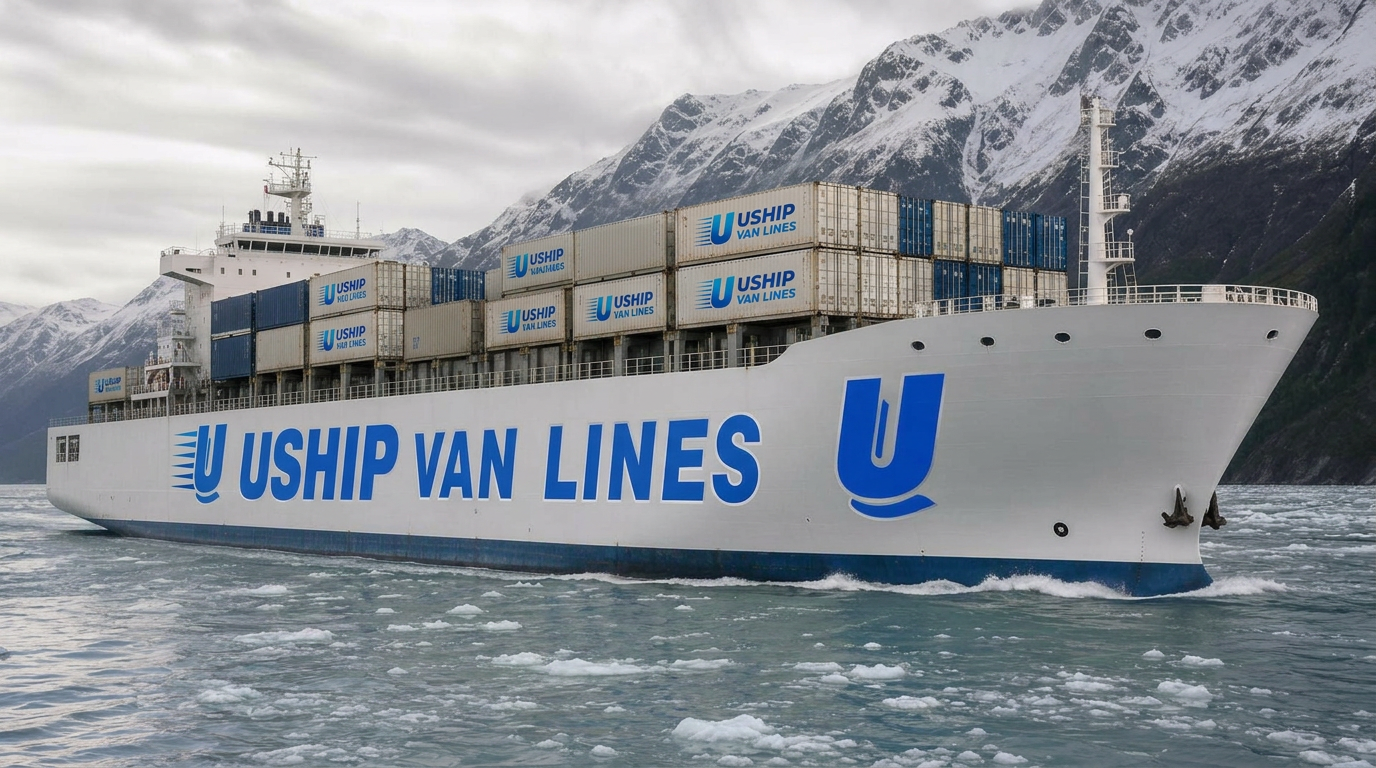
Moving from Altoona, PA to Alaska
Relocating from Altoona, Pennsylvania to Alaska represents one of the most logistically complex domestic moves in the United States. This transcontinental journey requires coordination across multiple transportation modes—long-haul trucking from central Pennsylvania to the Pacific Northwest, ocean barge transit through the Inside Passage or Gulf of Alaska, and final delivery to your Alaska destination. Best Alaska & Hawaii Movers, powered by UShip Van Lines, specializes in these multi-modal relocations, managing every detail from your Blair County doorstep to communities across the Last Frontier.
Whether you're moving to Anchorage for career opportunities, relocating to the Mat-Su Valley for quality of life, or heading to Fairbanks or beyond, we understand the unique requirements of Alaska-bound shipments. Our network handles everything from barge scheduling and port coordination to Alaska-specific regulations for household goods, vehicles, and restricted items. Ready to start planning your cross-country Alaska move? Request your personalized moving quote today and speak with a logistics specialist who understands both Pennsylvania and Alaska relocations.
Route overview
Understanding the Altoona to Alaska Moving Corridor
The Altoona, PA to Alaska route spans approximately 3,800–4,200 miles depending on your final Alaska destination, crossing the entire width of North America. Your household goods travel Interstate 99 north to I-80 westbound, crossing Pennsylvania, Ohio, Indiana, Illinois, Iowa, Nebraska, Wyoming, and into the Pacific Northwest. The transcontinental trucking leg terminates at the Port of Tacoma, Washington—the primary staging point for Alaska-bound barge shipments serving southcentral Alaska communities.
From Tacoma, your belongings load aboard ocean barges operated by carriers like Totem Ocean Trailer Express (TOTE) or Alaska Marine Lines, making the 1,450-nautical-mile voyage to the Port of Anchorage. This maritime leg typically takes 5–7 days of ocean transit, plus dock time on both ends. Once your container clears customs and port operations in Anchorage, last-mile trucking delivers to Anchorage neighborhoods, Eagle River, Wasilla/Palmer, Kenai Peninsula communities, or connects with additional transportation for Fairbanks, Interior Alaska, or bush destinations requiring air freight or seasonal ice road access.
This route requires careful timing coordination. The Pennsylvania-to-Tacoma trucking leg takes 4–6 days, port consolidation adds 3–7 days, ocean transit requires 5–7 days, and Alaska delivery adds 1–5 days depending on your location. Total door-to-door timelines typically range 18–35 days, with seasonal variations affecting barge frequency and weather-related delays.
How the moving process works
Your Step-by-Step Altoona to Alaska Moving Process
-
Initial Consultation and Inventory Assessment – We conduct a detailed home survey (virtual or in-person in the Altoona area) to catalog your household goods, identify items requiring special handling, and flag Alaska-restricted materials (certain plants, soil, unsealed food, ammunition). This assessment generates your customized quote based on cubic footage or weight, services required, and destination specifics.
-
Pre-Move Planning and Scheduling – Once booked, we coordinate your pickup window from Altoona with available barge sailing schedules from Tacoma. Alaska sailings typically run 1–3 times weekly during peak season (May–September) and less frequently in winter months. We'll schedule your Pennsylvania pickup to align with container consolidation deadlines, typically 7–14 days before your assigned sailing.
-
Professional Packing and Loading in Altoona – Our crew arrives at your Altoona residence with Alaska-appropriate packing materials (reinforced boxes, moisture barriers, additional padding for the ocean leg). Items are inventoried, packed, and loaded into a 53-foot semi-trailer for the cross-country haul. Fragile items receive extra protection for the multi-modal journey.
-
Transcontinental Trucking to Port of Tacoma – Your shipment travels I-80 westbound across the northern tier states, typically taking 4–6 days to reach the Tacoma port facility. Your belongings may share trailer space with other Alaska-bound shipments (consolidated loads reduce costs). The truck delivers to the port consolidation warehouse where your goods transfer to a 20-foot, 40-foot, or 53-foot ocean container.
-
Port Consolidation and Barge Loading – At Tacoma, your household goods load into ocean containers meeting marine shipping standards. Containers are secured, sealed, and loaded aboard Alaska-bound barges. This consolidation and loading process typically takes 3–7 days. You'll receive tracking information for your container and sailing schedule.
-
Ocean Transit to Port of Anchorage – The barge departs Tacoma, traveling northward through Puget Sound, the Inside Passage (or open Gulf of Alaska route), and into Cook Inlet to the Port of Anchorage. This maritime leg takes 5–7 days of sailing time, plus additional time for intermediate port stops if your shipment routes through other Alaska ports.
-
Alaska Delivery and Unpacking – Once your container clears the Port of Anchorage, it's trucked to your final Alaska destination. Anchorage-area deliveries occur within 1–2 days of port release. Deliveries to Mat-Su Valley, Kenai Peninsula, or Fairbanks add 1–3 days. For remote communities beyond the road system, additional air freight or seasonal transportation arrangements apply. Our crew unloads, and if contracted, unpacks and removes debris.
Estimated moving costs
What to Budget for Your Altoona to Alaska Move
Moving a typical 2–3 bedroom household from Altoona, PA to Alaska generally costs $8,500–$16,500 for a full-service relocation, with the wide range reflecting variables like exact home size, packing services, final Alaska destination, and seasonal timing. A modest 2-bedroom apartment (approximately 1,000–1,200 cubic feet) typically falls in the $8,500–$11,000 range, while a full 3-bedroom house (2,500–3,500 cubic feet) with garage contents runs $12,000–$16,500 or higher.
Key cost drivers for this route include:
- Distance and modal complexity – The 3,800+ mile journey involves transcontinental trucking plus ocean freight, inherently more expensive than standard domestic moves
- Cubic footage or weight – Alaska moves typically price by cubic feet (space in the container) or weight; the average 3-bedroom home runs 1,500–2,500 cubic feet
- Packing services – Full-service packing adds $1,200–$2,800 for a typical household; self-packing reduces costs but requires Alaska-appropriate materials
- Alaska destination – Anchorage delivery is baseline; Mat-Su Valley, Kenai, or Fairbanks add $500–$1,500; off-road-system communities require custom quotes
- Seasonal timing – Peak summer season (May–August) commands premium pricing due to high demand and more frequent sailings; shoulder seasons (April, September–October) offer better rates
- Vehicle shipping – Adding a vehicle to your barge shipment costs $1,800–$3,200 Tacoma-to-Anchorage depending on vehicle size
- Storage requirements – If your Alaska housing isn't ready, temporary storage in Anchorage runs $150–$400/month for typical household volumes
- Insurance coverage – Basic liability is included, but full-value protection (recommended for the ocean leg) adds 1–2% of declared shipment value
This is not a guaranteed quote. Your actual cost depends on your specific inventory, services selected, exact addresses, and timing. Request a detailed written estimate based on a professional inventory assessment for accurate pricing tailored to your Altoona to Alaska relocation.
Estimated transit times
Realistic Timeline: How Long Does Altoona to Alaska Take?
Plan for 18–35 days total transit time from pickup at your Altoona residence to delivery at your Alaska destination, with the timeline varying based on your specific Alaska location, barge sailing schedules, and seasonal factors.
Transit breakdown by leg:
- Altoona to Port of Tacoma trucking: 4–6 days for the 2,600-mile transcontinental haul across I-80
- Port consolidation and container loading: 3–7 days at the Tacoma port facility, coordinating with your assigned barge sailing date
- Ocean barge transit Tacoma to Anchorage: 5–7 days sailing time on the water, plus 1–2 days for port operations at both ends
- Alaska ground delivery: 1–2 days for Anchorage metro area; 2–3 days for Mat-Su Valley or Kenai Peninsula; 3–5 days for Fairbanks; custom timelines for remote communities
Peak season (May–September): More frequent barge sailings (often 2–3 per week) tighten timelines toward the 18–25 day range for Anchorage-area deliveries. However, high demand can create port congestion.
Off-season (October–April): Reduced sailing frequency (sometimes weekly or less) can extend timelines to 25–35+ days. Winter weather in Alaska and across the northern trucking route may add delays. Ice conditions in Cook Inlet occasionally impact Port of Anchorage operations January–March.
Expedited options: For urgent relocations, dedicated trucking (not sharing trailer space) and priority barge booking can compress timelines by 5–8 days but significantly increases costs. Most Alaska movers recommend standard consolidated service booked 4–6 weeks in advance for optimal pricing and reliable scheduling.
Regional logistics
Alaska-Specific Moving Logistics from Pennsylvania
Port and Maritime Requirements: Your shipment consolidates at the Port of Tacoma's Alaska cargo facilities, where ocean containers must meet U.S. Coast Guard and Alaska Marine Highway specifications. Containers are sealed and inventoried before loading. Unlike Hawaii moves (which have stricter agricultural inspections), Alaska-bound shipments face fewer restrictions, but the USDA still prohibits certain plants, soil, and unsealed food items that could harbor invasive species or pests. Your moving coordinator will provide a detailed restricted-items list during planning.
Vehicle Shipping Coordination: Most Alaska relocators ship at least one vehicle. Vehicles drive-on/drive-off (RoRo) from Tacoma on the same barges carrying household containers. Your vehicle must be clean (no soil/mud), contain no personal items except floor mats and mounted equipment, and have no more than 1/4 tank of fuel. Vehicle registration and proof of ownership are required. If shipping multiple vehicles or oversized vehicles (RVs, boats, equipment), these require separate booking and pricing. Vehicles typically arrive in Anchorage on the same sailing as your household goods, but port release may process on different schedules.
Alaska Address and Access Considerations: Alaska addresses can be complex—many rural areas use milepost designations rather than street addresses, and some communities are off the road system entirely. Confirm your exact delivery address, including any access restrictions (narrow roads, low-clearance areas, winter-only ice road access). Anchorage, Mat-Su Valley, and Kenai Peninsula are accessible year-round via paved highways. Fairbanks connects via the Parks Highway (358 miles from Anchorage). Communities like Valdez, Homer, Seward, and Kodiak require additional ferry or air service for off-season access. Bush communities (Bethel, Nome, Kotzebue, Barrow/Utqiaġvik) require air freight—significantly higher costs and weight restrictions apply.
Customs and Documentation: While Alaska is a U.S. state (no customs in the international sense), barge shipments require detailed cargo manifests, proof of residence, and sometimes Alaska PFD (Permanent Fund Dividend) residency documentation for tax purposes. Your moving company handles these filings, but you'll need to provide identification, destination address, and inventory lists. Military members on PCS orders require separate documentation through their transportation office.
Delivery Timing and Flexibility: Alaska deliveries require flexible scheduling. Weather, port operations, and road conditions can shift delivery windows by 1–3 days. Most movers provide a delivery window rather than a specific date. Ensure you have temporary lodging arrangements and don't schedule rigid commitments (new job start dates, school enrollments) for your exact estimated delivery date—build in 3–5 days of buffer. For remote deliveries, you may need to meet the truck at a highway milepost or coordinate with a local agent for final transport.
Seasonal considerations
Seasonal Planning for Your Alaska-Bound Move
Summer Peak Season (May–August): The most popular window for Alaska moves coincides with the state's peak construction, tourism, and relocation season. Barge sailings run most frequently (2–3 times weekly), Alaska weather is optimal, and road system access is reliable. However, demand drives premium pricing—expect 20–30% higher costs than shoulder seasons. Book 6–8 weeks ahead. Anchorage-area housing is competitive; secure your lease/purchase early. Altoona pickup weather is generally favorable, though summer thunderstorms across the Midwest trucking route can cause minor delays.
Shoulder Seasons (April and September–October): These months offer the best value proposition—more moderate pricing than peak summer, still-reasonable barge frequency (typically 1–2 sailings weekly), and manageable Alaska weather. April moves catch Alaska's late winter (still snowy in many areas but roads are clear), while September–October delivers fall colors and cooler temperatures. Shoulder season pricing typically runs 15–20% below peak summer rates. Early October is the cutoff before winter weather significantly impacts Alaska road conditions and sailing routes face more challenging seas.
Winter Off-Season (November–March): Alaska moves during winter months present distinct challenges and opportunities. Barge sailings reduce to weekly or less frequent; Cook Inlet ice can impact Port of Anchorage operations, particularly January–March. Transcontinental trucking across Wyoming, Montana, and other northern-tier states faces winter weather delays—storms, road closures, and mountain pass restrictions. However, pricing drops 25–35% below peak summer, and moving companies have greater availability. If your timeline is flexible and you're prepared for potential 30–40 day transits, winter moves offer significant savings. Interior Alaska destinations like Fairbanks experience -20°F to -40°F temperatures; delivery logistics require cold-weather preparation. November and early December, before deep winter sets in, are optimal for off-season moves.
Barge Schedule Considerations: Alaska Marine Lines and TOTE Maritime operate year-round but adjust frequency seasonally. Summer sees twice-weekly or more sailings; winter drops to weekly. Always coordinate your Altoona pickup date with confirmed barge sailing dates—missing your assigned sailing can add 7–14 days to your transit time.
Why choose Best Alaska & Hawaii Movers
Why Choose Best Alaska & Hawaii Movers for Your Altoona to Alaska Relocation
-
Alaska Specialists, Not Generalists – We exclusively focus on Alaska and Hawaii moves, giving us deep expertise in barge logistics, port operations, seasonal considerations, and Alaska-specific delivery challenges that general moving companies rarely encounter.
-
Transparent Multi-Modal Coordination – Your single point of contact manages the entire journey—Pennsylvania pickup, transcontinental trucking, Tacoma port consolidation, barge booking, and Alaska delivery—eliminating the confusion of coordinating multiple carriers yourself.
-
Powered by UShip Van Lines' Trusted Network – We leverage UShip Van Lines' nationwide carrier network for the Pennsylvania-to-Tacoma trucking leg, ensuring reliable, licensed interstate transportation, then apply our proprietary Alaska maritime expertise for the ocean and last-mile segments.
-
Realistic Timelines and Honest Communication – We provide accurate transit estimates based on real barge schedules and Alaska conditions, not optimistic marketing promises. You'll receive regular shipment updates and proactive communication if weather or logistics require timeline adjustments.
-
Comprehensive Alaska Destination Support – Whether you're moving to downtown Anchorage, a remote Mat-Su Valley homestead, Fairbanks, or a bush community, we've delivered there. We understand Alaska address systems, access limitations, and seasonal delivery requirements that surprise first-time Alaska movers.