
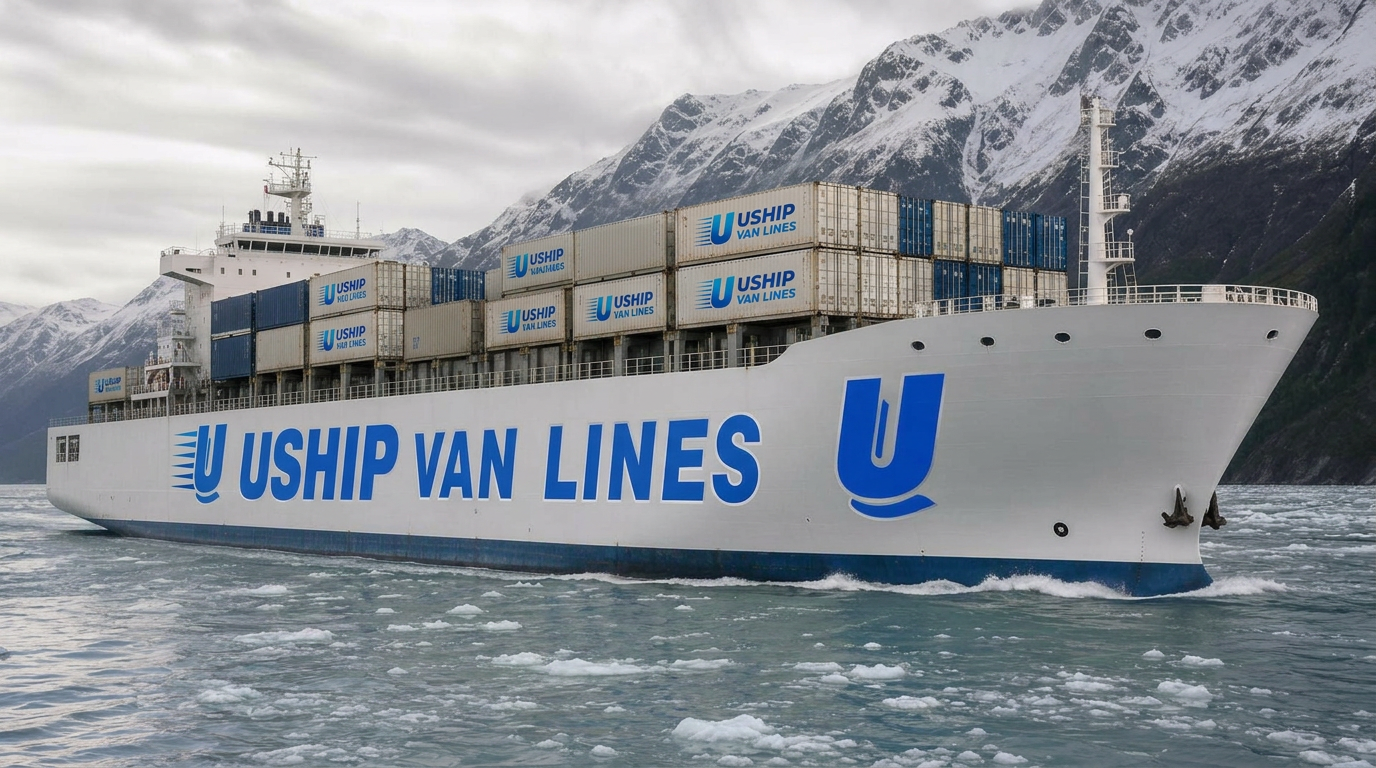
Moving from College Station, TX to Alaska
Relocating from College Station's warm Texas climate to Alaska's rugged frontier represents one of the most dramatic moves in North America. Whether you're drawn by career opportunities in Anchorage, academic positions in Fairbanks, or the adventurous lifestyle of the Last Frontier, this 3,400+ mile journey requires specialized logistics that most mainland movers simply can't handle.
Best Alaska & Hawaii Movers, powered by UShip Van Lines, orchestrates every phase of your College Station to Alaska move—from your Aggieland residence through overland trucking to the Tacoma consolidation hub, ocean barge transport to the Port of Anchorage, and final delivery across Alaska's unique terrain. Request a detailed quote to start planning your northern migration with confidence.
Route overview
The College Station to Alaska Moving Corridor
Your household goods travel approximately 3,400 miles from the Brazos Valley to Alaska through a carefully coordinated intermodal route. The journey begins with professional loading and overland transport from College Station through the Great Plains and Pacific Northwest to our Tacoma, Washington consolidation facility—roughly 2,400 highway miles typically completed in 4–6 days.
From Tacoma, your belongings join a scheduled ocean barge sailing to the Port of Anchorage, Alaska's primary cargo gateway. This 1,450-nautical-mile ocean leg operates on weekly schedules during peak season (May–September) and bi-weekly sailings in winter months. The barge portion adds 7–14 days depending on weather conditions and the specific sailing schedule.
Final delivery extends from the Anchorage port to your destination address—whether that's downtown Anchorage, Fairbanks via the Parks Highway, communities in the Matanuska-Susitna Valley, the Kenai Peninsula, or smaller bush communities requiring additional ferry or air cargo connections. This last-mile phase accounts for Alaska's vast distances and limited road infrastructure, with delivery times varying significantly based on your specific location and seasonal accessibility.
How the moving process works
How Your College Station to Alaska Move Works
-
Free Virtual or In-Home Assessment — We evaluate your inventory via video walkthrough or in-person survey in College Station, discussing Alaska-specific items like winter gear, outdoor equipment, and vehicle shipping needs to provide an accurate quote.
-
Professional Packing & Loading in College Station — Our crews pack your belongings using Alaska-rated materials designed for ocean transport and temperature extremes, with special attention to electronics, furniture, and cold-sensitive items that will experience climate transitions.
-
Overland Transport to Tacoma Consolidation Hub — Your shipment travels via interstate trucking through Montana, Idaho, and Washington to our Tacoma staging facility, where cargo is inspected, consolidated, and prepared for maritime loading (typically 4–6 days transit).
-
Ocean Barge Sailing to Anchorage — Containerized goods board a scheduled barge for the 1,450-nautical-mile voyage through the Gulf of Alaska, with sailings coordinated to match your preferred delivery window and seasonal availability (7–14 days at sea).
-
Port Clearance & Alaska Customs Inspection — Upon arrival at the Port of Anchorage, cargo undergoes USDA agricultural inspection (mandatory for Alaska-bound shipments) and port authority clearance before release to ground transportation.
-
Last-Mile Delivery Across Alaska — Your belongings transfer to Alaska-equipped trucks for final delivery, whether that's a same-day Anchorage delivery, a 350-mile haul to Fairbanks, or multi-leg transport to remote communities via the Marine Highway System or bush carriers.
-
Full Unpacking & Setup Service — Our delivery crews unpack, place furniture, and remove all packing materials, ensuring you're settled into your new Alaska home without the stress of managing debris in your new space.
Estimated moving costs
What Your College Station to Alaska Move Will Cost
A typical 2–3 bedroom household moving from College Station to Anchorage generally ranges from $8,500 to $16,000 for full-service door-to-door transport, depending on volume, services, and final destination. A studio or 1-bedroom move may cost $5,500–$8,500, while larger 4-bedroom homes can reach $18,000–$26,000 or more.
Primary cost factors for this route include:
- Total cubic footage or weight — Alaska moves price by space occupied in consolidation (most cost-effective) or by weight; a typical 3-BR home ranges from 800–1,400 cubic feet
- Overland distance to Tacoma — The 2,400-mile highway segment from Texas represents significant trucking expense before ocean costs even begin
- Barge sailing season — Peak summer sailings (May–September) command premium rates due to demand; winter moves may offer modest savings but face scheduling limitations
- Final Alaska destination — Anchorage delivery costs substantially less than Fairbanks (350 additional miles), Kenai Peninsula, or communities requiring ferry/air cargo transfers
- Packing service level — Full-pack service adds $1,200–$2,800 depending on home size; fragile-only or DIY packing reduces costs but increases risk
- Vehicle shipping — Adding a car or truck typically costs $2,200–$3,800 Tacoma-to-Anchorage via the same barge system
- Access challenges — Difficult pickup in College Station (long carries, stairs, narrow streets) or delivery in Alaska (unpaved roads, seasonal access) may incur additional fees
We provide binding estimates that lock in your price, protecting you from surprise charges. Request your detailed quote to see exactly what your specific move will cost with no hidden fees.
Estimated transit times
How Long Does College Station to Alaska Moving Take?
Expect 14–28 days total transit time from pickup in College Station to delivery in Alaska, with variation based on destination, season, and barge schedules.
Typical timeline breakdown:
- College Station to Tacoma overland: 4–6 days for the 2,400-mile highway segment, including one driver rest period and inspection stops
- Tacoma consolidation & loading: 2–5 days while your shipment is staged, containerized, and loaded onto the next available barge sailing
- Ocean barge sailing to Anchorage: 7–14 days depending on weather conditions, sea state in the Gulf of Alaska, and whether it's a direct or multi-stop sailing
- Port clearance & USDA inspection: 1–2 days for mandatory agricultural inspection, customs clearance, and transfer to ground transportation
- Final Alaska delivery: Same day for Anchorage metro, 1–3 days for Fairbanks/Mat-Su/Kenai, 3–10+ days for communities requiring ferry connections or bush cargo flights
Season significantly impacts timing: Summer peak season (May–September) offers weekly barge sailings and predictable schedules, making 16–21 day total transits realistic for Anchorage destinations. Winter moves (October–April) face bi-weekly sailings, weather delays in the Gulf of Alaska, and potential road closures on Alaska highways, extending timelines to 21–35 days or more.
Flexibility in your delivery window helps optimize scheduling and may reduce costs. We provide regular shipment tracking updates throughout the journey so you're never left wondering where your belongings are.
Regional logistics
Alaska-Specific Moving Logistics You Need to Know
Port of Anchorage Operations: Your shipment clears through Alaska's primary cargo gateway, which handles 90% of the state's consumer goods. All Hawaii and Alaska-bound moves undergo mandatory USDA agricultural inspection—prohibit soil, fresh produce, certain plants, and untreated wood. Processing typically takes 1–2 business days but can extend during peak season or if inspection issues arise.
Vehicle Shipping Coordination: Most customers ship one vehicle via the same barge system (Tacoma to Anchorage, $2,200–$3,800). You can drive one vehicle on the ALCAN Highway (2,300 miles from College Station through Canada, requiring 5–7 days of hard driving), but most opt for professional transport of all vehicles. Cars must be clean (no mud, which carries invasive species) and under ¼ tank of fuel for barge transport. Personal items can remain in the vehicle but aren't covered by moving insurance.
Alaska-Rated Packing Requirements: Extreme temperature swings (Texas heat through Alaska cold) and ocean transport require upgraded packing materials. Electronics need moisture-barrier wrapping, furniture requires additional padding, and temperature-sensitive items (cosmetics, medications, certain foods) may not survive the journey. We'll advise on what to carry with you versus what can safely ship.
Remote & Bush Community Deliveries: Communities off the road system (over 200 Alaska towns) require additional logistics. Your shipment may transfer to Alaska Marine Highway ferries (e.g., Kodiak, Sitka, Juneau, Ketchikan), bush cargo flights (smaller villages), or winter ice road deliveries. These add 3–14 days and $1,500–$5,000+ to total costs depending on location and cargo volume.
Address & Documentation Accuracy: Alaska addresses often include mile markers, lot numbers, and geographic descriptors rather than street names. GPS coordinates help in rural areas. We verify delivery addresses before booking to avoid costly rerouting. You'll need photo ID matching your destination address (or lease/purchase documents) for cargo release.
Winter Preparation Items: Shipping your own winter gear, cold-weather clothing, and Alaska survival equipment costs less than buying new in Alaska where prices run 20–40% higher. However, pack a "first night" box with essentials including warm layers, flashlight, and basic supplies in case delivery is delayed by weather.
Storage Options: We offer climate-controlled storage in Tacoma (if you need to delay barge sailing) and in Anchorage (if your housing isn't ready). This flexibility helps manage lease transitions and housing market delays common in Alaska's tight rental markets.
Seasonal considerations
Best Times to Move from College Station to Alaska
Spring/Summer (May–September) — Peak Season: This is Alaska's primary moving season, offering weekly barge sailings, optimal road conditions, and the most predictable schedules. College Station heat makes packing challenging, but Alaska weather is ideal for receiving shipments. Premium pricing applies due to high demand. Book 8–12 weeks in advance for preferred dates. Summer solstice (June) brings 19+ hours of Alaska daylight, making unpacking and settling easier.
Fall (October–November) — Shoulder Season: Barge schedules reduce to bi-weekly sailings as Alaska winter approaches. Moderate pricing with fewer booking conflicts, though transit times extend slightly. Early snow can impact Alaska highway conditions and remote deliveries. Good option if you have delivery flexibility and want to avoid peak-season premiums. College Station weather remains mild for packing.
Winter (December–March) — Off-Season: Alaska's coldest, darkest months see the fewest moves and lowest rates. Barge sailings may be limited or suspended to certain communities. Extreme cold (-20°F to -40°F in Fairbanks) requires special handling of electronics, liquids, and temperature-sensitive items. Highway conditions can be treacherous, and some remote locations become inaccessible. Best for budget-conscious moves with maximum flexibility, but expect extended timelines (25–35+ days) and potential weather delays.
Spring Thaw (April–Early May) — Transition Period: Schedules transition from winter to summer operations. Alaska's infamous "breakup" season brings mud, road damage, and unpredictable conditions. Barge sailings increase but may face ice delays in northern waters. Moderate pricing with improving availability. College Station spring weather is generally cooperative for packing and loading.
Pro tip: If your move timing is flexible, late May or September offers the best balance of reasonable pricing, reliable schedules, and good weather at both ends of the journey.
Why choose Best Alaska & Hawaii Movers
Why Best Alaska & Hawaii Movers for Your College Station to Alaska Move
-
Alaska Specialists, Not General Movers — We exclusively handle Alaska and Hawaii routes, meaning we own relationships with barge operators, understand USDA requirements, and know Alaska delivery challenges that mainland movers simply don't encounter.
-
Transparent Pricing, No Surprises — Binding estimates lock in your cost regardless of fuel price changes or scheduling shifts; itemized quotes show exactly what you're paying for, with no hidden "Alaska surcharges" added at delivery.
-
End-to-End Shipment Tracking — Real-time updates from College Station pickup through Tacoma consolidation, barge departure/arrival, port clearance, and final Alaska delivery—you'll always know your belongings' status and estimated delivery date.
-
Powered by UShip Van Lines' Network — Our partnership with UShip Van Lines provides nationwide pickup coverage, vetted carriers, and quality assurance protocols, while our Alaska expertise handles the specialized northern logistics other platforms can't manage.
-
Flexible Scheduling Around Alaska Reality — We build delivery windows that account for weather delays, barge schedules, and Alaska's seasonal access limitations, rather than making promises we can't keep about exact delivery dates in an unpredictable environment.