
Moving from Scranton, PA to Alaska
Relocating from Scranton, Pennsylvania to Alaska represents one of the most logistically complex long-distance moves in North America. Your household goods will travel over 4,000 miles through a multi-modal journey—starting with ground transport from northeastern Pennsylvania to the Pacific Northwest, then loaded onto a commercial barge for the voyage to Alaska, and finally delivered to your new home whether you're settling in Anchorage, Fairbanks, the Mat-Su Valley, or beyond.
Best Alaska & Hawaii Movers, powered by UShip Van Lines, specializes exclusively in these challenging continental-to-Alaska routes. We coordinate every leg of your move from initial pickup in Scranton through final delivery at your Alaska address, handling the complexities of barge scheduling, port transfers, customs documentation, and last-mile logistics so you don't have to. Ready to start planning your Alaska adventure? Request a free, no-obligation quote tailored to your specific route and household size.
Route overview
Route Overview: Scranton to Alaska
Your belongings begin their journey with pickup from your Scranton residence, then travel approximately 2,800 miles overland to the Port of Tacoma, Washington—the primary departure point for Alaska-bound freight. This cross-country leg typically takes 5–7 days depending on scheduling and whether your shipment consolidates with other Alaska-bound loads in our Seattle-area staging facility.
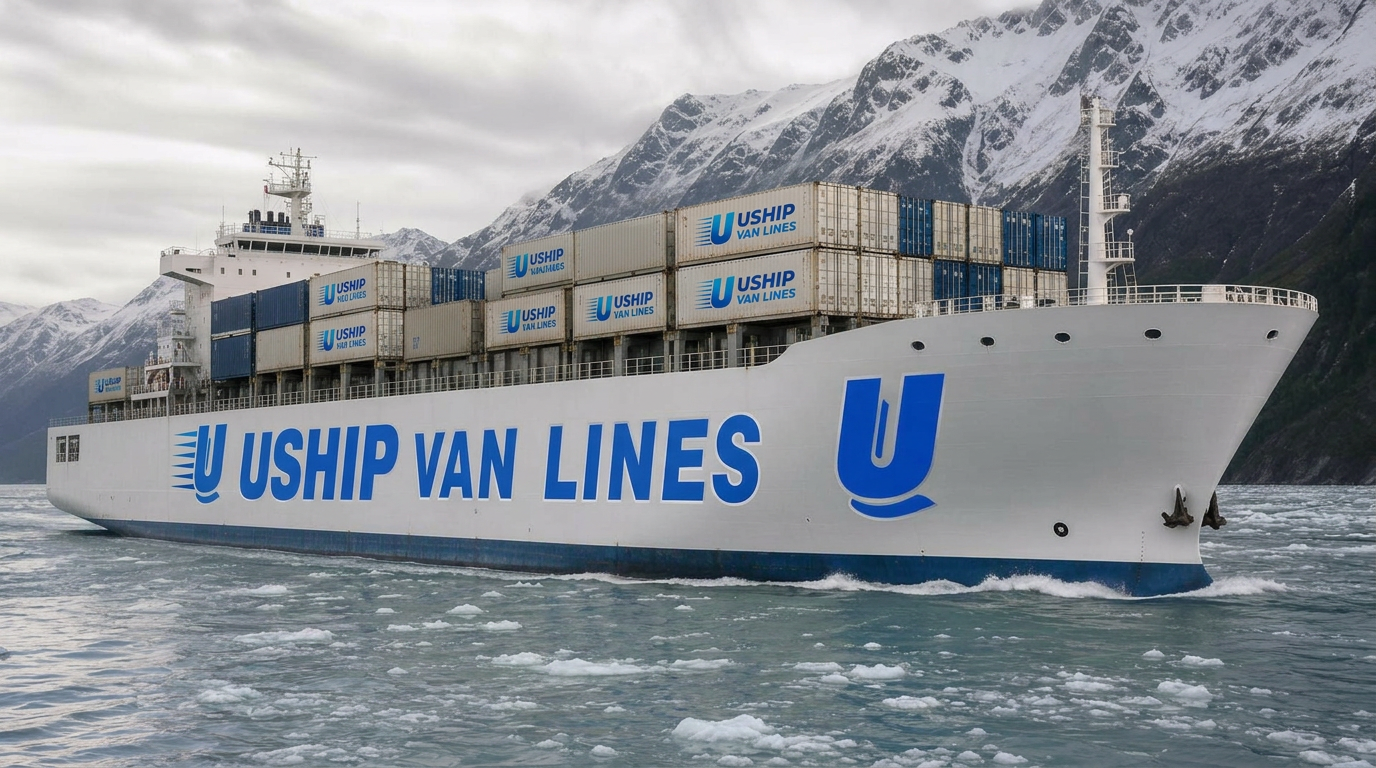
From Tacoma, your household goods are containerized and loaded onto commercial barges operated by carriers like Totem Ocean Trailer Express (TOTE) or Alaska Marine Lines. These vessels depart weekly year-round, sailing roughly 1,500 nautical miles through the Inside Passage to the Port of Anchorage—Alaska's primary freight hub. The ocean voyage typically takes 3–5 days depending on weather and routing.
Upon arrival in Anchorage, containers are offloaded, cleared through any necessary inspections, and transferred to local trucks for final delivery. If you're moving to Anchorage proper, delivery can occur within 1–3 days of port arrival. Destinations in Fairbanks, the Mat-Su Valley, Kenai Peninsula, or more remote communities add 1–5 additional days depending on distance, road conditions, and seasonal accessibility. Total door-to-door transit typically ranges from 14–28 days, with seasonal variation based on barge schedules and Alaska weather patterns.
How the moving process works
The Step-by-Step Moving Process
-
Initial Survey and Quote: We conduct a virtual or in-home assessment of your Scranton residence to inventory items, identify Alaska-restricted goods (see regulations below), discuss vehicle shipping options, and provide a detailed estimate covering all stages from Pennsylvania pickup through Alaska delivery.
-
Pre-Move Preparation and Scheduling: Once booked, we reserve your barge space (critical during peak summer months) and coordinate your Scranton pickup date working backward from your desired Alaska arrival window. You'll receive guidance on what cannot ship to Alaska—certain plants, soils, untreated wood, and specific produce items are prohibited by state agricultural regulations.
-
Scranton Pickup and Cross-Country Transport: Our team arrives at your Pennsylvania home on the scheduled date, professionally packs items if you've chosen full-service, loads your belongings, and begins the overland journey to Tacoma. Your shipment may consolidate with other Alaska-bound loads at our Pacific Northwest staging facility for efficient container loading.
-
Containerization and Barge Loading: At the Port of Tacoma, your household goods are loaded into weatherproof shipping containers (typically 20' or 40' steel containers) and secured for the ocean voyage. We handle all port documentation, booking confirmations with the steamship line, and ensure your container makes the scheduled sailing.
-
Ocean Transit to Alaska: Your container sails from Tacoma through the protected waters of the Inside Passage to Anchorage. We provide tracking updates and monitor the vessel's progress, keeping you informed of any weather delays or schedule changes.
-
Port of Anchorage Arrival and Customs Clearance: Upon arrival in Alaska, your container is offloaded and goes through agricultural inspection if required. We coordinate clearance and arrange transfer to our Alaska delivery partner for the final leg.
-
Final Delivery to Your Alaska Home: Local Alaska trucks transport your belongings from the Anchorage port to your final destination—whether that's a downtown Anchorage apartment, a homestead in the Mat-Su Valley, or a residence in Fairbanks. Our team unloads, places furniture, and ensures everything arrives in good condition before you sign off on delivery.
Estimated moving costs
Cost Expectations for Your Scranton to Alaska Move
Moving a typical 2–3 bedroom household from Scranton, PA to Alaska generally costs $8,500–$16,000 for full-service door-to-door transport. This wide range reflects variables including exact household volume, your specific Alaska destination, time of year, service level (full-pack vs. self-pack), and whether you're shipping vehicles alongside household goods.
Primary cost drivers include:
-
Household volume: Charged by cubic feet or container space. A 2-bedroom apartment (1,000–1,500 cubic feet) costs substantially less than a 3-bedroom house (2,500–3,500 cubic feet). Efficient packing and decluttering before the move directly reduce costs.
-
Overland distance to Tacoma: The 2,800-mile ground transport from Scranton to the Washington port represents a significant portion of total cost—typically $3,000–$5,500 depending on weight and whether you share container space.
-
Barge freight charges: Ocean transport is priced per container or by cubic footage. Summer months (May–September) sometimes see premium pricing due to high demand, while winter sailings may offer modest savings despite weather unpredictability.
-
Alaska destination and last-mile delivery: Delivery within Anchorage costs less than Fairbanks (additional 360 miles north), the Kenai Peninsula, or remote communities requiring special logistics. Difficult-access locations, gravel roads, or winter deliveries requiring 4WD add surcharges.
-
Service level: Self-packing saves $1,000–$2,500 but requires you to properly prepare items for a multi-week, multi-modal journey including ocean transit. Professional packing ensures proper protection and typically includes valuation coverage.
-
Vehicle shipping: Adding a car or truck costs $2,000–$3,500 via the same barge route, significantly cheaper than driving the Alaska Highway and far less wear on your vehicle.
We never guarantee prices without a detailed inventory—every move is unique. Request a personalized quote based on your actual household and timeline to get accurate pricing with no surprises.
Estimated transit times
Realistic Transit Time Expectations
Door-to-door delivery from Scranton to Alaska typically requires 14–28 days, broken down as follows:
Scranton to Tacoma overland (5–8 days): Cross-country trucking spans approximately 2,800 miles. Direct transport takes 5–6 days, while consolidated shipments that combine multiple Alaska-bound loads at our Seattle staging facility may take 7–8 days to optimize container loading.
Tacoma port processing and barge departure (1–4 days): Container loading, port documentation, and waiting for the next scheduled sailing add variability. During peak season (June–August), barges depart Tacoma for Anchorage 2–3 times weekly. Winter schedules may reduce to 1–2 weekly departures, potentially adding wait time if you miss a sailing window.
Ocean voyage to Anchorage (3–5 days): The Inside Passage route from Tacoma to the Port of Anchorage typically takes 3–4 days in good conditions. Severe weather, particularly during fall and winter storms, can add 1–2 days as vessels reduce speed for safety or take protected routing.
Port clearance and local transfer (1–3 days): Offloading containers, agricultural inspection (if applicable), and transferring to local delivery trucks typically takes 1–2 days in Anchorage. Complex clearances or peak port congestion can extend to 3 days.
Final delivery to your Alaska address (same-day to 5 days): Anchorage-area delivery often occurs within 24 hours of port clearance. Fairbanks adds 1–2 days for the 360-mile drive north on the Parks Highway. Kenai Peninsula, Mat-Su Valley, or more remote destinations add 1–5 days depending on distance, road conditions, and weather. Winter ice road closures or severe storms can cause delays.
Plan conservatively, especially if coordinating with Alaska housing leases or job start dates. We recommend building a 5–7 day buffer beyond our estimated delivery window to account for weather and logistics variables inherent in Alaska shipping.
Regional logistics
Alaska-Specific Logistics and Regulations
Port operations and barge carriers: The Port of Anchorage handles roughly 90% of Alaska-bound freight from the Lower 48. Containers arrive several times weekly from Tacoma via TOTE or Alaska Marine Lines. We manage all steamship line coordination, container booking, and port documentation so you never interact directly with maritime freight complexities.
Alaska agricultural restrictions: The state strictly prohibits certain items to protect its unique ecosystem. You cannot ship most live plants, soils, hay, straw, untreated firewood, or certain fresh fruits and vegetables. All wood items and plant-based materials are subject to inspection. We'll provide a detailed restricted-items list during your survey—ignoring these regulations results in items being confiscated and disposal fees. Artificial plants are permitted; most dried, processed foods are fine.
Vehicle shipping via barge: Shipping your car or truck alongside household goods costs $2,000–$3,500 and is far more practical than the 2,500+ mile Alaska Highway drive from the Lower 48 (which adds 7–10 days of driving, fuel costs, lodging, and significant vehicle wear). Vehicles ship in the same containers or on roll-on/roll-off (RoRo) barge space. They must be clean, operable, and contain no more than 1/4 tank of fuel per shipping regulations. We coordinate vehicle pickup from Scranton with your household goods for synchronized delivery in Alaska.
Last-mile delivery challenges: Alaska's size—twice that of Texas—means "last-mile" can actually be hundreds of miles. Anchorage and the Mat-Su Valley have paved highway access year-round. Fairbanks is 360 miles north via the Parks Highway, typically adding 1–2 delivery days. The Kenai Peninsula is accessible via the Seward Highway. Remote communities on gravel roads, requiring small planes, or accessible only by winter ice roads need special logistics planning and incur additional costs. Discuss your exact address during the quote phase so we can assess access and provide accurate delivery timelines.
Storage options: If your Alaska housing isn't ready when your shipment arrives in Anchorage, we offer short-term storage (typically $150–$400 per month depending on volume). Container storage at the port or in our Alaska warehouse keeps your belongings secure until you're ready for final delivery. Long-term storage for those spending winters Outside is also available.
Insurance and valuation: We include basic valuation coverage (typically $0.60 per pound per item) in all moves, but for a cross-country, multi-modal journey to Alaska, we strongly recommend full-value protection. This covers repair or replacement cost for damaged items rather than depreciated weight-based compensation. Additional coverage typically costs 1–2% of declared shipment value—a worthwhile investment for a move involving ocean transit and Alaska's challenging conditions.
Seasonal considerations
Seasonal Planning for Your Alaska Move
Summer (May–September): Peak moving season to Alaska coincides with the most favorable weather and road conditions. Barge schedules are most frequent (2–3 Tacoma departures weekly), reducing wait times. Expect premium pricing—demand is highest as families relocate before the school year. Book 6–8 weeks in advance to secure preferred dates and container space. The midnight sun provides extended daylight for loading/unloading, and Alaska's road network is fully accessible including gravel routes to remote areas. July and August see the highest demand and highest costs but most reliable transit.
Fall (October–November): Shoulder season offers moderate pricing and less competition for barge space, though weather becomes increasingly unpredictable. Early winter storms in the Gulf of Alaska can delay vessels 1–3 days. The Alaska Highway and rural roads remain passable through October but may see first snows by early November. This is an excellent time to move if you have schedule flexibility and want to avoid peak-season premiums. Book 4–6 weeks ahead.
Winter (December–March): Off-season moves offer the lowest pricing—sometimes 15–20% below summer rates—but come with significant weather challenges. Barge schedules reduce to 1–2 weekly Tacoma departures. Ocean storms in the Gulf of Alaska are common, potentially adding 2–5 days to transit as vessels slow or alter routing. Interior Alaska destinations like Fairbanks face extreme cold (-20°F to -40°F), requiring careful planning for delivery timing and ensuring temperature-sensitive items are properly packed. Some remote gravel roads may be impassable except by winter ice roads. Despite challenges, winter moves work well for those with flexible timelines and climate-appropriate belongings. Book 3–5 weeks ahead.
Spring (April–May): Transition season sees increasing barge frequency and improving weather, though "breakup" (spring thaw) can temporarily make some rural Alaska roads muddy and difficult to navigate. Pricing begins rising toward summer peaks as demand increases. This period offers a balance of moderate costs and improving conditions. Ice breakup on Alaska rivers typically completes by late April in southern regions, early May in the Interior. Book 5–7 weeks ahead as competition for Memorial Day weekend moves intensifies.
Why choose Best Alaska & Hawaii Movers
Why Choose Best Alaska & Hawaii Movers
-
Alaska specialists, not generalists: We focus exclusively on Alaska and Hawaii moves, not occasional add-ons to a nationwide moving company's services. Our team knows Tacoma port operations, barge carrier schedules, Alaska agricultural regulations, and the logistics challenges of delivering to Fairbanks in January or a Mat-Su Valley homestead in mud season.
-
Single-source coordination across all move stages: You work with one dedicated coordinator who manages your Scranton pickup, overland transport to Tacoma, barge booking, ocean transit monitoring, Alaska port clearance, and final delivery. No handoffs to disconnected subcontractors who don't communicate—we maintain accountability from Pennsylvania to Alaska.
-
Transparent, detailed estimates with no hidden fees: Our quotes itemize every cost component—ground transport, barge freight, port fees, Alaska delivery, fuel surcharges, and any applicable seasonal adjustments. We never lowball estimates to win business then surprise you with charges later. What we quote is what you pay (barring scope changes you request).
-
Powered by UShip Van Lines' vetted carrier network: Our partnership with UShip Van Lines gives us access to pre-screened, insured carriers for the Scranton-to-Tacoma overland leg and established relationships with Alaska's most reliable last-mile delivery operators. We only work with carriers who meet strict safety and service standards.
-
Flexible service levels for every budget: Choose full-service white-glove (we pack, load, transport, unload, unpack) or cost-saving partial services where you handle packing and we manage the complex logistics. We also offer vehicle shipping, temporary storage, and custom crating for valuable items like artwork or antiques making the long journey north.