
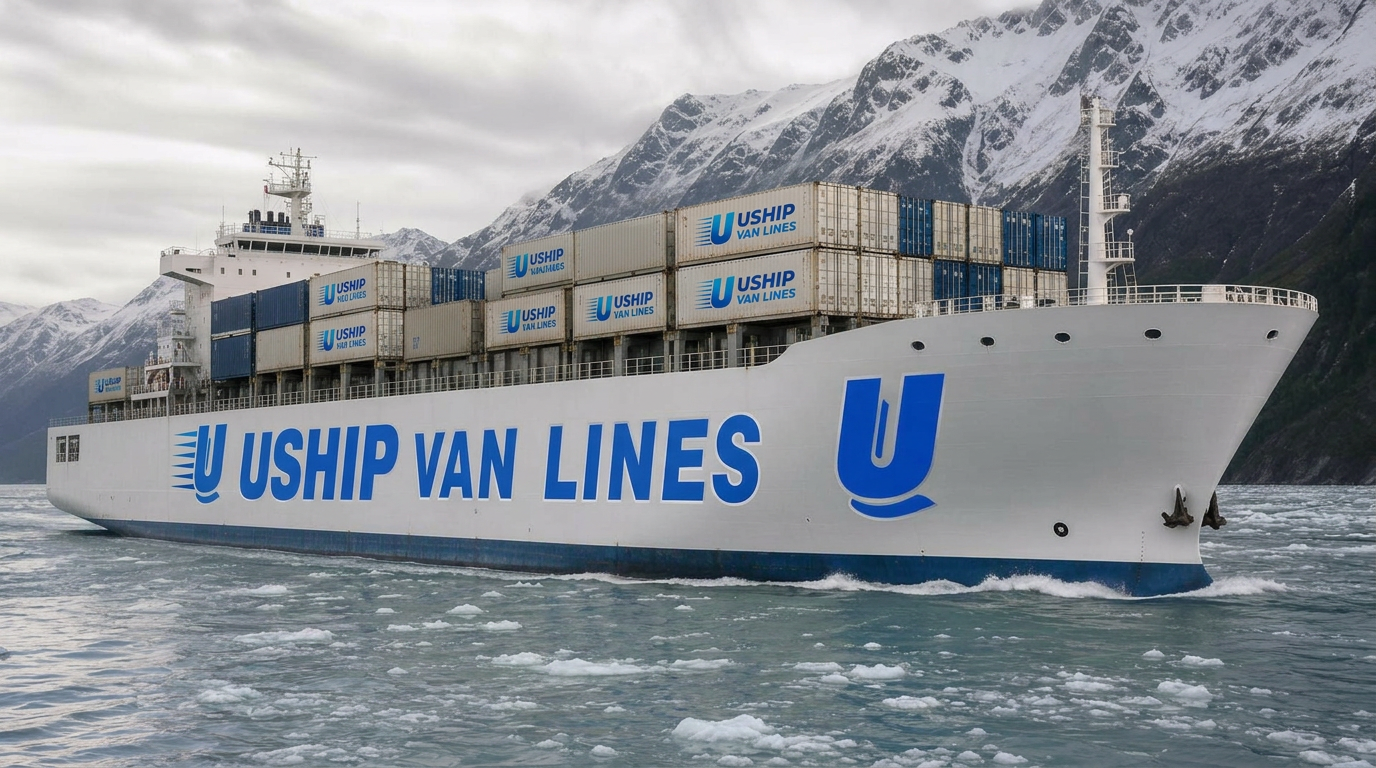
Moving from Alaska to Scranton, PA
Relocating from Alaska to Scranton, PA requires specialized logistics that few moving companies can handle. Your household goods travel by marine barge from Alaska ports to Tacoma, then overland nearly 2,800 miles across the northern United States to northeastern Pennsylvania's Lackawanna County.
Best Alaska & Hawaii Movers, powered by UShip Van Lines, coordinates every step of this complex multimodal journey—from port loading in Anchorage, Fairbanks, or your Alaska community through final delivery to Scranton's tree-lined neighborhoods. Ready to start planning your cross-country move? Request your free, no-obligation quote today.
Route overview
Understanding the Alaska to Scranton Moving Route
Your household goods begin their journey at Alaska marine terminals—typically the Port of Anchorage for most Southcentral residents, or Fairbanks last-mile consolidation for Interior Alaska moves. Items are containerized and loaded onto commercial barges serving the Alaska-Tacoma route, a maritime leg that operates year-round but follows seasonal schedules with varying frequency.
Once containers reach the Port of Tacoma, Washington, your goods transfer to long-haul trucks for the continental crossing. The overland route generally follows I-90 and I-80 eastward through Montana, South Dakota, and into the Midwest before turning northeast through Ohio and into Pennsylvania. Scranton sits in the Pocono Mountains region, accessible via I-81 and I-84, approximately 120 miles north of Philadelphia.
This 4,200+ total-mile journey combines marine and ground transportation, requiring coordination with port authorities, customs documentation, and weather-dependent scheduling. The complexity explains why specialized Alaska moving expertise matters—general long-distance movers lack the port relationships and barge-booking experience essential for smooth execution.
How the moving process works
Your Step-by-Step Moving Process
-
Initial Survey and Quote – A moving coordinator conducts a virtual or in-person assessment of your Alaska residence, cataloging items and discussing any special requirements (vehicles, firearms, perishables). You receive a detailed estimate based on weight, services, and current barge schedules.
-
Barge Schedule Coordination – Your move is booked on a specific barge sailing from Alaska to Tacoma, typically 7–10 days in advance. Sailing frequency varies by season: weekly during summer peak, every 10–14 days in winter. Your coordinator confirms cut-off dates for port delivery.
-
Packing and Alaska Pickup – Professional crews pack your household (or you complete a self-pack with company-supplied materials). Items are loaded into a 20' or 40' shipping container at your Alaska residence or a nearby consolidation point. The container is sealed and transported to the marine terminal.
-
Marine Transit to Tacoma – Your container sails from Alaska to the Port of Tacoma, a journey lasting 5–7 days depending on weather and routing. Containers are tracked through the shipping line's system, with status updates provided at key milestones.
-
Port Processing and Overland Transfer – At Tacoma, your container is unloaded, inspected, and transferred to a long-haul truck. Customs clearance and documentation verification occur here (typically same-day for domestic moves). The truck departs for the cross-country leg.
-
Continental Transit – Your goods travel approximately 2,800 road miles from Washington State to Pennsylvania over 4–6 days. Drivers follow regulated hours-of-service rules, with routing optimized for efficiency and road conditions.
-
Delivery in Scranton – Upon arrival in the Scranton area, your coordinator confirms the delivery window (typically a 24-hour range). Crews unload all items, place furniture per your direction, and remove packing materials. You inspect and sign off on the delivery inventory.
Estimated moving costs
What to Budget for Your Alaska to Scranton Move
A typical 2–3 bedroom household moving from Alaska to Scranton, PA generally costs $8,500–$14,500 for full-service door-to-door transport. Studio and 1-bedroom moves may range $5,500–$8,000, while larger 4+ bedroom homes can exceed $16,000–$22,000.
Primary cost drivers include:
- Shipment weight and volume – Alaska moves are priced primarily by weight (per hundredweight) and space occupied in containers. A typical 3BR home weighs 8,000–12,000 lbs.
- Barge freight rates – Marine shipping costs from Alaska ports fluctuate seasonally, with summer peak rates 15–25% higher than winter. Fuel surcharges also apply.
- Distance and overland transport – The 2,800-mile truck haul from Tacoma to Scranton adds significant cost, especially with current diesel prices and driver wages.
- Packing services – Professional full-pack services typically add $1,200–$2,800 depending on home size. Partial packing (fragiles only) costs $400–$900.
- Access and delivery logistics – Scranton's hilly terrain and older neighborhoods may have narrow streets or limited truck access, requiring shuttle services ($300–$700) in some cases.
- Storage needs – If your Scranton residence isn't ready, warehouse storage in Tacoma or Pennsylvania runs $150–$350 per month for typical household volumes.
- Vehicle shipping – Adding a car to your container (space permitting) costs $1,800–$3,200 from Alaska to Pennsylvania. Separate auto transport runs $2,200–$3,800.
- Seasonal timing – May through September sees highest demand and premium rates. November through March offers potential savings of 10–20%.
Insurance valuation also affects your quote. Basic released-value coverage (60¢ per pound) is included; full-value protection typically costs 1–2% of your declared shipment value. Always request itemized estimates from multiple carriers and never accept quotes without weight-based breakdowns.
Estimated transit times
Realistic Timeline from Alaska to Scranton
Door-to-door transit from Alaska to Scranton, PA typically requires 18–28 days under normal conditions. This timeline breaks down across multiple transportation legs:
Alaska pickup to port delivery: 1–3 days, depending on your distance from Anchorage or Fairbanks consolidation points. Bush Alaska locations may add 3–7 days for lightering or air freight to the main port.
Port dwell time: 2–5 days between container delivery to the terminal and actual barge sailing. This window accommodates container staging, customs documentation, and loading schedules.
Barge transit to Tacoma: 5–7 days of ocean voyage. Winter storms or heavy seas can occasionally extend this to 8–9 days, though such delays are rare with modern vessels.
Tacoma port processing: 1–2 days for unloading, customs clearance (routine for domestic shipments), and transfer to truck carrier. Weekend arrivals may extend this to 3 days.
Overland truck transit: 5–7 days for the 2,800-mile haul across the northern tier. Weather delays (winter snowstorms in Montana, Wyoming, or Pennsylvania) can add 1–3 days during peak winter.
Scranton area delivery coordination: 1–2 days of local scheduling to confirm your availability and coordinate final delivery logistics.
Total timeline variance depends heavily on barge schedule alignment—if you miss a sailing by one day, you may wait 7–14 days for the next departure. Summer's weekly service minimizes this risk; winter's less-frequent sailings require more precise planning. Always build a 3–5 day buffer before your Scranton lease start date or closing.
Regional logistics
Alaska-Specific Logistics You Must Understand
Port requirements and access: If moving from Anchorage or Mat-Su Valley, your container typically loads at your residence and transfers to the Port of Anchorage for barge loading. Fairbanks and Interior Alaska moves often consolidate at Fairbanks facilities, then truck to Anchorage (6+ hours). Kenai Peninsula residents may use Anchorage or occasionally Homer for smaller shipments. Bush Alaska (Bethel, Kotzebue, Nome, Barrow) requires air freight or seasonal barge to Anchorage, adding substantial cost and time.
Container types and loading: Most Alaska household moves use 20-foot shipping containers (holds 2–3 bedrooms) or 40-foot containers (4+ bedrooms or including vehicles). Containers are loaded at your door when accessible; remote locations may require staging at a company facility. Unlike Lower 48 moves where trucks carry your items loose, Alaska requires ocean-worthy containerization with proper bracing against marine conditions.
Vehicle transport options: You can ship a vehicle inside your household goods container (space permitting) or separately via roll-on/roll-off (RoRo) barge service. Container shipping protects against salt air but limits what else fits. RoRo requires vehicles to be operable, with less than 1/4 tank fuel, and allows only items secured in the vehicle. Separate auto carriers offer another option but typically cost more.
Restricted and prohibited items: Marine transport prohibits hazardous materials (propane, gasoline, paint, cleaning chemicals), ammunition (unless properly manifested and declared), and perishable foods. Alaska-specific items like fishing gear, hunting equipment, and firearms require proper declaration and documentation. USDA restrictions apply to any plant materials. Always disclose restricted items during your initial survey.
Documentation requirements: Domestic moves from Alaska to the Lower 48 require less paperwork than international shipments but still need detailed inventories, proof of residence, and customs forms (Alaska is a domestic point, but port processing includes federal oversight). Keep copies of your moving contract, inventory sheets, and insurance documentation accessible throughout the move.
Last-mile delivery in Scranton: Pennsylvania's northeastern climate and older infrastructure mean delivery crews must navigate narrow historic streets in downtown Scranton, hilly residential areas like South Side and West Side, and limited parking in apartment complexes. Large trucks may require shuttle transfers using smaller vehicles for final delivery. Discuss your specific Scranton address with your coordinator—properties in Green Ridge, Dunmore, or outlying Lackawanna County areas often have better truck access than central city locations.
Weather contingency planning: Unlike Lower 48 moves where weather rarely stops shipments entirely, Alaska moves face real weather risks. Build flexibility into your Scranton move-in dates. If your barge arrives during a Pennsylvania snowstorm, delivery may delay 24–48 hours. Communicate with your Scranton landlord or real estate agent about potential weather-related timing shifts.
Seasonal considerations
Timing Your Move: Alaska's Seasonal Realities
Summer (May–September): Peak moving season offers maximum barge frequency (weekly sailings) and most reliable weather. Seas are calmer, port operations run smoothly, and overland routes are snow-free. However, demand drives prices 15–25% higher, and booking windows fill 4–6 weeks in advance. If relocating for Scranton's September school year start, book by early June. Summer also means competitive pricing for Pennsylvania-bound trucks.
Fall (October–November): Shoulder season provides moderate pricing and still-regular barge schedules (every 7–10 days). Early October remains relatively mild in Alaska, but by late November, winter weather begins affecting both Alaska port access and cross-country truck routes. This period offers good value if you're flexible on exact dates. Scranton's fall foliage season means available rental housing is easier to secure.
Winter (December–March): Off-peak rates can save 10–20%, but barge sailings drop to every 10–14 days. Severe weather poses real risks: Alaska ports may experience ice delays, and the northern overland route through Montana and Wyoming faces blizzard closures (I-90 and I-80 can shut down for 24–48 hours). Add 3–5 days to standard transit windows. Winter moves work best for flexible timelines without hard deadlines. Pennsylvania's winter also means potential delivery complications in Scranton's snowy climate.
Spring (April–early May): Transition period with increasing barge frequency but unpredictable weather. Alaska's spring breakup can create muddy access issues in rural areas, while late-season snowstorms still hit the northern plains. Pricing begins climbing toward summer peaks by mid-May. If moving for summer employment in Scranton, late April bookings offer decent availability before the rush.
Barge schedule changes: Always confirm current sailing schedules directly, as shipping lines adjust frequency based on cargo demand and vessel maintenance cycles. Holiday weeks (Thanksgiving, Christmas, New Year's) see reduced service and port holiday closures adding 2–4 days.
Why choose Best Alaska & Hawaii Movers
Why Best Alaska & Hawaii Movers for Your Alaska to Scranton Move
-
Specialized Alaska logistics expertise – We exclusively handle Alaska and Hawaii moves, giving us deep relationships with Port of Anchorage operations, barge shipping lines, and Alaska-based crews who understand the unique challenges of Last Frontier relocations. Our coordinators know barge schedules, seasonal patterns, and backup routing options general movers simply don't encounter.
-
True multimodal coordination – Your move requires seamless handoffs between Alaska port teams, marine carriers, Tacoma port handlers, long-haul truckers, and Pennsylvania delivery crews. We manage every transition point with a single point of contact, preventing the communication gaps that plague broker-based moves.
-
Transparent, weight-based pricing – Receive detailed estimates breaking down barge freight, overland transport, port fees, and services. We explain how weight affects cost and provide strategies to reduce expenses without compromising your belongings' safety. No hidden fees or surprise charges at delivery.
-
Flexible scheduling around barge sailings – We proactively manage barge booking to align with your timeline, offering options when multiple sailings are available and clearly communicating tradeoffs between speed and cost. Our Alaska-based operations team monitors weather and port conditions to anticipate delays.
-
Comprehensive protection options – Choose from basic included coverage to full-value protection plans tailored to your belongings' worth. We clearly explain valuation differences and help you make informed insurance decisions for this complex, multimodal route.
-
Proven Pennsylvania delivery experience – While we specialize in Alaska logistics, our partnership with UShip Van Lines ensures your goods receive expert handling throughout the Lower 48 leg, including Scranton's challenging delivery environment in northeastern Pennsylvania's terrain.