
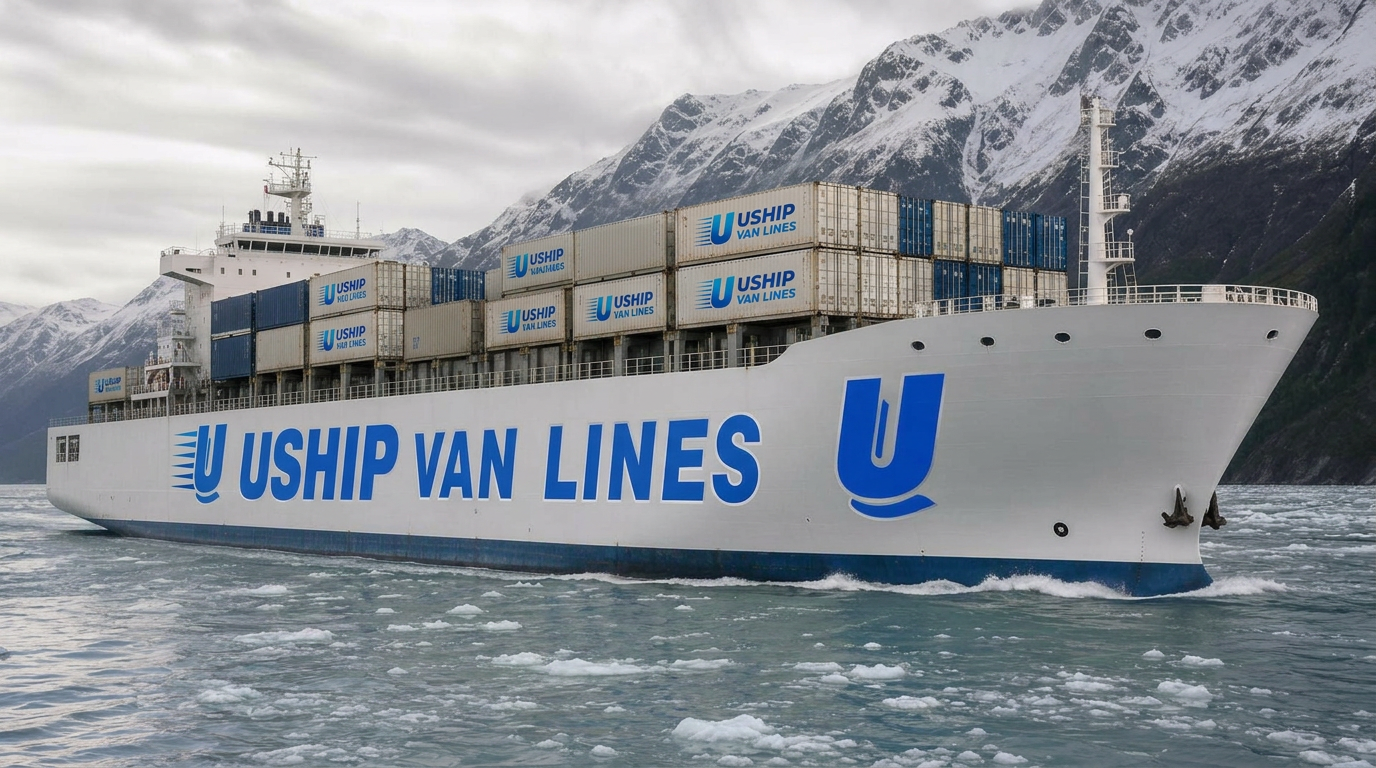
Moving from Alaska to Dayton, OH
Relocating from Alaska to Dayton, Ohio combines two distinct logistics challenges: marine shipping from Alaska's port system and a cross-country overland journey to the Midwest. Whether you're leaving Anchorage, Fairbanks, or the Mat-Su Valley for Dayton's affordable housing market and growing aerospace sector, this route requires specialized coordination that standard moving companies simply can't provide.
Best Alaska & Hawaii Movers, powered by UShip Van Lines, manages the complete Alaska-to-Lower 48 moving process—from barge scheduling out of Anchorage or Whittier through final delivery to your Dayton doorstep. Ready to simplify your long-distance move? Request your free, no-obligation quote and speak with an Alaska moving specialist today.
Route overview
Alaska to Dayton Route Logistics
The Alaska-to-Dayton corridor spans approximately 3,400 miles and requires multimodal transportation. Your household goods travel by truck from your Alaska pickup location to the Port of Anchorage or Whittier, then by marine barge to the Port of Tacoma in Washington State. From Tacoma, items transfer to long-haul trucks for the cross-country journey through Idaho, Montana or Wyoming, South Dakota, Iowa, and into southwestern Ohio.
Dayton sits at the intersection of I-75 and I-70, making final delivery straightforward once shipments reach the Midwest. The city's position in the Miami Valley means no unusual access restrictions, though winter weather coordination between Alaska departure and Ohio arrival windows matters significantly for scheduling.
This route sees consistent year-round demand from military families (Wright-Patterson Air Force Base is a major employer), healthcare professionals, and retirees seeking lower cost of living. Understanding barge schedules, weather windows, and overland transit variables makes the difference between a smooth relocation and costly delays.
How the moving process works
Your Alaska to Dayton Moving Process
-
Initial Survey & Inventory — We conduct a detailed virtual or in-home assessment of your household goods, noting any high-value items, vehicles, and special handling requirements. This inventory determines container sizing and establishes your baseline quote.
-
Barge Scheduling & Port Coordination — We reserve space on the next available barge from Anchorage or Whittier to Tacoma, factoring in seasonal sailing frequency (weekly in summer, every 10–14 days in winter). You'll receive confirmed sailing dates and cut-off times for container loading.
-
Alaska Pickup & Containerization — Professional crews load your belongings into weatherproof marine containers at your Alaska residence. Items are inventoried, padded, and secured for ocean transit. Containers are sealed and transported to the departure port.
-
Marine Transit to Tacoma — Your container sails from Alaska to Washington State, typically 5–7 days at sea. Marine tracking provides estimated arrival windows, and we monitor weather conditions that might affect sailing schedules.
-
Port Processing & Transfer — Once the barge docks in Tacoma, containers clear the port (1–3 business days) and transfer to our long-haul trucking partners. This stage includes customs documentation even for domestic Alaska moves.
-
Cross-Country Overland Transport — Trucks depart Tacoma for the 2,200-mile journey to Dayton, typically 4–6 days of drive time depending on weather and route. We provide tracking updates at major waypoints.
-
Dayton Delivery & Unpacking — Our delivery team contacts you 24–48 hours before arrival to schedule a specific delivery window. Crews unload, place items in designated rooms, and remove packing materials. You inspect and sign off on delivery completion.
Estimated moving costs
Cost Expectations for Alaska to Dayton Moves
A typical 2–3 bedroom household moving from Alaska to Dayton generally ranges from $6,800 to $12,500, with most families paying between $8,500 and $10,200. Studio or 1-bedroom moves average $4,200–$6,800, while larger 4+ bedroom homes can reach $14,000–$18,500 or more.
Key cost factors include:
- Container volume — Measured in linear feet of truck/container space; a 3-bedroom home typically requires 1,200–1,800 cubic feet
- Barge freight rates — Seasonal pricing varies; summer (May–September) sees 15–25% premiums due to peak demand
- Pickup/delivery accessibility — Remote Alaska locations requiring extra mileage or bush plane access add $800–$2,500; Dayton's metro accessibility keeps final-mile costs standard
- Vehicle shipping — Adding a car or truck runs $1,400–$2,200 Anchorage to Dayton, depending on vehicle size
- Packing services — Full professional packing adds $800–$1,800; partial packing (fragiles only) runs $300–$600
- Insurance coverage — Enhanced valuation protection beyond basic $0.60/lb costs 1.5–2.5% of declared value
- Storage needs — If timing gaps exist between Alaska departure and Dayton delivery, climate-controlled storage in Tacoma or en route runs $150–$280/month
We provide detailed, itemized quotes with no hidden fees. Prices are never guaranteed until a formal contract is signed, and final costs reflect actual services rendered.
Estimated transit times
Realistic Transit Timeframes
Door-to-door transit from Alaska to Dayton typically requires 16–28 days, broken down as follows:
Alaska Pickup to Port: 1–3 days depending on your location. Anchorage and Wasilla pickups usually load and deliver to port same-day or next-day. Fairbanks adds 1–2 days. Kenai Peninsula or remote locations may add 2–4 days.
Barge Sailing: 5–7 days at sea from Alaska ports to Tacoma. Actual sailing time is consistent, but barge departure frequency varies—weekly sailings in peak season (May–September), every 10–14 days in shoulder/winter months (October–April).
Port Processing in Tacoma: 2–4 business days for container offload, customs clearance (even domestic shipments require documentation), and transfer to trucking carriers. Occasional port congestion can extend this to 5–6 days.
Overland Transit Tacoma to Dayton: 5–7 days of road time covering 2,200 miles through mountain passes and plains. Winter weather through Montana/Wyoming or South Dakota can add 1–3 days if drivers must wait out storms.
Delivery Scheduling: Once the truck reaches the Dayton area, you'll receive 24–48 hours' notice to coordinate final delivery.
Plan for a 4-week window from your Alaska pack date to Dayton delivery. Expedited service can sometimes compress timelines by 3–5 days for an additional 20–30% cost premium, but barge schedules remain the limiting factor.
Regional logistics
Alaska-Specific Moving Logistics
Port Options: Most Alaska shipments route through the Port of Anchorage or the Port of Whittier (60 miles south of Anchorage, accessed via tunnel). Whittier often offers better winter access but requires precise timing with tunnel schedules (alternates direction hourly). Fairbanks and North Pole shipments truck 360 miles to Anchorage ports.
Vehicle Shipping: If you're shipping a car or truck alongside household goods, vehicles travel in the same barge container or via roll-on/roll-off (RoRo) service. RoRo is more economical ($1,200–$1,600 Anchorage to Tacoma) but requires you to drive the vehicle to port. Door-to-door vehicle shipping runs $1,800–$2,400 total to Dayton. Vehicles must be clean (Alaska agriculture inspection) and no more than ¼ tank of fuel for barge transport.
Documentation: Even though Alaska-to-Lower 48 moves are domestic, barge shipments require cargo manifests and customs-style paperwork. We handle all filing. Military members on PCS orders need complete orders copies. If you're bringing firearms, declare them on inventory sheets (legal for household goods shipment; ammunition restrictions apply).
Remote & Bush Locations: If you're moving from communities not on the road system (Bethel, Nome, Kotzebue, etc.), additional logistics include bush plane or seasonal barge to a road-connected hub, then standard trucking to Anchorage ports. These moves require 2–3 weeks extra lead time and add $2,500–$6,000+ to costs.
Storage Scenarios: If your Dayton housing isn't ready, we offer climate-controlled storage in Tacoma (convenient break point) or in Dayton itself. Tacoma storage makes sense if you're waiting weeks; Dayton storage works for shorter gaps (days to 2 weeks).
Prohibited Items: Alaska moves cannot include ammunition, propane tanks, opened food items, or hazardous materials on the barge. Perishables should be consumed, donated, or discarded before packing day.
Seasonal considerations
Seasonal Planning for Your Alaska Move
Spring (March–May): Ice breakup affects early-season barge schedules. Sailings become more frequent by mid-April, but weather delays are still common. Alaska roads transition from winter conditions, and Dayton weather moderates, making late April through May an excellent booking window. Rates begin climbing toward summer peaks in May.
Summer (June–August): Peak moving season for Alaska with the most frequent barge sailings (weekly) and longest daylight for packing. However, this is also the most expensive period, with barge rates 20–30% above winter baselines. Book 6–8 weeks ahead to secure space. Dayton delivery conditions are ideal with warm, dry weather.
Fall (September–November): Shoulder season offers good value. Barge frequency decreases to every 10–12 days by October, but rates drop 15–20% from summer peaks. Weather remains cooperative in Alaska through mid-September. Coordinate carefully if you need Dayton delivery before Thanksgiving, as timing gets tighter. Midwest autumn weather is generally favorable.
Winter (December–February): Lowest rates of the year (25–35% below summer), but longest transit times due to reduced barge schedules (every 12–14 days) and potential weather delays at both ends. Alaska winter conditions can complicate pickups from outlying areas. Winter storms across Montana, Wyoming, or Iowa may delay overland transit by 2–4 days. Best for flexible timelines and budget-conscious movers.
Regardless of season, book at least 4–6 weeks ahead. Summer and military PCS season (May–August) require 8–10 weeks for guaranteed space.
Why choose Best Alaska & Hawaii Movers
Why Best Alaska & Hawaii Movers for Your Alaska-to-Dayton Move
-
Alaska Specialists: We handle Alaska logistics daily—barge scheduling, port coordination, remote pickups, and weather contingencies that general movers don't understand. Our team knows the difference between summer and winter sailing schedules and plans accordingly.
-
Single-Source Accountability: You work with one coordinator from Alaska inventory through Dayton delivery. No handoffs between disconnected companies. We manage the barge carrier, port agents, and overland trucking as a unified operation powered by UShip Van Lines' nationwide network.
-
Transparent Pricing: Detailed, itemized quotes with every fee explained. No surprise charges at delivery. You'll know exactly what you're paying for barge freight, overland transport, and any additional services before you commit.
-
Flexible Scheduling: We accommodate Alaska's unique timing challenges—last-minute military orders, seasonal employment transitions, or weather delays. Our customer service team proactively communicates any schedule changes.
-
Comprehensive Insurance Options: Basic liability is included; we offer enhanced full-value protection plans tailored to high-value items common in Alaska households (hunting equipment, outdoor gear, collectibles).