
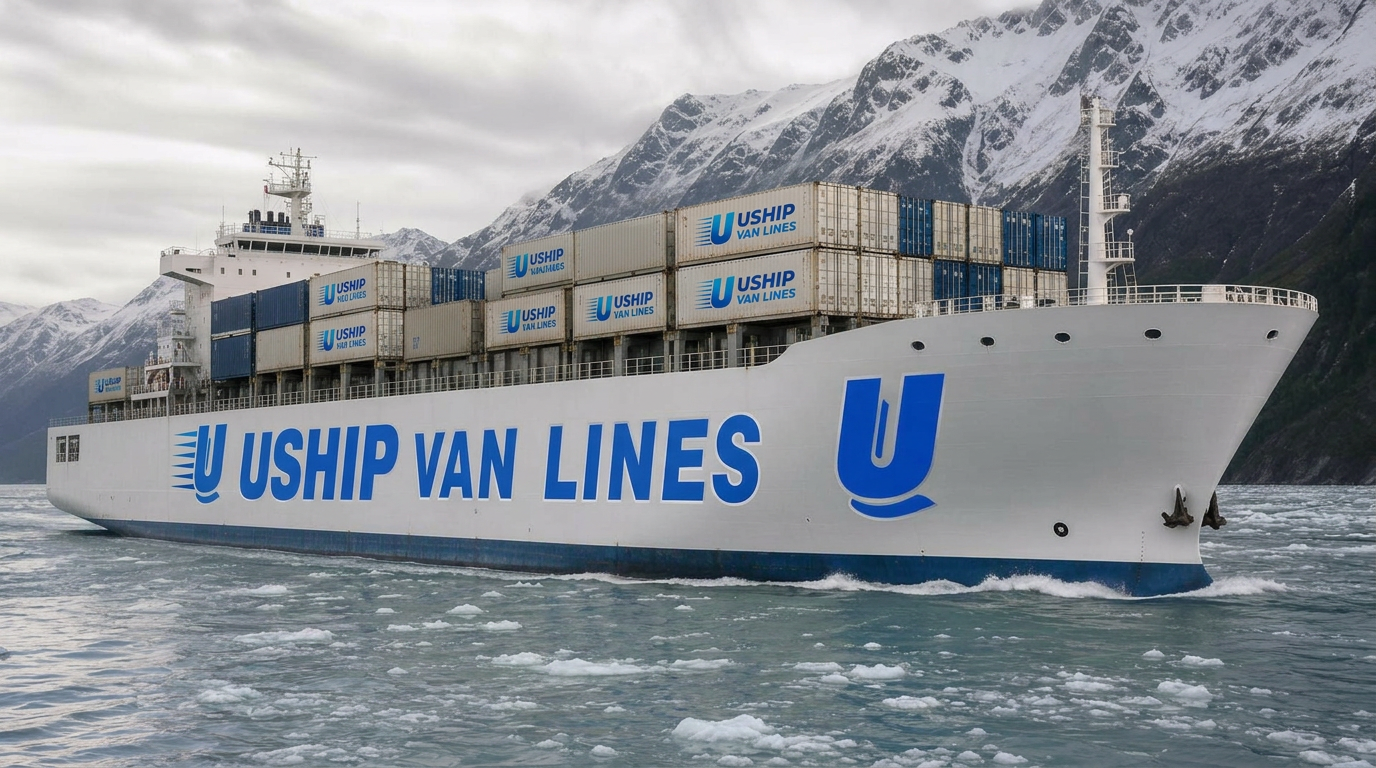
Moving from Alaska to Melbourne, FL
Relocating from Alaska to Melbourne, Florida means trading northern lights and frontier living for Space Coast sunshine and Atlantic beaches. This unique long-distance move combines barge shipping from Alaska's ports, overland trucking through the Lower 48, and final delivery to Florida's eastern coast—a logistical journey spanning more than 4,000 miles and multiple transportation modes.
Best Alaska & Hawaii Movers, powered by UShip Van Lines, specializes in these complex Alaska-to-Florida relocations. Our team coordinates every phase—from pickup in Anchorage, Fairbanks, the Mat-Su Valley, Kenai Peninsula, or remote bush communities through barge transit via Tacoma and cross-country delivery to Melbourne. Ready to start planning? Request your free, no-obligation moving quote today.
Route overview
The Alaska to Melbourne Route
The Alaska-to-Melbourne corridor presents unique moving challenges that standard long-distance carriers don't typically handle. Your household goods travel by truck to Port of Anchorage or Whittier, sail via barge to the Port of Tacoma (approximately 5–7 days on water), then transfer to long-haul trucks for the 3,200-mile overland journey across the continental United States to Florida's Brevard County.
Melbourne sits on Florida's Space Coast, roughly 70 miles southeast of Orlando and just south of the Kennedy Space Center. The final delivery leg navigates Interstate 95 along Florida's Atlantic corridor, then local roads into Melbourne's residential neighborhoods, beachfront communities like Indialantic and Melbourne Beach, or nearby areas such as Palm Bay and Viera.
This route requires careful coordination of maritime shipping schedules, customs documentation (Alaska barges are domestic but require specific manifests), and timing around Florida's hurricane season and Alaska's winter weather windows. Experienced Alaska movers understand these variables and build realistic timelines that account for weather delays, barge sailing schedules, and the realities of cross-country trucking.
How the moving process works
How Your Alaska to Melbourne Move Works
-
Free Consultation & Survey – Our moving specialists conduct a detailed inventory of your household goods, discuss special items (vehicles, boats, oversized furniture), and provide a transparent cost estimate based on volume, weight, and services requested. Virtual surveys available for most Alaska locations.
-
Strategic Scheduling – We coordinate your move around Alaska barge sailing schedules (typically weekly departures from Anchorage/Whittier to Tacoma May–October, reduced frequency November–April) and your Melbourne delivery window. Lead time of 4–8 weeks recommended for optimal scheduling.
-
Alaska Pickup & Packing – Professional crews load your belongings at your Alaska residence, whether that's a home in Eagle River, an apartment in Fairbanks, or a cabin accessible only by snow machine in winter. Full-service packing, partial packing, or labor-only options available.
-
Barge Transit to Tacoma – Your shipment travels via Alaska Marine Highway barge service or commercial freight barge to the Port of Tacoma. Items are containerized and secured for the 5–7 day ocean voyage through Inside Passage waters.
-
Transfer & Cross-Country Transport – In Tacoma, your goods transfer to long-haul semi-trucks for the journey across Washington, Idaho, Montana (or southern route via Nevada/Arizona), through the Midwest and South to Florida. Transit time: 7–12 days depending on routing and weather.
-
Final Delivery to Melbourne – Upon arrival in Florida, your shipment travels I-95 to the Melbourne area. Our delivery team contacts you 24–48 hours in advance to schedule placement, unloading, and unpacking services if requested.
-
Post-Move Support – We follow up to ensure your satisfaction, address any claims promptly, and provide guidance on settling into your new Melbourne community.
Estimated moving costs
What to Expect: Moving Costs
A typical 2–3 bedroom household moving from Alaska to Melbourne, FL generally ranges from $6,800 to $14,500, depending on several key factors. Studio or 1-bedroom moves may start around $4,200–$5,800, while larger 4+ bedroom homes can exceed $18,000.
Primary cost drivers include:
- Volume and weight – Alaska moves are priced by cubic feet or weight (per hundredweight). A 2-bedroom apartment averages 800–1,200 cubic feet; a 3-bedroom house runs 1,400–2,200 cubic feet.
- Barge shipping fees – Ocean freight from Alaska ports to Tacoma adds significant cost compared to standard Lower 48 moves. Rates fluctuate seasonally and by cargo volume.
- Distance – The 3,200+ road miles from Tacoma to Melbourne factor into fuel, driver time, and equipment costs.
- Packing services – Professional packing runs $800–$2,400 depending on home size and specialty items (china, artwork, electronics).
- Accessibility – Remote Alaska pickups (bush communities, off-road-system locations) requiring small planes, barges, or winter ice-road access add premium charges. Melbourne-area deliveries to gated communities, high-rises, or locations requiring shuttles also impact final cost.
- Vehicle shipping – Adding a car or truck to your move typically costs $1,800–$3,200 Alaska to Florida. Vehicles usually ship separately via auto transport carriers.
- Storage – If your Melbourne residence isn't ready, temporary storage in Tacoma or Florida warehouses runs $150–$400 per month.
- Timing – Peak summer season (June–August) commands higher rates due to demand and optimal barge schedules. Off-season winter moves may offer modest savings but face weather delays.
We never guarantee exact prices without a formal quote. Every move is unique. Request your personalized estimate to get accurate numbers based on your specific inventory, services, and timeline.
Estimated transit times
Transit Time: Alaska to Melbourne, FL
Door-to-door transit for Alaska to Melbourne moves typically requires 18–28 days, broken down by transportation leg:
Pickup to Port (1–3 days): Your goods are loaded in Alaska and trucked to Port of Anchorage, Whittier, or in rare cases other departure points. Bush locations may require additional days for lightering or air freight to the main port.
Barge Transit (5–7 days): The ocean voyage from Alaska to the Port of Tacoma takes roughly one week under normal conditions. Winter storms or mechanical issues can extend this to 8–10 days.
Port Processing & Transfer (2–4 days): In Tacoma, containers are offloaded, cleared through documentation, and transferred to over-the-road trucking equipment. This staging phase is critical and occasionally extends during peak shipping periods.
Cross-Country Trucking (7–12 days): The Tacoma-to-Melbourne highway journey covers approximately 3,200 miles. Factors affecting duration include routing (northern tier via I-90/I-94 or southern via I-40/I-10), weather (mountain passes in winter, summer heat in desert states), mandatory driver rest periods, and truck maintenance.
Final Delivery Window (1–2 days): Once your shipment reaches the Melbourne area, we schedule delivery within your availability window, typically offering morning or afternoon time slots.
Plan conservatively. Weather delays in Alaska (winter storms closing highways, ice fog grounding flights), barge schedule changes, truck breakdowns, and Florida hurricane evacuations can all extend timelines. We recommend padding your schedule by 5–7 days and arranging temporary housing or flexible lease start dates in Melbourne.
Regional logistics
Alaska-Specific Moving Logistics
Port Operations: Most Alaska household moves depart from the Port of Anchorage or Whittier. Containers are loaded at your residence, sealed, and transported to the port for barge loading. The Alaska Marine Highway System and commercial freight barges (Totem Ocean Trailer Express/TOTE, Lynden Transport) operate regular routes to Tacoma. Your mover coordinates manifests, cargo documentation, and sailing schedules.
Bush & Remote Locations: If you're moving from off-road-system communities (Nome, Bethel, Kotzebue, Dillingham, Kodiak Island villages, Southeast Alaska islands), your goods may require lighterage (barge-to-barge transfer), small plane freight to a hub community, or winter ice road/river transport. These logistics add time (1–2 weeks) and cost (sometimes 40–60% premiums) but are routine for experienced Alaska movers.
Vehicle Shipping: Cars and trucks typically ship separately via auto transport carriers. Alaska to Florida vehicle shipping runs $1,800–$3,200 and takes 12–18 days. Alternatively, vehicles can sometimes accompany household goods on the same barge to Tacoma, then ship separately overland—discuss options during your quote.
Restricted Items: Alaska moves face standard moving industry restrictions (hazardous materials, perishables, plants, ammunition) plus specific considerations. Bear spray, fuel canisters, and hunting ammunition cannot ship. Frozen fish and game must travel via specialized refrigerated freight, not household goods shipments. Propane tanks must be purged and certified.
Customs & Documentation: Though Alaska-to-Lower-48 moves are domestic, barge shipments require detailed manifests and sometimes agricultural inspections. Florida has strict regulations on plant materials and soil. Your mover handles documentation, but be prepared to provide detailed inventories.
Storage Options: If your Melbourne home isn't ready or you need interim storage between Alaska departure and Florida arrival, we offer warehouse storage in Tacoma or Florida facilities. Climate-controlled units recommended for electronics, wooden furniture, and sensitive items given Florida's humidity.
Final Mile in Melbourne: Melbourne-area deliveries are generally straightforward via I-95 and local roads. Barrier island communities (Indialantic, Melbourne Beach, Satellite Beach) cross causeways with height/weight limits for large trucks; shuttle service may be required for oversized loads. Gated communities and HOAs sometimes require advance delivery registration.
Seasonal considerations
Best Times to Move: Seasonal Factors
Summer (June–August): Peak moving season offers the most frequent barge sailings (often 2–3 per week from Anchorage), optimal weather for Alaska road access, and minimal risk of winter delays. However, demand is highest, prices peak, and you'll need to book 6–8 weeks in advance. Melbourne summers are hot and humid (90°F+), and Atlantic hurricane season runs June 1–November 30.
Fall (September–November): Excellent shoulder season with good weather in Alaska (though snow arrives by October in interior regions), continued regular barge service through October, and reduced demand leading to better pricing. Melbourne enjoys pleasant fall weather with lower humidity. Hurricane risk decreases significantly after mid-October.
Winter (December–February): Alaska's most challenging moving season. Barge service to Tacoma reduces to 1–2 sailings per month or pauses entirely for smaller routes. Road conditions can be treacherous (ice, extreme cold, limited daylight), and bush communities may be accessible only by snow machine or small plane. However, prices drop 15–25%, and scheduling is very flexible. Melbourne winter weather is ideal (60s–70s), making this a comfortable arrival season despite Alaska departure challenges.
Spring (March–May): Transition period as barge schedules ramp up (full service typically resumes by May) and Alaska thaws. March–April can bring unpredictable weather—breakup season means muddy, impassable roads in rural areas. May is increasingly popular as Alaska warms and Melbourne's beautiful spring weather arrives before summer heat. Moderate pricing and improving availability.
Bottom line: If flexibility allows, late April through early June or September through mid-October offer the best balance of weather, logistics, and value. Winter moves are feasible but require extra patience and contingency planning.
Why choose Best Alaska & Hawaii Movers
Why Choose Best Alaska & Hawaii Movers
-
Alaska Specialists, Not Generalists – We focus exclusively on Alaska and Hawaii relocations, understanding the unique barge logistics, seasonal weather challenges, and documentation requirements that standard moving companies don't handle. Our team knows the difference between moving from Anchorage versus Utqiaġvik, and plans accordingly.
-
Powered by UShip Van Lines Infrastructure – Our partnership with UShip Van Lines gives you access to a nationwide network of vetted carriers, competitive pricing through volume logistics, and technology platforms that keep you updated throughout your move. You get boutique Alaska expertise backed by enterprise-grade systems.
-
Transparent Pricing, Zero Surprises – We provide detailed, itemized quotes explaining exactly what you're paying for—barge fees, road miles, labor, packing materials, insurance. No hidden charges, no bait-and-switch tactics. If conditions change (access issues, added items), we discuss adjustments before proceeding.
-
End-to-End Coordination – From your first phone call through final delivery in Melbourne, one dedicated move coordinator manages your shipment. We handle barge bookings, trucking dispatch, customs paperwork, storage if needed, and delivery scheduling—you have a single point of contact, not a maze of subcontractors.
-
Flexible Service Levels – Choose full-service white-glove packing and unpacking, partial packing for fragile items only, or labor-only loading if you prefer to pack yourself. We tailor services to your budget and preferences, never upselling unnecessary add-ons.