
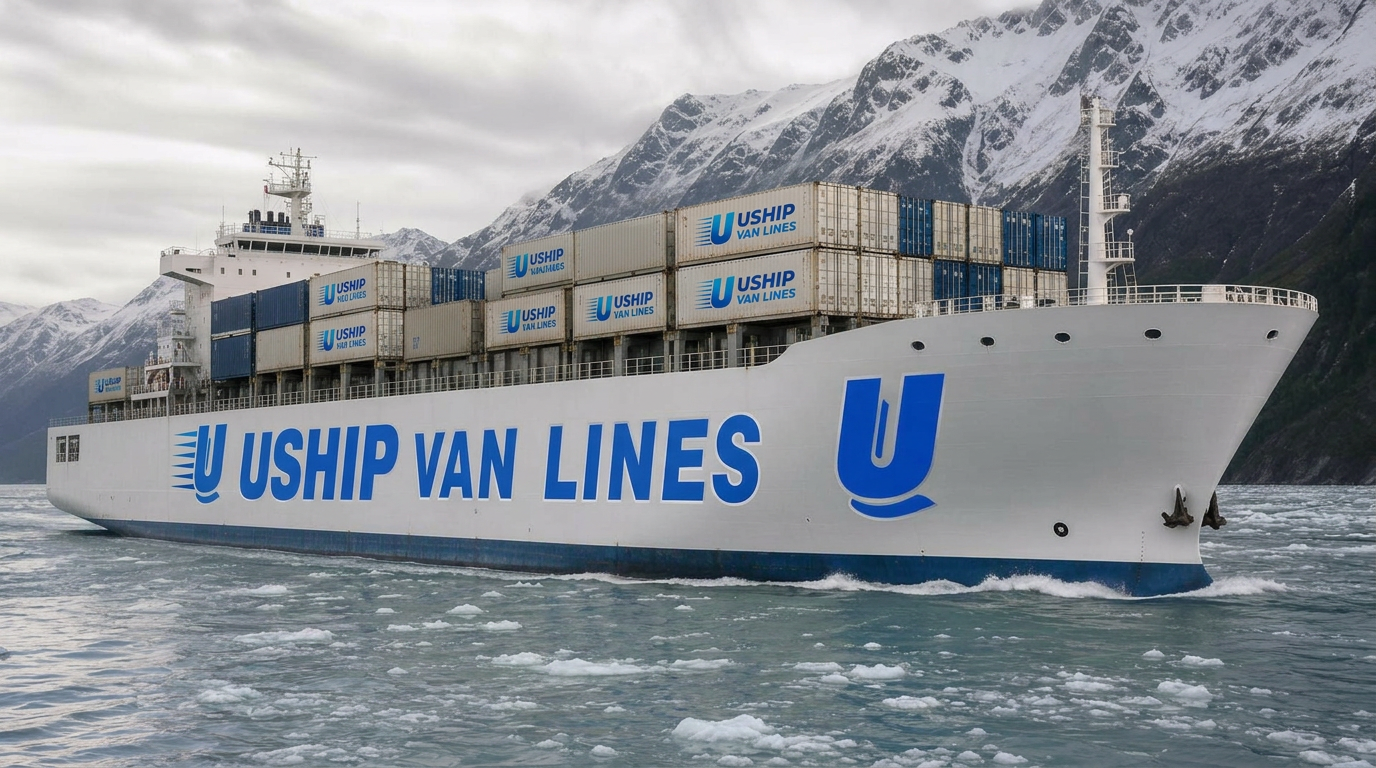
Moving from Appleton, WI to Alaska
Moving from Appleton, WI to Alaska represents one of the most logistically complex residential relocations in North America. Your household goods will travel roughly 2,800 miles overland from the Fox Cities to the Pacific Northwest, then ride commercial shipping barges through the Inside Passage to reach Anchorage or other Alaska ports. This multi-modal journey requires specialized carriers who understand both long-haul trucking and Alaska marine shipping regulations.
Best Alaska & Hawaii Movers, powered by UShip Van Lines, coordinates every phase of your Appleton-to-Alaska move—from loading your Wisconsin home through final delivery to your new address in Anchorage, Fairbanks, the Mat-Su Valley, or beyond. Our network manages truck transport to Seattle/Tacoma consolidation facilities, barge booking with Alaska Marine Lines or other carriers, customs documentation, and last-mile delivery across Alaska's unique terrain. Ready to simplify this complex move? Request your detailed quote today and speak with a coordinator who specializes in Wisconsin-to-Alaska relocations.
Route overview
Understanding the Appleton to Alaska Moving Route
Your belongings depart Appleton and travel west across Wisconsin, Minnesota, and the northern plains states before reaching the Interstate 90 or Interstate 94 corridors. From there, trucks follow I-90 through South Dakota, Montana, and Idaho, eventually reaching Washington State. The overland segment concludes at port consolidation warehouses in Tacoma or Seattle, where household goods are containerized and loaded onto northbound barges.
Barges depart Tacoma weekly during peak season (May–September) and less frequently in winter months, sailing through Puget Sound and the Inside Passage—a protected waterway threading between mainland British Columbia and coastal islands. The voyage covers roughly 1,400 nautical miles to the Port of Anchorage, typically taking 5–7 days at sea. Upon arrival in Alaska, containers are unloaded, cleared through any required inspections, and transferred to local delivery trucks for final placement at your destination address.
Alaska's road network serves Anchorage, the Mat-Su Valley (Wasilla, Palmer), Fairbanks, Kenai Peninsula communities, and a handful of smaller highway-connected towns. Off-road-system locations like Juneau, Ketchikan, Nome, Kodiak, or bush villages require additional small-plane or ferry connections, adding complexity and cost. Most Appleton-to-Alaska moves target road-accessible cities, but understanding your final destination's accessibility is critical during planning.
How the moving process works
Step-by-Step Moving Process from Appleton, WI to Alaska
-
Initial consultation and route planning – Contact Best Alaska & Hawaii Movers for a virtual or in-home survey of your Appleton residence. We'll assess your inventory, discuss destination details (exact Alaska address, access constraints), and explain barge sailing schedules. You'll receive a binding or not-to-exceed quote covering all legs of the journey.
-
Pre-move preparation and restricted items review – Alaska and maritime carriers prohibit hazardous materials (paint, propane, ammunition, certain cleaning chemicals) and enforce strict rules on perishables, plants, and pets. We provide a detailed checklist so you can donate, dispose of, or personally transport restricted goods. This is also the time to decide whether to ship vehicles separately on auto carriers or drive them via the Alaska-Canada Highway.
-
Loading and Wisconsin departure – Our crew arrives at your Appleton home with a long-distance moving truck. Furniture is disassembled, wrapped, and loaded according to a detailed inventory. High-value items receive extra padding. The truck departs for the Pacific Northwest, typically a 3–4 day drive to reach Tacoma consolidation facilities.
-
Tacoma port consolidation and containerization – At the Tacoma warehouse, your household goods are transferred into 20-foot or 40-foot ocean-rated shipping containers (often shared with other Alaska-bound shipments to reduce costs). Containers are sealed, labeled, and scheduled onto the next available barge. You receive container numbers and sailing dates for tracking.
-
Barge transit through the Inside Passage – The container boards a commercial barge operated by Alaska Marine Lines, Span Alaska, or similar carriers. The voyage takes 5–7 days, traveling through protected waters with minimal weather disruption during summer. Winter crossings can face delays due to storms or reduced sailing frequency.
-
Port of Anchorage arrival and customs clearance – Upon docking in Anchorage, containers are offloaded and undergo any required Alaska agricultural or customs inspections (rare for domestic moves, but state officials sometimes check for invasive pests). Cleared containers are delivered to our Alaska partner's warehouse.
-
Final delivery and unpacking in Alaska – A local delivery truck transports your container to your new home in Anchorage, Fairbanks, Mat-Su, or other road-accessible location. The crew unloads, reassembles furniture, and places items according to your directions. You inspect the shipment, note any damage on the inventory sheet, and sign off on delivery completion. Most Alaska deliveries occur within 1–3 days of port arrival, though remote areas may require additional transit time.
Estimated moving costs
Realistic Cost Estimates for Appleton, WI to Alaska Moves
A typical 2–3 bedroom household moving from Appleton to Anchorage generally costs $8,500–$14,000 for full-service door-to-door transport. Studio or 1-bedroom moves may range $5,000–$8,000, while large 4+ bedroom homes can exceed $16,000–$22,000. These figures assume standard service during peak summer season; actual costs depend on precise weight, destination, service level, and timing.
Key cost drivers include:
- Shipment weight and volume – Alaska moves are priced primarily by weight (per-pound rates) or container space. A 3-bedroom home averages 8,000–12,000 pounds. Heavier loads or bulky items (pianos, workshop equipment) increase costs proportionally.
- Overland truck distance – Appleton to Tacoma spans roughly 1,800 road miles. Fuel surcharges, driver labor, and truck wear factor into the overland leg, typically 30–40% of total cost.
- Barge shipping rates – Marine freight charges fluctuate based on fuel prices, seasonal demand, and container availability. Summer peak season commands premium rates; winter sailings may offer modest discounts but come with schedule uncertainty.
- Final Alaska delivery distance – Anchorage deliveries are straightforward. Fairbanks (360 miles north) adds $800–$1,500. Kenai Peninsula or remote highway locations add $500–$2,000 depending on distance and road conditions. Off-road-system communities require air or ferry charters, dramatically increasing costs.
- Additional services – Full packing ($1,200–$2,500), vehicle shipping ($1,800–$3,000 per car via auto transport or barge), storage in Tacoma or Anchorage ($150–$300/month), and specialty handling (antiques, fine art) all add to the base quote.
- Insurance and valuation – Basic carrier liability covers $0.60/pound/article. Full-value protection costs 1–2% of declared shipment value and covers repair or replacement at current cost.
Best Alaska & Hawaii Movers provides transparent, itemized quotes with no hidden fees. We never guarantee prices without a detailed inventory review, but our estimates reflect real-world Alaska moving costs based on thousands of completed shipments.
Estimated transit times
Expected Transit Times from Appleton to Alaska
Door-to-door delivery from Appleton, WI to Anchorage typically requires 14–24 days under normal summer conditions. Winter moves may extend to 21–35 days due to reduced barge frequency and weather delays.
Transit breakdown by leg:
- Appleton to Tacoma (overland truck) – 3–5 days. Trucks drive Interstate corridors with mandatory rest stops. Expedited service can shorten this to 3 days; standard service allows 4–5 days for consolidation scheduling.
- Tacoma warehouse consolidation – 2–7 days. Your goods wait for the next available barge sailing and container space. Summer sailings depart 2–3 times weekly; winter may be once weekly or biweekly. Booking in advance minimizes wait time.
- Barge sailing (Tacoma to Anchorage) – 5–7 days at sea. The Inside Passage route is relatively protected, so weather delays are uncommon in summer. Winter storms can add 1–3 days.
- Anchorage port offload and clearance – 1–2 days. Containers are unloaded by port stevedores and transferred to local delivery warehouses. Agricultural inspections (if required) are usually same-day.
- Final Alaska delivery – 1–3 days. Anchorage-area deliveries often occur within 24–48 hours of port clearance. Fairbanks, Mat-Su, or Kenai deliveries add 1–2 days for truck scheduling and road travel.
Example timelines:
- Appleton to Anchorage (summer peak): Load June 1 → Tacoma arrival June 5 → Barge departs June 8 → Port arrival June 14 → Delivery June 16 = 15 days total.
- Appleton to Fairbanks (winter): Load January 10 → Tacoma arrival January 15 → Barge departs January 22 → Port arrival January 30 → Fairbanks delivery February 2 = 23 days total.
Unexpected delays (truck breakdowns, port labor actions, severe weather) are rare but possible. We provide tracking updates at each transition and proactive communication if schedules shift.
Regional logistics
Alaska-Specific Logistics and Considerations
Port operations and barge carriers
The Port of Anchorage handles the vast majority of Alaska-bound household goods. Tacoma-based consolidators work with Alaska Marine Lines, Span Alaska, and Lynden Transport to schedule container space. You won't interact directly with the shipping line—Best Alaska & Hawaii Movers manages all booking, documentation, and tracking. Alternative ports (Seattle, Prince Rupert BC) are occasionally used for specialty routes but Tacoma offers the most frequent service.
Vehicle shipping options
Many Wisconsin-to-Alaska movers ship one vehicle via barge ($1,800–$2,500 per car, 10–14 days port-to-port) and drive another via the Alaska-Canada Highway (ALCAN). The 2,250-mile drive from Appleton to Anchorage via Canada takes 5–7 days and requires passport, vehicle registration, proof of insurance, and rabies vaccination certificates if traveling with pets. Winter ALCAN travel is challenging (limited services, icy roads); summer is scenic but plan for rough gravel stretches in northern BC and Yukon. Alternatively, ship all vehicles and fly to Alaska—often simpler for families.
Restricted and regulated items
Alaska enforces strict agricultural rules to protect against invasive species. Fresh fruits, vegetables, plants, soil, and untreated wood products may be inspected or rejected at the Port of Anchorage. Discard perishables before packing. Firearms are legal to transport (declare them, pack securely), but ammunition must travel separately or be purchased in Alaska. Propane tanks, paint, and hazardous chemicals cannot travel on barges—dispose of or donate these in Appleton.
Last-mile delivery challenges
Anchorage, Fairbanks, Wasilla, Palmer, Soldotna, and Kenai are served by standard delivery trucks. Smaller highway towns (Tok, Glennallen, Homer) require scheduling coordination but are reachable. Off-road-system communities (Juneau, Sitchikan, Bethel, Nome, Kodiak Island) require container offload in Anchorage and transloading onto small aircraft, ferries, or separate barges, adding $2,000–$10,000+ depending on destination. If your final Alaska address is remote, disclose this during the quote phase—it fundamentally changes logistics and cost.
Paperwork and customs
Alaska is a U.S. state, so no customs duties apply. However, if your truck transits Canada (some overland routes use Canadian highways briefly), drivers carry customs paperwork for the truck, not your household goods. You won't be involved. Alaska agricultural inspection is the only checkpoint, typically a visual container scan upon Anchorage arrival. Keep your inventory list and insurance documents accessible in case of rare damage claims.
Storage options
If your Alaska home isn't ready upon shipment arrival, Best Alaska & Hawaii Movers offers short-term container storage in Anchorage ($150–$250/month) or Tacoma ($125–$200/month). Storage-in-transit is common for military relocations or new construction delays. We'll coordinate delivery once you're ready, usually within 30–90 days.
Seasonal considerations
How Seasons Affect Your Appleton to Alaska Move
Summer (May–September): Peak moving season
Summer offers the most reliable barge schedules, with 2–3 weekly sailings from Tacoma and calm Inside Passage conditions. Road access to all Alaska highway communities is excellent, and delivery crews operate extended hours. However, summer is peak demand: book 6–8 weeks ahead to secure preferred dates and avoid premium pricing. Appleton's humid summer weather means proper climate control during packing (prevent mold on upholstered items). Alaska's long daylight hours (20+ hours in June) facilitate efficient unloading.
Fall (October–November): Shoulder season with mixed conditions
Barge frequency begins to decline in October, dropping to 1–2 weekly sailings by November. Early snow in Alaska's Interior (Fairbanks, Denali Highway) can complicate deliveries, though Anchorage and coastal areas remain accessible. Costs may drop 5–10% compared to summer peaks. Appleton's autumn is ideal for packing (cool, dry), and you'll beat the holiday rush. Book 4–6 weeks ahead.
Winter (December–March): Lowest frequency, highest risk of delays
Winter barges sail once weekly or less, and storms in the Gulf of Alaska occasionally force schedule changes. Road conditions in Interior Alaska can be treacherous (Fairbanks temps drop to -40°F, requiring winterized delivery trucks). However, winter moves cost 10–15% less, and availability is high. If your Appleton lease ends mid-winter or you're relocating for an Alaska job start date, plan for a 21–28 day window and consider short-term storage in Anchorage if delivery timing is uncertain. Protect electronics and wooden furniture from extreme temperature swings during the final Alaska leg.
Spring (April–May): Transition to peak season
Barge schedules ramp up in April as shipping lines anticipate summer demand. Alaska's "breakup" season brings muddy, unstable rural roads, but highway routes to Anchorage, Fairbanks, and Mat-Su remain clear. Spring is an excellent compromise: better availability than summer, improving weather, and moderate pricing. Book 4–6 weeks ahead. Appleton's spring thaw means watch for basement moisture if storing items before the move.
Why choose Best Alaska & Hawaii Movers
Why Choose Best Alaska & Hawaii Movers for Your Appleton to Alaska Move
-
Specialized Alaska logistics expertise – Powered by UShip Van Lines, we focus exclusively on Alaska and Hawaii relocations. Our team understands barge schedules, port operations, Alaska road conditions, and remote delivery challenges better than general moving companies attempting these routes as one-offs.
-
Single-point coordination across all move phases – You'll work with one dedicated coordinator from Appleton packing through Alaska delivery. We manage the truck carrier, port consolidator, barge booking, and final delivery crew, eliminating the confusion of dealing with multiple vendors.
-
Transparent pricing with no hidden fees – Our quotes itemize every cost: overland truck, barge freight, port handling, Alaska delivery mileage, and optional services. We explain what drives costs and offer alternatives (shared container vs. exclusive use, standard vs. expedited barge) so you control your budget.
-
Flexible scheduling around Alaska barge sailings – We book your move to align with optimal barge departure dates, minimizing Tacoma warehouse wait time. Summer moves get priority scheduling; winter moves include realistic timelines and contingency planning.
-
Proactive communication and shipment tracking – Receive updates when your truck departs Appleton, arrives in Tacoma, container loads onto the barge, barge docks in Anchorage, and delivery truck departs for your home. Access container tracking numbers and direct coordinator contact throughout the journey.
-
Comprehensive insurance and claims support – We offer full-value protection plans and guide you through the claims process if damage occurs. Our Alaska delivery partners are vetted for careful handling and professional service, reducing the likelihood of issues.