
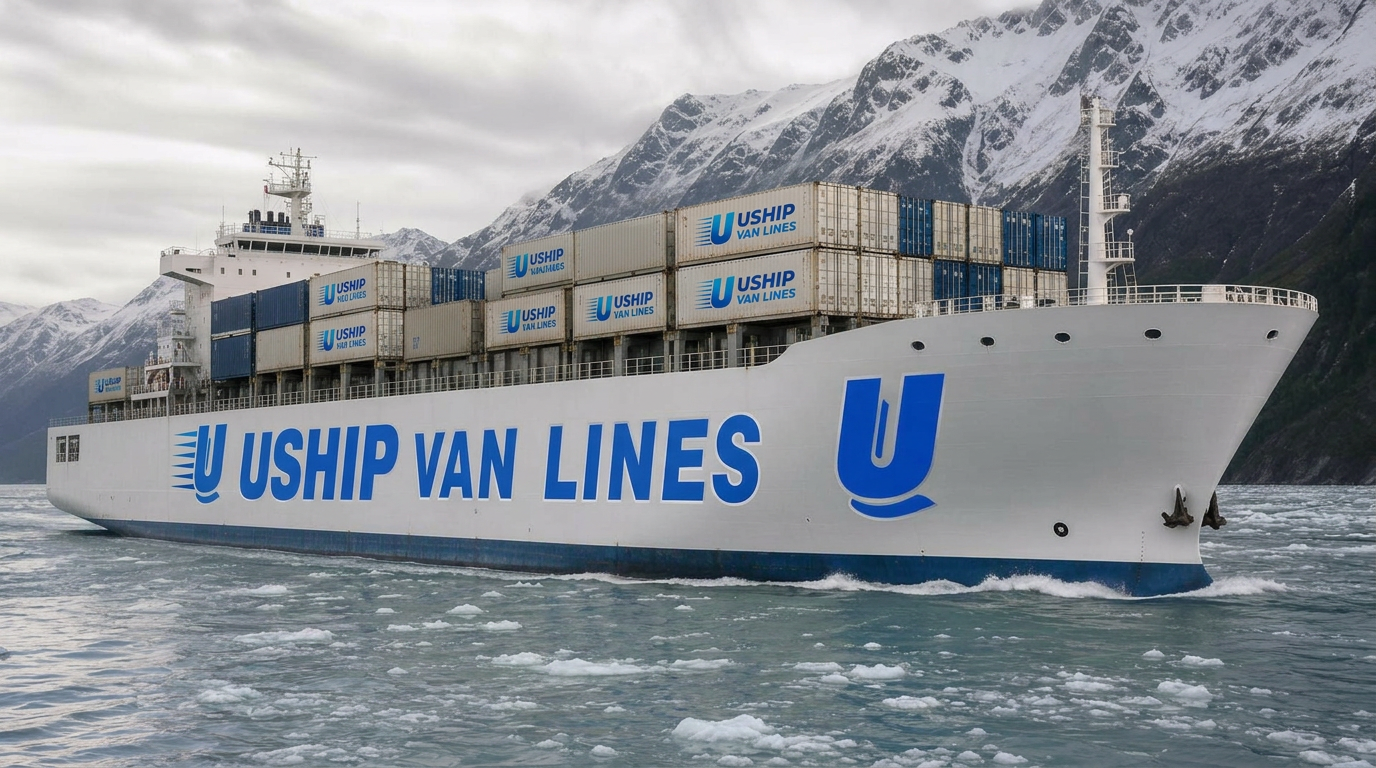
Moving from Miramar, FL to Alaska
Relocating from Miramar, Florida to Alaska transforms a 4,500-mile journey into a multi-modal adventure involving over-the-road transport, ocean barge service through the Port of Tacoma, and final delivery across the Last Frontier. Whether you're headed to Anchorage, Fairbanks, the Matanuska-Susitna Valley, or remote communities, this route demands specialized logistics, seasonal planning, and carriers experienced in Alaska's unique requirements.
Best Alaska & Hawaii Movers, powered by UShip Van Lines, coordinates every leg—from your Miramar residence through cross-country highway transit, Tacoma port consolidation, barge sailing, Port of Anchorage unloading, and last-mile delivery to your Alaska destination. Request your free, no-obligation quote today to start planning your northbound move with confidence.
Route overview
Route Overview: Miramar, FL to Alaska
Moving from Miramar to Alaska follows a carefully orchestrated path: your household goods are loaded in South Florida, trucked approximately 3,400 miles across the southern and northwestern United States to the Port of Tacoma, Washington, then consolidated onto Alaska Marine Lines or TOTE Maritime barges for the 1,500-nautical-mile voyage to the Port of Anchorage. From Anchorage, shipments either deliver locally or transfer to smaller trucks for communities like Fairbanks (358 miles north), Wasilla/Palmer in the Mat-Su Borough (40–50 miles), Kenai Peninsula towns (up to 150 miles), or bush destinations requiring air/barge combinations.
This route is entirely weather-dependent and schedule-driven. Barge sailings from Tacoma typically run weekly during peak season (May–September) and twice monthly in winter, with each sailing taking 60–80 hours of ocean transit plus port processing time. Florida's subtropical climate gives way to Alaska's subarctic and arctic conditions, requiring moisture protection, freeze-thaw planning, and proper crating for fragile items.
Timing your departure from Miramar with barge schedules, port cutoff dates, and Alaska delivery windows is critical. Summer moves enjoy the most frequent sailings and longest daylight hours for Alaska delivery, while winter moves face tighter schedules, potential weather delays, and limited access to off-road-system communities.
How the moving process works
The Step-by-Step Moving Process
-
Initial Survey and Quote (4–6 Weeks Before Move): A virtual or in-home survey catalogs your Miramar household, noting items requiring crating (glassware, artwork, electronics), vehicle shipment needs, and special Alaska considerations (firearms documentation, propane tank disposal, hazardous materials restrictions). You receive a binding or binding-not-to-exceed estimate.
-
Barge Schedule Coordination (3–4 Weeks Out): Your move coordinator books a specific barge sailing from Tacoma, providing port cutoff dates that determine when your truck must arrive. Summer sailings book early; winter requires flexibility for less-frequent departures.
-
Packing and Loading in Miramar (1–2 Days): Professional crews pack your belongings using moisture-resistant materials, extra padding for ocean transit, and clearly labeled cartons. Items load into a dedicated or shared container/trailer, sealed and documented with detailed inventory.
-
Cross-Country Transit to Tacoma (5–8 Days): Your shipment travels I-10 west through Louisiana and Texas, I-20 through New Mexico and Arizona, then I-5 north through California, Oregon, and Washington. Drivers comply with DOT hours-of-service rules; typical transit is 6–7 days for exclusive use, up to 10 days for consolidated shipments.
-
Port of Tacoma Staging and Barge Loading (1–3 Days): At the Tacoma terminal, containers are inspected, manifested, and loaded onto northbound barges. Proper documentation (bill of lading, customs forms for any international goods, Alaska-specific paperwork) is finalized.
-
Ocean Barge Transit (3–4 Days at Sea): The barge sails through the Inside Passage, navigating Canadian waters before entering Alaska's Gulf Coast and Anchorage's Knik Arm. Weather, tides, and port traffic influence exact arrival times.
-
Port of Anchorage Unloading and Delivery (1–5 Days Post-Arrival): Containers are offloaded, cleared through customs if needed, and transferred to local delivery trucks. Anchorage-area deliveries may occur within 24–48 hours; Fairbanks, Mat-Su, Kenai, and remote deliveries require additional scheduling and road access confirmation, especially in winter or spring breakup seasons.
Estimated moving costs
Cost Estimate: What to Expect
A typical 2–3 bedroom household move from Miramar, FL to Alaska generally ranges from $8,500 to $16,000, depending on shipment volume, barge season, final destination, and service level. A 1,200–1,500 cubic foot shipment (roughly a 2-bedroom apartment) to Anchorage averages $9,000–$11,500, while a full 3-bedroom home (2,500–3,500 cubic feet) to Fairbanks or Mat-Su can reach $14,000–$16,000 or more.
Key Cost Drivers:
- Distance and Mode: Cross-country trucking to Tacoma ($2,500–$4,000), barge freight ($3,500–$6,500 depending on season and cubic footage), and Alaska last-mile delivery ($1,000–$3,000 for off-Anchorage destinations).
- Barge Season: Peak summer sailings (June–August) command premium rates due to high demand; shoulder seasons (April–May, September–October) offer moderate pricing; winter sailings (November–March) may have lower freight rates but fewer schedule options.
- Volume and Weight: Charges are typically per cubic foot or by weight (whichever is greater). Accurate pre-move surveys prevent surprise costs.
- Packing and Crating: Full-service packing adds $1,200–$2,500; custom crating for artwork, pianos, or antiques adds $200–$800 per item.
- Vehicle Shipping: Cars, trucks, and ATVs ship separately on the same barge ($1,200–$2,200 per vehicle Tacoma to Anchorage) or via dedicated auto carriers.
- Insurance: Basic valuation (60¢/lb) is included; full-value protection typically costs 1–2% of declared shipment value ($200–$500 for most households).
- Accessibility: Remote or off-road-system communities (bush Alaska) require additional barge connections or air freight, significantly increasing costs.
Cost-Saving Tips: Book 6–8 weeks ahead during peak season; consolidate shipments to share container space; pack non-fragile items yourself; schedule moves in shoulder seasons; dispose of bulky, low-value furniture before departure.
Note: These are industry-typical ranges. Best Alaska & Hawaii Movers provides customized quotes based on your exact inventory, timeline, and destination.
Estimated transit times
Transit Time: Door-to-Door Timeline
Total transit time from Miramar, FL to Alaska typically spans 14 to 28 days door-to-door, with significant variation by barge schedule, destination, and season.
Breakdown by Leg:
- Miramar to Tacoma (Overland Truck): 5–8 days for exclusive-use transport; 7–10 days for consolidated/shared loads. Includes mandatory driver rest periods and potential weather delays crossing mountain passes.
- Tacoma Port Staging: 1–3 days between truck arrival and barge sailing. Timing depends on sailing schedule and port operations.
- Barge Sailing (Tacoma to Anchorage): 60–80 hours of ocean transit (approximately 3–4 days). Weather, tides, and port congestion can add 12–24 hours.
- Anchorage Port Clearance: 1–2 days for container offload, customs (if applicable), and local terminal processing.
- Final Delivery:
- Anchorage metro: 1–2 days post-port clearance
- Mat-Su Valley (Wasilla, Palmer): 2–3 days
- Kenai Peninsula (Soldotna, Homer): 3–4 days
- Fairbanks: 4–5 days (weather-dependent, especially in winter)
- Bush communities: 7–14+ days (requires secondary barge or air freight)
Fastest Possible Timeline: 14–16 days for an Anchorage delivery during peak summer with perfect alignment between truck arrival and barge departure.
Typical Realistic Timeline: 18–22 days for most Alaska destinations.
Extended Timeline Scenarios: 24–28 days for winter moves, remote deliveries, or when consolidation delays occur.
Best Alaska & Hawaii Movers provides shipment tracking at each leg and proactive communication about any schedule changes. Alaska's weather and infrastructure make flexibility essential—plan for buffer time rather than scheduling back-to-back commitments.
Regional logistics
Alaska-Specific Logistics You Need to Know
Ports and Terminals All Miramar-to-Alaska moves consolidate at the Port of Tacoma before barge loading. In Alaska, the Port of Anchorage handles the vast majority of household goods, with secondary ports in Whittier (seasonal, primarily summer) and Kodiak (limited household-goods service). Understanding port cutoff dates—typically 48–72 hours before sailing—is essential for coordinating your Miramar packing date.
Vehicle Shipping Cars and trucks ship separately on the same barge via roll-on/roll-off (RoRo) service. Vehicles must be empty (no personal items), have no more than ¼ tank of fuel, and be in running condition unless arranged as "inoperable" freight (higher cost). Tacoma to Anchorage vehicle shipping runs $1,200–$2,200 depending on vehicle size and season. Motorcycles, ATVs, and boats have separate handling requirements. Many Alaska residents drive the Alaska-Canada Highway (ALCAN) as an alternative, which takes 4–6 days and approximately 2,300 miles from the Lower 48 border.
Restricted and Prohibited Items Alaska barge shipments prohibit hazardous materials (paint, propane tanks, aerosols, fertilizers, ammunition in some cases), perishable foods, and plants subject to USDA restrictions. Firearms are permitted but require ATF Form 5300.9 (if crossing into Canada temporarily) and proper declaration. Dispose of or donate restricted items before your Miramar pack date.
Customs and Documentation While Alaska is a U.S. state and no customs clearance is required for domestic goods, the barge route transits Canadian waters (Inside Passage), triggering potential inspections. Proper bills of lading, government-issued ID matching shipment documentation, and inventory lists are mandatory. Non-U.S. citizens may need additional paperwork.
Last-Mile Delivery Challenges Anchorage and Mat-Su Valley enjoy paved road access year-round. Fairbanks delivery via the Parks Highway (AK-3) is reliable but weather-dependent in winter. Kenai Peninsula deliveries via the Seward Highway (AK-1) face occasional avalanche closures. Remote communities on Bristol Bay, the North Slope, Aleutian Chain, or Southeast Alaska's island towns require secondary barge service from Anchorage or air freight (dramatically increasing cost and time). Confirm delivery feasibility and costs for off-road-system locations during your quote process.
Storage Options If your Alaska housing isn't ready upon shipment arrival, short-term storage (30–90 days) is available at Anchorage-area warehouses for $150–$400/month depending on volume. Long-term storage for winter arrivals pending spring delivery to remote areas can be arranged.
Military and Government Moves Active-duty military relocating to Joint Base Elmendorf-Richardson (JBER) or other Alaska installations should coordinate with their transportation office. While Best Alaska & Hawaii Movers serves civilian relocations, military moves through the Defense Personal Property System (DPS) follow separate processes, though we can provide supplementary services for excess weight or specialty items.
Seasonal considerations
Seasonal Considerations for Alaska Moves
Summer (June–August) Peak moving season offers the most frequent barge sailings (weekly departures), longest daylight hours for Alaska delivery (18–22 hours of daylight), and best road conditions statewide. However, demand drives higher prices, requires 6–8 week advance booking, and creates port congestion. Ideal for families coordinating school-year starts, remote-area deliveries requiring dry conditions, and first-time Alaska movers preferring optimal weather.
Spring (April–May) Shoulder season features increasing barge frequency (transitioning from bi-weekly to weekly), moderate pricing, and warming temperatures. However, "breakup season" creates muddy, impassable rural roads as permafrost thaws, making remote deliveries difficult. Anchorage and highway-accessible communities are fine; bush Alaska and unpaved-road locations face delays. Good for budget-conscious movers targeting Anchorage, Mat-Su, or Kenai.
Fall (September–October) Another shoulder season with still-frequent sailings, competitive rates, and stable road conditions before winter freeze. Shorter daylight (12–14 hours in September, 8–10 in October) and early snowfall in interior Alaska require flexible scheduling. Excellent for moves avoiding peak-season premiums while maintaining reliable delivery windows.
Winter (November–March) Off-peak season has the lowest freight rates and least competition for barge space, but sailings drop to twice monthly or less. Extreme cold (-20°F to -40°F in Fairbanks), ice fog, short daylight (3–5 hours mid-winter), and hazardous road conditions (especially the Parks Highway to Fairbanks and remote routes) create delivery challenges. Many bush communities become inaccessible except by air. Best for flexible schedules, Anchorage-only deliveries, or those willing to wait for spring final delivery. Vehicle shipments may require winterization and battery disconnection.
Barge Schedule Reality: Alaska Marine Lines and TOTE publish schedules 3–6 months ahead. Summer sailings fill quickly; winter schedules adjust based on demand and weather. Always confirm current sailing dates before committing to move dates in Miramar.
Why choose Best Alaska & Hawaii Movers
Why Choose Best Alaska & Hawaii Movers for Your Miramar to Alaska Move
-
Alaska-Specific Expertise: We specialize exclusively in moves to and from Alaska and Hawaii, understanding barge logistics, seasonal variables, port coordination, and last-mile delivery challenges that general moving companies don't encounter. Your move isn't an experiment—it's our daily focus.
-
Seamless Multi-Modal Coordination: Powered by UShip Van Lines' technology and carrier network, we manage every transition point—Miramar pickup, cross-country trucking, Tacoma port staging, barge booking, Anchorage delivery, and final transport to your Alaska community—under one contract with a single point of contact.
-
Transparent Pricing and Realistic Timelines: We provide detailed, itemized quotes with no hidden fees, realistic transit-time estimates based on actual barge schedules, and proactive communication about any delays. You'll know exactly what to expect at every stage.
-
Comprehensive Service Options: From full-service packing and custom crating to vehicle shipping, storage solutions, and specialized handling for firearms, antiques, or temperature-sensitive items, we tailor services to your needs and budget.
-
Shipment Tracking and Support: Real-time updates at each leg (truck departure, Tacoma arrival, barge sailing, Anchorage port clearance, delivery dispatch) keep you informed, while our customer support team addresses questions and concerns promptly throughout your 2–4 week journey.