
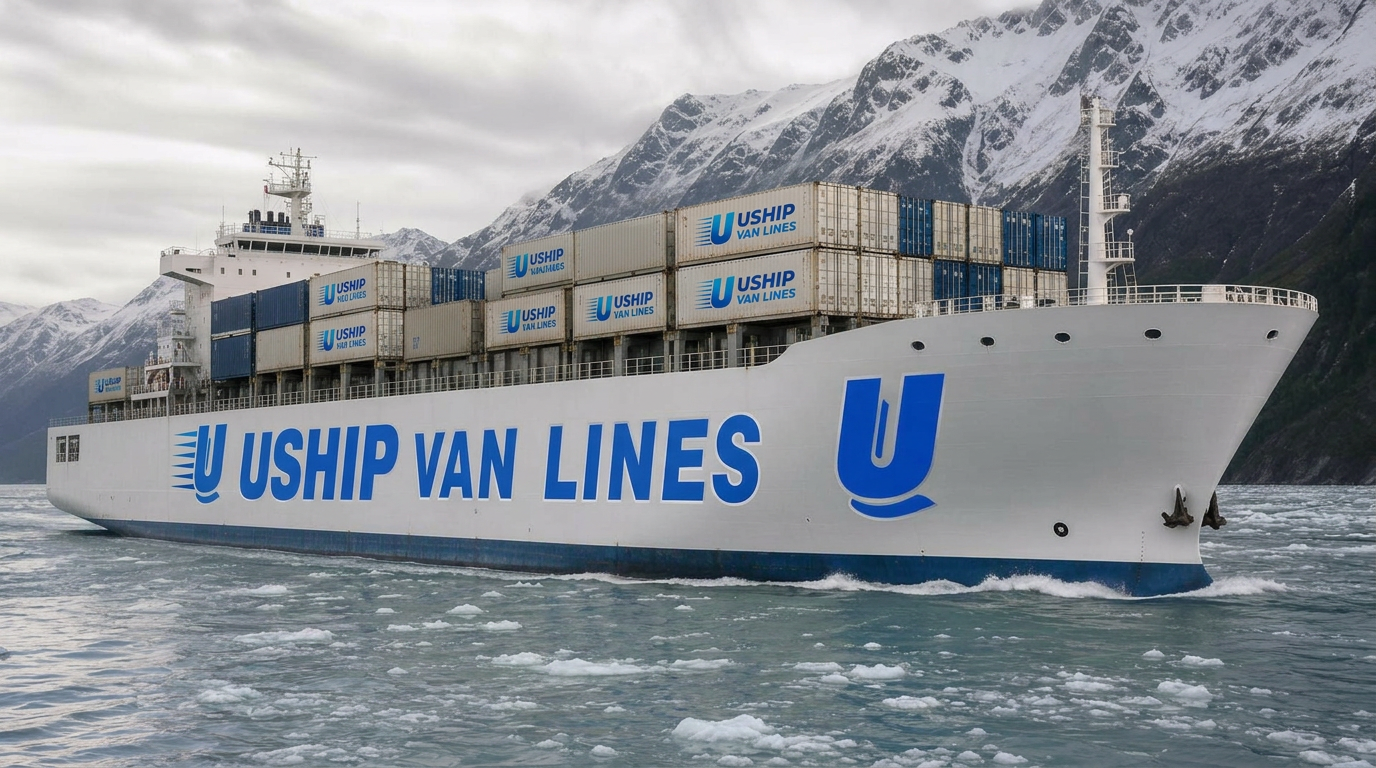
Moving from Alaska to Omaha, NE
Relocating from Alaska to Omaha means coordinating barge transport, cross-country trucking, and careful timing around weather windows. Whether you're leaving Anchorage, Fairbanks, or the Mat-Su Valley, this 3,000+ mile move requires specialized carriers who understand Alaska's unique logistics and Nebraska's Midwest climate.
Best Alaska & Hawaii Movers, powered by UShip Van Lines, connects you with experienced carriers who handle Alaska-to-Lower 48 moves daily. Request your free quote today to compare vetted movers and lock in competitive rates for your Omaha relocation.
Route overview
Alaska to Omaha: A Cross-Continental Journey
Moving from Alaska to Omaha, Nebraska spans roughly 3,200 miles and crosses multiple climate zones, from subarctic wilderness to Great Plains farmland. Your household goods will typically travel by truck to the Port of Anchorage (or other Alaska departure points), barge south to Tacoma or Seattle, then over-the-road trucking through Idaho, Wyoming, and into eastern Nebraska. Omaha sits at the crossroads of I-80 and I-29, making final delivery straightforward once your shipment reaches the Midwest.
This route combines marine and ground transport, requiring coordination between barge schedules, port operations, and long-haul trucking availability. Alaska's limited road system means most shipments consolidate through Anchorage, though Fairbanks and Mat-Su residents may have additional first-mile trucking. Omaha's central location and developed infrastructure make it a relatively easy final destination compared to more remote Nebraska towns.
Timing is everything on this lane. Barge sailings from Alaska run year-round but can face weather delays in fall and winter. Summer and early fall offer the most reliable schedules, while spring breakup and winter storms occasionally extend transit windows. Planning around these seasonal factors ensures your belongings arrive on schedule.
How the moving process works
Step-by-Step: How Your Alaska-to-Omaha Move Works
-
Request quotes and book early: Contact Best Alaska & Hawaii Movers 6–10 weeks before your target move date. Alaska moves require advance planning due to barge schedules and carrier availability. Compare quotes, verify insurance coverage, and confirm pickup/delivery windows.
-
Pre-move survey and inventory: Your carrier will conduct an in-home or virtual survey to assess volume, identify items requiring special handling (firearms, artwork, fragile items), and provide a detailed inventory. This step ensures accurate pricing and prevents surprises on moving day.
-
First-mile pickup in Alaska: Movers load your household goods at your Alaska residence—whether in Anchorage, Fairbanks, Wasilla, or beyond. If you're in a remote area, goods may consolidate at a nearby hub before port transport. Vehicles can be shipped separately or alongside household goods, depending on your timeline.
-
Barge transport to the Pacific Northwest: Your shipment travels by barge from the Port of Anchorage (or Whittier/Kodiak for some routes) to Tacoma or Seattle. This leg typically takes 4–7 days depending on weather and vessel schedules. Goods remain in sealed containers or trailers for protection.
-
Port clearance and customs processing: Upon arrival in Tacoma/Seattle, containers are offloaded, inspected, and transferred to long-haul trucking carriers. Though Alaska-to-Lower 48 moves don't require international customs, port paperwork and USDA inspections (for certain items) may add 1–2 business days.
-
Cross-country trucking to Omaha: Your shipment travels east via I-90 and I-80, covering roughly 1,700 miles from Seattle to Omaha. Drivers typically complete this leg in 3–5 days, accounting for mandatory rest breaks and any consolidation stops. Real-time tracking keeps you informed of progress.
-
Final delivery and unpacking: Movers deliver to your Omaha address, unload all items per your inventory checklist, and remove packing materials if contracted. Inspect for damage immediately and note any issues on the delivery receipt. Full-service movers can unpack and set up furniture if arranged in advance.
Estimated moving costs
What Does an Alaska-to-Omaha Move Cost?
A typical 2–3 bedroom household moving from Alaska to Omaha ranges from $6,500 to $12,000 for full-service transport. Studio or 1-bedroom moves may start around $4,000–$6,000, while larger 4-bedroom homes can exceed $15,000. These estimates assume professional packing, marine transport, and door-to-door delivery; costs vary based on volume, services, and season.
Key cost drivers include:
- Shipment weight and volume: Charges are often calculated per cubic foot or pound. A typical 3-bedroom home equals 1,000–1,500 cubic feet or 8,000–12,000 pounds.
- Packing and materials: Professional packing adds $800–$2,500 depending on fragile items, custom crating, and box quantities. DIY packing saves money but increases risk of damage.
- Barge and port fees: Marine transport from Alaska to Tacoma/Seattle includes container fees, port handling, and fuel surcharges. These fees are typically bundled into your quote.
- Distance from port: If you're in Fairbanks, the Mat-Su Valley, or Kenai Peninsula, first-mile trucking to the port adds $500–$1,500 depending on mileage.
- Vehicle shipping: Separately shipping a car from Alaska to Omaha costs $1,200–$2,200 via roll-on/roll-off (RORO) barge and overland transport.
- Seasonality: Summer (June–August) sees peak demand and higher rates. Winter moves (November–February) may offer 10–15% savings but face weather-related delays.
- Insurance and valuation: Basic carrier liability covers $0.60/lb; full-value protection costs 1–2% of declared value and is strongly recommended for Alaska moves.
Always request binding or not-to-exceed estimates in writing. Beware of low-ball quotes that escalate after loading. Best Alaska & Hawaii Movers connects you only with transparent, licensed carriers.
Estimated transit times
How Long Does the Move Take?
Door-to-door transit from Alaska to Omaha typically requires 14–28 days, though expedited service can sometimes shorten this to 12–14 days during optimal conditions. Standard timelines break down as follows:
- Alaska pickup and port delivery: 1–3 days, depending on your distance from Anchorage or Fairbanks and road conditions.
- Barge sailing to Tacoma/Seattle: 4–7 days. Weekly sailings mean you may wait several days for the next available departure if you miss a cutoff.
- Port processing and truck loading: 2–4 days for offloading, customs/USDA clearance (if applicable), and transferring containers to over-the-road carriers.
- Cross-country trucking: 3–6 days from Seattle to Omaha, accounting for driver hours-of-service regulations and potential consolidation stops.
- Final delivery window: Carriers typically provide a 2–3 day delivery window. Expedited service may narrow this to next-day delivery upon truck arrival in Omaha.
Weather and seasonal factors significantly impact timelines. Late fall and winter storms can delay barges by 2–5 days and slow trucking through mountain passes. Spring breakup (April–May) occasionally disrupts Alaska road access. Summer offers the most predictable schedules but higher demand. Build buffer time into your Omaha lease start date or home closing to avoid costly delays.
Regional logistics
Alaska-Specific Moving Logistics
Port and marine transport: Most Alaska-to-Lower 48 shipments depart from the Port of Anchorage, served by weekly container and barge services. Whittier and Kodiak also handle freight but with less frequent sailings. Your goods travel in sealed 20-foot or 40-foot containers (shared or dedicated) or in truck trailers driven onto RORO barges. Marine transport includes inherent risks; verify your mover carries ocean cargo insurance.
Last-mile access in Alaska: If you live outside Anchorage—Fairbanks (358 miles north), Mat-Su Valley, Kenai Peninsula, or smaller communities—your goods must first reach the port. Winter road conditions on the Parks Highway, Glenn Highway, or Seward Highway can delay pickups. Remote locations (bush Alaska, Aleutians) require air freight or seasonal barge service at significantly higher cost.
Vehicle shipping: Cars, trucks, and motorcycles ship separately from household goods, typically via RORO barge to Tacoma and then overland carrier to Omaha. Allow 18–28 days for vehicle delivery. Drain fuel to 1/4 tank, remove personal items, and document existing damage with photos. Enclosed transport is available for high-value vehicles but costs 40–60% more than open carriers.
Prohibited and restricted items: USDA regulations prohibit moving live plants, soil, fresh produce, and untreated wood from Alaska to the Lower 48. Firearms must be declared, unloaded, and packed per federal guidelines. Hazardous materials (propane, paint, cleaning chemicals) cannot travel on barges. Dispose of or consume perishables before moving day.
Paperwork and documentation: Keep a detailed inventory with photos of high-value items. Obtain copies of your carrier's USDOT number, MC authority, and insurance certificates. For tax purposes, save all receipts—Alaska-to-Lower 48 moves may qualify for relocation deductions if job-related (consult a tax professional).
Climate transition: Alaska's dry cold preserves wood furniture and electronics; Omaha's humid summers can cause expansion and mildew. Use climate-controlled storage if your delivery date doesn't align with occupancy. Consider dehumidifiers for your Omaha home's basement to protect Alaska-shipped items.
Seasonal considerations
Best Times to Move from Alaska to Omaha
Summer (June–August): Peak moving season offers the most reliable barge schedules, longest daylight hours for Alaska loading, and dry roads through the Pacific Northwest and Rockies. Expect premium pricing (10–20% above off-season) and book 8–12 weeks ahead. Omaha summers are hot and humid; plan climate-controlled storage if your delivery window straddles apartment lease dates.
Fall (September–November): Early fall (September–early October) provides good weather and slightly lower rates as demand drops. Late fall (November) introduces storm risks in the Gulf of Alaska and early snow in mountain passes. Barge delays become more common. Omaha's fall weather is mild, making unloading comfortable, but Thanksgiving week sees limited carrier availability.
Winter (December–February): Lowest rates and best availability for flexible schedules. Expect 3–7 day weather delays on barges and potential road closures through the Rockies (I-90, I-80). Alaska's extreme cold complicates loading fragile items. Omaha winters bring snow, ice, and freezing temps; ensure carriers can navigate residential streets and have contingency plans for blizzards. Only recommended if you have flexible timelines and want maximum savings.
Spring (March–May): Shoulder season with moderate pricing and improving weather. Early spring (March–April) still sees Alaska breakup conditions—muddy roads, limited access to rural areas—but barge schedules stabilize. Late spring (May) offers excellent conditions on both ends. Omaha's spring storms (tornadoes, hail) rarely impact moves but warrant checking forecasts before delivery day.
Why choose Best Alaska & Hawaii Movers
Why Choose Best Alaska & Hawaii Movers for Your Omaha Relocation
- Alaska specialists, not generalists: We exclusively connect customers with carriers experienced in Alaska barge logistics, port coordination, and extreme-weather contingencies—expertise standard moving brokers simply don't have.
- Transparent, competitive pricing: Our UShip Van Lines platform lets you compare vetted movers side-by-side. No hidden fees, no bait-and-switch tactics. Request your free quote and see real pricing from multiple carriers within 24 hours.
- End-to-end support: From your first call to final delivery in Omaha, our team provides tracking updates, answers questions, and resolves issues. You're never left guessing where your belongings are or when they'll arrive.
- Vetted, insured carriers only: Every mover in our network holds active USDOT and MC authority, maintains cargo insurance, and passes our performance reviews. We exclude carriers with poor safety records or customer complaints.
- Flexible service levels: Whether you need full-service packing and white-glove delivery or cost-effective freight shipping with self-packing, we match you with the right carrier for your budget and timeline.