
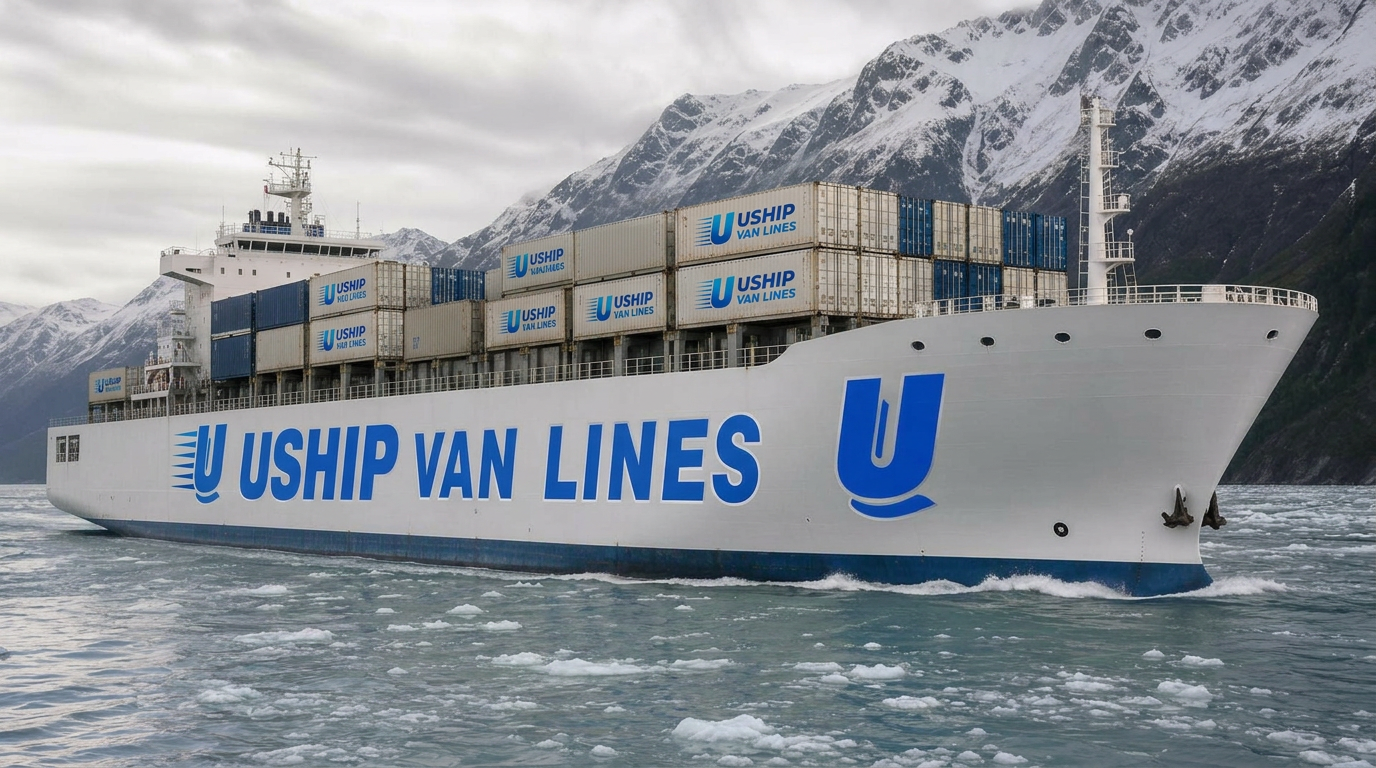
Moving from Alaska to Detroit, MI
Moving from Alaska to Detroit, MI combines the logistical complexity of barge freight with the long overland haul to the Motor City. Whether you're leaving Anchorage for a job at one of Detroit's automotive giants, relocating from Fairbanks for a career change, or moving your family from the Mat-Su Valley to Michigan's lower cost of living, this route demands experienced coordination across marine terminals, customs checkpoints, and 2,400+ miles of highway.
Best Alaska & Hawaii Movers, powered by UShip Van Lines, specializes in Alaska-to-Lower 48 relocations, managing barge schedules from Anchorage, coordinating shipments through the Port of Tacoma, and delivering your household across the continental U.S. to Detroit's diverse neighborhoods. Ready to start planning your move? Request a free, no-obligation quote tailored to your timeline and inventory.
Route overview
Route Overview: Alaska to Detroit, MI
The Alaska-to-Detroit corridor serves hundreds of families and professionals each year, driven by Michigan's automotive industry, lower housing costs, and proximity to Great Lakes recreation. Most shipments originate in the Anchorage metro area (including Eagle River and Wasilla), Fairbanks, or the Kenai Peninsula, with a small but steady volume from bush communities accessible by air or seasonal road.
Your household goods travel by barge from the Port of Anchorage to the Port of Tacoma, Washington—a 1,400-nautical-mile voyage that typically takes 4–6 days depending on weather and sailing schedules. Once offloaded in Tacoma, your shipment is loaded onto a 53-foot over-the-road tractor-trailer and driven approximately 2,400 miles via I-90 through Montana, North Dakota, and across to Michigan, adding another 5–8 days of transit time.
Detroit destinations range from downtown lofts and Midtown renovations to suburban communities like Livonia, Rochester Hills, and Dearborn. Narrow city streets, older walk-up buildings, and winter road conditions require carriers familiar with Michigan's urban logistics and seasonal challenges.
How the moving process works
How the Alaska-to-Detroit Moving Process Works
-
Free Quote & Planning Consultation: Contact Best Alaska & Hawaii Movers for a detailed inventory review. We'll ask about your origin (house vs. apartment, elevator access, flights of stairs), destination address in Detroit, preferred moving dates, and whether you need vehicle shipping, storage, or packing services.
-
Barge Scheduling & Booking: We coordinate your shipment with the Port of Anchorage barge schedule. Alaska Marine Lines, TOTE Maritime, and other carriers sail weekly or bi-weekly; booking 4–6 weeks in advance secures your slot and prevents costly delays during peak summer season.
-
Professional Packing & Loading in Alaska: On your scheduled day, our Alaska crew arrives to pack fragile items (dishes, electronics, artwork), wrap furniture, and load your belongings into a secure shipping container or onto pallets. All items are inventoried, labeled, and photographed for insurance and tracking.
-
Barge Transit to Tacoma: Your shipment sails from Anchorage to Tacoma, a 4–6 day ocean voyage. Containers remain sealed and climate-controlled throughout the journey. We monitor vessel tracking and notify you when your shipment docks in Washington.
-
Customs Clearance & Overland Loading: Though you're moving within the U.S., Alaska shipments may undergo agricultural inspections in Tacoma to prevent invasive species. Once cleared, your container is transferred to a long-haul truck for the cross-country leg to Detroit.
-
Cross-Country Transit via I-90: The truck departs Tacoma, traveling east through Spokane, Missoula, Billings, Fargo, and into Michigan. This leg typically takes 5–8 days, depending on weather, driver hours-of-service regulations, and any intermediate consolidation stops.
-
Final Delivery in Detroit: Your driver contacts you 24–48 hours before arrival to schedule delivery. On delivery day, the crew unloads, places furniture in rooms per your direction, and removes packing materials. You inspect and sign off on the inventory sheet, noting any damage for insurance claims.
Estimated moving costs
What Does It Cost to Move from Alaska to Detroit, MI?
A typical 2–3 bedroom household move from Alaska to Detroit ranges from $6,500 to $12,000, with most families paying between $8,000 and $10,000 for full-service moves. Studio and 1-bedroom apartments start around $4,500–$6,000, while 4+ bedroom homes with heavy furniture, shop tools, or specialty items can exceed $14,000.
Key cost drivers include:
- Volume & weight: Barge freight is priced by cubic feet or container size (20-foot vs. 40-foot); overland trucking adds per-mile and weight charges.
- Origin accessibility: Moves from remote Alaska communities (Kenai, Homer, or bush locations) require small-plane or barge feeder service, adding $1,000–$3,000.
- Packing services: Professional packing of fragile items, custom crating for artwork or antiques, and full-pack service add $800–$2,500.
- Season & timing: Summer (May–September) is peak moving season in Alaska; barge space is tight and rates run 15–25% higher than winter.
- Vehicle shipping: Adding a car or truck to your barge shipment costs $1,200–$2,000 Anchorage-to-Tacoma, plus $800–$1,400 Tacoma-to-Detroit overland.
- Storage: If your Detroit home isn't ready, warehouse storage in Tacoma or Michigan runs $150–$300/month for a typical household.
We provide transparent, itemized quotes with no hidden fees. Final costs are confirmed in your Bill of Lading before pickup. Best Alaska & Hawaii Movers never requires full payment upfront—standard terms are a deposit at booking and balance due upon delivery.
Estimated transit times
How Long Does the Move Take?
Door-to-door transit from Alaska to Detroit typically requires 10–16 days under normal conditions. Here's the leg-by-leg breakdown:
- Pickup to barge departure: 1–3 days (containers are loaded, trucked to the Port of Anchorage, and staged for the next sailing).
- Barge voyage Anchorage–Tacoma: 4–6 days on the water, depending on weather in the Gulf of Alaska and sailing route.
- Tacoma offload & truck loading: 1–2 days for customs/agricultural inspection, container destuffing, and loading onto the overland truck.
- Overland transit Tacoma–Detroit: 5–8 days via I-90, factoring in mandatory driver rest periods and potential weather delays in Montana or the Dakotas during winter.
Summer moves (June–August) can run longer due to high barge demand and port congestion in Tacoma. Winter moves (November–March) face fewer scheduling delays but may encounter road closures or slowdowns from snowstorms across the northern tier. We provide real-time tracking updates and proactive communication if your timeline shifts.
Regional logistics
Alaska-Specific Logistics & Considerations
Barge Ports & Terminals: Most Alaska moves originate from the Port of Anchorage (serving Anchorage, Eagle River, Wasilla, Palmer). Shipments from Fairbanks are trucked 360 miles south to Anchorage for barge loading. Kenai Peninsula and Southeast Alaska (Juneau, Ketchikan) may use alternative barge routes or require small-plane coordination.
Vehicle Shipping: If you're driving the Alaska Highway (ALCAN) to Detroit, budget 7–10 days and significant fuel, lodging, and vehicle wear costs. Most families save time and money shipping one vehicle via barge to Tacoma, then overland to Detroit. Vehicles must be empty of personal belongings (customs requirement) and have less than a quarter-tank of fuel.
Prohibited & Restricted Items: Barge carriers and USDA prohibit flammable liquids (propane, gasoline, paint), ammunition, fireworks, perishable food, and live plants. Frozen game meat, fishing gear, and hunting trophies require USDA veterinary certificates and may face additional inspection fees.
Last-Mile Delivery in Detroit: Detroit's historic neighborhoods feature narrow streets, low-clearance bridges, and limited truck access. Confirm your delivery address can accommodate a 53-foot tractor-trailer; if not, we'll arrange a smaller shuttle truck for the final mile at a modest additional fee. Winter deliveries may require shoveled driveways and salted walkways.
Insurance & Valuation: Basic carrier liability covers $0.60/lb per article (federal minimum). We strongly recommend full-value protection, which covers repair or replacement cost for damaged items. Typical premium is 1–2% of your shipment's declared value (e.g., $100–$200 for a $10,000 valuation).
Seasonal considerations
Seasonal Timing: When Should You Move?
Summer (May–September): Peak season in Alaska. Barge sailings are frequent, weather is mild, and road conditions are ideal both in Alaska and across the Lower 48. However, demand is highest—book 6–8 weeks in advance and expect premium pricing. Ideal if you need fast turnaround or have school-age children starting in Detroit in the fall.
Fall (October–November): Shoulder season with lower rates (10–15% below summer) and still-reliable barge schedules. Early snow can impact Alaska pickups in remote areas, and late-season storms in the northern Rockies may slow overland transit. Good balance of cost and reliability.
Winter (December–March): Lowest rates of the year, but barge sailings drop to every 10–14 days, and Gulf of Alaska weather can delay vessels by 1–3 days. Overland trucking through Montana and North Dakota is subject to winter road closures and chain requirements. Best for budget-conscious moves with flexible delivery windows; avoid if you have a hard deadline.
Spring (April–early May): Barge schedules ramp up, but Alaska's spring thaw can make rural roads muddy and impassable. Breakup season is unpredictable—confirm your pickup location is accessible year-round. Rates begin climbing toward summer peaks by mid-May.
Why choose Best Alaska & Hawaii Movers
Why Choose Best Alaska & Hawaii Movers for Your Alaska-to-Detroit Move
- Alaska & Non-Contiguous Expertise: We've coordinated hundreds of Alaska-to-Lower 48 moves, managing barge schedules, port logistics, and customs requirements that general moving companies don't understand.
- Single-Source Accountability: One team, one contract, one point of contact from Anchorage pickup through Detroit delivery—no handoffs to unknown subcontractors.
- Transparent, All-Inclusive Pricing: Itemized quotes covering barge freight, overland trucking, labor, fuel surcharges, and insurance. No surprise fees at delivery.
- Real-Time Tracking & Communication: Portal access to shipment status, proactive text/email updates at each milestone, and a dedicated move coordinator available by phone.
- Powered by UShip Van Lines: Backed by a nationwide carrier network with Detroit-area agents, Michigan DOT operating authority, and 24/7 dispatch support for weather delays or route changes.