
Moving from Omaha, NE to Alaska
Moving from Omaha to Alaska represents one of the most logistically complex domestic relocations you can undertake. Your household goods will travel over 3,000 miles from the heartland of Nebraska to America's Last Frontier, requiring truck transport to the Pacific Northwest, ocean barge shipping to Alaska, and final delivery to your new home—whether that's in Anchorage, Fairbanks, or a remote community.
Best Alaska & Hawaii Movers, powered by UShip Van Lines, specializes in this exact route. We coordinate every leg of your move from pickup in Omaha through barge transit and final delivery anywhere in Alaska. Request a free quote today to receive a detailed breakdown of costs and timelines for your specific move.
Route overview
How Your Move from Omaha to Alaska Works
Your belongings begin their journey with pickup from your Omaha residence. A professional moving crew loads your items into a truck that travels west across Nebraska, Wyoming, and Idaho to reach Tacoma, Washington—the primary consolidation point for Alaska-bound shipments. This overland leg typically takes 2–3 days and covers approximately 1,700 miles.
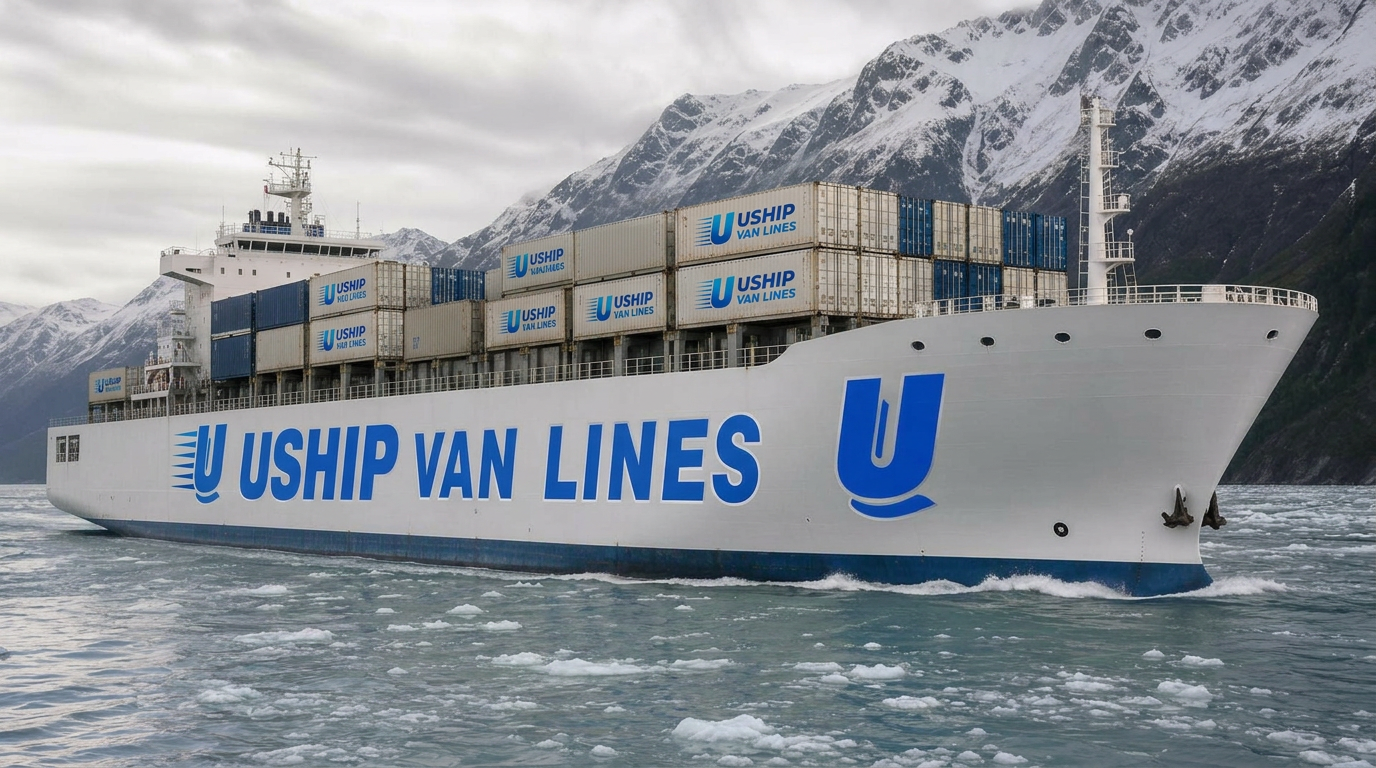
In Tacoma, your household goods are transferred to a shipping container and loaded aboard an ocean barge operated by carriers like Lynden Transport or TOTE Maritime. The barge sails through Puget Sound, up the Inside Passage, and across the Gulf of Alaska to the Port of Anchorage. This maritime leg takes 5–7 days under normal weather conditions, with barges typically departing weekly during peak season (May through September) and less frequently in winter.
Once your container arrives at the Port of Anchorage, it's unloaded and prepared for final delivery. If your destination is Anchorage or the Mat-Su Valley, delivery usually happens within 1–3 days. For Fairbanks, Kenai Peninsula, or other Alaska communities, add another 1–4 days depending on distance and road conditions. Bush communities accessible only by air or seasonal ice roads require specialized arrangements and extended timelines.
How the moving process works
The Step-by-Step Moving Process
-
Initial consultation and quote – Contact Best Alaska & Hawaii Movers for a detailed inventory assessment. We'll discuss your move date, destination in Alaska, and any special items like vehicles, boats, or ATVs. You'll receive a comprehensive quote breaking down truck transport, barge fees, insurance options, and delivery costs.
-
Pre-move preparation – Book your move 4–8 weeks in advance, especially for summer relocations when barge space fills quickly. Sort and declutter—moving costs are based on weight and cubic footage. Gather required documentation including proof of Alaska residency if applicable for certain exemptions.
-
Pickup in Omaha – Professional movers arrive at your scheduled time to load your belongings. They'll inventory every item, wrap furniture for protection, and secure everything for the long journey. The truck departs for Tacoma immediately after loading is complete.
-
Overland transit to Tacoma – Your items travel Interstate 80 west through Wyoming, then north through Idaho and into Washington. The truck arrives at the Tacoma consolidation facility where your goods are containerized for barge shipment. This leg takes 2–3 days.
-
Barge transit to Alaska – Your container is loaded onto the next available barge to Anchorage. The ocean voyage takes 5–7 days. You'll receive tracking updates as your shipment progresses. Weather delays are possible, especially October through April.
-
Port processing and customs clearance – At the Port of Anchorage, your container is unloaded and cleared. Alaska requires inspection of certain items including plants, soil, and some foods. This processing typically takes 1–2 business days.
-
Final delivery to your Alaska home – A local Alaska delivery crew transports your belongings to your new residence. They'll unload, place items in rooms per your direction, and remove packing materials. You inspect everything and sign off on delivery completion.
Estimated moving costs
What You'll Pay to Move from Omaha to Alaska
A typical 2–3 bedroom household moving from Omaha to Anchorage costs $8,500–$14,000 for full-service door-to-door moving. Studio or 1-bedroom apartments generally run $5,000–$7,500, while larger 4-bedroom homes can reach $16,000–$22,000 or more. These estimates include pickup, overland transport, barge shipping, and delivery—but exact costs depend on your specific situation.
The biggest cost drivers are shipment weight and volume. Movers charge by the cubic foot or by weight (per hundredweight). A moderately furnished 3-bedroom home typically weighs 8,000–12,000 pounds and occupies 800–1,200 cubic feet. Additional factors include packing services (add $800–$2,000), specialty items like pianos or gun safes (additional fees apply), vehicle shipping ($1,800–$3,500 per vehicle to Alaska), and destination—Fairbanks or remote locations cost more than Anchorage due to additional trucking.
Insurance is essential for moves of this magnitude. Basic carrier liability covers only $0.60 per pound per item, so a 50-pound television would receive just $30 if damaged. Full-value protection costs 1–2% of your shipment's declared value but covers repair or replacement of damaged items. Budget $150–$400 for adequate coverage on a $15,000–$25,000 household goods shipment.
Timing affects cost significantly. Summer moves (May–August) command premium rates due to high demand and favorable weather. Winter moves (November–March) may save 10–20% but face longer transit times and greater weather risk. Request quotes in writing that detail all charges—legitimate movers provide transparent pricing with no hidden fees.
Estimated transit times
How Long Your Move Takes Door-to-Door
Plan for 12–18 days total transit time from pickup in Omaha to delivery at your Alaska destination under normal conditions. This timeline breaks down into distinct legs, each with its own variables.
Omaha to Tacoma (2–3 days): The overland truck journey covers approximately 1,700 miles through six states. Professional drivers follow DOT regulations including mandatory rest periods. Weather delays crossing Wyoming in winter can add 1–2 days.
Tacoma processing and containerization (1–2 days): Your goods are unloaded from the truck, inventoried, and loaded into a shipping container at the Tacoma port facility. This happens quickly during peak season but may take longer if barge departures are infrequent in winter.
Barge transit to Anchorage (5–7 days): The ocean voyage depends on weather, sea conditions, and the specific barge schedule. Summer sailings often complete the journey in 5–6 days. Winter storms can extend transit to 8–10 days. Barges typically depart Tacoma 2–3 times weekly in summer, once weekly or less in winter.
Port processing in Anchorage (1–2 days): Container unloading, customs clearance, and inspection happen at the Port of Anchorage. Alaska inspects for invasive species and prohibited items. This step rarely causes delays unless issues arise with documentation or restricted items.
Final delivery (1–5 days): Anchorage area deliveries usually occur within 1–2 days after port processing. Fairbanks adds 1–2 days for the 360-mile drive north. Kenai Peninsula, Homer, and other road-accessible communities see delivery within 2–3 days. Bush communities requiring air freight or seasonal access can add weeks to the timeline.
Book your move with realistic expectations. Summer moves from Omaha typically complete in 12–15 days. Winter moves should allow 16–21 days to account for weather contingencies.
Regional logistics
Alaska-Specific Moving Logistics You Need to Know
Barge schedules and booking deadlines govern Alaska moves. Carriers like Lynden Transport and TOTE Maritime publish seasonal schedules, but space fills quickly during summer. Book your shipment 4–8 weeks before your desired move date to guarantee barge space. Last-minute bookings may force you to wait for the next available sailing, delaying your move by a week or more.
Vehicle shipping to Alaska requires separate arrangements. You can ship your car, truck, or SUV on the same barge as your household goods, typically costing $1,800–$3,500 per vehicle from Tacoma to Anchorage. Alternatively, drive the Alaska Highway—a 2,200-mile journey from the Lower 48 through Canada requiring passport documentation, vehicle preparation, and 4–6 days of driving. Many Omaha residents opt to ship one vehicle and drive another, especially if relocating with family.
Restricted and prohibited items require attention. Alaska bans certain plants, soil, and agricultural products due to invasive species concerns. Hazardous materials (propane tanks, ammunition, paint, cleaning chemicals) cannot travel by barge—you'll need to dispose of these before pickup or acquire them after arrival. Some food items face restrictions. Review the Alaska Department of Natural Resources guidelines or ask your moving coordinator for a complete prohibited items list.
Port of Anchorage processing involves customs-style inspection even though Alaska is part of the United States. Inspectors check for prohibited plants, pests, and restricted items. Maintain clear documentation of your belongings. Missing paperwork rarely causes serious delays but can extend port processing by a day or two.
Final delivery logistics vary by Alaska destination. Anchorage, Eagle River, and Mat-Su Valley (Wasilla, Palmer) are straightforward—delivery trucks access these areas year-round on paved highways. Fairbanks requires a 360-mile drive north on the Parks Highway, typically adding 1–2 days and $800–$1,500 to delivery costs. Kenai Peninsula communities (Soldotna, Homer, Seward) add similar time and cost. Bush Alaska locations without road access—Bethel, Kotzebue, Nome, and hundreds of smaller villages—require air freight for final delivery, substantially increasing costs and timelines. Discuss your specific destination with your coordinator upfront.
Storage options exist at both ends if your housing isn't ready. Tacoma facilities can hold your containerized goods before barge departure if needed. Anchorage-area storage is available post-arrival if your new residence isn't accessible. Storage adds $150–$300 per month depending on the facility and your shipment size.
Seasonal considerations
Best Times to Move from Omaha to Alaska
Summer (May–September) is peak moving season for Alaska relocations. Barge schedules are most frequent with 2–3 weekly departures from Tacoma. Weather is optimal for both ocean transit and road delivery throughout Alaska. The Inside Passage and Gulf of Alaska are calmer, reducing the risk of storm delays. Road conditions to Fairbanks, the Kenai Peninsula, and remote areas are excellent. The trade-off: higher costs due to demand, and you'll need to book 6–8 weeks in advance to secure your preferred dates. June through August see the highest volume of military and civilian relocations.
Fall (September–October) offers a sweet spot for many movers. Rates begin to drop as peak season ends, potentially saving 10–15% compared to July. Barge schedules remain relatively frequent through September. Weather is still generally favorable, though October brings increasing storm risk in the Gulf of Alaska. Fall moves work well if you have flexibility—be prepared for weather delays but enjoy lower costs and greater availability.
Winter (November–March) presents the most challenging conditions but the lowest rates. Barge departures from Tacoma may reduce to once weekly or even less frequently. Gulf of Alaska storms are common, potentially adding 2–5 days to ocean transit. Interior Alaska roads to Fairbanks face ice and snow, though professional drivers handle these conditions routinely. Remote Alaska locations may be inaccessible during mid-winter. Winter moves make sense if you're cost-conscious, have flexible delivery dates, and your destination is Anchorage or another year-round accessible community. Expect to save 15–25% compared to summer rates.
Spring (April–May) marks the transition to peak season. April weather remains unpredictable in Alaska with late-season storms possible. By May, conditions improve rapidly and barge schedules increase. Rates rise throughout spring approaching summer peaks. Book early-May moves by March to secure good rates before demand intensifies.
Why choose Best Alaska & Hawaii Movers
Why Choose Best Alaska & Hawaii Movers for Your Omaha to Alaska Relocation
-
Alaska specialists, not generalists – We focus exclusively on Alaska and Hawaii moves. Our team knows barge schedules, Alaska delivery logistics, and seasonal considerations that general moving companies miss. We coordinate every leg from Omaha pickup through final delivery in Alaska.
-
Transparent pricing with no surprises – You'll receive a detailed written quote breaking down every cost: truck transport, barge fees, delivery charges, insurance options, and any additional services. We never surprise you with hidden fees or unexpected charges at delivery.
-
Single point of contact throughout – One coordinator manages your entire move from initial quote through final delivery. You're never transferred between departments or left wondering about your shipment status. We provide tracking updates at each milestone.
-
Powered by UShip Van Lines' network – Our partnership with UShip Van Lines gives you access to vetted professional carriers with proven track records on the Omaha-to-Alaska route. You benefit from competitive rates and reliable service backed by comprehensive insurance options.
-
Flexible scheduling and storage solutions – We work around your timeline, whether you need quick pickup or prefer to coordinate with your housing schedule. Storage is available in Tacoma or Anchorage if you need flexibility between pickup and delivery dates.