
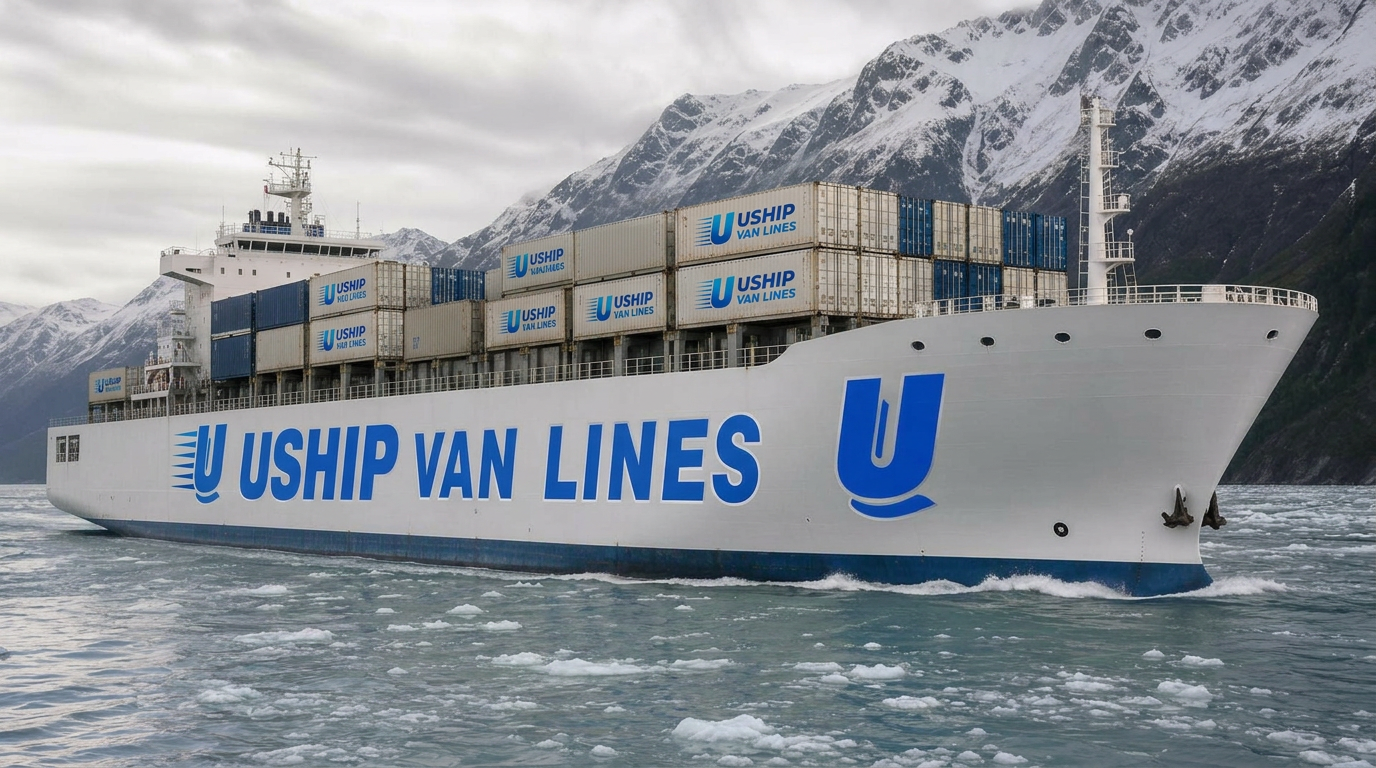
Moving from Alaska to Wyoming
Relocating from Alaska to Wyoming means navigating one of the most logistically complex moving routes in the continental United States. Your household goods will travel by barge from Alaska to the Port of Tacoma, then overland across the Pacific Northwest and Rockies to the Equality State—a journey that requires specialized knowledge of marine shipping schedules, customs documentation, and cross-country trucking.
Whether you're leaving Anchorage for Cheyenne, Fairbanks for Casper, or Mat-Su for Jackson, Best Alaska & Hawaii Movers (powered by UShip Van Lines) coordinates every phase of your interstate relocation. Request a free quote today to receive a detailed timeline and cost estimate tailored to your specific move date and inventory.
Route overview
The Alaska to Wyoming Moving Route
Moving from Alaska to Wyoming is a multi-modal journey spanning approximately 2,400–2,800 miles depending on your exact origin and destination cities. Your belongings begin their journey at one of Alaska's major ports—most commonly the Port of Anchorage or Port of Whittier—where they're loaded into shipping containers for barge transport to Tacoma, Washington. This marine leg typically takes 4–7 days depending on weather and vessel schedules.
From Tacoma, your containerized household goods transfer to long-haul trucks for the overland portion through Washington, Idaho, and into Wyoming. The drive from Tacoma to major Wyoming cities like Cheyenne takes 14–18 hours of road time, though actual transit includes loading/unloading windows, DOT rest requirements, and potential weather delays in mountain passes. Wyoming's vast geography means final delivery times vary significantly—moves to southeastern cities like Cheyenne arrive faster than deliveries to remote northwestern areas near Yellowstone.
This route requires careful coordination between marine carriers operating Alaska barge routes and trucking companies experienced with Rocky Mountain winter driving conditions. Unlike moves within the Lower 48, you cannot simply load a truck in Alaska and drive to Wyoming—the marine component adds scheduling complexity but also allows you to ship vehicles, heavy furniture, and outdoor equipment that wouldn't survive a traditional long-distance drive.
How the moving process works
How Your Alaska to Wyoming Move Works: Step-by-Step
-
Initial consultation and inventory assessment — Your move coordinator conducts a virtual or in-home survey of your Alaska residence, documenting furniture, appliances, vehicles, and special items. This assessment determines container size (20-foot or 40-foot), creates your detailed quote, and identifies items requiring special handling (firearms, perishables, hazardous materials that cannot ship via barge).
-
Barge schedule reservation and booking — We reserve space on the next available Alaska Marine Lines or TOTE Maritime vessel departing for Tacoma, typically sailing weekly during summer months and less frequently in winter. Your move date determines your barge sailing, and we provide a firm pickup window 2–3 days before vessel departure to ensure your container reaches the port on time.
-
Professional packing and container loading in Alaska — Our Alaska-based crew arrives at your home with marine-grade packing materials, furniture pads, and tie-down equipment. They pack your household goods using techniques specific to ocean transport—extra bracing for the barge voyage, moisture barriers for Alaska's humidity, and weight distribution for container stability. If you're shipping a vehicle, it's driven into the container last or shipped separately in a vehicle rack.
-
Ocean transit to Port of Tacoma — Your sealed container travels by barge down the Inside Passage or across the Gulf of Alaska to Tacoma, Washington. Transit takes 4–7 days depending on route, weather, and vessel schedule. Your container clears U.S. Customs (even though Alaska is a U.S. state, cargo from Alaska sometimes requires agricultural inspection documentation).
-
Container transfer and overland trucking — At the Port of Tacoma, your container is offloaded from the barge, inspected, and loaded onto a long-haul truck. The driver transports your container across Washington, through Idaho, and into Wyoming via I-90 or I-25 depending on your destination city. This leg takes 2–4 days including required driver rest periods.
-
Final delivery and unloading in Wyoming — Our Wyoming delivery team contacts you 24–48 hours before arrival to confirm your delivery window. They unload your container at your new residence, place furniture in designated rooms, reassemble items disassembled for shipping, and remove all packing materials. You inspect your shipment and sign the final delivery paperwork.
-
Post-move support and claims assistance — If any items were damaged during transit, we guide you through the insurance claim process, providing documentation and coordinating repairs or replacement. Our customer service team remains available for 30 days post-delivery to address any questions about your move.
Estimated moving costs
What Does It Cost to Move from Alaska to Wyoming?
A typical 2–3 bedroom household move from Alaska to Wyoming ranges from $6,800 to $13,500 for full-service door-to-door relocation. This estimate includes container rental, marine freight from Alaska to Tacoma, overland trucking to Wyoming, professional packing materials, loading/unloading labor, and basic liability coverage. Your actual cost depends on seven primary factors:
Container size and volume — A 20-foot container (approximately 1,100 cubic feet) costs significantly less than a 40-foot container (approximately 2,300 cubic feet). Most 2-bedroom apartments fit in a 20-foot unit; larger homes require 40-foot containers or multiple units.
Origin and destination cities — Moves from Anchorage to Cheyenne represent the baseline pricing. Remote Alaska origins (Fairbanks, Kenai, Wasilla) add $800–$2,200 for local trucking to the port. Remote Wyoming destinations (Jackson Hole, Sheridan, Gillette) add $600–$1,800 for final-mile delivery beyond major freight corridors.
Barge season and demand — Summer months (May–September) see higher barge rates due to peak Alaska moving season. Winter sailings (November–March) may offer 12–18% lower marine freight costs but face weather-related schedule uncertainty. Booking 8–12 weeks in advance typically secures better rates than last-minute reservations.
Packing services — Full professional packing adds $1,200–$2,800 depending on home size and item complexity. Partial packing (kitchen, fragile items, art) costs $500–$1,200. Self-packing saves money but increases your liability for damage to improperly packed items during the ocean voyage.
Vehicle shipping — Adding a vehicle to your container costs $800–$1,600 if space permits. Shipping a vehicle separately via auto transport from Alaska to Wyoming runs $1,800–$3,200 depending on vehicle size and whether you choose open or enclosed transport.
Insurance and valuation coverage — Basic liability (60 cents per pound per article) is included. Full-value protection costs approximately 1.5–2.5% of your declared shipment value and covers repair, replacement, or cash settlement for damaged items.
Storage and timing flexibility — If you cannot take immediate delivery in Wyoming, short-term storage in Tacoma or Wyoming costs $150–$400 per month for a 20-foot container. Storage adds handling fees each time your container is moved.
We do not publish guaranteed prices online because every Alaska move involves unique variables. Request a detailed quote to receive transparent pricing with no hidden fees.
Estimated transit times
How Long Does an Alaska to Wyoming Move Take?
Expect 12–21 days door-to-door for a complete Alaska to Wyoming relocation, broken down by these major phases:
Packing and pickup in Alaska: 1–2 days — Professional crews pack and load your household goods into the shipping container at your Alaska residence. Timeline depends on home size, access (stairs, elevators, long driveways), and whether you're doing partial self-packing.
Local transport to Alaska port: 0–2 days — If you live in Anchorage near the port, your container goes directly to the dock the same day. Fairbanks, Mat-Su Valley, and Kenai Peninsula origins require 1–2 days of local trucking to reach the Port of Anchorage or Whittier.
Barge transit to Tacoma: 4–7 days — Ocean voyage time varies by vessel route and weather. Direct sailings from Anchorage to Tacoma take 4–5 days. Routes with stops at Kodiak, Cordova, or other ports extend to 6–7 days. Winter storms can add 1–2 days to any sailing.
Port processing and container transfer: 1–2 days — After docking in Tacoma, your container is offloaded, cleared through any required inspections, and transferred from the marine terminal to the trucking yard. This typically happens within 24–48 hours unless customs flags your shipment for additional inspection.
Overland trucking to Wyoming: 2–4 days — The 1,200–1,400 mile drive from Tacoma to Wyoming cities takes 2–3 days including mandatory driver rest periods. Difficult winter weather in mountain passes (Snoqualmie, Lookout, Teton) can extend this to 4 days. Remote Wyoming destinations add another 1–2 days for final delivery routing.
Delivery window flexibility: 1–3 days — We provide a delivery window (typically 2–3 consecutive days) rather than a guaranteed date due to the variables in long-haul trucking. You'll receive 24–48 hour advance notice when your driver is en route.
Rush moves can sometimes complete in 10–12 days during ideal summer conditions with direct barge sailings and immediate truck availability, but building in 18–21 days provides realistic cushion for weather, logistics, and scheduling variables. If you have inflexible move-in dates in Wyoming, discuss guaranteed delivery options (at premium cost) with your move coordinator.
Regional logistics
Alaska-Specific Moving Logistics You Need to Know
Port access and container availability — Most Alaska moves ship through the Port of Anchorage, Alaska's primary deep-water facility handling 90% of the state's containerized freight. Your move coordinator reserves container space weeks in advance, as equipment availability tightens during summer construction season when shipping containers transport building materials to remote Alaska communities. If you're moving from Fairbanks, your container trucks 360 miles to Anchorage before barge loading; from the Kenai Peninsula, containers can sometimes ship via the Port of Whittier, reducing local trucking distance.
Vehicle shipping considerations — Many Alaska residents ship vehicles alongside household goods to save on separate auto transport costs. A standard sedan or small SUV fits in a 40-foot container with household items, though weight limits apply (typically 22,000–24,000 lbs total container weight). Vehicles must be drained to 1/4 tank or less for safety regulations, and batteries are often disconnected. If your vehicle doesn't fit in your household goods container, dedicated vehicle shipping from Alaska to Wyoming runs $1,800–$3,200 and takes 10–14 days via auto carrier once it reaches Seattle or Tacoma.
Restricted and prohibited items — Barge transport prohibits hazardous materials (propane tanks, ammunition, aerosols, paint, cleaning chemicals), perishable food, and plants subject to agricultural restrictions. Alaska residents often accumulate heating fuel, camping propane, and fishing/hunting supplies that cannot ship—plan to sell, dispose of, or personally transport these items. Firearms are permitted if properly declared and packed, but follow ATF regulations for interstate transport.
Customs and agricultural inspections — Even though you're moving between U.S. states, shipments from Alaska sometimes undergo USDA inspection for invasive species, particularly if you're transporting outdoor equipment, firewood, or items that contacted soil. Required documentation includes a detailed household goods inventory and proof of residence. Processing rarely delays moves more than 24 hours unless inspectors find undeclared agricultural products.
Weight and cubic footage considerations — Container shipping charges by container size, not weight, up to maximum weight limits. This differs from Lower 48 moves often priced by weight, creating potential savings for Alaska households with heavy furniture, tools, and outdoor gear. However, overweight containers (exceeding 22,000–24,000 lbs) incur surcharges and may require special handling, delaying your shipment.
Insurance and marine coverage — Basic liability coverage (60 cents per pound) is insufficient for Alaska moves involving ocean transit. Full-value protection costs 1.5–2.5% of declared value but covers wave damage, container shifting, and salt air corrosion risks specific to marine transport. Document high-value items with photos before packing, and consider separate policies for firearms, art, or collectibles exceeding standard coverage limits.
Wyoming delivery challenges — While Wyoming's major cities (Cheyenne, Casper, Laramie) have excellent freight access via I-25 and I-80, rural and mountain properties present delivery challenges. Unimproved roads, seasonal closures, and large-truck restrictions may require transferring your container to a smaller vehicle for final delivery, adding $400–$900 to your cost. Discuss your exact Wyoming address with your move coordinator during the quote process to identify potential access issues.
Seasonal considerations
Best Times to Move from Alaska to Wyoming (Seasonal Guide)
Summer (May–August): Peak season, optimal conditions — Summer offers the most frequent barge sailings (weekly departures), best weather for ocean transit, and easiest road conditions for Wyoming delivery. July and August see peak demand, resulting in higher prices and requiring 10–12 week advance booking. Ice-free Alaska ports and dry Wyoming roads make this the most predictable season, ideal if you have school-age children needing to relocate before the academic year.
Early Fall (September–October): Excellent value window — Barge frequency remains high through September, but demand drops after Labor Day, creating pricing opportunities 15–20% below peak summer rates. Weather remains generally favorable, though late October brings increasing snow risk in Wyoming's high elevations. This is the sweet spot for cost-conscious movers with flexible timelines.
Winter (November–March): Lowest prices, highest uncertainty — Barge sailings reduce to every 10–14 days during winter months, and severe weather can delay vessels by 2–5 days. Marine freight costs drop 12–18%, but Wyoming delivery faces snow, ice, and potential road closures in mountain passes. Trucks may require tire chains, and delivery windows expand to 4–5 days due to weather unpredictability. Best for budget-focused moves where you can tolerate date flexibility and have backup housing if delivery delays occur.
Spring (April–early May): Shoulder season transition — Barge schedules increase as tourism season approaches, but ice breakup can temporarily disrupt Alaska port operations in early April. Wyoming faces spring snowstorms and mud season, potentially complicating delivery to rural properties. Prices sit between winter lows and summer peaks. Good option if you're moving to Wyoming's cities (Cheyenne, Casper, Laramie) with paved access rather than mountain or ranch properties.
Alaska-specific timing note: The Port of Anchorage operates year-round, but some smaller Alaska ports (Whittier, Valdez) have reduced winter access. If you're moving from Fairbanks or North Slope communities, winter moves face additional complexity with ice road seasons and equipment availability. Consult with your move coordinator about origin-specific seasonal factors.
Why choose Best Alaska & Hawaii Movers
Why Choose Best Alaska & Hawaii Movers for Your Alaska to Wyoming Relocation
-
Alaska marine shipping expertise — We specialize in the unique logistics of Alaska moves, coordinating barge schedules, port access, and container optimization that generalist movers cannot match. Our Alaska coordinators understand seasonal sailing patterns, equipment availability, and the documentation required for smooth marine transit.
-
Single-source accountability, multiple transport modes — Rather than hiring separate companies for your Alaska pickup, ocean barge, and Wyoming delivery, you work with one move coordinator who manages every phase. This eliminates finger-pointing between carriers if delays or damage occur and ensures seamless container transfers between transport modes.
-
Transparent pricing, no hidden fees — We provide itemized quotes breaking down marine freight, trucking, labor, and materials costs. You'll know exactly what you're paying for before committing, with no surprise fuel surcharges, long-carry fees, or handling charges added at delivery.
-
Flexible scheduling around barge sailings — We educate you on how barge schedules affect your move timeline and offer multiple sailing options when available. If you miss your target sailing, we help you understand the next available departure and adjust your Wyoming delivery timeline accordingly.
-
Powered by UShip Van Lines' nationwide network — Best Alaska & Hawaii Movers leverages UShip Van Lines' vetted carrier network for the overland Wyoming portion of your move, ensuring professional drivers experienced with Rocky Mountain routes, winter driving, and rural delivery challenges.
-
Post-delivery support and damage resolution — Our customer service doesn't end when the truck leaves your Wyoming driveway. We remain available for 30 days post-delivery to address concerns, process insurance claims, and coordinate repairs if transit damage occurred.