
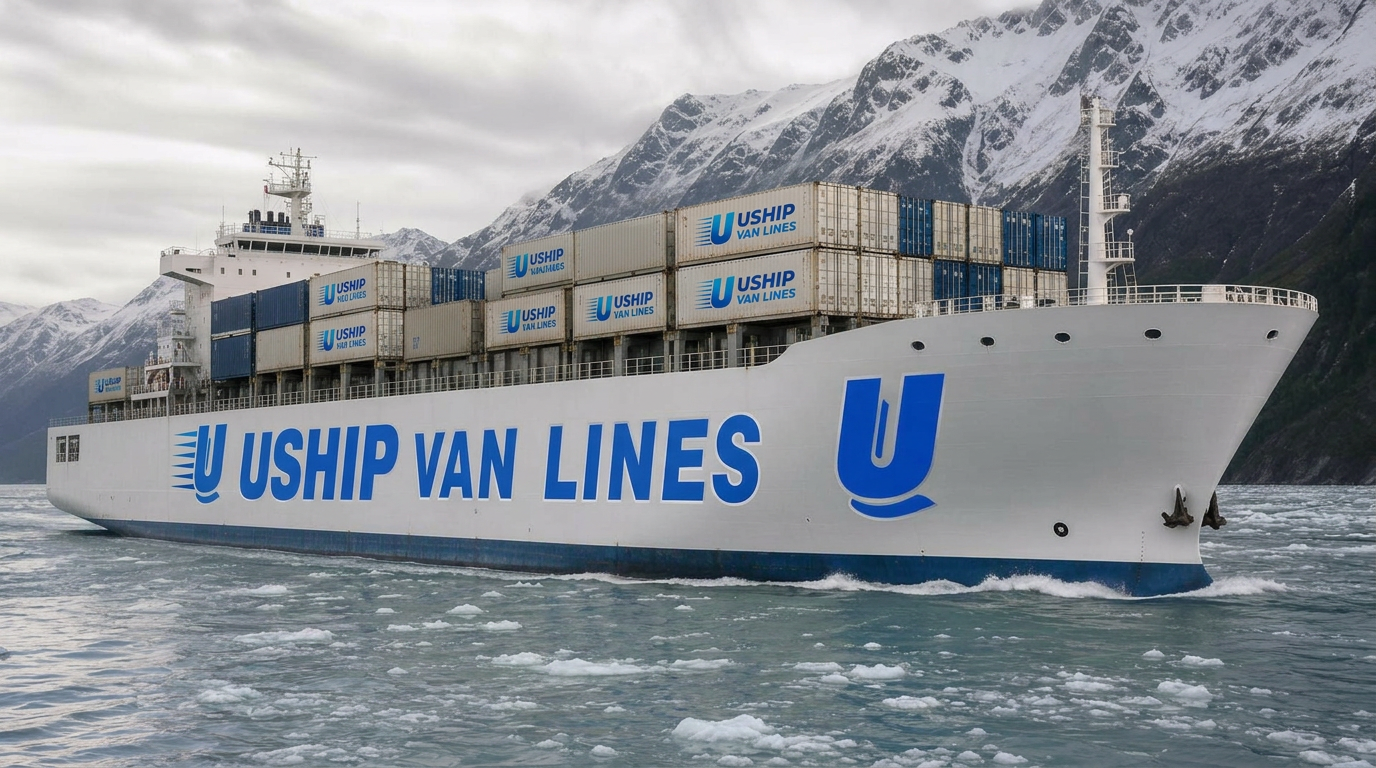
Moving from Tulsa, OK to Alaska
Moving from Tulsa to Alaska is one of the most logistically complex domestic relocations you can make—but with the right preparation, it's entirely manageable. Your household goods will travel nearly 3,000 miles overland to the Port of Tacoma, then ride a barge across the Gulf of Alaska to Anchorage, Fairbanks, or another destination. The entire journey typically takes 2–4 weeks door-to-door, depending on barge schedules and your final Alaska location.
Best Alaska & Hawaii Movers, powered by UShip Van Lines, specializes in this exact route. We coordinate every leg—ground transport from Tulsa, barge containerization in Tacoma, customs paperwork, and last-mile delivery across Alaska's unique terrain. Ready to get started? Request a free, no-obligation quote tailored to your timeline and inventory.
Route overview
The Tulsa to Alaska Moving Route
Your belongings begin their journey with a long-haul truck departure from Tulsa, crossing the Great Plains, Rocky Mountains, and Pacific Northwest to reach the Port of Tacoma in Washington State. This overland leg typically takes 4–7 days depending on weather and routing. In Tacoma, your shipment is loaded into a 20-foot or 40-foot ocean container and palletized for the marine crossing.
The barge departs Tacoma weekly (schedules vary by season) and sails north through the Inside Passage or offshore route, arriving at the Port of Anchorage roughly 5–8 days later. From Anchorage, your container is offloaded, cleared through Alaska port inspection, and dispatched for final delivery—either direct in the Anchorage bowl, or via secondary truck to Fairbanks, the Mat-Su Valley, Kenai Peninsula, or even bush communities accessible by winter ice road or air cargo.
This intermodal process requires precise coordination between trucking carriers, steamship lines, port agents, and local delivery teams. Every shipment is tracked container-by-container, and you'll receive milestone updates as your household crosses each checkpoint.
How the moving process works
How Your Tulsa to Alaska Move Works: Step-by-Step
-
Free In-Home or Virtual Survey – We assess your inventory, note any oversized items (vehicles, boats, ATVs), and provide a detailed written estimate with transparent line-item costs.
-
Packing and Load-Out in Tulsa – Professional movers wrap, box, and label your belongings. Fragile items receive extra padding; furniture is disassembled as needed. The truck is loaded using weight distribution best practices for cross-country haul.
-
Overland Transit to Tacoma – Your shipment travels I-44 → I-70 → I-84 or I-90, covering approximately 1,900 miles. The driver maintains GPS tracking, and you receive real-time ETA updates.
-
Containerization at Port of Tacoma – At the marine terminal, your goods are transferred into a steel ocean container. We complete U.S. Customs documentation (even domestic Alaska moves require maritime manifests) and schedule barge space.
-
Barge Voyage to Alaska – Your container sails with regular weekly service (or twice-weekly in peak summer season). The voyage takes 5–8 days depending on weather and port calls.
-
Port of Anchorage Arrival and Clearance – The container is offloaded, inspected by Alaska agricultural authorities (no uncertified soil, firewood, or invasive species), and released to our local delivery agent.
-
Final Delivery and Unload – A local Alaska crew brings your container to your new home. They unload, unpack (if contracted), reassemble furniture, and remove all packing debris. You inspect and sign off on delivery completion.
Estimated moving costs
What Does It Cost to Move from Tulsa to Alaska?
A typical 2-bedroom apartment or small home (7,000–9,000 lbs) moving from Tulsa to Anchorage generally costs $6,500–$10,500, while a 3–4 bedroom home (12,000–15,000 lbs) typically ranges $10,500–$16,000. These estimates include ground transport, barge freight, standard liability coverage, and delivery within the Anchorage municipality.
Key cost drivers include:
- Weight and cubic footage – Alaska barge pricing is primarily weight-based, with minimums around 5,000 lbs.
- Barge schedule and seasonality – Summer (May–September) sees higher demand and occasionally premium rates; shoulder seasons can offer better pricing.
- Final destination accessibility – Delivery to Fairbanks, Kenai, or off-road-system locations adds trucking or air-freight surcharges.
- Vehicle shipping – Cars and trucks can ride the same barge in a separate RORO (roll-on/roll-off) or container slot, typically $1,200–$2,200 per vehicle Tacoma to Anchorage.
- Packing services – Full professional packing adds roughly $800–$1,800 depending on home size and fragile inventory.
- Insurance – Standard carrier liability is $0.60/lb; full-replacement-value coverage costs about 1–2% of declared value.
- Storage – If you need short-term warehousing in Tacoma or Anchorage (common when closing dates don't align), expect $150–$400/month for a container.
We never quote guaranteed flat rates over the phone—every estimate is customized after a thorough inventory review. Request your personalized quote to see exactly what your move will cost with no hidden fees.
Estimated transit times
How Long Does a Tulsa to Alaska Move Take?
Door-to-door transit from Tulsa to Anchorage typically takes 14–28 days, broken down as follows:
- Tulsa to Tacoma overland: 4–7 days (variable by season and truck routing)
- Tacoma port dwell and containerization: 1–3 days (depends on barge sailing schedule)
- Barge sailing time: 5–8 days (weather dependent; Inside Passage vs. offshore route)
- Anchorage port clearance and drayage: 1–2 days
- Final delivery scheduling: 1–5 days (delivery zones are assigned; remote areas take longer)
If your destination is Fairbanks, Mat-Su, or Kenai, add 2–5 additional days for secondary trucking from Anchorage. Bush or off-road-system locations may require seasonal ice-road transport (winter only) or air cargo (small loads), which can extend timelines to 4–6 weeks.
Barge schedules are published months in advance, and we'll lock your sailing as soon as your shipment reaches Tacoma. Summer sailings are more frequent (sometimes twice weekly), while winter service may be weekly or every 10 days. Always book early if you have a firm move-in date—Alaska moving requires more lead time than Lower 48 moves.
Regional logistics
Alaska-Specific Moving Logistics You Need to Know
Ports and Container Handling: The Port of Anchorage is Alaska's primary deep-water terminal for household goods. All barge cargo is inspected by Alaska Department of Natural Resources agriculture officers—prohibited items include uncertified firewood, soil, hay, and certain plants. Pack smart and avoid delays.
Vehicle Shipping: If you're driving your car from Tulsa to Alaska, you'll face 3,500+ miles via the Alaska Highway (ALCAN), often requiring 7–10 days and significant fuel/lodging costs. Many customers choose to ship one vehicle on the same barge as household goods. Vehicles must be clean (no mud, no soil), operational for roll-on/roll-off, and have no more than 1/4 tank of gas. Personal items are not allowed inside shipped vehicles.
Last-Mile Delivery Challenges: Anchorage and the Mat-Su Valley have paved road access and standard delivery. Fairbanks requires an additional 6-hour truck haul north. Kenai, Homer, and Soldotna are 2–4 hours south on the Seward/Sterling Highway. Remote locations like Bethel, Kotzebue, Nome, or island communities in Southeast Alaska often require air cargo or seasonal barge service—plan for significantly higher costs and longer timelines.
Storage Options: If your new home isn't ready when your container arrives in Anchorage, we can hold your shipment in a secure, climate-controlled Anchorage warehouse. Short-term storage (up to 30 days) is common and affordable; long-term options are also available.
Partial Loads and Consolidation: If you're moving a small apartment or need budget-friendly options, we offer consolidated service where your goods share a container with another shipment. This reduces costs but may add 3–7 days to transit while we coordinate loads.
Paperwork and Timing: While Alaska is a U.S. state and no customs duties apply, maritime manifests and port documentation are required. We handle all filings—you just need to provide a detailed inventory and ensure nothing prohibited is packed.
Seasonal considerations
Best Times to Move from Tulsa to Alaska
Summer (May–September): Peak moving season. Weather is ideal, barge schedules are most frequent, and road conditions across the Rockies and Alaska are optimal. Expect higher demand, tighter truck availability, and premium pricing—especially for late June through early August when families relocate before the school year. Book 8–12 weeks in advance.
Fall (October–November): Shoulder season with moderate pricing and good availability. Barge schedules begin to thin slightly, and early snow can appear in the Alaska Range and mountain passes. Still a solid window, especially if you're flexible on exact delivery week. Book 6–8 weeks out.
Winter (December–March): Off-peak season with the best pricing, but weather can complicate timelines. I-90 and I-84 through the Cascades and Rockies may face closure during blizzards, and Anchorage port operations occasionally pause for extreme cold or ice. Barge service continues but is less frequent (weekly or biweekly). Upside: lower costs and high availability. Book 4–6 weeks ahead.
Spring (April–early May): Transitional period. Weather improves, barge schedules ramp up, and pricing is moderate. Watch for late-season snowstorms in the high Rockies and spring breakup (mud season) in rural Alaska, which can delay last-mile deliveries to remote properties. Book 6–8 weeks out.
No matter the season, we monitor weather and adjust routing in real time to keep your shipment safe and on schedule.
Why choose Best Alaska & Hawaii Movers
Why Choose Best Alaska & Hawaii Movers for Your Tulsa to Alaska Move
-
Proven Alaska Expertise – We specialize exclusively in Alaska and Hawaii relocations, with deep knowledge of barge logistics, port procedures, and last-mile delivery across Alaska's challenging terrain.
-
Transparent, All-Inclusive Pricing – You'll receive a detailed written estimate breaking down every cost—ground transport, barge freight, insurance, delivery, and any optional services. No surprise fees at delivery.
-
End-to-End Coordination – One point of contact manages your entire move from Tulsa packing through Anchorage delivery. We track your shipment at every milestone and proactively communicate updates.
-
Flexible Scheduling and Storage – We work around your timeline, offer short- and long-term storage in Tacoma or Anchorage, and accommodate last-minute changes when possible.
-
Powered by UShip Van Lines' Network – Our partnership with UShip Van Lines gives us access to a vetted nationwide carrier network, volume barge contracts, and claims support—ensuring reliability and accountability on every move.