
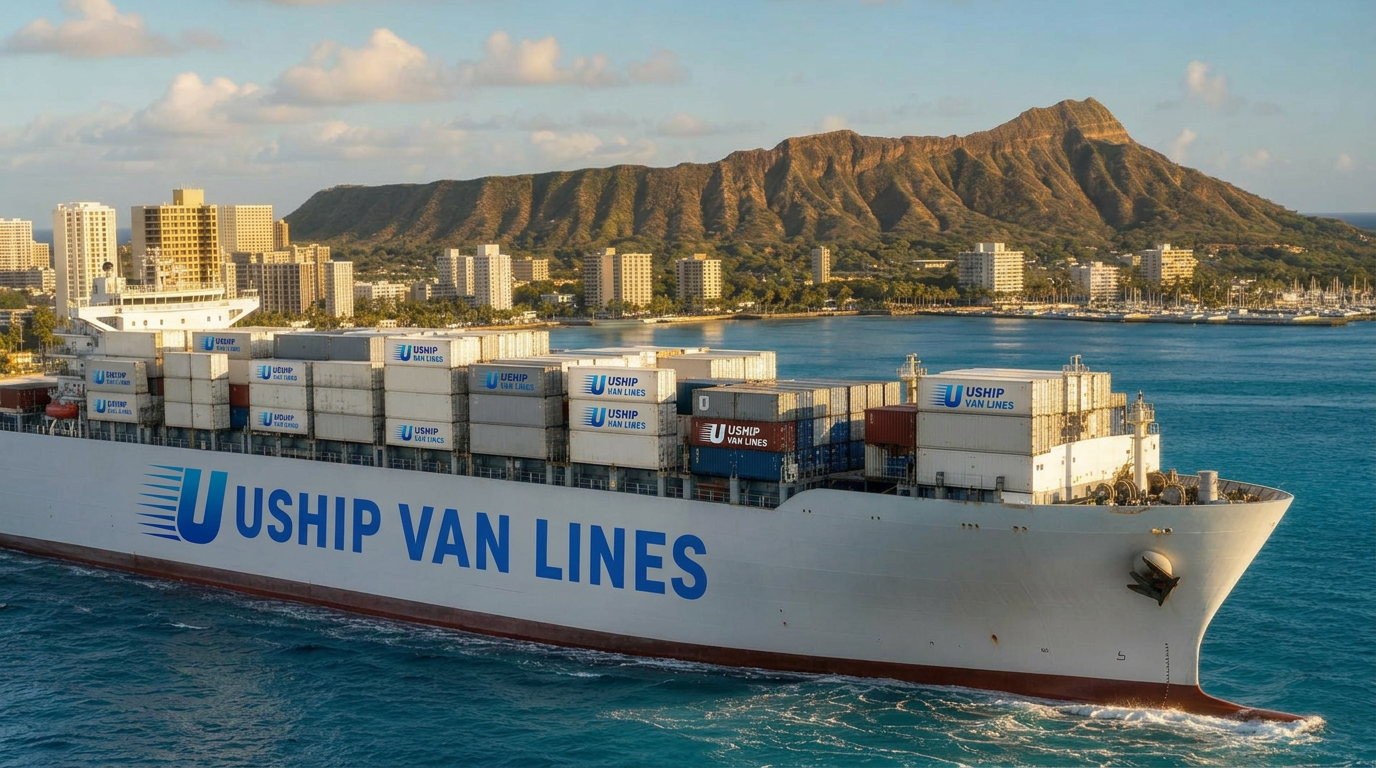
Moving from Tulsa, OK to Hawaii
Moving from Tulsa to Hawaii represents one of the most dramatic relocations in the continental-to-island spectrum—trading Oklahoma's rolling plains and Midwestern seasons for Pacific breezes, volcanic landscapes, and year-round warmth. Unlike a simple truck move, your household goods will travel by land to the West Coast, then by ocean container to the islands, requiring careful coordination across multiple carriers and timelines.
Best Alaska & Hawaii Movers, powered by UShip Van Lines, specializes in these complex multi-modal moves. We handle the full chain—trucking your belongings from Tulsa to Long Beach or Oakland, loading into ocean containers, coordinating with Matson or Pasha shipping lines, and arranging final delivery on Oahu, Maui, Kauai, or the Big Island. Ready to start your island journey? Request a free, detailed quote today.
Route overview
Route Overview: Tulsa, OK to Hawaii
Your move begins with a 1,600–1,800 mile overland journey from Tulsa to major California ports—typically Long Beach or Oakland. Professional movers load your household goods into a semi-trailer, which travels west via I-40 through the Texas panhandle, New Mexico, and Arizona before reaching Southern California, or north through Kansas and Nevada to the Bay Area. This leg typically takes 3–5 days depending on routing and scheduling.
Once at port, your belongings are transferred into a 20-foot or 40-foot ocean container and loaded onto a Matson or Pasha vessel bound for Honolulu. Ocean transit averages 5–7 days to Oahu. If your final destination is a neighbor island—Maui, Kauai, or the Big Island—you'll need inter-island barge service (Young Brothers or Aloha Marine Lines), adding another 3–5 days. Total door-to-door transit: 14–21 days for Oahu, 18–28 days for neighbor islands.
This route demands precision timing and documentation. Hawaii has strict agricultural inspections, vehicle import rules, and container release protocols. Working with a carrier experienced in Oklahoma-to-Hawaii logistics eliminates common pitfalls and keeps your shipment moving smoothly through every checkpoint.
How the moving process works
How the Moving Process Works
1. In-Home or Virtual Survey Your move coordinator conducts a detailed inventory of your Tulsa home—furniture, appliances, boxes, specialty items. This survey determines container size (shared 20-foot vs. exclusive 40-foot), accurate cubic footage, and identifies items restricted by Hawaii ag laws (soil-bound plants, certain woods, untreated wicker).
2. Packing and Loading in Tulsa Professional movers arrive at your Oklahoma home to pack (if you've selected full-service) and load your belongings into a dedicated moving truck. Fragile items receive extra padding; furniture is disassembled as needed. The truck departs for California, typically within 24–48 hours of loading.
3. Overland Transport to West Coast Port Your shipment travels 1,600+ miles to Long Beach or Oakland over 3–5 days. The carrier coordinates with port logistics teams to schedule container stuffing within a tight window aligned with vessel departure dates.
4. Container Loading and Ocean Freight At the port warehouse, longshoremen transfer your goods into a steel ocean container, securing everything for the Pacific crossing. The sealed container is loaded onto a Matson or Pasha ship. You'll receive a bill of lading with container number and estimated arrival date in Honolulu.
5. Hawaii Customs and Agricultural Inspection Upon arrival in Honolulu, your container clears U.S. Customs (usually straightforward for household goods) and undergoes Hawaii Department of Agriculture inspection. Inspectors look for prohibited plant materials, soil, and invasive pests. Proper documentation from step 1 expedites this process.
6. Inter-Island Transport (If Applicable) Moving to Maui, Kauai, Hilo, or Kona? Your container is transferred to an inter-island barge, adding 3–5 days. Neighbor island ports are smaller, so delivery scheduling requires extra coordination.
7. Final Delivery and Unloading Local Hawaii movers deliver your container to your new address, unload, place furniture, and remove packing materials. You conduct a final walkthrough, checking items against your inventory list. Most carriers offer unpacking services for an additional fee.
Estimated moving costs
Cost Estimate: What to Budget
A 2–3 bedroom household move from Tulsa to Hawaii typically ranges $6,800–$12,500, depending on volume, service level, and destination island. Here's how costs break down:
Key Cost Drivers:
- Volume & Container Type: Shared 20-foot container (good for 1–2 BR, ~1,200 cu ft) costs less than exclusive 40-foot (~2,400 cu ft for 3–4 BR). Exclusive containers avoid mixing shipments and offer faster processing.
- Service Level: Basic door-to-port service (you handle packing) starts lower; full-service (packing, unpacking, furniture assembly) adds $1,800–$3,200.
- Destination Island: Oahu is most economical (direct port). Neighbor islands (Maui, Kauai, Big Island) add $800–$1,600 for inter-island barge and remote delivery.
- Time of Year: Summer (May–August) sees 15–25% rate premiums due to peak military PCS season and family moves. Winter offers better pricing and vessel availability.
- Vehicle Shipping: Adding a car costs $1,100–$1,600 (Tulsa to Honolulu) via RORO (roll-on/roll-off) service. Vehicles ship separately from household goods, usually on the same carrier lines.
- Storage: If your Honolulu apartment isn't ready, Hawaii storage runs $150–$280/month for a 10×10 unit (climate-controlled recommended).
Sample Estimate: A 2,800 cu ft move (3 BR home) from Tulsa to Honolulu with professional packing, exclusive 40-foot container, and basic insurance typically lands around $9,200–$10,800. The same move to Maui adds roughly $1,200.
Important: These are industry averages. Your actual quote depends on precise inventory, access conditions (stairs, long carries), and current fuel surcharges. Best Alaska & Hawaii Movers provides transparent, itemized estimates with no hidden fees. Request your custom quote to see exact pricing for your situation.
Estimated transit times
Transit Time: Door-to-Door Timeline
Plan for 14–21 days from Tulsa pickup to Oahu delivery, or 18–28 days to neighbor islands. Here's the typical breakdown:
Overland (Tulsa to California Port): 3–5 days Your truck travels ~1,700 miles at regulated interstate speeds. Drivers follow DOT hours-of-service rules, building in rest stops. Some carriers use team drivers to shorten this leg to 2–3 days.
Port Dwell & Container Loading: 1–3 days At Long Beach or Oakland, your shipment waits for the next available container slot and vessel. Peak season can stretch dwell time; winter moves often load same-day or next-day.
Ocean Voyage to Honolulu: 5–7 days Matson's scheduled service departs Long Beach weekly (occasionally Oakland). The 2,500-mile Pacific crossing takes 5 days in ideal conditions; weather or port congestion can add 1–2 days.
Customs/Ag Inspection in Hawaii: 1–2 days Containers clear U.S. Customs quickly (household goods are low-risk). Ag inspection is thorough but typically completes within 24 hours if documentation is correct.
Inter-Island Barge (If Applicable): 3–5 days Young Brothers or Aloha Marine barges run multiple times weekly to Maui, Kauai, and the Big Island. Scheduling depends on your container's Honolulu arrival date and the next available departure.
Local Delivery on Your Island: 1–2 days Once cleared, local movers schedule delivery within 24–48 hours. Neighbor islands may have limited delivery windows due to smaller crew availability.
Expedite Options: For time-sensitive moves (job start dates, housing deadlines), exclusive containers and priority port scheduling can shave 3–5 days off the timeline, though at 15–20% cost premium. Discuss expedite options when requesting your quote.
Regional logistics
Hawaii-Specific Logistics You Need to Know
Ports of Entry Most shipments route through Honolulu Harbor (Oahu), the state's primary container port. From there, neighbor island moves transfer to Young Brothers inter-island barges serving Kahului (Maui), Nawiliwili (Kauai), Hilo and Kawaihae (Big Island). If you're moving directly to a neighbor island, your carrier coordinates the barge connection seamlessly—you won't handle separate bookings.
Hawaii Agricultural Restrictions The Hawaii Department of Agriculture enforces strict import rules to protect the islands' fragile ecosystems. Prohibited items include: soil or plants with soil attached, certain hardwoods (unfinished teak, mahogany), live plants from the mainland (except pre-approved species with permits), fresh fruits, and untreated wicker. Your moving company should provide a checklist during the survey. Items flagged during inspection are destroyed or quarantined at your expense, so disclose everything upfront.
Vehicle Shipping Shipping your car from Tulsa to Hawaii is common and runs parallel to household goods. Vehicles travel via RORO (roll-on/roll-off) service on the same Matson/Pasha ships. Cost: $1,100–$1,600 Tulsa to Honolulu. You'll drive or transport your car to the California port (or hire auto transport), where it's inspected, loaded, and secured. Hawaii requires vehicles to pass a safety inspection within 30 days of arrival; out-of-state titles must be surrendered for Hawaii registration. Factor in ~$300 for registration, inspection, and plates.
Documentation & Paperwork You'll need: detailed inventory list (provided by mover), signed bill of lading (ocean carrier), proof of Hawaii residency or employment (for some exemptions), and vehicle title (if shipping a car). Hawaii doesn't charge sales tax on household goods, but you'll declare high-value items ($5,000+) to Customs. Keep receipts for antiques, electronics, or jewelry.
Storage Options in Hawaii If your new home isn't ready upon arrival, most carriers offer short-term container storage at the port warehouse ($50–$100/day) or transfer to a climate-controlled facility ($150–$280/month). Honolulu and neighbor island storage units fill quickly; book ahead if you anticipate delays.
Last-Mile Delivery Challenges Hawaii's narrow roads, steep driveways, and older buildings (tight stairwells, no elevators) can complicate delivery. Confirm your new address with your carrier: Is it accessible to a full-size truck? Are there parking restrictions or HOA rules? Condos in Honolulu often require delivery reservations and certificate of insurance from the moving company. Remote Big Island or Kauai addresses may incur extra fees for longer drives from the port.
Unpacking & Setup Most carriers offer basic furniture placement. Full unpacking services (emptying boxes, disposing of materials) cost an additional $400–$800. Given Hawaii's recycling rules and limited landfill space, many movers reuse or recycle packing materials—confirm your preference upfront.
Seasonal considerations
Seasonal Considerations for Your Hawaii Move
Spring (March–May): Moderate Activity, Good Weather Mild Oklahoma spring weather makes packing and loading comfortable. Ocean conditions are generally calm post-winter. Rates begin climbing toward summer peaks in late April. Book 6–8 weeks ahead for best pricing. Hawaii's hotel and rental markets tighten as tourist season ramps up, so secure housing early.
Summer (June–August): Peak Season, Highest Costs This is the busiest window for moves—military PCS cycles, family relocations timed to school years, and summer job transfers. Expect 15–25% rate increases and longer booking lead times (8–12 weeks recommended). Tulsa's heat (90s–100s°F) makes mid-day moving grueling; schedule early morning starts. Hurricane season begins in the Pacific (June 1), though major storms affecting Hawaii are rare. Matson and Pasha maintain schedules unless a named storm directly threatens Honolulu.
Fall (September–November): Ideal Window This is the sweet spot. Summer crowds dissipate, rates drop 10–20%, and carrier availability improves. Oklahoma weather cools into comfortable 60s–70s. Pacific hurricane season peaks in August–September, but November onward sees minimal storm risk. Inter-island logistics run smoothly with fewer bottlenecks. Book 4–6 weeks out for excellent pricing and flexibility.
Winter (December–February): Lowest Rates, Weather Variables Winter offers the best pricing and easiest scheduling. Oklahoma winter weather (30s–50s, occasional ice/snow) can complicate driveways and loading days—coordinate closely on forecast. Pacific storms occasionally delay vessels by 1–2 days, but serious disruptions are uncommon. If your move lands near Christmas/New Year's, book 8+ weeks ahead; carrier offices and crews take holiday time. Arriving in Hawaii during winter means avoiding tourist high season and finding better rental deals.
Hurricane Season Note: The Central Pacific hurricane season (June 1–November 30) rarely disrupts shipping. Hawaii's geography and cooler waters deflect most systems. Matson and Pasha have robust weather protocols; in 20+ years, fewer than five storms have caused significant port closures. Your carrier monitors forecasts and adjusts schedules proactively.
Why choose Best Alaska & Hawaii Movers
Why Choose Best Alaska & Hawaii Movers
-
Specialized Oklahoma-to-Hawaii Expertise: We manage the full logistics chain—Tulsa pickup, overland transport to California ports, ocean container coordination with Matson and Pasha, and final delivery across all Hawaiian islands. No handoffs to inexperienced third parties.
-
Transparent, All-Inclusive Pricing: Your quote includes trucking, container fees, ocean freight, basic insurance, and standard delivery. No surprise fuel surcharges or hidden port fees. You'll know your total cost before signing.
-
Dedicated Move Coordination: One point of contact from survey to delivery. Your coordinator tracks your shipment across every leg—land, sea, and inter-island—providing proactive updates and handling any issues immediately.
-
Hawaii Agricultural Compliance: We know Hawaii's ag restrictions inside and out. During your survey, we'll identify prohibited items and help you make compliant decisions, avoiding costly inspection delays or quarantines.
-
Flexible Scheduling & Storage: Need to move in summer but your Maui rental isn't ready until fall? We offer container storage at competitive rates and flexible delivery windows to match your housing timeline.
-
Powered by UShip Van Lines: Our partnership with UShip Van Lines brings additional carrier resources, competitive pricing, and a robust claims process, giving you confidence that your belongings are protected throughout this complex journey.