
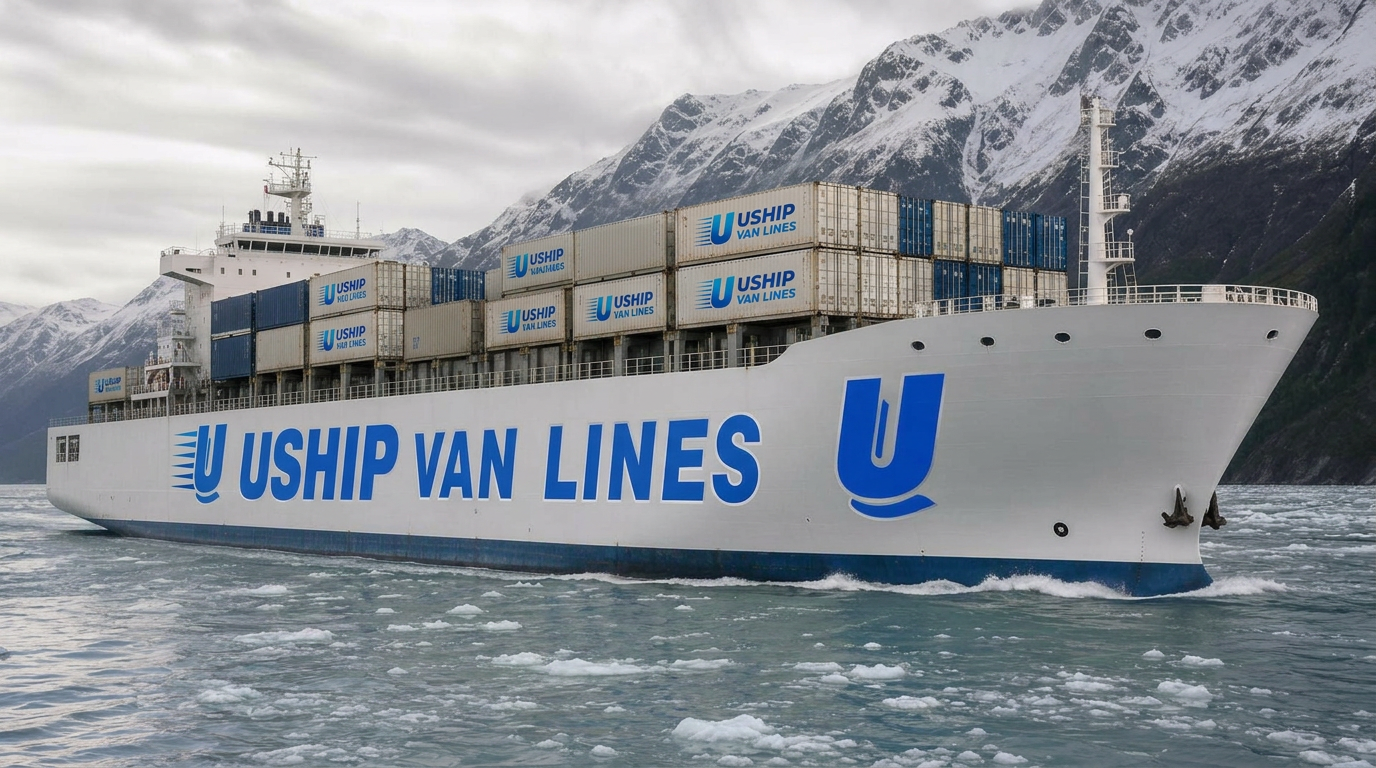
Moving from Alaska to Tulsa, OK
Relocating from Alaska to Tulsa means navigating one of the most logistically complex moving routes in North America. Your household goods will travel by barge from Alaska to the Port of Tacoma, then cross 1,800+ miles overland through the Pacific Northwest and Great Plains to reach Oklahoma's second-largest city. Best Alaska & Hawaii Movers, powered by UShip Van Lines, specializes in this precise combination of maritime and ground transport.
Whether you're leaving Anchorage, Fairbanks, the Mat-Su Valley, or a bush community, we coordinate every phase—from Alaska pickup through barge loading, containerized ocean transit, Tacoma offloading, over-the-road trucking, and final delivery to your Tulsa doorstep. Ready to simplify your Alaska-to-Oklahoma move? Request your free, no-obligation quote now.
Route overview
The Alaska-to-Tulsa Moving Corridor
This route combines Alaska's maritime freight infrastructure with one of the longest overland hauls in the continental United States. Your belongings depart Alaska via barge to Tacoma, Washington—a 1,400+ nautical mile voyage through the Inside Passage and coastal Pacific. Once offloaded at the Port of Tacoma, goods transfer to long-haul trucks for the cross-country journey through Washington, Idaho, Montana or Wyoming, South Dakota or Nebraska, Kansas, and finally Oklahoma.
Tulsa sits at the crossroads of I-44 and US-75, making it accessible from western freight corridors, but the sheer distance from the Pacific Coast adds 3–5 days of ground transit after your barge arrives. The route demands precise scheduling: barge sailings from Anchorage run weekly during summer peak season but taper to every 10–14 days in winter, and ground carriers must account for mountain passes, seasonal weather, and Midwest road conditions.
This lane appeals to military families (Tinker Air Force Base is 15 miles southeast), oil and gas professionals transitioning from Alaska's North Slope to Oklahoma's energy sector, and retirees drawn to Tulsa's lower cost of living and thriving arts scene. The move's complexity rewards working with a carrier experienced in Alaska maritime logistics and long-haul coordination.
How the moving process works
How Your Alaska-to-Tulsa Move Works: Step by Step
-
Alaska Pickup and Container Loading
Our crew arrives at your Alaska residence (Anchorage metro, Fairbanks, Mat-Su, Kenai Peninsula, or bush location requiring last-mile service) to load your household into a 20-foot or 40-foot ocean container. We pad and secure furniture, complete a detailed inventory, and seal the container for the journey south. -
Ground Transport to Port of Anchorage
The loaded container moves by truck to the Port of Anchorage (or Whittier for some sailings). If you're in a remote area, we coordinate last-mile pickup via local freight partners or small truck. Transit time from interior Alaska to the port: 1–2 days. -
Barge Sailing to Tacoma
Your container boards a commercial barge operated by carriers like TOTE Maritime Alaska or Alaska Marine Lines. The voyage to Tacoma takes 4–6 days in good weather, occasionally longer in winter storms. Containers remain sealed and protected throughout the sea leg. -
Port of Tacoma Offloading and Customs Clearance
Upon arrival in Washington, longshoremen offload your container and it clears any necessary inspections (typically minimal for domestic Alaska-to-Lower 48 moves). This process takes 1–2 days, depending on port congestion. -
Container Transfer to Long-Haul Truck
The container is loaded onto a flatbed or chassis for the overland journey. Our dispatch team schedules the truck to depart Tacoma within 24–48 hours of offloading, routing through I-90 or I-84 east, then south via I-25 or US-287 through the Rockies, and finally southeast via I-70 and I-44 into Oklahoma. -
Cross-Country Ground Transit
The truck travels approximately 1,850 miles from Tacoma to Tulsa, typically requiring 3–5 days of drive time. Drivers observe DOT hours-of-service regulations and may pause for fuel, rest, and weather delays (especially in winter over mountain passes or during Midwest ice events). -
Tulsa Area Delivery and Unloading
The truck arrives at your Tulsa address—whether in downtown, Midtown, South Tulsa (Jenks/Bixby), Broken Arrow, or Owasso. Our crew unloads, places furniture according to your floor plan, reassembles beds and tables, and removes all packing materials. You complete a final inventory check and sign off on delivery.
Estimated moving costs
What You'll Pay: Alaska-to-Tulsa Moving Costs
A typical 2–3 bedroom household (8,000–12,000 pounds) moving from Alaska to Tulsa generally costs $8,500–$14,500, depending on volume, origin/destination specifics, season, and services selected. This estimate includes:
- Barge freight: $3,500–$6,000 for containerized ocean transport from Anchorage to Tacoma (charged per container or per cubic foot)
- Ground linehaul: $3,000–$5,500 for the 1,850-mile truck journey from Tacoma to Tulsa
- Alaska pickup labor: $800–$1,500 for packing, loading, and last-mile service if outside Anchorage
- Tulsa delivery labor: $600–$1,000 for unloading and furniture placement
- Insurance: $200–$500 for full-value protection on a mid-sized shipment
Key cost drivers:
- Volume and weight: Every additional 1,000 pounds or 100 cubic feet adds $400–$700.
- Seasonality: Peak summer moves (May–August) can run 15–25% higher due to barge demand and Alaska construction/tourism traffic.
- Remote origins: Bush communities requiring air freight or barge feeder service to Anchorage add $1,500–$4,000.
- Vehicle shipping: Adding a car or truck to the container costs $1,200–$2,500 (barge-only; overland vehicle transport is typically separate).
- Packing services: Full professional packing adds $800–$2,000; partial (fragile items only) adds $300–$600.
- Storage: If your Tulsa home isn't ready, short-term warehousing in Tacoma or Oklahoma runs $150–$300/month.
We never guarantee prices sight-unseen. Request a detailed quote based on your actual inventory and timeline for the most accurate estimate.
Estimated transit times
How Long Does an Alaska-to-Tulsa Move Take?
Expect a door-to-door timeline of 12–21 days from your Alaska pickup to Tulsa delivery, broken down as follows:
- Alaska pickup to Port of Anchorage: 1–2 days (same-day if you're in Anchorage; up to 3 days for Fairbanks or Mat-Su with scheduling)
- Port dwell and barge departure: 1–3 days (containers often wait for the next scheduled sailing)
- Barge transit to Tacoma: 4–6 days (occasionally 7–8 days in heavy winter weather or routing via Dutch Harbor)
- Tacoma offloading and customs: 1–2 days
- Ground transit Tacoma to Tulsa: 3–5 days (4 days is typical in good conditions)
- Delivery scheduling: Same-day to +1 day once truck arrives in Tulsa metro
Seasonal variance:
- Summer (May–August): Barges sail weekly; total time typically 12–16 days.
- Winter (November–February): Barges sail every 10–14 days; weather delays can push the window to 18–21 days.
- Shoulder seasons (March–April, September–October): 14–18 days, moderate barge frequency and generally favorable road conditions.
If you have a firm Tulsa move-in date, book 4–6 weeks in advance to secure a barge slot and coordinate ground delivery timing.
Regional logistics
Alaska-Specific Moving Logistics You Need to Know
Ports and Barge Operations
Most Alaska-to-Lower 48 moves originate at the Port of Anchorage, the state's primary freight hub. Some sailings depart from the Port of Whittier (60 miles south of Anchorage, accessed via tunnel), which serves as an alternative for certain barge lines. If you're in Southeast Alaska (Juneau, Ketchikan, Sitka), goods may barge directly to Tacoma or route through Anchorage. Bush and remote communities (Bethel, Nome, Kodiak, Unalaska) require feeder barge or air freight to connect with the main Anchorage-Tacoma service.
Containerization and Packing
Your household loads into a standard 20-foot steel ocean container (1,100–1,400 cubic feet, suitable for a 1–2 BR home) or a 40-foot container (2,300–2,700 cubic feet, for 3–4 BR). Containers are sealed at your Alaska residence and remain sealed until Tulsa delivery, minimizing handling and damage risk. We pad furniture, use cargo straps, and block and brace heavy items to withstand the barge's roll and pitch.
Vehicle Shipping
Many Alaska-to-Oklahoma movers ship one vehicle inside the household goods container (if space allows) or book separate vehicle transport. Inside-container shipping costs less ($1,200–$2,000) but limits household volume. Roll-on/roll-off (RoRo) vehicle barges are another option, with cars driving onto the barge in Anchorage and offloading in Tacoma for overland drive-away or truck transport to Tulsa ($1,500–$2,800 total). Disclose vehicle shipping early so we can plan container space or coordinate auto carriers.
Documentation and Regulations
Alaska-to-Lower 48 moves are considered domestic (no customs duties), but carriers complete a bill of lading for barge transit and a household goods inventory for insurance. If shipping firearms, declare them on the inventory and pack according to federal guidelines (unloaded, locked, ammunition separate). If moving from a remote village, coordinate with tribal or community offices for any local freight restrictions.
Last-Mile and Bush Access
Anchorage, Fairbanks, Wasilla/Palmer, and Kenai Peninsula towns have direct road access. For bush locations (off the road system), we arrange small truck, barge feeder, or air freight to transport your container to the Port of Anchorage. Costs and lead times vary widely—Nome or Bethel typically add $1,500–$3,000 and 3–7 days; remote villages on the Yukon-Kuskokwim Delta or Aleutian Chain can require custom logistics quotes.
Tulsa Delivery Considerations
Tulsa's street grid is straightforward, but some older Midtown and downtown neighborhoods have narrow streets, low-hanging trees, or limited truck access. If delivering to a historic district, university-area apartment, or gated community, confirm truck access in advance. Most Tulsa-area subdivisions (South Tulsa, Broken Arrow, Bixby, Owasso, Jenks) accommodate large moving trucks without issue.
Seasonal considerations
Best (and Most Challenging) Times to Move Alaska to Tulsa
Spring (March–May)
Barge schedules ramp up from winter lows, with sailings increasing to weekly by late April. Breakup season in Alaska can make remote pickups muddy and challenging, but Tacoma and the overland route to Tulsa are generally clear. Costs are moderate, and availability improves as peak season approaches. Good choice for families coordinating with Tulsa school start dates (late August).
Summer (June–August)
Peak moving season. Weekly barge sailings, shortest transit times (often 12–14 days door-to-door), and maximum flexibility. However, demand is highest—book 6–8 weeks ahead—and rates run 15–25% above winter baseline. Weather is excellent on the water and overland. Ideal if you need speed and certainty, but budget for premium pricing.
Fall (September–November)
Barge frequency begins to taper in October; by November, expect sailings every 10–12 days. Weather remains mostly favorable until mid-November, when early winter storms can delay barges and create icy conditions over mountain passes in Montana/Wyoming. Costs drop slightly from summer highs. Good window for retirees or remote workers with flexible timelines.
Winter (December–February)
The most challenging and economical season. Barges sail every 10–14 days, and winter storms in the Gulf of Alaska or North Pacific can delay sailings or add 1–3 days to transit. Overland, I-90 and I-25 face periodic closures for snow and ice, potentially adding 1–2 days to ground transit. Rates are lowest (10–20% below summer), and availability is high. Best for cost-conscious movers who can tolerate a 3-week window and weather uncertainty.
Why choose Best Alaska & Hawaii Movers
Why Best Alaska & Hawaii Movers for Your Alaska-to-Tulsa Move?
- Alaska Maritime Specialists: We coordinate barge schedules, container loading, and Port of Anchorage logistics daily—this isn't a once-a-year route for us; it's our core business.
- Seamless Barge-to-Ground Handoff: Our Tacoma partners offload and transfer your container to long-haul trucks without delays, keeping your shipment on schedule through the critical port transition.
- Transparent, All-Inclusive Pricing: Your quote covers barge freight, ground linehaul, Alaska pickup labor, Tulsa delivery labor, and basic insurance—no surprise fees at delivery.
- Powered by UShip Van Lines: Our nationwide carrier network ensures reliable over-the-road service from Tacoma to Tulsa, with real-time tracking and direct communication.
- Flexible Scheduling and Storage: Need to store in Tacoma or Oklahoma while your Tulsa home closes? We offer short- and long-term warehousing at transparent rates, with easy redelivery when you're ready.