
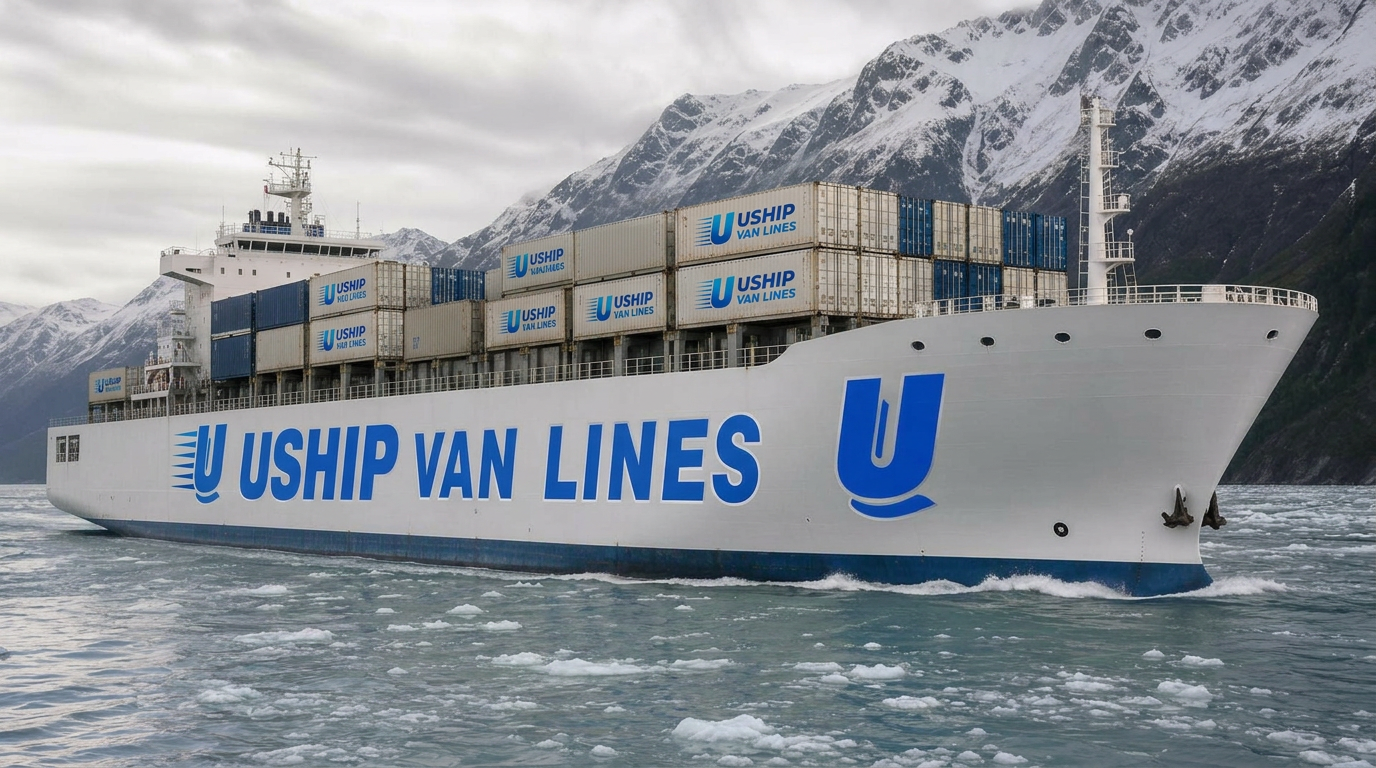
Moving from Philadelphia, PA to Alaska
Moving from Philadelphia, PA to Alaska transforms a cross-country relocation into a genuine multimodal adventure. Your household goods will travel over 3,800 miles by truck and barge, crossing the entire continental United States before boarding a vessel in Tacoma, WA bound for Anchorage or other Alaska ports.
Best Alaska & Hawaii Movers specializes in this exact route, coordinating the complex logistics of long-haul trucking, marine shipping, and last-mile delivery throughout the Last Frontier. Whether you're relocating to Anchorage, Fairbanks, the Mat-Su Valley, or remote bush communities, we'll guide you through every mile and every mode of transport. Request a detailed quote today to see how we make Philadelphia-to-Alaska moves straightforward.
Route overview
How Philadelphia to Alaska Moves Work
Your belongings begin their journey with a long-haul truck from the Philadelphia metro area, traveling westward approximately 2,800 miles to our consolidation facility near Tacoma, Washington. This leg typically takes 5–7 days depending on weather and scheduling. Once your shipment reaches the Pacific Northwest, it's transferred to a marine container and loaded onto a commercial barge operated by carriers like Tote Maritime or Matson.
The ocean voyage from Tacoma to the Port of Anchorage takes 6–8 days under normal conditions, traveling through the Inside Passage and across the Gulf of Alaska. After clearing customs and port operations in Anchorage, your shipment enters the final phase: ground delivery to your new Alaska address. For Anchorage-area moves, this happens quickly; for destinations like Fairbanks, the Mat-Su Valley, Kenai Peninsula, or remote locations, we arrange specialized carriers familiar with Alaska highways and seasonal road conditions.
This coordinated truck-barge-truck process is the most cost-effective method for full household moves to Alaska. Air freight exists but costs 5–10 times more and works only for small shipments. The Philadelphia-to-Alaska route requires careful scheduling around barge departure windows—typically weekly during summer, less frequent in winter—so advance planning is essential.
How the moving process works
Step-by-Step: Your Philadelphia to Alaska Move
-
Initial consultation and survey — We assess your inventory via video walk-through or in-home visit (Philadelphia metro), provide a binding estimate, and explain the multimodal timeline. You'll receive a detailed breakdown of truck, barge, and delivery costs.
-
Packing and preparation — Professional packing is strongly recommended for Alaska moves due to the multiple handling points. We use marine-grade materials and moisture barriers to protect against condensation during the ocean voyage. Prohibited items (hazardous materials, perishables, plants) are identified and excluded.
-
Long-haul trucking to Tacoma — Your household goods are loaded in Philadelphia and transported cross-country to our Pacific Northwest staging facility. Transit takes 5–7 days. We provide tracking updates and coordinate your delivery window.
-
Marine containerization and barge loading — Your shipment is transferred into a weatherproof marine container, sealed, and loaded onto the next available barge to Alaska. You'll receive your bill of lading and container number for tracking.
-
Ocean transit to Alaska — The barge sails from Tacoma to Anchorage (or Whittier for some routes), taking 6–8 days. Shipments are fully insured against marine risks. Weather delays are rare but possible, especially October through March.
-
Port clearance and customs — Upon arrival at the Alaska port, containers are offloaded and processed. Alaska is a U.S. state, so there are no customs duties, but agricultural inspections may occur. This adds 1–2 days.
-
Final delivery to your Alaska address — We coordinate last-mile delivery with Alaska-based carriers. Anchorage deliveries happen within 3–5 days of port arrival. Fairbanks, Mat-Su, Kenai, or remote destinations may require additional transit time depending on road conditions and weather.
Estimated moving costs
What a Philadelphia to Alaska Move Costs
A typical 2–3 bedroom household move from Philadelphia to Anchorage ranges from $8,500 to $14,000 for full-service door-to-door transport. Studio or 1-bedroom moves may run $5,000–$7,500, while 4+ bedroom homes can exceed $18,000. These estimates include long-haul trucking, marine freight, port handling, and Alaska ground delivery.
Key cost drivers:
- Volume and weight — Barge charges are calculated by cubic footage or container size (20' vs. 40'). Reducing your load saves significantly.
- Packing services — Professional packing adds $800–$2,000 but is worthwhile given the handling complexity and moisture exposure.
- Final destination — Anchorage is the base rate. Fairbanks adds $800–$1,500; Mat-Su Valley $400–$900; Kenai Peninsula $1,200–$2,000; bush locations requiring air or winter-only ice road delivery can add $3,000+.
- Season — Summer (May–September) sees higher demand and slightly elevated rates but more frequent barge sailings. Winter moves may find better pricing but face longer transit windows.
- Vehicles — Shipping a car from Philadelphia to Alaska via the same barge route costs $2,200–$3,500 and is often bundled with household goods for efficiency.
- Storage — If your Alaska housing isn't ready, Anchorage-area storage runs $150–$300/month for typical household volumes.
We never advertise guaranteed flat-rate pricing because Alaska logistics involve third-party carriers and weather variables. Every quote is customized to your exact inventory, dates, and destination. Request a detailed estimate to see your specific costs.
Estimated transit times
Philadelphia to Alaska: Realistic Timelines
Door-to-door transit from Philadelphia to Anchorage typically takes 18–28 days under normal conditions. This breaks down as:
- Philadelphia to Tacoma (truck): 5–7 days
- Tacoma staging and barge loading: 2–5 days (depends on next departure)
- Tacoma to Anchorage (ocean): 6–8 days
- Port offload and clearance: 1–3 days
- Anchorage final delivery: 2–5 days
For destinations beyond Anchorage, add extra time. Fairbanks deliveries typically add 3–5 days due to the 360-mile highway haul. Kenai Peninsula destinations add 4–7 days. Remote locations served by seasonal barge service (Nome, Kotzebue, Bethel) may add weeks or require summer-only access.
Winter moves (October–March) often experience slower timelines due to weather delays in mountain passes, reduced barge frequencies, and Alaska road conditions. Summer moves benefit from weekly barge departures and optimal driving conditions but face higher demand and tighter scheduling. Always build in a 5–7 day buffer beyond the quoted timeframe, especially if you have firm job start dates or housing commitments.
Regional logistics
Alaska-Specific Moving Logistics You Need to Know
Ports and marine routing: Most Philadelphia-to-Alaska shipments use the Port of Anchorage via Tacoma. Some carriers route through the Port of Whittier (60 miles south of Anchorage), which requires an additional truck transfer through a single-lane tunnel. We coordinate all port scheduling, customs paperwork, and offloading logistics.
Vehicle shipping: Your car can travel on the same barge as your household goods. Vehicles must be clean (Alaska agricultural inspection), under 1/4 tank of fuel, and free of personal items except floor mats and car seats. Shipping a sedan from Philadelphia to Anchorage costs $2,200–$3,500 and takes the same 18–28 days. Motorcycles, RVs, and boats can also be shipped; we'll provide specialized quotes.
Paperwork and documentation: Alaska is a U.S. state, so no passports or international customs are required. However, you'll receive a bill of lading for the marine leg, and agricultural inspection forms may be needed if you're bringing any wood items, soil, or plant-based goods. We handle all documentation and keep you informed at each checkpoint.
Last-mile delivery challenges: Anchorage and the road-connected "Railbelt" (Wasilla, Palmer, Fairbanks, Kenai, Soldotna) are straightforward. Remote communities may require float-plane cargo service, seasonal barge (summer only), or winter ice-road delivery. We'll explain your options and costs upfront if you're moving off the highway system.
Storage options: If your Alaska residence isn't ready, we offer short-term climate-controlled storage in Anchorage. This is common for military relocations, early retirees waiting on housing construction, or anyone closing on a home mid-transit. Monthly rates run $150–$300 depending on volume.
Prohibited items: Alaska moves cannot include hazardous materials (paint, propane, ammunition), perishable food, or live plants. Firearms are allowed if properly declared and packed according to federal regulations. We'll provide a complete exclusion list during your survey.
Seasonal considerations
Best Times to Move from Philadelphia to Alaska
Summer (May–September): Peak moving season for Alaska. Barge departures run weekly, weather is favorable across all modes, and Alaska road conditions are excellent. You'll pay modestly higher rates due to demand, but scheduling is most flexible and transit times are most predictable. Ideal if you have children transitioning schools or need to start work by a firm date.
Fall (October–November): Shoulder season with moderate pricing and still-reliable barge service. Early snow can begin affecting Alaska highways by late October, and barge frequencies start to decrease. Good option if you're cost-conscious and flexible on exact delivery dates.
Winter (December–March): Off-peak season with the best pricing—often 10–15% below summer rates. However, barge sailings are less frequent (sometimes bi-weekly), mountain passes can close temporarily due to storms, and Alaska delivery faces snow and ice challenges. Remote Alaska destinations may be inaccessible until spring. Only recommended if you're storing goods short-term or have very flexible timelines.
Spring (April–May): Transition period as service ramps up. Pricing begins to climb toward summer levels, but you'll avoid peak-season crush. Ice breakup can briefly affect some Alaska river crossings in early April, but conditions generally improve rapidly. Excellent compromise between cost and reliability.
Why choose Best Alaska & Hawaii Movers
Why Best Alaska & Hawaii Movers for Your Philadelphia to Alaska Move
-
Alaska specialists, not generalists — We focus exclusively on moves to and from Alaska and Hawaii, managing the multimodal complexity that defeats most traditional movers. Our team knows barge schedules, Alaska carriers, and seasonal logistics inside and out.
-
Single-source accountability — You get one point of contact from Philadelphia pickup through Alaska delivery. We coordinate truck, barge, port operations, and final-mile carriers so you never chase down separate vendors.
-
Transparent, customized pricing — No hidden fees or surprise charges. Your binding estimate includes every leg of the journey, and we explain exactly what drives your cost. If your inventory changes, we adjust the quote fairly before any truck is loaded.
-
Comprehensive insurance and tracking — Full-value marine insurance covers your goods from Philadelphia door to Alaska door. You'll receive tracking updates at every major milestone: truck departure, Tacoma arrival, barge sailing, port clearance, and final delivery.
-
Powered by UShip Van Lines infrastructure — Our operational backbone ensures access to vetted long-haul carriers, reliable marine partnerships, and Alaska ground delivery networks built over years of Alaska service. You get boutique expertise with enterprise reliability.