
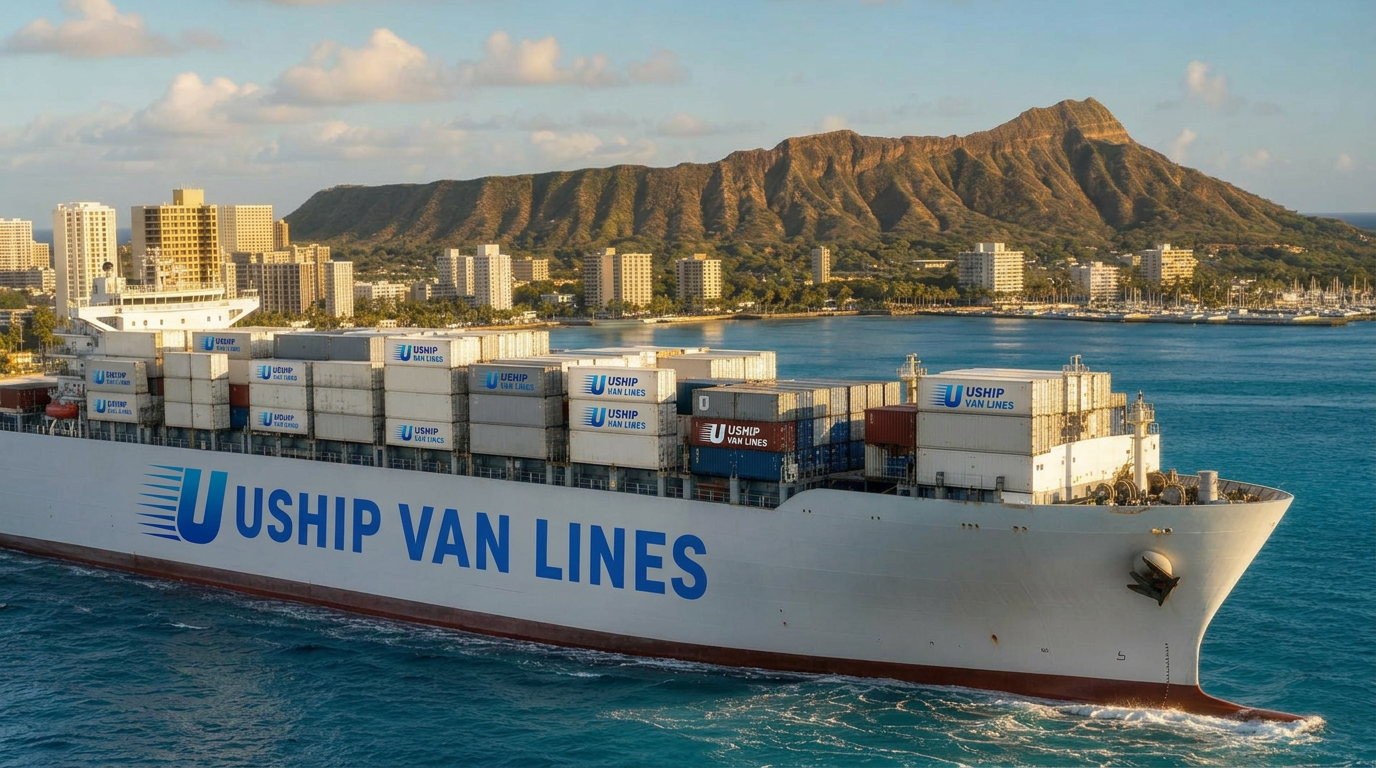
Moving from Philadelphia, PA to Hawaii
Moving from Philadelphia to Hawaii represents one of the most logistically complex relocations in the United States. Your household goods will travel approximately 5,000 miles across the country and then across the Pacific Ocean, requiring seamless coordination between ground transportation and ocean freight carriers.
Best Alaska & Hawaii Movers, powered by UShip Van Lines, specializes in these cross-country-to-ocean moves. We handle the entire journey from your Philadelphia doorstep to your new Hawaiian home, coordinating ground transport to West Coast ports and ocean container shipping to Honolulu, Maui, Kauai, or the Big Island. Request your free quote today to get started.
Route overview
How Philadelphia to Hawaii Moves Work
Your belongings begin their journey with ground transportation from Philadelphia to either the Port of Long Beach or Port of Oakland in California—a cross-country haul of roughly 2,800 miles that typically takes 5–7 days. Once at the West Coast port, your goods are loaded into ocean containers for Matson or Pasha shipping lines, which operate regular service to Hawaii.
The ocean voyage from California to Honolulu takes 5–7 days under normal conditions. If you're moving to a neighbor island (Maui, Kauai, Big Island), add another 3–5 days for inter-island barge service and final delivery. The entire door-to-door process typically requires 3–5 weeks, though seasonal port congestion and weather can extend timelines.
This route requires specialized knowledge of both long-haul trucking regulations and Hawaii's unique import requirements, including agricultural inspections and documentation that mainland-only movers often mishandle.
How the moving process works
The Step-by-Step Moving Process
-
Initial quote and survey – We assess your inventory via virtual or in-home survey, considering items that cannot be shipped to Hawaii (plants, certain foods, some chemicals) and provide a detailed cost estimate based on volume and service level.
-
Scheduling and coordination – We book your pickup date in Philadelphia and reserve container space with Matson or Pasha, coordinating timing to minimize storage fees and avoid peak congestion periods at West Coast ports.
-
Philadelphia pickup and packing – Our crew loads your household goods into a commercial truck, either pre-packed by you or with full-service packing available; items are inventoried and prepared for the cross-country haul.
-
Cross-country transport to California – Your shipment travels I-76 to I-80 across Pennsylvania, Ohio, Nebraska, Wyoming, and into California, typically taking 5–7 days depending on weather and route conditions.
-
Container loading and ocean shipment – At Long Beach or Oakland, your goods are transferred into 20-foot or 40-foot ocean containers (shared or exclusive depending on your shipment size), inspected by USDA if required, and loaded onto Matson or Pasha vessels for the Pacific crossing.
-
Hawaii port clearance – Upon arrival in Honolulu, containers clear customs and agricultural inspection; prohibited items are flagged, and your shipment is released for inter-island transfer if needed.
-
Final delivery – Your goods are unloaded at your new Hawaii address; we recommend being present to check inventory and note any damage immediately for insurance purposes.
Estimated moving costs
What You'll Pay: Realistic Cost Ranges
A typical 2-bedroom move from Philadelphia to Hawaii costs $6,500–$11,000, while a 3-bedroom household runs $9,000–$15,000 or more. These ranges reflect the complexity of combining cross-country ground transport with ocean freight.
Key cost drivers include:
- Volume and weight – Hawaii movers charge by cubic footage or container space; a full 40-foot container costs significantly more than a shared 20-foot option
- Service level – Full-service packing, crating for fragile items, and white-glove delivery add $1,500–$4,000 to base transportation costs
- Destination island – Oahu (Honolulu) is the least expensive; Maui, Kauai, and Big Island require inter-island barge service adding $800–$2,000
- Vehicle shipping – Cars ship separately via roll-on/roll-off vessels; expect $1,200–$1,800 per vehicle from West Coast ports
- Seasonal timing – Summer and early fall see 15–25% premium pricing due to high demand and hurricane season scheduling challenges
- Insurance coverage – Full replacement value coverage typically costs 1.5–2.5% of declared value versus basic 60¢/lb carrier liability
We never quote guaranteed prices without a detailed inventory, as Hawaii moves have too many variables. Request a free estimate for accurate pricing based on your specific needs.
Estimated transit times
How Long Your Move Takes
Door-to-door delivery from Philadelphia to Hawaii typically requires 21–35 days under normal conditions. Here's the realistic breakdown:
Ground transport (Philadelphia to California ports): 5–7 days for the 2,800-mile cross-country haul, barring winter weather delays in the Rockies or Sierra Nevada.
Port staging and container loading: 2–5 days to transfer your goods from truck to ocean container, complete agricultural pre-inspections, and await vessel departure. Matson and Pasha operate weekly sailings, but timing depends on your arrival date.
Ocean voyage (California to Honolulu): 5–7 days for the 2,400-nautical-mile Pacific crossing, weather permitting. Hurricane season (June–November) can extend this by 1–3 days.
Hawaii port clearance: 1–3 days for customs, USDA agricultural inspection, and container release. Prohibited items cause delays.
Inter-island delivery (if applicable): Add 3–5 days for barge service to Maui, Kauai, or Big Island, plus final trucking to your address.
Peak summer months and holiday periods can add 5–10 days to every leg. Winter weather in the Rockies or Pennsylvania can delay your initial pickup. We provide tracking updates at each milestone.
Regional logistics
Hawaii-Specific Logistics You Must Understand
Ports and carriers: Your shipment will route through either Long Beach or Oakland (occasionally Tacoma) for Matson or Pasha sailing. Honolulu is the primary Hawaii port; neighbor islands require Young Brothers inter-island barge. You have no control over which West Coast port your mover uses—it depends on their network and carrier contracts.
Agricultural restrictions: Hawaii enforces strict USDA quarantine rules. Prohibited items include: all plants, soil, fresh produce, certain seeds, untreated wood, and some packaged foods. Inspectors will open your container; non-compliant items are confiscated and destroyed at your expense. Your mover should provide a detailed prohibited-items list during booking.
Vehicle shipping: Cars ship separately on Matson or Pasha roll-on/roll-off auto carriers from the same West Coast ports. Vehicles must be clean (exterior wash), contain less than ¼ tank of fuel, and pass agricultural inspection. Personal items in the car are not allowed. Expect 2–3 weeks port-to-port, plus processing time. Coordinate vehicle shipping timing with your household goods for a simultaneous arrival if possible.
Paperwork requirements: You'll need a detailed inventory list (high-value items documented separately), proof of ownership for vehicles, and possibly a Hawaii state ID or lease agreement to clear customs smoothly. Active-duty military personnel have streamlined processes under PCS orders.
Condo and high-rise rules: Honolulu and neighbor island condos often have strict move-in rules: reserved elevator times, certificate of insurance requirements (your mover provides this), and weekend/evening restrictions. Notify your building management 2–4 weeks before your delivery date, and share those rules with your moving coordinator immediately.
Storage options: If your Hawaii housing isn't ready, Honolulu-area storage costs $150–$350/month for a 10x10 unit. Neighbor island storage is limited and more expensive. Plan your delivery timing carefully to avoid unnecessary storage fees.
Seasonal considerations
Best Times to Move & Seasonal Challenges
Winter (December–February): Philadelphia winters bring snow and ice that can delay your initial pickup by days. Once goods reach California, ocean service runs smoothly, and port congestion is lower. This is often the most affordable season for Hawaii moves, with rates 10–20% below summer peaks. Just build in weather buffer time for the East Coast and mountain crossings.
Spring (March–May): Ideal moving window with mild weather across the country and lower demand before summer rush. Port operations run efficiently, and ocean carriers maintain reliable schedules. Rates are moderate, and you'll avoid both winter storms and hurricane season complications. Book 6–8 weeks ahead for best availability.
Summer (June–August): Peak moving season coincides with the start of hurricane season (officially June 1). Expect 15–25% premium pricing, longer wait times for container space, and potential weather delays in the Pacific. Families moving before school starts create booking bottlenecks. Reserve your move 10–12 weeks in advance, and consider insurance riders for storm-related delays.
Fall (September–November): Hurricane season peaks in August–October, potentially disrupting vessel schedules and port operations. September and early October are the riskiest months for tropical storm delays. Late November sees demand drop and prices normalize. If moving during hurricane season, expect your mover to have contingency plans and flexible delivery windows.
Why choose Best Alaska & Hawaii Movers
Why Choose Best Alaska & Hawaii Movers
-
Specialized Hawaii expertise – We focus exclusively on Alaska and Hawaii moves, understanding the ocean freight logistics, port procedures, and agricultural regulations that general movers often bungle.
-
Single-source accountability – You work with one coordinator from Philadelphia pickup through Hawaii delivery, eliminating the finger-pointing common when mainland movers subcontract ocean legs to third parties.
-
Transparent, detailed pricing – We provide line-item quotes breaking down ground transport, ocean freight, port fees, and optional services—no hidden surcharges or surprise charges at delivery.
-
Established carrier relationships – Our volume with Matson and Pasha means better container availability during peak seasons and leverage when weather or port issues require expedited solutions.
-
Powered by UShip Van Lines – Our backing by UShip's nationwide moving network gives you financial stability, insurance coverage, and customer support infrastructure that small Hawaii-only brokers can't match.
-
Real-time tracking and communication – You receive updates at every milestone: departure from Philadelphia, arrival at West Coast port, vessel departure, Hawaii port clearance, and delivery scheduling.