
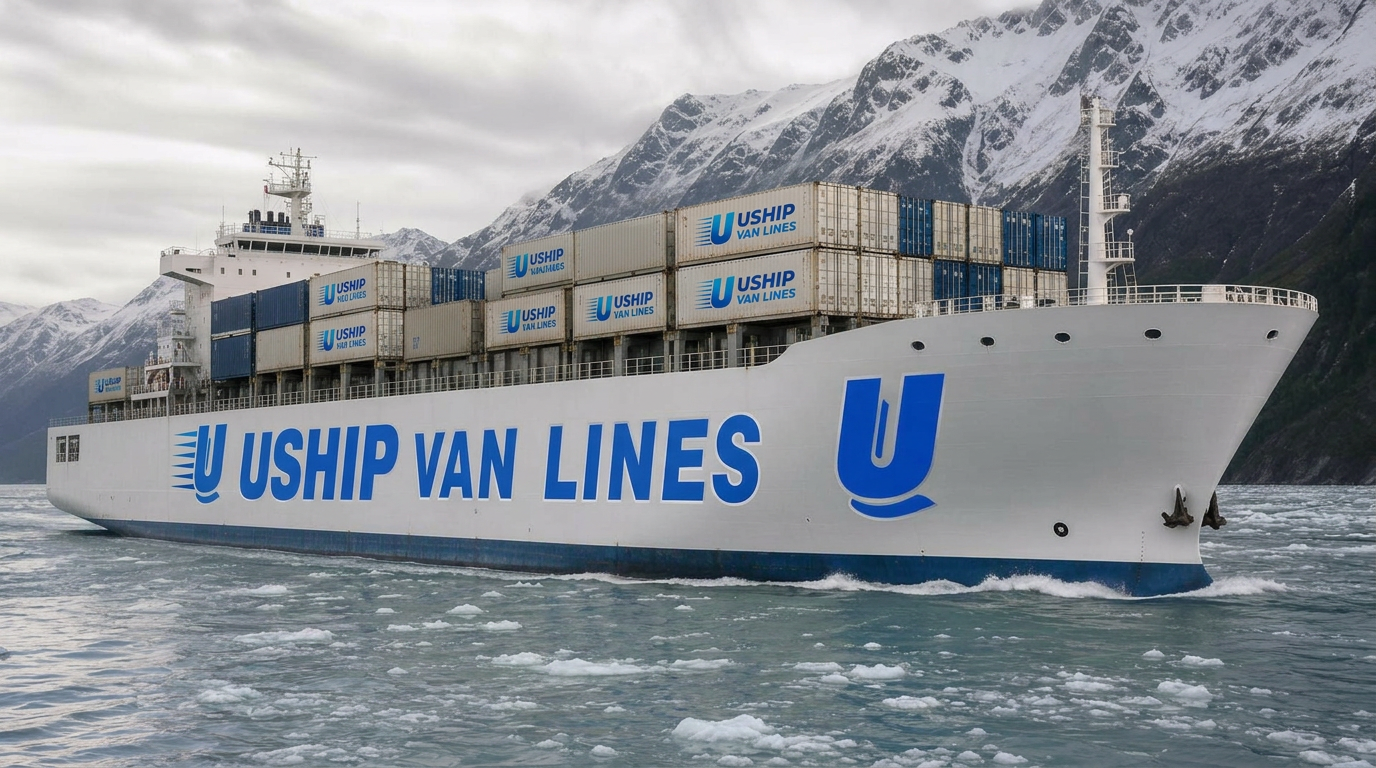
Moving from Alaska to Philadelphia, PA
Moving from Alaska to Philadelphia represents one of the most complex long-distance relocations in North America. This route combines marine shipping via barge from Alaska ports to the Pacific Northwest, overland trucking across nearly 3,000 miles of continental highway, and final delivery to the City of Brotherly Love. Whether you're leaving Anchorage, Fairbanks, the Mat-Su Valley, or smaller Alaska communities, your household goods will travel through multiple transportation modes and climate zones.
Best Alaska & Hawaii Movers, powered by UShip Van Lines, specializes in this exact logistics challenge. We coordinate every leg—from your door in Alaska through the Port of Tacoma consolidation, across the lower 48, and into Philadelphia's urban neighborhoods or suburban communities. Ready to simplify your cross-country move? Request your free, no-obligation quote today.
Route overview
The Alaska to Philadelphia Moving Route
This transcontinental move begins with barge service from Alaska to the Port of Tacoma, Washington—the primary consolidation point for Alaska household goods. From Anchorage, your belongings travel approximately 1,430 nautical miles (roughly 1,650 land miles) over 3–5 days of ocean transit. Fairbanks and interior Alaska shipments add an initial trucking leg of 350+ miles to reach Anchorage port facilities before barge departure.
Once your container is offloaded in Tacoma, the overland segment begins. This 2,850-mile highway journey crosses Washington, Idaho or Montana, the northern plains states, and through either the Great Lakes region or a more southerly route via Ohio before reaching Pennsylvania. The drive typically takes 5–7 days under normal conditions, with weather playing a significant role during winter months.
Philadelphia delivery requires careful planning. Center City addresses face narrow streets and strict parking regulations; suburbs like King of Prussia, Bryn Mawr, or Cherry Hill (across the river in New Jersey) offer easier truck access but still demand coordination with local ordinances and homeowner associations.
How the moving process works
How Your Alaska to Philadelphia Move Works: Step by Step
-
Free Quote and Move Planning – Contact Best Alaska & Hawaii Movers for a detailed estimate. We'll assess your inventory, confirm your Alaska origin (Anchorage, Fairbanks, Kenai Peninsula, Mat-Su, or remote area), verify your Philadelphia destination address, and establish your preferred timeline. We'll explain barge sailing schedules and seasonal constraints upfront.
-
Pre-Move Preparation and Packing – Decide whether to self-pack or use professional packing services. Alaska moves require marine-grade packing for the barge segment—we'll provide guidance on moisture protection, weight distribution, and prohibited items. Vehicle shipping (if needed) is quoted separately and follows the same barge-to-overland route.
-
Alaska Pickup and Port Transport – Our team picks up your household goods at your Alaska residence. If you're outside the Anchorage area, we arrange the first-leg trucking to port facilities. Your items are loaded into a marine container or consolidated shipment, inventoried, and prepared for ocean transit.
-
Barge Transit to Tacoma – Your container sails from Alaska to the Port of Tacoma (or occasionally Seattle). This leg takes 3–7 days depending on the specific sailing schedule and weather. Barges operate year-round but are most frequent May through September.
-
Tacoma Offload and Overland Transfer – The container is offloaded, cleared through our Tacoma hub, and transferred to a long-haul truck. If you have a smaller move, your goods may be consolidated with other shipments heading eastward to optimize cost and efficiency.
-
Cross-Country Highway Transit – Your belongings travel via interstate highway through the northern or central corridor. Drivers follow DOT hours-of-service regulations, so expect 5–7 days road time. We provide tracking updates and maintain communication throughout.
-
Philadelphia Delivery and Unpacking – Upon arrival in the Philadelphia metro area, our delivery team contacts you to schedule a precise delivery window. They navigate Philadelphia's unique street grid, unload your items, and (if contracted) provide unpacking services. We conduct a final walkthrough and inventory check before signing off.
Estimated moving costs
What Does an Alaska to Philadelphia Move Cost?
A typical 2-bedroom household (approximately 7,000–9,000 pounds) moving from Alaska to Philadelphia generally costs $6,800–$11,500. A 3-bedroom home (10,000–14,000 pounds) typically ranges $9,500–$16,000. These estimates include barge shipping, overland trucking, basic liability coverage, and standard delivery.
Key cost drivers:
- Volume and weight – Alaska barge pricing is heavily weight-dependent. Every additional 1,000 pounds adds $400–$700 to the total.
- Origin accessibility – Fairbanks, Mat-Su, Kenai Peninsula, and remote communities incur extra first-leg trucking fees ($800–$2,500+).
- Packing services – Professional packing for a 3-bedroom home adds $1,200–$2,500. Marine-grade packing for fragile items costs more.
- Season – Peak summer moves (June–August) command higher prices due to barge demand. Off-season (October–March) can save 10–20%.
- Philadelphia delivery complexity – Urban Center City addresses may require shuttle trucks or special permits, adding $300–$800.
- Vehicle shipping – Cars, trucks, or SUVs cost an additional $1,800–$3,200 per vehicle via the same barge-plus-drive route.
- Insurance – Full-value protection (replacement cost) runs 1–3% of the declared shipment value.
We provide transparent, itemized quotes—no hidden fees. Pricing fluctuates with fuel costs, barge schedules, and carrier availability, so we never guarantee prices without a formal quote.
Estimated transit times
How Long Does the Alaska to Philadelphia Move Take?
Door-to-door transit time averages 16–28 days depending on your Alaska starting point, barge schedule alignment, and time of year.
Breakdown by leg:
- Alaska pickup to port (if outside Anchorage) – 1–3 days for Fairbanks, Mat-Su, Kenai; longer for remote bush communities.
- Barge transit (Alaska to Tacoma) – 3–7 days ocean time, plus 1–3 days port handling on each end.
- Tacoma consolidation and loading – 1–4 days to offload, sort, and reload onto overland truck.
- Overland trucking (Tacoma to Philadelphia) – 5–7 days highway transit under normal conditions.
- Philadelphia area delivery – 1–2 days to schedule and complete final delivery.
Add buffer time for:
- Barge sailing frequency – Sailings run weekly in summer, every 10–14 days in shoulder seasons, and less frequently in deep winter.
- Weather delays – Winter storms in Alaska, the Rockies, or the Midwest can add 2–5 days. Snow in Philadelphia also complicates final delivery.
- Port congestion – Tacoma occasionally experiences backups during peak import seasons (rare but possible).
We recommend booking 4–6 weeks before your desired delivery date to secure your preferred barge sailing and allow flexibility for unforeseen delays.
Regional logistics
Alaska-Specific Moving Logistics You Need to Know
Ports and Marine Shipping: Alaska household goods ship via the Port of Anchorage (primary), with occasional use of Whittier or Seward. These ports connect to Tacoma or Seattle via weekly/bi-weekly barge service operated by carriers like TOTE Maritime and Alaska Marine Lines. Your goods travel in either dedicated containers or consolidated break-bulk cargo.
First-Mile Trucking in Alaska: If you live in Fairbanks, the Mat-Su Valley (Wasilla, Palmer), Kenai Peninsula (Soldotna, Homer), or points along the highway system, plan for first-leg trucking. Remote communities accessible only by air or small barge require specialized service—contact us for custom quotes.
Vehicle Shipping: Vehicles ship via the same barge but must be prepped: less than 1/4 tank fuel, no personal items inside, battery disconnected. Vehicles are driven on/off the barge. Auto transport from Tacoma to Philadelphia is typically via open car carrier.
Prohibited and Restricted Items: Barges prohibit flammables (propane, gasoline, lighter fluid), ammunition, perishables, and hazardous materials. Firearms must be declared and packed per federal regulations. Plants face USDA restrictions entering the lower 48.
Documentation: Alaska to continental U.S. moves are domestic—no customs. However, detailed inventories are required for barge manifest filing. Keep copies of all paperwork, including your bill of lading.
Insurance and Claims: Basic carrier liability covers 60 cents per pound per article—insufficient for most households. We strongly recommend full-value protection. Document high-value items (electronics, artwork, antiques) with photos and serial numbers before packing.
Storage Options: If your Philadelphia residence isn't ready, we offer short-term storage in Tacoma or Philadelphia-area warehouses. Storage in climate-controlled facilities runs $150–$350/month depending on volume.
Seasonal considerations
Best Times to Move from Alaska to Philadelphia
Summer (June–August): Peak season for Alaska moves. Barge sailings are most frequent, weather is optimal, and roads are clear. Expect premium pricing due to high demand. Book 6–8 weeks ahead. Ideal if you need predictable timing.
Spring (April–May) and Fall (September–October): Shoulder seasons offer moderate pricing and decent availability. Barge schedules start to thin in late fall. Weather is variable—spring breakup creates mud and road challenges in rural Alaska; fall brings early snow to mountain passes. Good balance of cost and reliability.
Winter (November–March): Off-season pricing can save 10–20%, but comes with risks. Barge sailings are less frequent. Alaska roads face ice, extreme cold, and limited daylight. Cross-country trucking encounters snow and ice from the Rockies through the Great Lakes. Philadelphia winters bring nor'easters and snow, complicating final delivery. Choose winter only if you have flexible timelines and can tolerate potential delays.
Philadelphia-specific notes: Summers are hot and humid; crews prefer early-morning deliveries. Winters require planning around street parking bans during snow emergencies. Spring and fall offer the most comfortable moving conditions in the Philly metro area.
Why choose Best Alaska & Hawaii Movers
Why Best Alaska & Hawaii Movers for Your Alaska to Philadelphia Relocation
-
Alaska Expertise – We specialize in the unique logistics of Alaska moves: barge coordination, port handling, first-mile challenges, and remote-area service. Our team knows the Port of Anchorage, Tacoma workflows, and every mile of the highway in between.
-
Powered by UShip Van Lines – Our backing by UShip Van Lines gives you access to a nationwide carrier network, vetted drivers, and coast-to-coast logistics infrastructure. We combine Alaska specialization with continental-scale reach.
-
Transparent Pricing – You receive a detailed, itemized quote with no hidden fees. We explain every cost component—barge, trucking, fuel surcharges, accessorials—so you make informed decisions.
-
End-to-End Service – One contract, one point of contact, one seamless move. We handle barge booking, trucking coordination, tracking, delivery scheduling, and claims (if needed). You don't juggle multiple vendors.
-
Customer-First Communication – We provide regular updates at every major milestone: pickup, port arrival, barge departure, Tacoma offload, truck dispatch, and delivery window. You're never left wondering where your belongings are.