
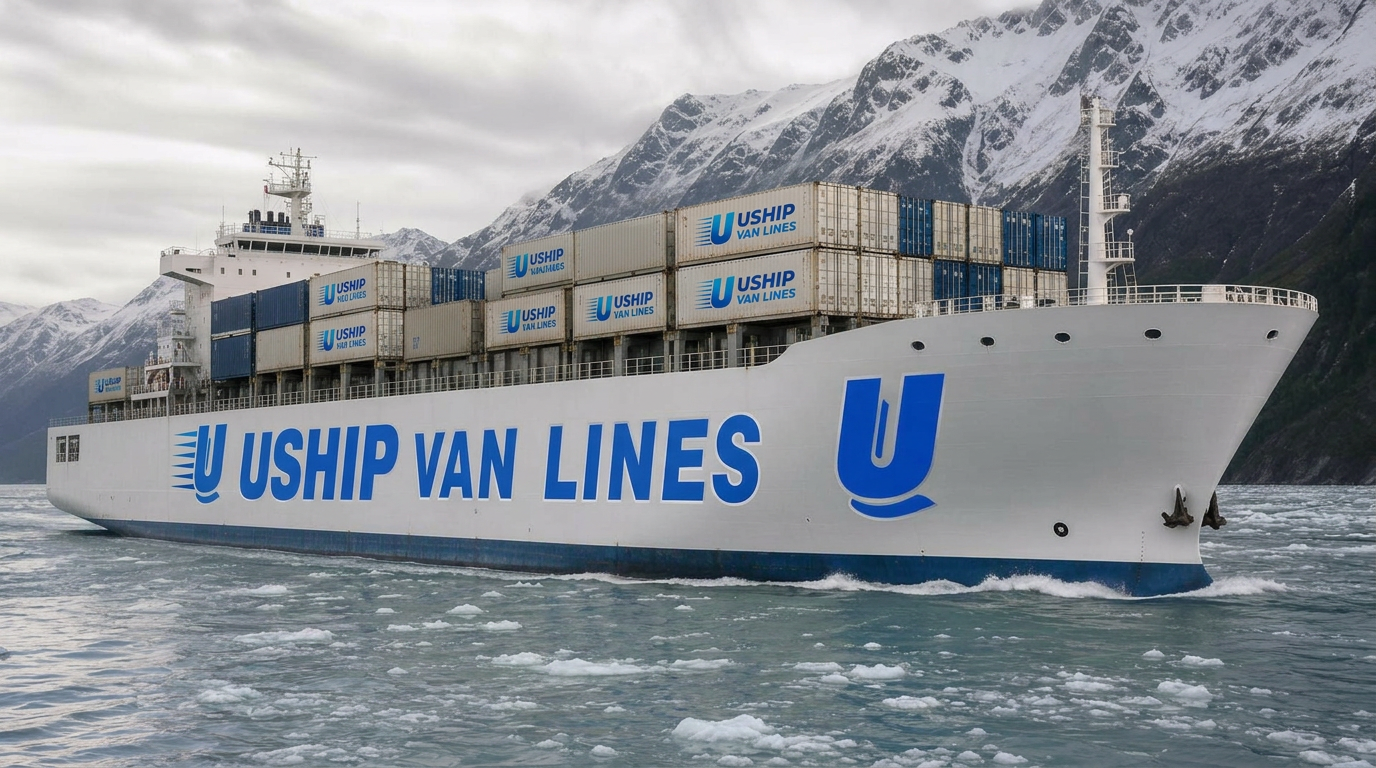
Moving from Irving, TX to Alaska
Moving from Irving, TX to Alaska represents one of the most logistically complex relocations in North America. Your household goods will travel over 3,000 miles through multiple transit legs—ground transport to the Seattle/Tacoma port, ocean barge to Alaska, and final delivery to your door in Anchorage, Fairbanks, or beyond.
Best Alaska & Hawaii Movers, powered by UShip Van Lines, specializes in this exact route. We coordinate every step from pickup in Irving to delivery across the Last Frontier, handling the barge logistics, customs paperwork, and last-mile challenges that make Alaska moves unique. Request your free quote today to get started with a team that understands non-contiguous state relocations.
Route overview
Your Irving to Alaska Moving Route
This move begins with ground transportation from Irving through the western United States to the Port of Tacoma or Seattle, typically a 2–3 day drive covering approximately 2,100 miles. Your belongings are then loaded into shipping containers for the Alaska Marine Highway System barge or commercial vessel service to Alaska's ports—most commonly the Port of Anchorage, though shipments can also route through Whittier or other regional ports.
The barge leg covers roughly 1,400 nautical miles and operates on a weekly or bi-weekly schedule depending on season. During peak summer months (May through September), sailings are more frequent and weather conditions are optimal. Winter sailings continue but face potential delays from storms in the Gulf of Alaska.
Once your container arrives in Alaska, the final leg involves local delivery to your specific destination. Anchorage and Mat-Su Valley addresses receive relatively straightforward delivery. Remote locations in the Kenai Peninsula, Fairbanks, or bush communities require additional coordination, sometimes involving smaller trucks, float planes, or seasonal ice road access depending on your exact destination and time of year.
How the moving process works
How Your Irving to Alaska Move Works
-
Initial Survey and Quote — We conduct a virtual or in-home assessment of your Irving residence to calculate cubic footage, identify items requiring special handling, and provide a detailed cost estimate covering all legs of the journey.
-
Pre-Move Planning — Our team coordinates your optimal shipping schedule based on Alaska barge departure dates, typically booking 4–8 weeks in advance during peak season. We provide a complete checklist covering items restricted from Alaska shipment (certain plants, soil, firewood due to invasive species regulations).
-
Packing and Loading in Irving — Professional packers arrive at your Irving home to prepare your belongings using marine-grade packing materials designed for ocean transit. Items are loaded into our truck for the drive to the Pacific Northwest.
-
Container Staging and Barge Loading — Your goods transfer into a sealed shipping container at the Tacoma/Seattle port facility. We complete all maritime documentation, customs forms (Alaska is domestic but requires specific agricultural inspections), and coordinate with barge operators.
-
Ocean Transit — The container travels by barge through Puget Sound and the Inside Passage to Alaska. You receive tracking updates as the vessel progresses northward, with typical transit taking 5–7 days in good weather conditions.
-
Alaska Port Arrival and Clearance — Upon arrival at the Port of Anchorage or your destination port, the container clears agricultural inspection and customs processing. This typically takes 1–2 business days.
-
Final Delivery — Our Alaska-based partners load your container onto a local delivery truck for the last-mile journey to your new home. For remote locations, this may involve coordination with bush carriers, seasonal scheduling, or temporary storage until road conditions permit delivery.
Estimated moving costs
What to Budget for Your Irving to Alaska Move
A typical 2-bedroom household moving from Irving to Anchorage generally ranges from $7,500 to $12,000, while a 3-bedroom home averages $11,000 to $16,500. These figures reflect full-service moves including packing, all transportation legs, and standard delivery.
Key cost drivers include:
- Volume and weight — Charges are calculated by cubic feet or weight, whichever is greater. Alaska moves favor lighter, space-efficient packing.
- Final destination — Anchorage delivery sits at the lower end; Fairbanks adds $1,200–$2,000; remote bush locations can add $3,000+ due to specialized carriers and limited access windows.
- Seasonal timing — Summer peak season (June–August) typically costs 15–25% more than shoulder seasons (April–May, September–October) due to higher demand and fuel surcharges.
- Packing services — Full professional packing adds $1,000–$2,500 for a typical home; partial packing (fragiles only) runs $400–$800.
- Vehicle shipping — Adding a car or truck to your barge shipment adds $1,800–$3,200 depending on vehicle size and destination.
- Storage — If your home isn't ready or weather delays delivery, Alaska-side storage runs $150–$400 per month for a typical household.
These are estimated ranges based on typical moves. Your actual cost depends on your specific inventory, services selected, and current fuel prices. Request a detailed quote for precise pricing tailored to your situation.
Estimated transit times
Timeline: Irving to Alaska Door-to-Door
Plan for 14 to 28 days total transit time from pickup in Irving to delivery at your Alaska destination under normal conditions.
The timeline breaks down as:
- Ground transport to Pacific Northwest — 2 to 4 days depending on route and weather conditions through mountain passes.
- Port staging and container loading — 1 to 3 days for transfer, container packing, and barge loading coordination.
- Barge transit to Alaska — 5 to 9 days from sailing to port arrival, varying by specific route, weather in the Gulf of Alaska, and intermediate port calls.
- Port clearance and inspection — 1 to 2 business days for agricultural inspection and documentation processing.
- Last-mile Alaska delivery — Same day to 7+ days depending on final destination. Anchorage typically delivers within 24–48 hours of clearance. Fairbanks adds 1–2 days. Remote communities may require 3–7 days or seasonal scheduling.
Winter moves (November through March) should add 3–7 days to these estimates due to potential weather delays, reduced barge frequency, and challenging road conditions for last-mile delivery. Spring breakup season (late April to early May) can impact delivery to remote areas as seasonal ice roads close and some routes become temporarily impassable.
You'll receive tracking updates at each major milestone. The barge leg offers limited real-time tracking, but we confirm vessel departure, provide estimated arrival windows, and notify you immediately upon Alaska port arrival.
Regional logistics
Alaska-Specific Moving Logistics from Irving
Port Operations and Barge Scheduling — Your container routes through either the Port of Tacoma or Seattle, connecting with Alaska Marine Highway System barges or commercial carriers like Totem Ocean Trailer Express. Sailing schedules vary by season; summer offers weekly departures while winter may be bi-weekly. We coordinate your ground transport arrival to align with confirmed sailing dates, minimizing port storage fees.
Container Types and Loading — Most household moves use 20-foot or 40-foot shipping containers. A typical 2-bedroom home fits comfortably in a 20-foot container; 3–4 bedroom homes often require a 40-foot unit. Containers are loaded at the port facility to maximize space and ensure proper weight distribution for ocean transit. Partial loads can share container space with other shipments heading to Alaska, reducing costs for smaller moves.
Vehicle Shipping — Cars and trucks can ship on the same barge as your household goods, though they travel in a separate roll-on/roll-off section. Vehicles must be nearly empty (less than 1/4 tank fuel, no personal items except floor mats and car seats) to meet maritime safety regulations. Alaska requires that vehicles be steam-cleaned or pressure-washed before shipping to prevent invasive species—we can arrange this service at the port or you can handle it in Irving before departure.
Agricultural Restrictions — Alaska maintains strict biosecurity to protect against invasive pests and diseases. Prohibited items include potted plants with soil, certain wooden furniture with bark, firewood, fresh fruits and vegetables, and any items containing soil or organic material. Our team provides a complete restricted items list during your pre-move consultation. All shipments undergo agricultural inspection upon Alaska arrival, and prohibited items found are confiscated and destroyed without compensation.
Last-Mile Delivery Challenges — Once in Alaska, delivery complexity increases with distance from Anchorage. The Mat-Su Valley (Wasilla, Palmer) adds minimal complexity. Fairbanks requires transit via the Parks Highway, a 360-mile journey that's straightforward in summer but can face closures or delays in winter. Kenai Peninsula destinations involve the Seward Highway and Sterling Highway, both subject to avalanche closures and weather delays. Remote bush locations may require float plane cargo service, seasonal barge to coastal villages, or winter ice road transport—these require careful scheduling and substantially increase costs.
Storage Options — Alaska-side storage is available if your home isn't ready or weather delays delivery. Climate-controlled storage in Anchorage runs $150–$250/month for a typical household; exterior storage (suitable for most items in summer) costs $100–$175/month. Fairbanks and other locations have more limited options with higher costs. For remote destinations, we may recommend temporary storage in Anchorage until seasonal access windows open.
Seasonal considerations
Best Times to Move from Irving to Alaska
Summer (June–August) — Peak moving season offers the most reliable weather, frequent barge sailings (often weekly), and optimal road conditions for last-mile delivery throughout Alaska. Expect premium pricing (15–25% higher) and book 6–8 weeks in advance as capacity fills quickly. This is the ideal window for moves to remote destinations with limited seasonal access.
Spring (April–May) — Shoulder season provides moderate weather and increasing barge frequency as services ramp up from winter schedules. Costs run 10–15% below summer peak. Late May offers excellent value with near-summer sailing frequency at lower rates. Early April can face spring breakup challenges for interior Alaska deliveries as snow melts and unpaved roads become muddy.
Fall (September–October) — Another excellent value window with still-favorable weather and good barge availability. September mirrors late-spring conditions; October sees decreasing frequency but remains reliable. Pricing sits 10–20% below summer. Book early as many Alaskans schedule southbound moves during this period, competing for container space.
Winter (November–March) — Off-peak season offers the lowest rates (20–30% below summer) but comes with significant considerations. Barge sailings reduce to bi-weekly or monthly depending on route. Gulf of Alaska storms can delay voyages by several days. Interior Alaska deliveries face extreme cold (Fairbanks regularly hits -40°F), requiring special attention to temperature-sensitive items. Some remote locations become inaccessible until spring. However, for Anchorage and major population centers, winter moves remain viable if you're flexible on timing and prepared for potential delays.
Regardless of season, agricultural inspection requirements remain constant—all shipments undergo review for prohibited plants, soil, and organic materials that could introduce invasive species to Alaska's fragile ecosystems.
Why choose Best Alaska & Hawaii Movers
Why Choose Best Alaska & Hawaii Movers for Your Irving to Alaska Move
-
Non-Contiguous Specialists — We exclusively focus on Alaska and Hawaii moves, giving us deep expertise in barge logistics, agricultural regulations, and last-mile delivery challenges that generalist movers can't match.
-
Single-Point Coordination — You work with one team from Irving pickup through Alaska delivery. We manage the trucking company, barge operators, port logistics, and local Alaska carriers, eliminating the coordination headaches of working with multiple vendors.
-
Alaska Network — Our established partnerships with Alaska-based delivery services, storage facilities, and specialized carriers (including bush plane cargo operators and seasonal ice road truckers) ensure we can reach your final destination regardless of remoteness.
-
Transparent Pricing — We provide detailed quotes breaking down each cost component—ground transport, barge fees, port charges, delivery costs—so you understand exactly what you're paying for with no surprise fees upon delivery.
-
Year-Round Service — Unlike brokers who avoid off-season Alaska moves, we operate 12 months a year with realistic scheduling and pricing that reflects seasonal conditions rather than refusing service during winter months.