
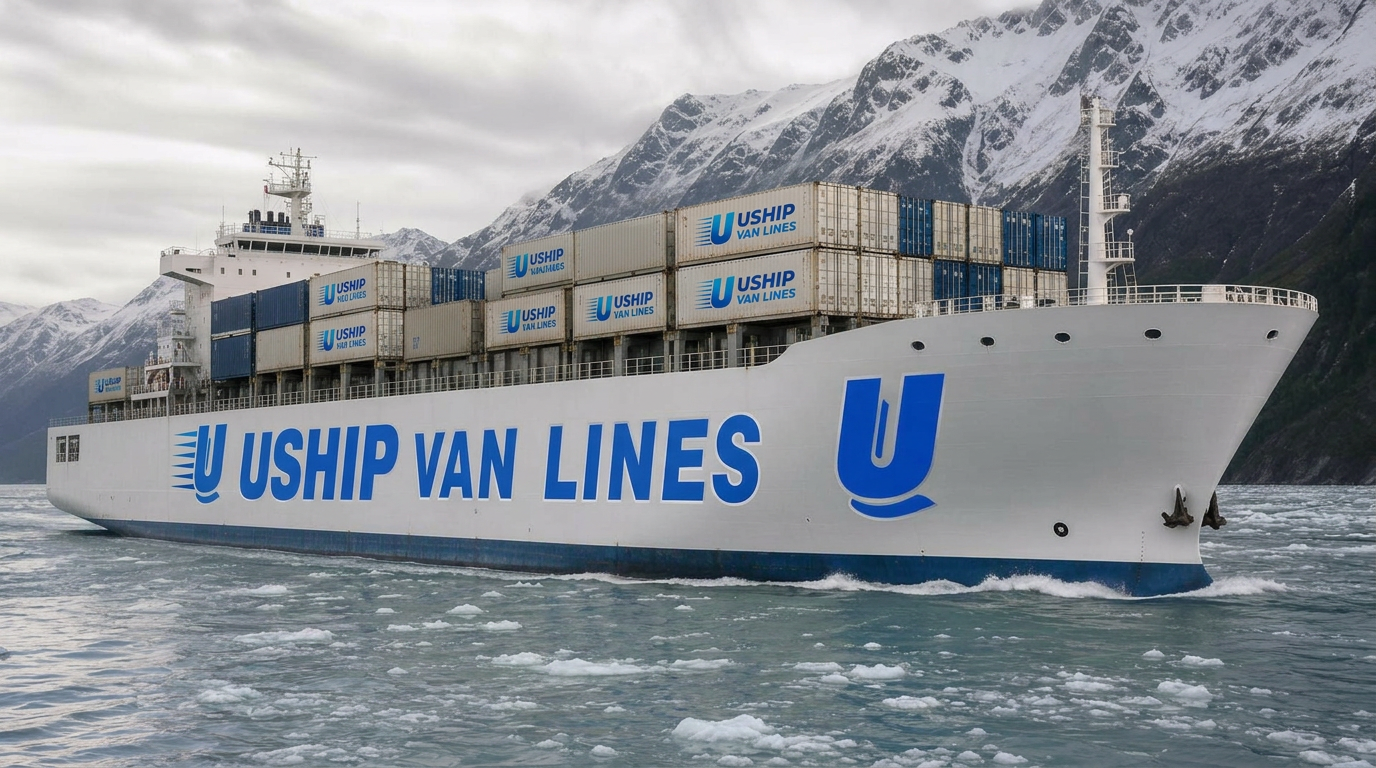
Moving from Coral Springs, FL to Alaska
Moving from Coral Springs, Florida to Alaska represents one of the most logistically complex domestic relocations you can make. Your belongings will travel over 4,000 miles, transitioning from South Florida's subtropical warmth to Alaska's rugged frontier climate—crossing multiple climate zones, requiring barge transport through Pacific waters, and navigating Alaska's unique delivery infrastructure.
Best Alaska & Hawaii Movers, powered by UShip Van Lines, specializes in these extreme-distance relocations. We coordinate the entire journey from your Coral Springs doorstep through West Coast consolidation, barge transport to Alaska ports, and final delivery to your new home—whether you're settling in Anchorage, Fairbanks, the Mat-Su Valley, or remote communities. Ready to start planning your move north? Request a detailed quote today.
Route overview
The Coral Springs to Alaska Route
Your move from Coral Springs begins with professional packing and loading at your Florida residence, followed by overland transport to a West Coast consolidation hub—typically Tacoma, Washington. This initial leg covers approximately 3,300 miles across the southern United States, taking 5–7 days depending on route and weather.
From Tacoma, your household goods are loaded into marine containers and transported via Alaska Marine Highway barge service or commercial shipping lines to Alaska ports. Most shipments destined for the Anchorage area arrive at the Port of Anchorage, while Fairbanks-bound moves often route through Whittier or Anchorage with ground transport north. The barge crossing takes 3–7 days depending on weather, season, and specific port routing.
Final delivery involves specialized Alaska carriers who understand local road conditions, seasonal access limitations, and remote-area logistics. If you're moving to Juneau, Sitka, Kodiak, or other water-access communities, additional marine transport legs may be required. Bush destinations accessible only by air require freight forwarding arrangements that we coordinate as part of comprehensive Alaska moving services.
How the moving process works
How Your Coral Springs to Alaska Move Works
-
Free Consultation & Custom Quote – We assess your inventory, discuss your specific Alaska destination, review timeline requirements, and provide a detailed cost breakdown covering all legs of your journey. We'll explain barge schedules, seasonal considerations, and any special handling for vehicles or temperature-sensitive items.
-
Pre-Move Planning & Documentation – Alaska moves require careful paperwork, including detailed inventory lists for customs-like inspections and specific packing requirements for marine transport. We guide you through Florida departure regulations, Alaska agricultural restrictions (no soil, certain plants prohibited), and vehicle shipping documentation if you're transporting cars.
-
Professional Packing & Loading in Coral Springs – Our team arrives at your Florida home with marine-grade packing materials designed for the humidity transition and long-distance handling. We use reinforced boxes, moisture barriers, and containerization best practices to protect belongings through multiple climate zones and handling points.
-
Overland Transport to West Coast Hub – Your household goods travel via climate-controlled truck to our Tacoma consolidation facility. We coordinate timing to align with barge schedules, minimizing storage time while ensuring your shipment catches the optimal sailing for your delivery window.
-
Container Loading & Barge Transport – Goods are transferred into ocean-worthy containers with professional blocking and bracing for marine conditions. We handle all port documentation, customs paperwork, and coordinate with Alaska Marine Highway or commercial carriers for the Pacific crossing to your destination port.
-
Alaska Port Receipt & Customs Clearance – Upon arrival at Port of Anchorage, Whittier, or other Alaska ports, we manage container offloading, inspection compliance, and transfer to Alaska-based ground carriers. Any required agricultural inspections or documentation reviews are coordinated seamlessly.
-
Final Delivery to Your Alaska Home – Alaska-specialist drivers navigate local roads, weather conditions, and access challenges to deliver your belongings. We schedule delivery windows accounting for Alaska's unique conditions, coordinate any storage needs if your home isn't ready, and ensure complete unpacking assistance if requested.
Estimated moving costs
What Your Move Will Cost
Moving a typical 2–3 bedroom household from Coral Springs, FL to Alaska generally ranges from $8,500 to $16,000 for full-service door-to-door transport. Studio and 1-bedroom moves may cost $4,500–$7,500, while larger 4+ bedroom homes with full basements can exceed $20,000.
Key cost drivers include:
-
Distance and weight – The 4,000+ mile journey with marine transport requires multiple carriers and handling points. Pricing is primarily weight-based, with typical 3-bedroom homes weighing 8,000–12,000 pounds.
-
Barge schedule and seasonality – Summer months (May–September) see higher demand and premium pricing for Alaska transport. Winter barge schedules are limited, sometimes offering lower rates but with weather-related delays.
-
Final destination specifics – Anchorage, Fairbanks, and Mat-Su Valley deliveries are most economical. Remote locations like Kenai Peninsula, Southeast Alaska communities, or bush destinations require additional marine or air freight legs with corresponding cost increases.
-
Packing services and materials – Full professional packing adds $1,500–$3,500 but is highly recommended for Alaska moves due to the complexity and multiple handling points. Marine-grade materials and moisture protection are essential.
-
Vehicle shipping – Adding a car typically costs $1,800–$2,800 from Florida to Alaska via the same barge route. Multiple vehicles receive slight per-unit discounts.
-
Insurance and valuation – Basic coverage is included, but full-value protection (recommended for Alaska moves) adds 1–2% of declared value. Given the journey complexity, comprehensive coverage provides important peace of mind.
-
Storage needs – If your Alaska home isn't ready or barge schedules don't align perfectly, short-term storage in Tacoma or Alaska adds $150–$400 per month depending on volume.
We never quote guaranteed prices sight-unseen. Request a detailed in-home or virtual survey for an accurate, binding estimate tailored to your specific inventory and circumstances.
Estimated transit times
How Long Your Move Takes
Door-to-door transit from Coral Springs to Alaska typically requires 3–5 weeks depending on your specific destination, time of year, and barge schedules. Breaking down the timeline:
Coral Springs to Tacoma (5–7 days): Overland transport across the continental U.S. takes nearly a week, accounting for driver rest requirements and optimal routing through southern or northern transcontinental routes.
Tacoma consolidation and container loading (2–5 days): Your goods are transferred from truck to marine container, properly blocked and braced for ocean transport. Timing depends on barge sailing schedules and whether your shipment requires consolidation with other loads.
Barge crossing to Alaska (3–7 days): The marine leg from Tacoma/Seattle to Alaska ports varies by destination. Anchorage runs take 3–5 days in good weather, while Southeast Alaska ports or Kodiak routes may require 5–7 days. Weather delays during fall and winter storms can add several days.
Port processing and ground transfer (1–3 days): Container offloading, inspection, and transfer to Alaska ground carriers typically takes 1–2 days, though port congestion or inspection holds can extend this.
Final delivery within Alaska (1–5 days): Anchorage-area deliveries happen quickly once goods clear the port. Fairbanks adds 1–2 days for the 360-mile drive north. Remote locations on the Kenai Peninsula, Southeast communities, or bush destinations may require additional days or even weeks during certain seasons.
Peak season considerations: Summer moves (May–August) often proceed faster due to optimal weather and frequent barge sailings. Winter months see reduced barge schedules and weather-related delays, potentially extending total transit to 5–7 weeks.
We provide tracking at each major milestone and maintain communication throughout your move, updating you on barge departure, Alaska arrival, and delivery scheduling.
Regional logistics
Alaska-Specific Moving Logistics
Barge ports and routing: Most Coral Springs to Alaska moves route through Tacoma, WA for barge loading. Primary Alaska destination ports include Port of Anchorage (serving Anchorage and Mat-Su Valley), Whittier (alternative for Anchorage with rail connection), and direct ports for Southeast Alaska communities. We coordinate with Alaska Marine Highway System and commercial carriers based on your destination and schedule.
Vehicle shipping: Cars and trucks ship alongside household goods on the same barge, typically in the same container or as roll-on/roll-off cargo. Vehicles must be clean (Alaska agricultural inspection), have less than 1/4 tank fuel, and include no personal items inside. Cost averages $1,800–$2,800 per vehicle from Florida to Alaska. We handle all port paperwork and coordinate synchronized delivery with your household goods.
Agricultural restrictions: Alaska enforces strict regulations on soil and certain plants to prevent invasive species. Potted plants must be bare-rooted, and outdoor equipment must be thoroughly cleaned. We provide a detailed prohibited/restricted items list during planning. Most household goods pass inspection easily with proper preparation.
Last-mile delivery challenges: Alaska's infrastructure differs dramatically from Florida's. Anchorage and Fairbanks have paved road access year-round, but outlying areas may have gravel roads, seasonal closures, or require special arrangements. Communities like Homer, Seward, Soldotna, and Wasilla are accessible by ground, but ferry-dependent locations (Juneau, Sitka, Ketchikan, Kodiak) need additional marine legs. Bush villages accessible only by air require freight forwarding we coordinate separately.
Storage options: Both Tacoma and Alaska-based storage is available if timing gaps occur. Climate-controlled facilities protect belongings during transition periods. Short-term storage (2–4 weeks) is common when home purchases or leases don't align perfectly with barge schedules.
Communication and tracking: We provide regular updates as your shipment progresses through each leg. You'll receive notifications at overland departure, Tacoma arrival, barge loading, Alaska port arrival, customs clearance, and final delivery scheduling. Alaska's communication infrastructure is excellent in urban areas, though remote locations may have limited connectivity during final delivery days.
Winter delivery preparation: If moving during colder months, ensure your Alaska home is heated and accessible. We coordinate with you to confirm driveway and road conditions before final delivery attempts, avoiding situations where weather prevents safe completion.
Seasonal considerations
Timing Your Move: Alaska Seasonal Factors
Summer (May–September): Peak moving season for Alaska. Barge schedules are most frequent, weather is most predictable, and road access to remote areas is best. However, demand drives premium pricing, and you'll need to book 6–8 weeks ahead to secure preferred dates. Ideal if you're starting a job, enrolling kids in school, or want to settle before winter.
Fall (October–November): Shoulder season offers moderate pricing and decent weather early in the period. Barge schedules begin reducing frequency after mid-October. November moves risk early snow and ice, particularly for Fairbanks and interior Alaska destinations. Good option if you're flexible and can accept potential weather delays.
Winter (December–March): Off-peak season with significantly reduced barge schedules—often just 1–2 sailings per month to major ports. Weather delays are common, and some remote locations become inaccessible. However, pricing can be 15–25% lower than summer peak. Only recommended if you have flexible timing and are moving to major hubs like Anchorage where year-round access is reliable.
Spring (April–May): Transition period as barge schedules ramp up and weather improves. Early April can still see winter conditions, but late April through May offers increasing reliability. Pricing begins rising but hasn't hit summer peaks. Excellent value window if you can target late April or early May departures.
Special considerations from Florida: Your belongings will experience dramatic climate transitions. Items leaving Coral Springs' 80°F humidity will arrive in Alaska cold—potentially below freezing even in summer in some areas. Moisture-sensitive items need special attention, and we use climate-appropriate packing materials throughout. Vehicle batteries and fluids should be winter-ready before shipping, even if departing in summer.
Why choose Best Alaska & Hawaii Movers
Why Choose Best Alaska & Hawaii Movers for Your Coral Springs to Alaska Move
-
Alaska specialists, not generalists – Unlike standard long-distance movers who subcontract Alaska legs to unfamiliar carriers, we've built our business specifically around Alaska and Hawaii relocations. We understand barge schedules, Alaska regulations, climate challenges, and remote-area logistics that standard moving companies struggle with.
-
Single-source coordination, end-to-end – You work with one dedicated move coordinator from Coral Springs pickup through Alaska delivery. We manage every carrier, barge line, port authority, and delivery driver—eliminating the finger-pointing common with multi-vendor moves.
-
Transparent, all-inclusive pricing – Our quotes include every leg of your journey: Florida packing and loading, overland transport, barge freight, Alaska delivery, and standard insurance. No surprise fees, no hidden port charges. You'll know exactly what your move costs before signing any agreement.
-
Marine-grade packing for multi-climate transitions – We use specialized materials and techniques designed specifically for the Florida-to-Alaska climate journey: moisture barriers, reinforced containerization, and blocking methods that protect belongings through humidity, temperature extremes, and marine conditions.
-
Flexible scheduling with barge coordination – We track Alaska Marine Highway and commercial carrier schedules in real-time, helping you find optimal sailing dates that balance cost, speed, and seasonal factors. Our Tacoma consolidation hub ensures smooth transitions without extended warehouse delays.
-
Powered by UShip Van Lines infrastructure – Best Alaska & Hawaii Movers leverages UShip Van Lines' nationwide carrier network for the continental portion of your move, then applies our Alaska expertise for the marine and final delivery legs—giving you the best of both worlds.