
Moving from Perth Amboy, NJ to Alaska
Moving from Perth Amboy, New Jersey to Alaska represents one of North America's most complex relocations—combining transcontinental ground transport with maritime shipping through the Pacific Northwest. Whether you're headed to Anchorage for a career opportunity, relocating to the Mat-Su Valley for a lifestyle change, or moving to Fairbanks for university, this 4,000+ mile journey requires specialized expertise and careful coordination across multiple transportation modes.
Best Alaska & Hawaii Movers, powered by UShip Van Lines, handles every phase of your Perth Amboy to Alaska move—from initial packing and cross-country transport to barge coordination through Tacoma and final delivery to your Alaska doorstep. Our team navigates the unique challenges of Alaska moves daily, managing weather variables, vessel schedules, customs documentation, and last-mile delivery across the Last Frontier. Ready to start planning your move north? Request a detailed quote today and speak with a relocation specialist who understands both New Jersey logistics and Alaska's unique requirements.
Route overview
The Perth Amboy, NJ to Alaska Moving Route
Your household goods begin their journey in Perth Amboy—part of the greater New York metro area with excellent highway access via the Garden State Parkway, New Jersey Turnpike, and I-95 corridor. Professional movers will load your belongings for cross-country transport covering approximately 3,400 miles to the Port of Tacoma in Washington State. This continental leg typically takes 5–7 days depending on route efficiency, weather conditions, and whether you're sharing truck space with other shipments moving westward.
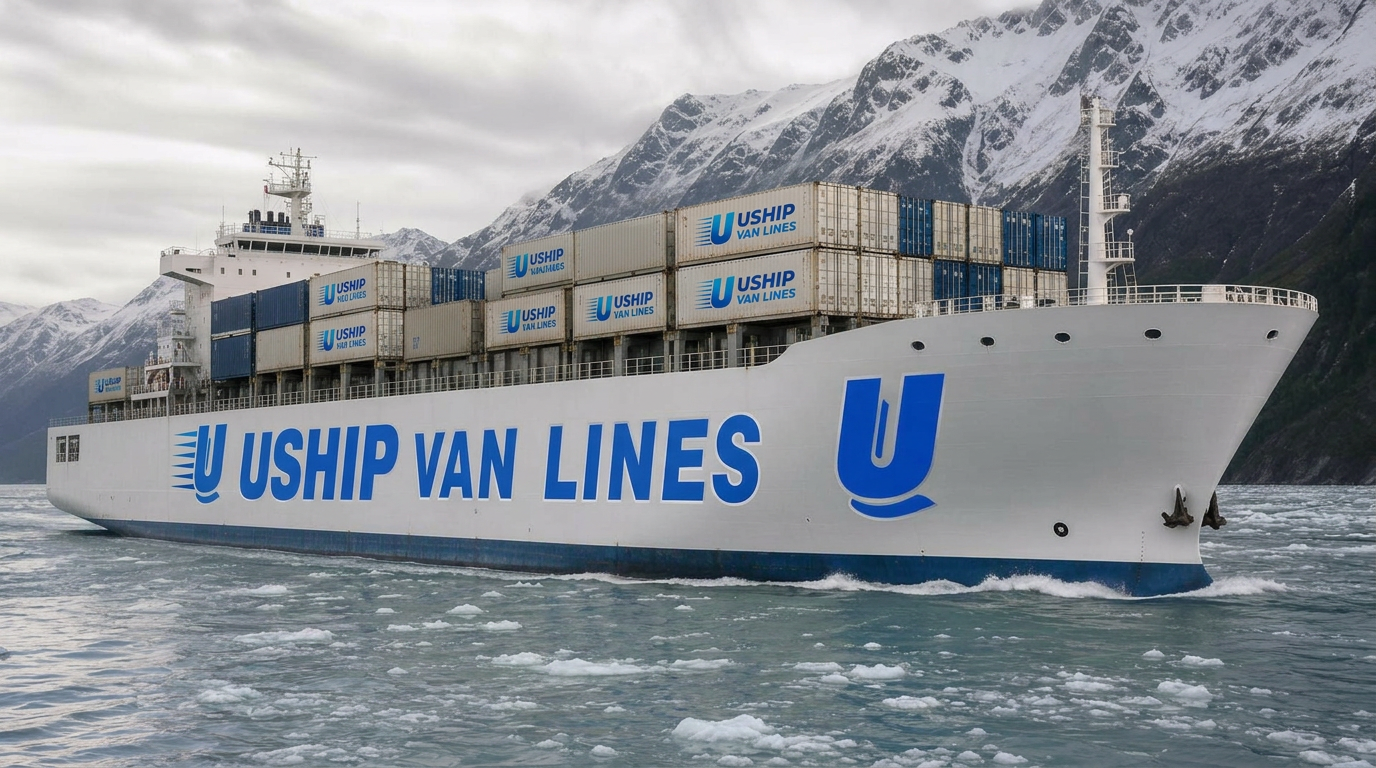
Once your shipment reaches Tacoma, it's transferred to ocean freight containers and loaded aboard weekly barge services operated by carriers like TOTE Maritime Alaska or Alaska Marine Lines. These dedicated Alaska barges traverse the Inside Passage and Gulf of Alaska, docking at the Port of Anchorage after approximately 5–7 days at sea. The marine leg is weather-dependent, with winter crossings occasionally experiencing delays during severe storm systems in the Gulf.
After clearing the port in Anchorage, your goods are delivered to your final Alaska destination—whether that's within Anchorage itself, north to Fairbanks via the Parks Highway, south to the Kenai Peninsula, or into the Mat-Su Valley communities like Wasilla and Palmer. Remote or off-road-system locations may require additional arrangements, including bush plane cargo flights or seasonal ice road transport depending on your specific destination and time of year.
How the moving process works
How Your Perth Amboy to Alaska Move Works: Step-by-Step
-
Free Consultation & Customized Quote – Contact Best Alaska & Hawaii Movers for a detailed inventory assessment. We'll discuss your Perth Amboy pickup location, Alaska destination, timeline preferences, and any special items (vehicles, boats, ATVs) you want shipped alongside your household goods. You'll receive a transparent breakdown covering ground transport, ocean freight, and Alaska delivery.
-
Pre-Move Planning & Documentation – Our team coordinates your optimal moving window based on barge schedules from Tacoma (typically weekly departures year-round, with some seasonal variations). We'll provide guidance on Alaska-specific requirements, including what items are restricted or require special handling, and help you prepare necessary documentation for shipping to Alaska.
-
Professional Packing & Perth Amboy Pickup – On your scheduled date, experienced movers arrive at your Perth Amboy residence with proper equipment, packing materials, and containerization supplies. All items are carefully inventoried, wrapped, and loaded into the truck. High-value items and fragile belongings receive extra protection for the multi-leg journey ahead.
-
Cross-Country Transport to Tacoma – Your shipment travels westward across the continental United States, typically following I-80 or I-90 corridors through Pennsylvania, Ohio, Indiana, Iowa, Nebraska, Wyoming, and into Washington. Most shipments reach Tacoma within 5–7 days, where they're staged for ocean container loading.
-
Container Loading & Barge Departure – At the Port of Tacoma, your goods are loaded into weatherproof ocean containers (often shared with other Alaska-bound shipments to optimize costs). Containers are secured aboard the next available Alaska barge, with departures typically every 5–7 days. You'll receive vessel tracking information to monitor your shipment's progress.
-
Ocean Transit & Anchorage Port Arrival – The barge journey covers approximately 1,500 nautical miles through the protected waters of the Inside Passage before entering the Gulf of Alaska and approaching the Port of Anchorage. Transit time averages 5–7 days under normal conditions, though winter weather may occasionally add 1–2 days. Your shipment clears port logistics and is unloaded for final delivery staging.
-
Last-Mile Delivery Across Alaska – Once cleared from the Anchorage port, your goods are loaded onto local delivery trucks for transport to your final destination. Anchorage deliveries typically occur within 1–2 days of port arrival. Fairbanks deliveries add 1–2 days for the 360-mile drive north. Kenai Peninsula, Mat-Su Valley, and other road-accessible locations are scheduled based on route optimization and weather. Remote or off-grid destinations may require additional coordination with bush carriers or seasonal access planning.
Additional Coordination for Vehicles & Specialty Items
If you're shipping vehicles alongside your household goods, they'll typically travel on the same barge but are loaded separately using roll-on/roll-off (RoRo) methods. Boats, motorcycles, ATVs, and snowmachines can also be accommodated with advance planning. All vehicles must be clean (Alaska agricultural inspection requirements), contain no more than 1/4 tank of fuel, and have no personal items inside for insurance purposes.
Estimated moving costs
What Does a Move from Perth Amboy, NJ to Alaska Cost?
For a typical 2–3 bedroom household moving from Perth Amboy to Anchorage or other major Alaska destinations, expect total costs in the $7,500–$14,000 range. Smaller 1-bedroom or studio moves may start around $4,500–$6,500, while larger 4+ bedroom homes with full basements, garages, and multiple vehicles can exceed $18,000–$25,000. These estimates reflect the complete door-to-door service including ground transport, ocean freight, and Alaska delivery.
Major Cost Factors:
-
Volume & Weight – Alaska moves are priced primarily by cubic footage or weight. A typical 2-bedroom apartment averages 1,000–1,500 cubic feet; a 3-bedroom house ranges 1,500–2,500 cubic feet. Heavier items (pianos, safes, shop equipment) increase shipping costs due to weight limits on containers and trucks.
-
Distance Within Alaska – Anchorage delivery represents the base Alaska rate. Adding 360 miles to Fairbanks typically adds $800–$1,500. Kenai Peninsula destinations (100–150 miles from Anchorage) add $300–$600. Remote or off-road-system locations requiring bush planes, barges, or seasonal access can add $2,000–$5,000+ depending on specific logistics.
-
Packing Services – Full professional packing for a 2-bedroom home adds approximately $800–$1,500. Partial packing (kitchen, fragile items, artwork) runs $300–$700. DIY packing with company-supplied materials saves labor costs but requires more advance preparation.
-
Time of Year – Summer moves (May–September) see higher demand and potentially premium pricing, though barge schedules are most reliable. Winter moves (October–April) may offer better rates but can face weather delays and more limited scheduling flexibility.
-
Vehicle Shipping – Adding a standard sedan or pickup to your household goods shipment typically costs $1,500–$2,500 from the Lower 48 to Alaska. Larger vehicles (RVs, boats, heavy equipment) require custom quotes based on dimensions and weight.
-
Storage Needs – If your Alaska housing isn't ready or you're waiting for seasonal access, warehouse storage in either Tacoma or Anchorage runs $150–$400 per month for typical household volumes.
Important: These ranges reflect typical market conditions and are provided for planning purposes only. Best Alaska & Hawaii Movers does not guarantee specific pricing without a formal quote based on your exact inventory, services requested, and current operating conditions. Request a detailed written estimate for accurate budgeting tailored to your specific Perth Amboy to Alaska move.
Estimated transit times
How Long Does Moving from Perth Amboy to Alaska Take?
Door-to-door transit from Perth Amboy, New Jersey to Alaska destinations typically requires 14–21 days under normal conditions, broken down as follows:
Perth Amboy to Tacoma (Ground Transport): 5–7 Days Your household goods travel approximately 3,400 miles across the continental United States. Direct routes following I-80 or I-90 westward can achieve 5-day delivery in ideal conditions, though 6–7 days is more typical for consolidated shipments coordinating with other moves along the route. Weather events (blizzards crossing the Rockies, severe thunderstorms in the Midwest) can add 1–2 days during winter and spring months.
Container Staging & Barge Loading: 1–3 Days Once your shipment arrives in Tacoma, it's transferred to ocean containers and staged for the next available Alaska barge. With weekly departures, most shipments catch a vessel within 1–2 days. Peak summer season or scheduling constraints may occasionally extend this to 3–4 days.
Ocean Transit Tacoma to Anchorage: 5–7 Days Barge services traverse approximately 1,500 nautical miles through the Inside Passage and across the Gulf of Alaska. Under favorable conditions, the voyage takes 5–6 days. Winter storms in the Gulf can extend crossing times to 7–8 days, and occasionally severe weather forces vessels to wait for safe passage windows, adding another 1–2 days.
Port Clearance & Local Delivery Setup: 1–2 Days After docking in Anchorage, containers are offloaded, cleared through port logistics, and prepared for local delivery trucks. This process typically takes 1–2 business days.
Final Alaska Delivery: Same-Day to 3 Days Anchorage-area deliveries can occur the same day as port clearance or next business day. Fairbanks adds 1–2 days for the northbound drive. Kenai Peninsula, Mat-Su Valley, and other road-accessible Alaska destinations are scheduled within 1–3 days based on route optimization and current delivery demand.
Total Timeline: Most Perth Amboy to Anchorage moves complete in 14–18 days. Fairbanks and other Interior Alaska destinations average 16–20 days. Remote locations requiring bush plane connections or seasonal access (ice roads, summer-only barge service to coastal villages) can extend timelines to 21–30+ days depending on specific logistics and weather windows.
Planning Buffer: For critical move-in dates, add a 5–7 day buffer beyond the estimated delivery window to account for weather variables and logistical coordination across this complex multi-modal route.
Regional logistics
Alaska-Specific Moving Logistics: What Makes This Route Unique
Port of Anchorage Operations Nearly all ocean freight to Alaska flows through the Port of Anchorage, one of North America's most northerly deep-water ports. Your containers arrive at the port's terminal and go through standard unloading and staging processes. Unlike Hawaii moves (which may face agricultural inspections), Alaska primarily focuses on proper documentation and container security. However, Alaska does enforce strict agricultural regulations on certain items, particularly if you're bringing plants, soil, or certain food products. Firewood is generally prohibited. Our team provides complete documentation checklists to ensure smooth port clearance.
Marine Carrier Scheduling Two primary carriers dominate Alaska freight: TOTE Maritime Alaska (operating twice-weekly sailings) and Alaska Marine Lines (weekly to bi-weekly depending on season). Both offer reliable service, though exact scheduling varies by time of year. We coordinate your shipment with the optimal vessel based on your timeline requirements and current operational schedules. Winter months may see reduced frequency or occasional weather delays.
Vehicle Shipping Alongside Household Goods Most customers moving to Alaska ship at least one vehicle. The same barges carrying household goods containers also accommodate vehicles via roll-on/roll-off loading. Key vehicle shipping requirements:
- Vehicles must be washed clean (Alaska agricultural inspection)
- Fuel tanks no more than 1/4 full (safety regulation)
- No personal items inside (insurance and security reasons)
- Vehicle keys must be provided for loading/unloading
- Batteries should be secured and charged
Vehicle shipping costs are calculated separately from household goods, typically $1,500–$2,500 per standard vehicle from the Lower 48 to Anchorage. Oversized vehicles, RVs, boats, and equipment require custom measurements and pricing.
Last-Mile Delivery Across Alaska's Road System Alaska's road network is limited compared to the Lower 48. The main highway system connects Anchorage to Fairbanks (Parks Highway, 360 miles), the Kenai Peninsula (Seward and Sterling Highways), and Mat-Su Valley (Glenn Highway to Palmer/Wasilla). These are all-weather roads, though winter conditions require careful timing and preparation. Deliveries to these connected communities are straightforward and included in standard Alaska moving quotes.
Off-Road-System & Remote Deliveries Alaska has hundreds of communities accessible only by air or seasonal water transport. If you're moving to a village, bush location, or remote homestead:
- Bush plane cargo: Small items can be flown from Anchorage or regional hubs. Weight and size limits apply (typically 50–150 lbs per piece). Costs run $0.50–$2.00 per pound depending on distance.
- Summer barge service: Coastal communities receive seasonal barge deliveries (typically June–September). Full household shipments can be coordinated with advance planning.
- Winter ice roads: Some Interior communities receive truck access via frozen rivers (January–March).
- Combination approaches: Large moves to remote areas often combine container delivery to the nearest road-system hub (e.g., Fairbanks, Kenai, Homer) with customer-arranged final transport via boat, plane, or snowmachine.
Our Alaska specialists will discuss remote delivery options during your consultation if your destination is off the road system.
Special Item Considerations
- Firearms: Alaska is a firearm-friendly state, but proper documentation and packing is required for shipment. All firearms must be declared, unloaded, and secured. Ammunition ships separately under hazmat protocols.
- Propane tanks: Must be purged and certified empty. Many customers find it easier to sell tanks in New Jersey and purchase new ones in Alaska.
- Flammable liquids: Gasoline, paint, solvents, and similar items cannot ship via ocean freight. Plan to dispose of these before your move.
- Perishables: No food shipments (frozen or refrigerated) via this route due to transit time and temperature fluctuations.
- Plants: Some plants are restricted; check Alaska Department of Natural Resources guidelines. Most houseplants are acceptable with proper inspection.
Documentation & Insurance Best Alaska & Hawaii Movers handles all necessary shipping documentation, including bills of lading, container manifests, and port paperwork. We recommend full-value protection insurance for Alaska moves given the distance and multi-modal nature. Basic carrier liability covers only $0.60 per pound per item—inadequate for valuable household goods. Full-value coverage typically costs 1–2% of your shipment's declared value and provides comprehensive protection throughout the entire journey.
Seasonal considerations
Best Time to Move from Perth Amboy to Alaska: Seasonal Factors
Summer (May–September): Peak Season, Maximum Reliability Summer represents the most popular and logistically straightforward period for Alaska moves. Barge schedules run with highest frequency and greatest reliability. Weather across the continental route is generally favorable, and Gulf of Alaska crossings face fewer severe storms. Alaska highways are in best condition, making deliveries to Fairbanks, Kenai, and remote locations most predictable. The trade-off is higher demand, potentially premium pricing, and longer lead times for scheduling (book 4–6 weeks ahead). If you have flexibility, early May or late September offer better availability than peak June–August.
Fall (October–November): Shoulder Season Value Early fall offers a sweet spot: summer weather patterns often extend into September and early October, providing reliable transit conditions with decreasing demand. Barge schedules remain robust through October, though some carriers reduce frequency in November. You may secure better rates than peak summer while avoiding the worst winter weather. However, be prepared for increasing unpredictability—late October and November storms can begin affecting Gulf crossings, and early snow may impact Alaska interior deliveries. This is ideal for budget-conscious movers with some schedule flexibility.
Winter (December–March): Budget Rates, Weather Challenges Winter moves offer the lowest rates and easiest scheduling availability, but come with significant weather considerations. Cross-country routes through the Rockies and northern Plains face blizzards and ice storms that can delay ground transport by 2–4 days. Gulf of Alaska winter storms are most severe, potentially extending barge crossings or forcing vessels to wait for safe passage windows. Alaska deliveries to Fairbanks and Interior locations contend with extreme cold (-20°F to -40°F), requiring special handling for temperature-sensitive items. Coastal communities face heavy snow and ice. Winter moves work well for experienced Alaska hands comfortable with weather variables, or for those with flexible timelines who prioritize cost savings. Allow extra buffer time (7–10 days beyond standard estimates).
Spring (April–May): Transition Period Spring sees increasing barge frequency as carriers ramp up for summer season. Ground transport weather improves significantly compared to winter, though late blizzards can still impact mountain passes through mid-April. Gulf of Alaska conditions become more favorable, and Alaska destinations begin thawing out. Pricing is moderate—better than peak summer but higher than winter lows. May is particularly attractive, offering near-summer reliability without peak-season premiums. This is the best time for those seeking a balance of value, reliability, and good weather probability.
Alaska-Specific Timing Considerations:
- Ice Road Access: Some remote Alaska communities are accessible only via winter ice roads (January–March), while others require summer barge service (June–August) or year-round air cargo.
- Fishing & Tourism Industry: If your move relates to Alaska's fishing or tourism industries, coordinate with seasonal employment timing. Cannery workers and guides often need late-April or May deliveries before summer seasons begin.
- School Calendar: Families moving for Alaska school years should target late July through mid-August deliveries to settle before fall semester starts.
Why choose Best Alaska & Hawaii Movers
Why Choose Best Alaska & Hawaii Movers (Powered by UShip Van Lines)
-
Alaska & Hawaii Specialists – While most national moving companies treat Alaska as an afterthought or subcontract to unknown carriers, we focus exclusively on Alaska and Hawaii relocations. Our team understands barge schedules, port operations, seasonal weather variables, and last-mile Alaska delivery challenges because we handle these routes daily, year-round.
-
Transparent Multi-Modal Coordination – Your Perth Amboy to Alaska move involves at least three distinct transportation modes: ground truck, ocean barge, and local Alaska delivery. We manage every handoff, track your shipment through each phase, and keep you informed with regular updates—no confusion about which company is responsible at which stage.
-
Honest Cost Estimates, No Hidden Fees – We provide detailed written quotes breaking down ground transport, ocean freight, port fees, and Alaska delivery costs. You'll know exactly what you're paying for before commitment, with clear explanations of what could cause price variations (storage, remote delivery, special handling). We don't play the low-ball estimate game only to hit you with surprise charges later.
-
Flexible Scheduling for Your Timeline – Whether you need fast-track summer delivery to meet a job start date or budget-conscious winter transport with flexible arrival windows, we work within your constraints. Our established relationships with cross-country carriers and Alaska barge operators give us scheduling flexibility that benefits your move.
-
Comprehensive Service Options – From full-service packing, loading, transport, and unpacking to cost-saving partial services where you handle packing yourself, we tailor our involvement to your needs and budget. Need vehicle shipping? Boat transport? Storage in Tacoma or Anchorage while waiting for your Alaska home to be ready? We coordinate all elements through a single point of contact.
-
Real Alaska Experience & Support – Our Alaska delivery teams know the difference between Anchorage and Wasilla, understand that Fairbanks winter deliveries require different handling than summer moves, and can advise on everything from which furniture won't fit in typical Alaska apartments to where to buy appliances if you choose to leave yours behind. You're working with people who know Alaska, not a generic national call center reading from scripts.