
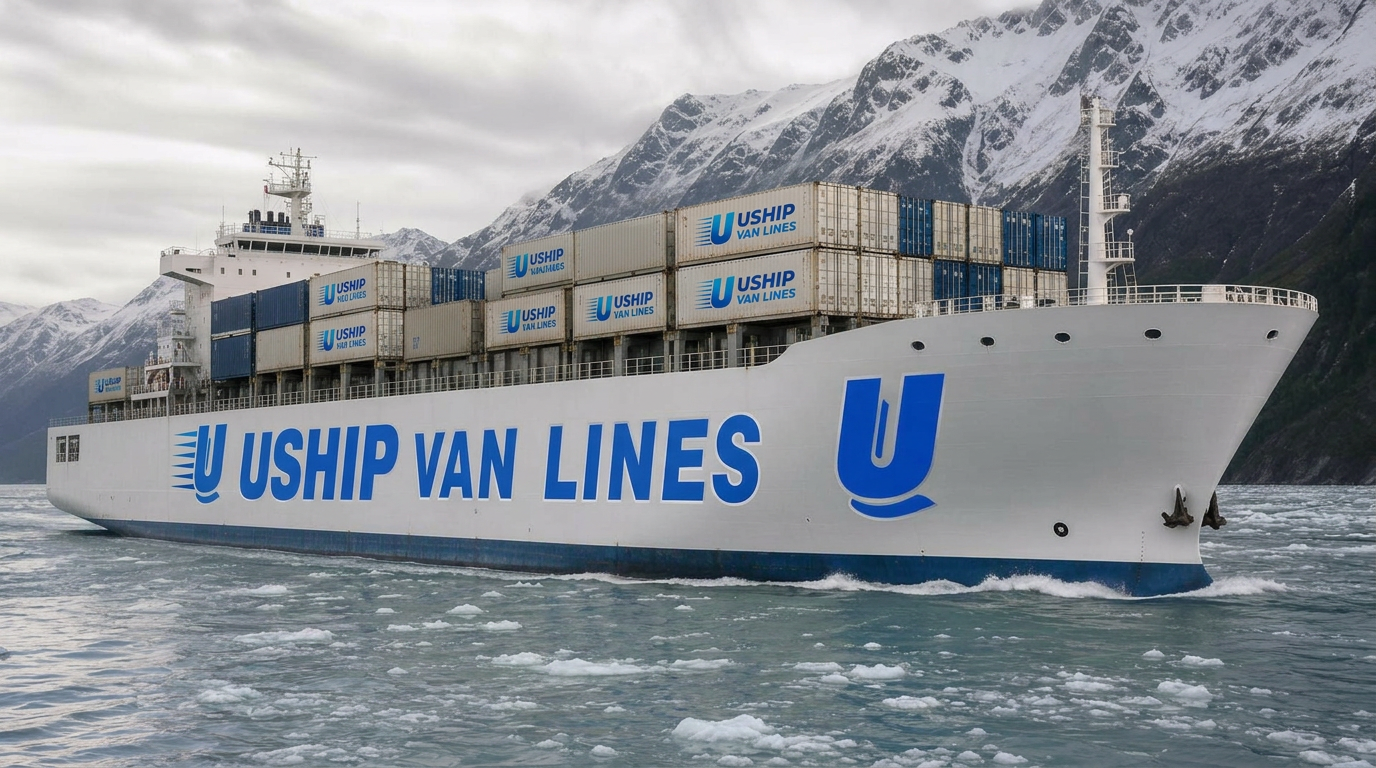
Moving from Bridgeport, CT to Alaska
Moving from Bridgeport, CT to Alaska means coordinating a cross-country truck haul from coastal Connecticut to the Pacific Northwest, then managing ocean barge transport to the Last Frontier. This isn't a simple interstate move—it's a multi-modal logistics challenge involving thousands of highway miles, strict barge schedules, and Alaska-specific regulations.
Best Alaska & Hawaii Movers, powered by UShip Van Lines, handles every phase of this complex journey. From pickup at your Bridgeport home through final delivery in Anchorage, Fairbanks, or beyond, our network manages the Continental U.S. leg, Seattle/Tacoma consolidation, weekly barge sailings, and Alaska last-mile delivery. Ready to plan your move north? Request a detailed quote to see exactly what your Bridgeport-to-Alaska relocation will involve.
Route overview
Understanding the Bridgeport, CT to Alaska Moving Route
Your household goods begin their journey in Bridgeport, leaving Long Island Sound and New England behind for a transcontinental haul of approximately 3,400 miles to the Seattle-Tacoma metropolitan area. Professional movers load your belongings in Connecticut, then transport them west across I-84 through Pennsylvania and Ohio, I-90 across the northern tier through Chicago, the Dakotas, Montana, and Idaho, before reaching Washington State. This Continental segment typically takes 5–7 days of over-the-road transit.
Once in the Tacoma area, your shipment enters a consolidation facility where household goods are containerized for ocean barge transport. The Port of Tacoma serves as the primary gateway for Alaska-bound freight, with weekly sailings operated by carriers like TOTE Maritime and Alaska Marine Lines. The barge voyage from Tacoma to the Port of Anchorage covers roughly 1,450 nautical miles up the Inside Passage and across the Gulf of Alaska, requiring 4–6 days at sea depending on weather and routing.
After clearing customs and Alaska Department of Transportation inspections at the Port of Anchorage, your shipment moves to final delivery. If your destination is Anchorage or the Mat-Su Valley (Wasilla, Palmer), delivery happens within 1–2 days. Fairbanks adds another 360 miles north via the Parks Highway, requiring an additional 1–2 days. Remote communities on the Kenai Peninsula, in Southeast Alaska, or in bush locations may involve further coordination with regional carriers, air freight, or seasonal barge services.
How the moving process works
How Your Bridgeport to Alaska Move Works: Step-by-Step
-
Free In-Home or Virtual Survey: A moving consultant evaluates your Bridgeport residence—whether a Park City brownstone, Black Rock apartment, or North End single-family home—to assess volume, special items (pianos, antiques, vehicle shipping), and access challenges. You receive a detailed, binding-not-to-exceed estimate that breaks down truck, barge, and Alaska delivery costs.
-
Pre-Move Planning and Documentation: Approximately 4–6 weeks before your move date, you'll prepare required paperwork. Alaska moves demand detailed inventory lists for customs (even though Alaska is a U.S. state, maritime shipping requires documentation). If shipping a vehicle separately, you'll arrange auto transport or drive-away services. Prohibited items include hazardous materials, perishable foods, plants (restricted by USDA), and ammunition—common items that cannot travel by barge.
-
Pickup and Packing in Bridgeport: On moving day, a professional crew arrives at your Connecticut address. They pack fragile items using marine-grade materials (double-boxing, moisture barriers), load furniture and boxes into a 26' or larger moving truck, and conduct a walk-through inventory. The truck departs Bridgeport, merging onto I-95 North before cutting west on I-84 toward the cross-country route.
-
Continental Transit to Tacoma: Your shipment travels approximately 3,400 miles over 5–7 days, passing through major hubs in Chicago, Minneapolis, and Spokane. The driver coordinates with dispatch to ensure timely arrival at the Tacoma consolidation warehouse, where your goods transfer from the moving truck into a 20' or 40' ocean container. This consolidation step is critical—barge sailings operate on fixed weekly schedules, and missing a sailing adds 7 days to your timeline.
-
Ocean Barge from Tacoma to Anchorage: Your container boards a roll-on/roll-off (RORO) or container ship operated by TOTE Maritime or Alaska Marine Lines. The vessel sails north through Puget Sound, up the Inside Passage past British Columbia, and across the Gulf of Alaska to the Port of Anchorage. This leg takes 4–6 days. Sailing frequency is weekly year-round, but winter weather (November–March) can cause delays or rerouting.
-
Port Clearance and Alaska Distribution: Upon arrival at the Port of Anchorage, your container is offloaded and inspected by Alaska DOT and U.S. Customs (standard maritime procedure). Clearance typically takes 1–2 business days. Once released, your goods move to a local Alaska moving company's warehouse for deconsolidation and final-mile routing.
-
Final Delivery in Alaska: A local Alaska crew loads your belongings onto a truck for delivery to your new address. Anchorage and Mat-Su deliveries happen within 1–2 days of port clearance. Fairbanks deliveries add 1–2 days for the 360-mile drive on the Parks Highway. Remote locations (Kenai, Homer, Kodiak, Juneau, Sitka) require additional coordination—Southeast Alaska destinations may involve a second barge leg or air freight; Kenai Peninsula stops add 2–3 days. Your delivery team will unpack, assemble furniture if requested, and remove packing materials.
Estimated moving costs
What Does a Bridgeport, CT to Alaska Move Cost?
A typical 2–3 bedroom household move from Bridgeport to Anchorage generally ranges from $8,500 to $14,000, depending on volume, services, and timing. A studio or one-bedroom apartment might fall in the $5,000–$7,500 range, while a 4-bedroom home with a full basement and garage can easily exceed $16,000–$20,000. These are estimates, not guaranteed prices—your final cost depends on the specific details of your move.
Key cost drivers include:
- Volume and Weight: Alaska moves are priced by cubic feet or weight. The average 3-bedroom home contains 800–1,200 cubic feet of household goods. Heavier items (appliances, furniture, books) increase barge fees, which are calculated per hundred-weight (CWT) or per container.
- Packing Services: Professional packing in Bridgeport adds $800–$2,000 for a typical home. Marine-grade packing (moisture barriers, double-boxing fragile items) is strongly recommended for the ocean crossing—saltwater air and container condensation can damage improperly packed belongings.
- Vehicle Shipping: Shipping a car from Connecticut to Alaska via auto transport (typically routed through Seattle for barge loading) adds $2,500–$4,500 per vehicle. Driving the Alaska-Canada Highway (ALCAN) from the Lower 48 is an alternative, but it's a 3,500+ mile journey requiring 7–10 days, winter driving skills, and vehicle preparation.
- Storage: If your Bridgeport move-out date and Alaska delivery date don't align, storage is available in Tacoma or Anchorage. Short-term storage (under 30 days) may be included in some quotes; long-term storage runs $150–$400/month depending on volume.
- Seasonal Demand: Summer (May–August) is peak moving season for Alaska, driven by school schedules and milder weather. Expect 15–25% higher rates during these months due to demand. Winter moves (November–March) offer lower pricing but face weather delays and limited barge schedules.
- Final-Mile Complexity: Delivery to downtown Anchorage is straightforward. Remote destinations—Fairbanks (360 miles north), Kenai Peninsula (130+ miles south), or bush communities accessible only by plane or seasonal barge—add significant final-mile costs, sometimes $1,500–$5,000 or more.
- Insurance and Valuation: Standard carrier liability covers $0.60 per pound per article, which is inadequate for valuable items. Full-value protection costs 1–2% of your shipment's declared value (e.g., $150–$300 for a $15,000 valuation) but provides comprehensive coverage for damage or loss during the ocean crossing.
To get an accurate, binding estimate for your Bridgeport-to-Alaska move, request a detailed quote with a full inventory and service breakdown. Never accept a quote without understanding what's included—barge fees, Alaska delivery, and any surcharges should be transparent.
Estimated transit times
How Long Does a Bridgeport, CT to Alaska Move Take?
Door-to-door transit time from Bridgeport to Anchorage typically ranges from 14 to 21 days, with Fairbanks and remote locations requiring 18–28 days or more. This timeline assumes no weather delays, missed sailings, or extended storage.
Breakdown by leg:
- Bridgeport to Tacoma (Continental Truck): 5–7 days for the 3,400-mile haul. Your goods travel I-84 west through Pennsylvania, Ohio, Indiana, Illinois, Wisconsin, Minnesota, South Dakota, Wyoming, Idaho, and Washington. Professional drivers cover 500–700 miles per day, adhering to DOT hours-of-service regulations.
- Tacoma Consolidation: 1–3 days. Your shipment arrives at a warehouse, is inventoried, and loaded into an ocean container. Timing depends on the next available barge sailing—weekly sailings mean you might wait a few days or depart the same week.
- Barge Transit (Tacoma to Anchorage): 4–6 days at sea. TOTE Maritime and Alaska Marine Lines operate the route year-round. Winter crossings (November–March) may experience delays due to Gulf of Alaska storms, adding 1–3 days.
- Port Clearance in Anchorage: 1–2 business days for customs and Alaska DOT inspection. Delays are rare but can occur if documentation is incomplete or if peak-season volume overwhelms port facilities.
- Final Delivery in Alaska: 1–2 days for Anchorage and Mat-Su Valley. Fairbanks adds 1–2 days for the drive north on the Parks Highway. Kenai Peninsula (Homer, Soldotna) adds 2–3 days. Southeast Alaska (Juneau, Ketchikan, Sitka) requires a second barge leg or air freight, adding 5–14 days. Bush destinations (Bethel, Kotzebue, Nome) are served by seasonal barge or year-round air freight, with timelines ranging from 1 week to several months depending on the season.
Plan for contingencies: Winter weather, mechanical delays, and port congestion can add 3–7 days to any leg. Book your move with at least 30 days' lead time, and if you have a firm Alaska start date (job, school, housing lease), pad your timeline by at least one week to avoid stress.
Regional logistics
Alaska-Specific Logistics: What Bridgeport Movers Need to Know
Port of Tacoma and Port of Anchorage: Nearly all household goods from the Lower 48 to Alaska pass through Tacoma and Anchorage. The Port of Tacoma is the largest North American gateway for Alaska freight, with dedicated terminals for TOTE and Alaska Marine Lines. The Port of Anchorage is Alaska's primary deep-water port, handling 90% of the state's consumer goods. Your shipment will be inspected at both ends—ensure your inventory is accurate and complete.
Customs and Documentation: Even though Alaska is a U.S. state, maritime shipping requires customs-style documentation. You'll provide a detailed inventory (item descriptions, values), proof of residency (Alaska driver's license application, lease, or employment letter), and identification. If you're shipping firearms, Alaska allows it, but federal rules apply—declare all firearms on your inventory, and ensure they're unloaded and separately packed from ammunition (which cannot ship by barge). Plants and certain foods are restricted by USDA and Alaska Department of Natural Resources—confirm allowed items with your mover.
Vehicle Shipping: Most customers ship vehicles separately via auto transport carriers, which consolidate cars in Seattle/Tacoma and load them onto the same barges. Expect $2,500–$4,500 per vehicle for Connecticut-to-Alaska auto transport. Alternatively, driving the ALCAN Highway is a rite of passage for some movers—it's 3,500+ miles from Connecticut through Canada to Alaska, requiring 7–10 days, a mechanically sound vehicle, winter tires (if traveling October–April), and readiness for remote stretches with limited services. If you drive, you'll need a passport or enhanced driver's license for the Canadian border.
Last-Mile Delivery Challenges: Alaska's size and geography complicate final delivery. Anchorage, Eagle River, and the Mat-Su Valley (Wasilla, Palmer) are accessible year-round via paved highways. Fairbanks sits 360 miles north on the Parks Highway—a well-maintained route, but winter deliveries require winter driving expertise. The Kenai Peninsula (Soldotna, Homer, Seward) adds 130–220 miles south of Anchorage on the Seward and Sterling Highways. Southeast Alaska communities (Juneau, Sitka, Ketchikan) are not connected to the road system—deliveries require a second barge leg from the Alaska Marine Highway System or air freight, adding cost and time. Bush Alaska (Nome, Bethel, Kotzebue, Barrow) is accessible only by plane year-round or by seasonal barge (summer only for most communities). If your destination is off the road system, discuss logistics and costs in detail during your quote consultation.
Prohibited and Restricted Items: Alaska barge carriers prohibit hazardous materials (paint, propane, gasoline, cleaning chemicals), ammunition, perishable foods, and plants. Certain electronics and lithium batteries face restrictions. If you have valuable or irreplaceable items (documents, jewelry, heirlooms), carry them with you—don't pack them in the moving truck. Your mover will provide a full prohibited-items list during planning.
Storage Options: If your Bridgeport move-out and Alaska move-in dates don't align, storage is available at Tacoma consolidation facilities or in Anchorage. Tacoma storage is climate-controlled and secure, priced at $150–$300/month for typical household volumes. Anchorage storage offers similar pricing and is convenient if you need to house-hunt after arrival. Communicate your storage needs early—barge schedules are fixed, and missing a sailing because you're not ready can add a week to your timeline.
Seasonal considerations
Timing Your Bridgeport to Alaska Move: Seasonal Factors
Summer (May–August): Peak moving season for Alaska. Families relocate during school vacation, military transfers spike in June and July, and mild weather makes unpacking easier in Alaska's climate. Barge schedules are most frequent, but capacity fills quickly—book 6–8 weeks in advance. Expect premium pricing (15–25% above off-season rates). The Parks Highway to Fairbanks is clear and dry, and Southeast Alaska ferries run full schedules.
Fall (September–October): Shoulder season offers moderate pricing and reliable barge schedules. September weather is pleasant in Alaska—cooler but still dry. By late October, snow arrives in Fairbanks and at higher elevations. Demand drops after Labor Day, so you may find better availability and negotiating room. It's an ideal window if you're flexible on timing.
Winter (November–March): Off-season pricing is 15–25% lower, but winter moves present challenges. Gulf of Alaska storms can delay barges by 2–5 days, and ice conditions occasionally affect port operations in Anchorage (rare but possible in extreme cold snaps). The Parks Highway to Fairbanks requires winter tires, chains, and experienced drivers—local Alaska carriers are equipped, but delivery windows widen. Daylight is limited (4–5 hours in December), complicating deliveries. If you're moving to Fairbanks or bush Alaska in winter, confirm your carrier has cold-weather logistics experience. On the plus side: lower costs, less competition for capacity, and immediate availability.
Spring (April–May): Transition season. Barge schedules ramp up in April as the tourism and construction seasons approach. Pricing begins to climb in May. Spring breakup (April–May) can make unpaved roads in rural Alaska temporarily impassable—if your destination is off the road system or on a rural plot, confirm access with your carrier. Otherwise, spring is a sweet spot: improving weather, moderate pricing, and good availability.
Best advice: If you have flexibility, aim for September or April. If you're locked into summer, book early and budget for peak pricing. Winter movers should add extra buffer days and confirm their carrier's Alaska experience.
Why choose Best Alaska & Hawaii Movers
Why Choose Best Alaska & Hawaii Movers (Powered by UShip Van Lines)
-
Alaska Logistics Expertise: Moving to Alaska isn't like a typical interstate move—it's a multi-modal journey involving truck, barge, and remote last-mile delivery. Our network has decades of combined experience with Pacific Northwest consolidation, Alaska Marine Lines and TOTE barge sailings, Port of Anchorage clearance, and deliveries everywhere from downtown Anchorage to remote Fairbanks suburbs and Kenai Peninsula communities.
-
Transparent, Detailed Estimates: We provide binding-not-to-exceed quotes that break down every cost: Continental truck, Tacoma consolidation, barge freight, Alaska delivery, and any surcharges. You'll never face surprise fees at delivery. Our consultants walk you through the timeline, seasonal considerations, and logistics challenges specific to your Bridgeport-to-Alaska route.
-
Comprehensive Service Options: From full-service packing in Bridgeport (including marine-grade materials for the ocean crossing) to vehicle shipping, storage, and unpacking in Alaska, we coordinate every detail. You get a single point of contact who manages the entire move—no juggling multiple vendors or trying to sync truck and barge schedules yourself.
-
Proven Quality and Accountability: Our network partners are licensed, insured, and experienced in Alaska moves. We monitor every shipment from Bridgeport pickup through Anchorage (or Fairbanks, or beyond) delivery, providing tracking updates at each milestone: departure from Connecticut, arrival in Tacoma, barge loading, port clearance, and final delivery. If issues arise—weather delays, documentation questions—we communicate proactively.
-
Customer-Focused Support: Moving across 3,400 miles and an ocean is stressful. Our team provides guidance on what to pack, what to leave behind, how to prepare your vehicle for shipping or the ALCAN drive, and what to expect upon arrival in Alaska. We're available by phone, email, or chat throughout your move, ready to answer questions and solve problems.