
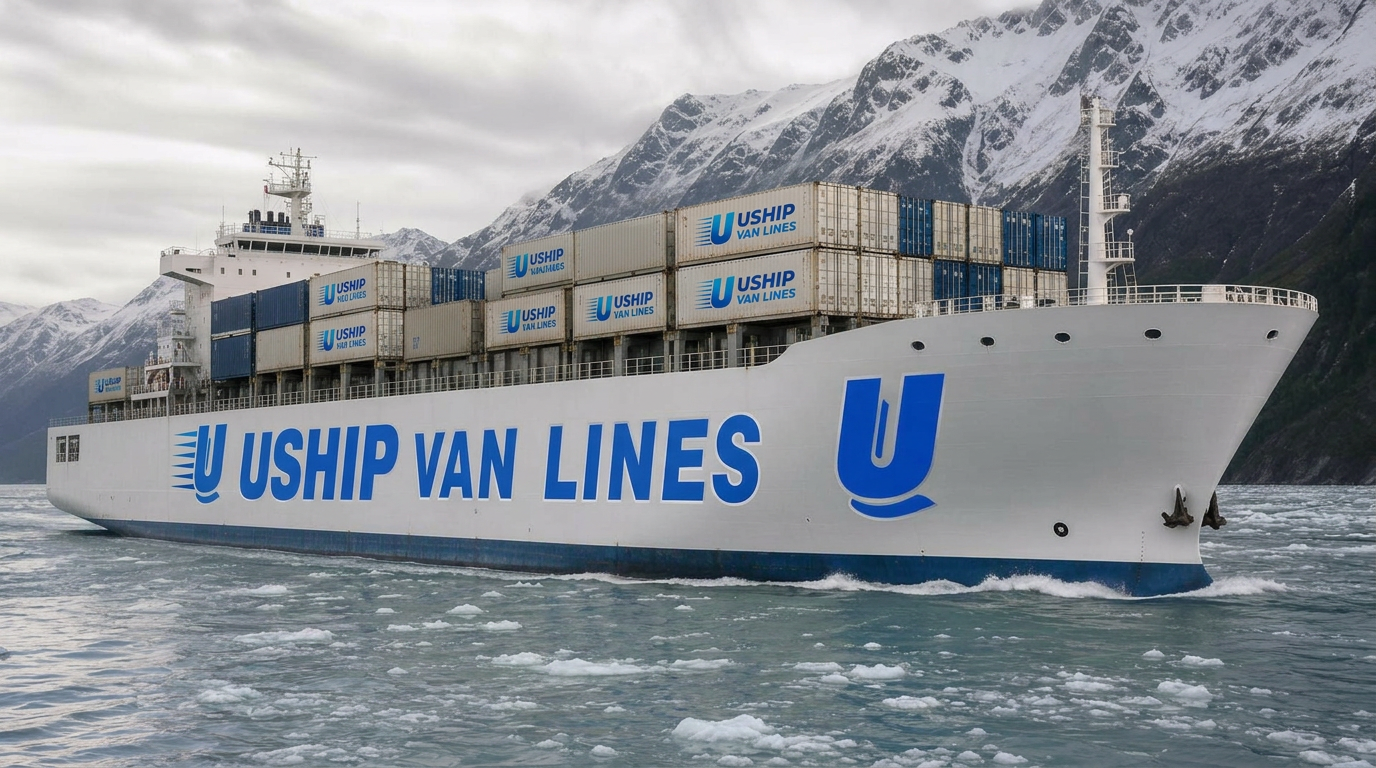
Moving from Baltimore, MD to Alaska
Relocating from Baltimore to Alaska transforms your East Coast urban lifestyle into a frontier adventure—but the 3,400-mile journey requires specialized expertise. Unlike standard interstate moves, your household goods will travel by truck to the Pacific Northwest, then by barge to Anchorage or other Alaska ports, adding unique logistics, timelines, and considerations.
Best Alaska & Hawaii Movers, powered by UShip Van Lines, coordinates every phase of your Baltimore-to-Alaska relocation. From pickup in Charm City through cross-country transit, port handling, ocean barge, and final delivery to Anchorage, Fairbanks, or beyond, we manage the complexity so you can focus on your next chapter. Request your free quote to see exactly what your move will cost and how long it will take.
Route overview
Baltimore to Alaska: A Cross-Continental Journey
Your move begins with pickup anywhere in the Baltimore metro—from Federal Hill to Towson, Canton to Columbia. Professional movers load your belongings into a 53-foot trailer bound for the West Coast. The first leg crosses the continental United States via I-70 and I-90, typically reaching the Seattle-Tacoma region in 5–7 days depending on weather and routing.
In the Pacific Northwest, your shipment transfers to a barge terminal—usually the Port of Tacoma. Cargo is containerized or loaded onto pallets for the ocean voyage to Alaska, most commonly to the Port of Anchorage. Barges sail weekly during peak season (April–October) but less frequently in winter, adding schedule considerations unique to Alaska logistics.
Once your container arrives in Alaska, a local delivery team handles last-mile service to your final destination—whether that's Anchorage proper, the Mat-Su Valley (Wasilla, Palmer), Fairbanks via the Parks Highway, Kenai Peninsula communities, or even bush locations requiring smaller trucks or alternative transport. This multi-modal approach is the only practical way to move full households from the Lower 48 to America's largest state.
How the moving process works
How Your Baltimore-to-Alaska Move Works: Step by Step
-
Free Quote & Planning (Week 1): Contact Best Alaska & Hawaii Movers for a detailed estimate based on your inventory size and exact Alaska destination. We'll discuss timelines, costs, and any special items (vehicles, ATVs, boats) that can ship alongside household goods.
-
Professional Packing & Loading (Day 1): Crews arrive at your Baltimore home to pack fragile items, disassemble furniture, and load everything into a climate-controlled trailer. You'll receive a detailed inventory list and bill of lading before the truck departs.
-
Cross-Country Transit (Days 2–8): Your shipment travels approximately 3,000 miles to the Port of Tacoma or Seattle. GPS tracking keeps you informed, and the carrier navigates mountain passes and potential weather delays with experienced drivers.
-
Port Transfer & Barge Loading (Days 9–12): At the Pacific terminal, longshoremen transfer your goods into ocean containers or secure them for roll-on/roll-off barge service. Paperwork includes customs forms (Alaska is a U.S. state, but some documentation mirrors international protocol) and marine insurance verification.
-
Ocean Barge to Alaska (Days 13–17): The voyage from Tacoma to Anchorage typically takes 3–5 days of sailing time. Barges operate on fixed schedules, so timing depends on your shipment's arrival at the port and the next available sailing—weekly in summer, every 10–14 days in winter.
-
Alaska Port Clearance (Days 18–19): Your container is offloaded at the Port of Anchorage and cleared through the terminal. This stage involves dock fees, handling charges, and coordination with local delivery partners.
-
Last-Mile Delivery (Days 20–25): A regional Alaska carrier delivers to your doorstep—whether that's a house in South Anchorage, a cabin near Denali, or a property in Homer. Crews unload, reassemble furniture, and remove packing materials, completing your journey from Chesapeake Bay to the Last Frontier.
Estimated moving costs
What Does a Baltimore-to-Alaska Move Cost?
For a typical 2–3 bedroom household (approximately 7,000–10,000 lbs), expect total costs between $8,500 and $14,000 for full-service door-to-door relocation. Studio or 1-bedroom moves may run $5,500–$7,500, while 4+ bedroom homes can exceed $16,000 depending on volume and services.
Key cost drivers include:
- Distance & Weight: The 3,400-mile route and ocean barge leg create higher base costs than standard Lower 48 moves. Barge freight is priced per cubic foot or container size.
- Packing Services: Full professional packing adds $800–$2,000 but protects belongings through multiple handling points (truck → port → barge → final delivery).
- Vehicle Shipping: Adding a car or truck to your shipment costs $1,800–$3,200, typically via the same barge in a separate container or on a roll-on/roll-off deck.
- Seasonal Timing: Summer moves (May–September) face higher demand and sometimes premium barge rates. Winter sailings are less frequent but may offer slightly lower freight costs.
- Final Destination: Delivery to Anchorage or Wasilla is straightforward. Fairbanks adds 350+ miles of Alaska highway trucking. Remote locations like Kodiak, Sitka, or bush communities require additional barge legs or air freight, significantly increasing cost.
- Storage: If you need temporary warehouse storage at either end (Baltimore or Alaska), add $150–$400 per month depending on volume.
Best Alaska & Hawaii Movers provides itemized quotes with no hidden fees. We'll break down each leg—truck, barge, delivery—so you understand exactly what you're paying for. Request your free estimate to see real numbers for your specific move.
Estimated transit times
How Long Does Baltimore to Alaska Take?
Door-to-door transit typically requires 20–28 days from Baltimore pickup to Alaska delivery. This timeline breaks down as follows:
- Truck to Seattle/Tacoma: 5–7 days for the cross-country drive, depending on route, weather (especially winter mountain pass conditions), and any required rest stops.
- Port Staging: 2–4 days for your shipment to be unloaded, inspected, and prepared for barge loading. This window allows for scheduling the next available sailing.
- Barge Transit: 3–5 days of actual sailing time from Tacoma to Anchorage. The voyage covers roughly 1,400 nautical miles through the Inside Passage or offshore Pacific routes.
- Alaska Port Clearance: 1–2 days for offloading, customs/dock processing, and transfer to local delivery carriers.
- Final Delivery: 1–5 days depending on your destination. Anchorage-area deliveries happen quickly; Fairbanks requires an additional day; Kenai Peninsula or more remote areas may add several more days.
Seasonal variation is significant: Summer barges sail weekly, allowing tighter schedules. Winter sailings (November–March) may run every 10–14 days, extending total transit by a week or more if your truck arrives between sailing windows. Always build in buffer time—if you need to be in your Alaska home by a specific date, plan your Baltimore pickup 4–6 weeks in advance to accommodate potential delays (weather, mechanical issues, port congestion).
Regional logistics
Alaska-Specific Moving Logistics You Need to Know
Port & Barge Essentials: Your shipment will route through the Port of Tacoma (most common) or occasionally Seattle, then sail to the Port of Anchorage. Some destinations like Southeast Alaska (Juneau, Ketchikan) or Kodiak require different barge routes with longer transit. Barge companies include TOTE Maritime and Alaska Marine Lines—your moving company coordinates scheduling, but understanding the barge calendar helps you plan.
Vehicle Shipping: Most Baltimore-to-Alaska movers offer combined household goods and vehicle transport. Your car ships in a container or on the barge deck, arriving alongside your furniture. This is far more economical than driving the Alaska Highway (5,000+ miles from Baltimore via Canada) and avoids wear, fuel costs, and border paperwork. Vehicles must be cleaned (no soil/mud) and inspected before loading.
Customs & Documentation: Alaska is a U.S. state, so there are no international customs. However, if your route involves Canadian transit (rare for barge shipments, more common if driving personally), you'll need border documentation. The moving company handles all port paperwork, including bills of lading, dock receipts, and delivery orders.
Last-Mile Challenges: Anchorage, Wasilla, Palmer, and Eagle River have straightforward road access. Fairbanks requires an additional 350-mile haul on the Parks Highway—reliable but subject to winter closures. Kenai Peninsula towns (Soldotna, Homer) add ferry or extended truck routes. Bush communities (Bethel, Nome, Barrow) are road-inaccessible and require air freight or separate barge service, dramatically increasing cost and complexity. Clarify your exact destination during the quote process to ensure realistic pricing and timelines.
Storage Options: If your Alaska home isn't ready or you're still house-hunting, we offer warehouse storage in Anchorage. This is common for military PCS moves or flexible relocations. Baltimore-side storage is also available if you need to vacate your current home before the moving window opens.
Prohibited & Restricted Items: Alaska regulations prohibit importing certain plants (invasive species risk) and soil. Firearms are legal to move but require proper declaration. Perishable food should be consumed before packing. Hazardous materials (propane tanks, certain cleaners) cannot ship via barge—dispose of these in Baltimore and repurchase in Alaska.
Seasonal considerations
Best Times to Move from Baltimore to Alaska
Spring (April–May): Barge schedules ramp up to weekly service, and Alaska weather begins to cooperate for last-mile deliveries. This is an excellent window for families aiming to settle before summer. Baltimore weather is mild, making packing and loading easier. Watch for late-season snowstorms in the Rockies, which can delay truck transit by 1–2 days.
Summer (June–August): Peak moving season offers the most reliable schedules and fastest transit times. Weekly barges, longer Alaska daylight (20+ hours in June), and dry conditions make delivery straightforward even to remote areas. However, demand is highest—book at least 6–8 weeks ahead and expect premium pricing. Baltimore's heat and humidity mean climate-controlled storage may be advisable if there's any delay on either end.
Fall (September–October): Shoulder season balances good weather with slightly lower demand. Barge frequency begins to taper in October, but schedules remain weekly through mid-autumn. Early snow in Alaska's interior (Fairbanks, Denali Highway) can complicate last-mile delivery by late October, so aim for early September departure if targeting interior destinations.
Winter (November–March): Off-season moves face the longest timelines due to reduced barge sailings (every 10–14 days) and potential weather disruptions. Cross-country truck transit contends with Rocky Mountain passes that may require chains or close temporarily. Alaska delivery can be challenging in deep winter—icy driveways, short daylight, extreme cold. However, costs may be 10–15% lower, and availability is better if your timeline is flexible. Winter moves work well for Anchorage deliveries (the city remains accessible year-round) but are riskier for Fairbanks or rural areas.
Why choose Best Alaska & Hawaii Movers
Why Choose Best Alaska & Hawaii Movers for Your Baltimore-to-Alaska Relocation
-
Alaska Expertise, Not Generic Long-Distance: We specialize exclusively in Alaska and Hawaii moves, managing the barge logistics, port coordination, and last-mile delivery that standard moving companies don't handle. Powered by UShip Van Lines, we combine nationwide reach with Alaska-specific know-how.
-
Transparent, Itemized Pricing: You'll receive a detailed breakdown of truck transport, barge freight, port fees, and delivery costs—no surprise charges when your shipment arrives in Anchorage. We explain every line item so you can budget confidently.
-
End-to-End Coordination: One point of contact manages your entire move from Baltimore pickup through Alaska delivery. We handle truck carriers, barge booking, port agents, and final delivery teams, so you're not juggling multiple vendors across 4,000 miles.
-
Vehicle & Household Goods Together: Ship your car or truck alongside your furniture on the same barge, saving time and money versus separate arrangements. We coordinate both to arrive together in Alaska.
-
Flexible Timing & Storage: Need to store belongings in Anchorage while you house-hunt or wait for closing? We offer secure warehouse options and can adjust delivery dates to match your schedule, not just the barge calendar.