
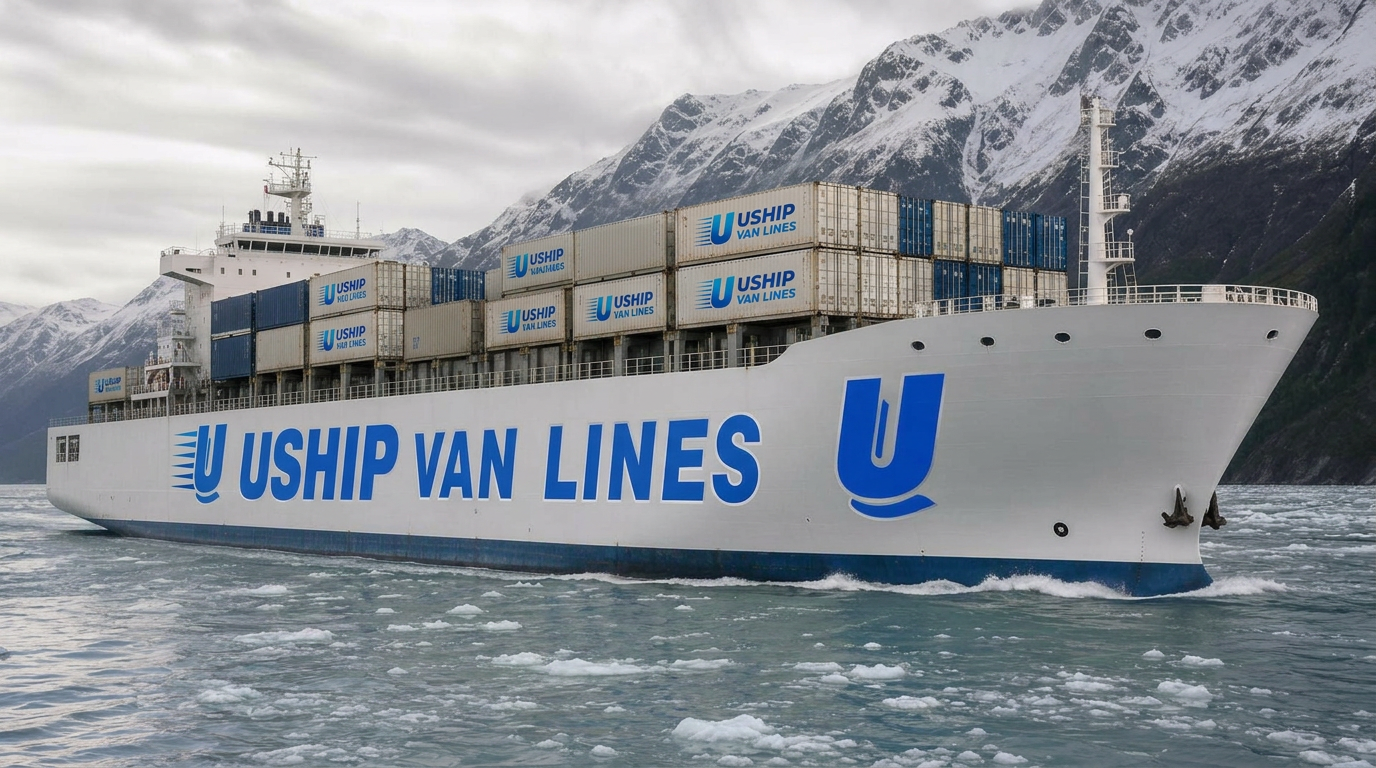
Moving from Alaska to Baltimore, MD
Moving from Alaska to Baltimore, MD means crossing one of the longest and most logistically complex routes in North America. Your household goods will travel by barge from Alaska to a West Coast port—typically Tacoma or Seattle—then cross the country by truck to Maryland's largest city. This multi-modal journey requires specialized carriers, careful timing, and realistic expectations about costs and transit windows.
Best Alaska & Hawaii Movers connects you with vetted carriers experienced in Alaska barge logistics and cross-country delivery. Whether you're leaving Anchorage, Fairbanks, the Mat-Su Valley, or a remote community, we'll help you navigate port schedules, coordinate pickups, and secure competitive quotes. Request your free estimate today to compare rates and timelines from multiple carriers.
Route overview
Route Overview: Alaska to Baltimore
The Alaska-to-Baltimore move spans roughly 3,800 miles and involves two distinct transportation legs. First, your belongings are loaded into containers—typically 20-foot steel or specialized moving vans—and shipped via barge from Alaska to Tacoma or Seattle. This marine leg takes 5–8 days depending on the carrier, weather, and port congestion. Once the barge docks in the Pacific Northwest, your containers are offloaded, inspected, and transferred to long-haul trucks.
The overland leg crosses Washington, Idaho, Montana, North Dakota, Minnesota, Wisconsin, Illinois, Indiana, Ohio, Pennsylvania, and into Maryland—or alternatively routes through I-90 and I-80 depending on season and carrier preference. This transcontinental haul adds another 5–9 days, with drivers adhering to federal hours-of-service limits. Total door-to-door transit typically ranges from 12–18 days, though weather delays, port slowdowns, or customs inspections can extend that window.
Baltimore sits along the I-95 corridor with excellent highway access, making final delivery straightforward once your shipment reaches the Mid-Atlantic. The city's urban density means movers must navigate narrow streets, parking restrictions, and occasional permit requirements for larger trucks. Communicate your exact Baltimore address—whether downtown, Fells Point, Canton, or the suburbs—early in the planning process so your carrier can route appropriately and arrange any necessary permits.
How the moving process works
How the Alaska to Baltimore Move Works
-
Request quotes and compare carriers. Contact Best Alaska & Hawaii Movers to receive estimates from multiple Alaska-specialist carriers. Provide your origin city (Anchorage, Fairbanks, Kenai, etc.), inventory size, preferred pickup window, and any special items like vehicles or fragile antiques.
-
Schedule your Alaska pickup. Your chosen carrier will arrange a pickup date based on barge sailing schedules. If you're in a remote or off-road community, plan for an earlier pickup to allow time for positioning to the nearest barge-accessible port (Anchorage, Whittier, or Kodiak).
-
Pack and load your shipment. Professional movers will pack your belongings into weatherproof containers or load them into moving vans designed for marine transport. All items are inventoried, and a bill of lading is issued. Secure high-value items and keep essentials (documents, medications, valuables) with you.
-
Barge transport to the Lower 48. Your container sails from Alaska to Tacoma or Seattle, typically a 5–8 day voyage. The carrier tracks the shipment and notifies you when the barge docks and customs clearance (if applicable) is complete.
-
Overland haul across the country. Once offloaded, your container is transferred to a long-haul truck and driven east via I-90, I-80, or a southern route. Expect 5–9 days for this leg, with the driver coordinating a delivery window as they approach Maryland.
-
Final delivery in Baltimore. The truck arrives at your Baltimore address during the scheduled window. Movers unload, place items in rooms per your instructions, and verify the inventory. Inspect for damage immediately and note any issues on the delivery receipt.
-
Unpack and settle in. Review your shipment, file any insurance claims within the required timeframe (usually 9 months), and enjoy your new home in Charm City. Keep all paperwork—bill of lading, inventory sheets, receipts—for at least one year.
Estimated moving costs
What You'll Pay to Move from Alaska to Baltimore
A typical 2–3 bedroom household moving from Alaska to Baltimore costs $6,500–$12,000 for full-service transport. Studio or 1-bedroom moves may start around $4,000–$5,500, while 4+ bedroom homes or high-volume shipments can exceed $15,000. These figures reflect combined barge + overland transport, basic valuation coverage, and standard pickup/delivery.
Key cost drivers include:
- Volume and weight. Movers charge by cubic feet or weight. A 1,200 cubic foot load (roughly a 2-bedroom apartment) will cost significantly less than a 2,500 cubic foot load (large 3-bedroom home).
- Origin accessibility. Pickups in Anchorage or Fairbanks cost less than moves from remote Mat-Su communities, the Kenai Peninsula, or bush locations requiring barge-to-barge transfers.
- Packing services. Full-pack service (movers pack everything) adds $800–$2,000. Fragile-only or partial packing is less expensive. DIY packing saves money but increases your liability for damage.
- Vehicle shipping. Adding a car or truck to your shipment typically costs $1,500–$2,800 Alaska-to-Baltimore, depending on vehicle size and whether it's driven or container-shipped.
- Season and demand. Summer (May–September) is peak Alaska moving season; prices rise and availability tightens. Off-peak moves (October–April) may yield 10–20% savings, but barge schedules are less frequent.
- Insurance and valuation. Basic carrier liability (60 cents per pound) is included. Full-value protection or third-party insurance adds 1–3% of shipment value but provides comprehensive coverage.
Always request binding or binding-not-to-exceed estimates in writing. Avoid brokers quoting unrealistically low prices; Alaska moves require specialized equipment and experience, and legitimate carriers price accordingly.
Estimated transit times
How Long the Move Takes
Door-to-door transit from Alaska to Baltimore typically requires 12–18 days, broken down as follows:
- Alaska pickup and port delivery: 1–3 days. If you're in Anchorage or Fairbanks with direct barge access, expect shorter lead times. Remote locations (Kenai, Kodiak, Mat-Su outlying areas) may require an extra day or two for positioning.
- Barge sailing to Tacoma/Seattle: 5–8 days. Barge schedules run weekly in summer, less frequently in winter. Weather in the Gulf of Alaska can cause delays, especially October–March.
- Port offload and customs (if needed): 1–2 days. Most Alaska-to-CONUS moves don't require customs, but carriers inspect and transfer containers during this window.
- Overland truck haul: 5–9 days. The 3,800-mile drive crosses multiple time zones and weather systems. Drivers rest per DOT regulations, and winter weather in the northern tier states can slow progress.
Plan for buffer time. If you have a firm Baltimore start date for work, school, or a lease, schedule your pickup 3–4 weeks in advance. This cushion accommodates barge delays, weather, and scheduling flexibility. Many Alaska movers offer temporary storage in Tacoma or Baltimore if your shipment arrives before you're ready.
Regional logistics
Alaska-Specific Logistics You Need to Know
Barge ports and routing: Most Alaska household shipments originate via the Port of Anchorage, with Whittier serving as an alternate (especially for rail-accessible loads) and Kodiak for island communities. Fairbanks and Mat-Su Valley loads are typically trucked to Anchorage for barge loading. If you're in a remote or off-road location, your mover may arrange a smaller barge or freight plane to the nearest hub, then consolidate for the southbound sailing.
Container types: Expect your goods loaded into 20-foot steel shipping containers (the industry standard for Alaska marine moves) or specialized moving vans. Containers are weatherproof and secure, but proper packing and padding are essential to prevent shifting during the voyage and overland haul.
Vehicle shipping: You can ship your car or truck alongside your household goods. Vehicles are typically driven onto the barge (roll-on/roll-off) or loaded into shared containers. Expect 10–14 days Alaska-to-Baltimore for vehicles. Ensure the gas tank is under ¼ full, disconnect alarms, and remove all personal items. Some carriers offer door-to-door auto transport; others require you to drop off/pick up at port.
Paperwork and documentation: Alaska-to-CONUS moves don't require international customs, but you'll complete a detailed inventory and bill of lading. Keep copies of all documents, including your estimate, contract, insurance certificates, and delivery receipts. If shipping firearms, adhere to federal and state laws (Maryland has strict regulations).
Last-mile delivery in Baltimore: Baltimore's Inner Harbor, Fells Point, Federal Hill, and downtown neighborhoods have narrow streets and parking restrictions. Notify your carrier of any delivery challenges—permit requirements, loading dock access, elevator reservations—at least one week before arrival. Suburban Baltimore (Towson, Columbia, Dundalk) offers easier truck access but may incur additional mileage fees if you're far from I-95 or I-695.
Seasonal considerations
Seasonal Timing for Alaska to Baltimore Moves
Summer (May–September): Peak moving season. Barge schedules run frequently (often weekly), weather is mild, and overland routes are clear. Demand is highest, so book 4–6 weeks ahead and expect premium pricing. Daylight in Alaska is abundant, making pickups and last-mile deliveries easier. Baltimore summers are hot and humid, but delivery logistics are straightforward.
Fall (October–November): Shoulder season. Barge frequency decreases, but you'll find better pricing and availability. Early winter storms can begin in Alaska and the northern Rockies by late October, so build extra transit time into your schedule. Baltimore fall weather is pleasant, ideal for move-in.
Winter (December–March): Off-peak and challenging. Barge schedules are limited (often bi-weekly or less), and Alaska winter weather can delay pickups and port operations. The overland route faces snow and ice across Montana, North Dakota, and the Midwest, potentially adding days to delivery. However, rates drop 10–20%, and movers have more scheduling flexibility. If you're flexible and don't mind uncertainty, winter moves save money—just avoid hard deadlines.
Spring (April–early May): Transition season. Barge schedules ramp up, Alaska roads clear of ice, and demand is moderate. Pricing is mid-range, and you'll avoid both peak-summer crowds and winter weather risks. Spring in Baltimore is mild and beautiful for settling in. This window offers the best balance of cost, availability, and conditions.
Why choose Best Alaska & Hawaii Movers
Why Choose Best Alaska & Hawaii Movers for Your Alaska-Baltimore Move
- Multi-carrier marketplace powered by UShip Van Lines. We connect you with vetted carriers specializing in Alaska logistics, so you compare rates, services, and reviews in one place—no need to call a dozen companies individually.
- Deep Alaska expertise. Our network includes movers experienced in barge schedules, port operations, remote pickups, and the unique challenges of Alaska household relocations. We understand Mat-Su dirt roads, Fairbanks winter conditions, and Anchorage port congestion.
- Transparent, realistic pricing. We provide binding or binding-not-to-exceed estimates with clear line items. No bait-and-switch, no hidden barge fees, no surprise charges at delivery.
- Comprehensive service options. From full-pack white-glove service to budget-friendly freight options, our carriers offer flexible solutions. Add vehicle shipping, temporary storage, or specialized handling for antiques, pianos, or fragile items.
- End-to-end support. We guide you from quote request through final delivery. Track your shipment, get answers to questions, and resolve issues quickly. Our goal is a smooth, stress-free move so you can focus on settling into Baltimore.