
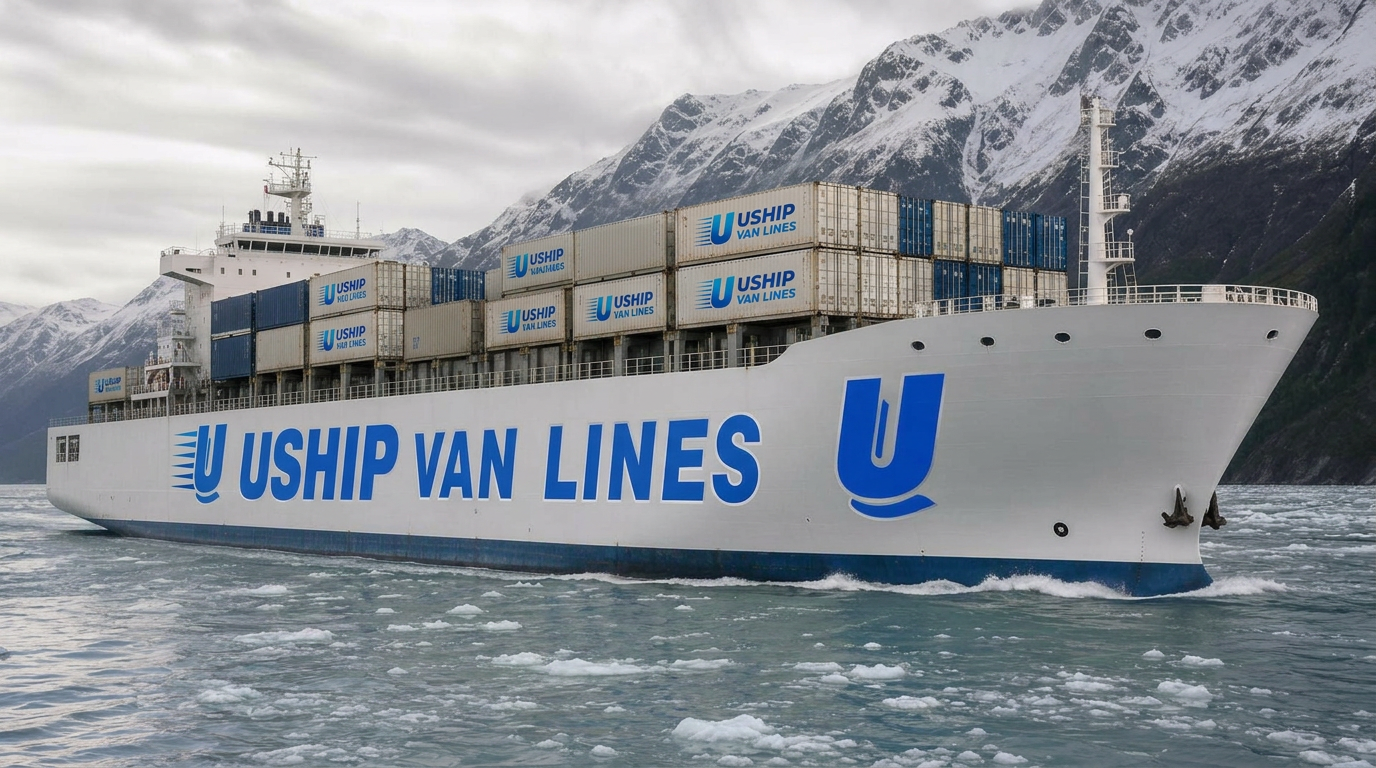
Moving from Alaska to Salt Lake City, UT
Relocating from Alaska to Salt Lake City combines the logistical complexity of a long-haul interstate move with Alaska's unique barge and port requirements. Whether you're leaving Anchorage, Fairbanks, the Mat-Su Valley, or a more remote community, your household goods will travel by barge to the Port of Tacoma, then overland through Idaho to Utah's capital region—a journey covering roughly 2,400 highway miles after the marine leg.
Best Alaska & Hawaii Movers, powered by UShip Van Lines, specializes in Alaska-origin moves and coordinates every step:港湾 consolidation, marine transit, customs clearance (if applicable), and final delivery to your Salt Lake City address. Ready to start planning? Request a free, no-obligation quote and speak with a move coordinator who understands Alaska logistics inside and out.
Route overview
Route Overview: Alaska to Salt Lake City
Your shipment begins with pickup anywhere in Alaska—Anchorage, Fairbanks, Kenai Peninsula, Mat-Su Borough, or bush communities accessible by smaller feeder barge or air cargo. Household goods are trucked or barged to a consolidation hub, typically in Anchorage, then loaded into marine containers bound for the Port of Tacoma, Washington. This barge leg crosses the Gulf of Alaska and the Inside Passage, a voyage that takes 5–8 days depending on weather and the carrier's schedule.
Once your container clears Tacoma, it's transferred to a long-haul truck for the 840-mile overland journey through Washington, Idaho, and into Utah. The route follows I-90 east to Spokane, then drops south on I-84 through Twin Falls, Idaho, before turning southeast on I-84/I-15 into the Salt Lake Valley. Salt Lake City sits at 4,226 feet elevation in a high-desert basin beneath the Wasatch Range, so movers must account for mountain passes in winter and urban delivery logistics in Utah's largest metro area.
From barge departure to final delivery, plan on 10–21 days door-to-door. This timeline is heavily influenced by barge sailing frequency (typically weekly in summer, less frequent in winter), port dwell time, and cross-country truck scheduling. Best Alaska & Hawaii Movers coordinates the entire chain, so you have a single point of contact and full shipment visibility from Alaska soil to your Salt Lake City doorstep.
How the moving process works
The Moving Process: Step by Step
1. Free Consultation and Inventory
Contact Best Alaska & Hawaii Movers for a no-obligation quote. Provide a detailed inventory—room by room—and note any vehicles, high-value items, or special handling needs. Our team will ask about your Alaska pickup location (road-accessible or requiring feeder barge) and your Salt Lake City delivery address, including any apartment or condo restrictions.
2. Packing and Pickup in Alaska
Professional movers arrive at your Alaska home to pack, pad, and load your belongings. If you're in a remote area (bush Alaska or off the road system), goods may be consolidated in Anchorage first. Full-service packing is strongly recommended for the barge leg; items must be secured to withstand ocean swells and container handling.
3. Consolidation and Marine Container Loading
Your household is transported to the Anchorage consolidation warehouse, where it's loaded into a 20-foot or 40-foot marine container alongside other Alaska shipments (or as an exclusive use if you have a large enough load). The container is sealed, manifest is prepared, and it's trucked to the Port of Anchorage for barge loading.
4. Barge Transit to Port of Tacoma
The barge departs Anchorage and sails 1,400+ nautical miles south through the Gulf of Alaska and Inside Passage. Transit takes 5–8 days. You'll receive departure and estimated arrival notifications. Weather delays are rare but possible in fall and winter.
5. Port of Tacoma Customs Clearance and Deconsolidation
At Tacoma, the container is offloaded, cleared through any necessary inspections, and transferred to a deconsolidation facility if it's a shared container. Your goods are reloaded onto a long-haul truck bound for Salt Lake City. Port dwell time is typically 1–3 days.
6. Overland Transit to Salt Lake City
The truck departs Tacoma on a 2–3 day journey via I-90 and I-84, crossing the Columbia River Gorge, southern Idaho, and climbing into the Wasatch Front. Salt Lake City's urban core and mountain geography mean your driver will coordinate a precise delivery window and navigate any HOA or building access requirements.
7. Delivery and Unpacking in Salt Lake City
Movers deliver your goods, unload, and place furniture and boxes in the rooms you specify. Optional unpacking service is available. Inspect your shipment promptly and note any damage or missing items on the delivery receipt—this is essential for insurance claims.
Estimated moving costs
Cost Estimate: What to Expect
Moving a typical 2- to 3-bedroom household from Alaska to Salt Lake City generally costs $6,800–$12,500, though final pricing depends on shipment weight, volume, packing services, pickup/delivery locations, and time of year. A studio or 1-bedroom load may run $4,200–$6,500; a 4-bedroom home with vehicles can exceed $15,000.
Key Cost Drivers:
- Distance and marine leg: The barge from Anchorage to Tacoma is the largest expense, covering fuel surcharges, port handling, and marine container fees. The 840-mile truck leg from Tacoma to Salt Lake City adds long-haul diesel and driver costs.
- Shipment weight and volume: Carriers charge by cubic feet or pounds. A 3-BR home averages 7,000–10,000 pounds. Piano, hot tubs, and oversized furniture add to both weight and handling fees.
- Packing and special handling: Full-service packing (recommended for barge moves) costs $800–$2,000. Crating for antiques, artwork, or fragile items is extra.
- Alaska pickup location: Road-accessible cities (Anchorage, Wasilla, Fairbanks) are standard. Remote communities requiring feeder barge or air cargo to Anchorage incur additional local freight charges.
- Seasonality: Summer is peak Alaska moving season; demand drives prices up and barge space fills quickly. Book 6–8 weeks ahead in June–August. Off-season (October–March) may offer lower rates but fewer sailing options.
- Vehicle shipping: Driving the Alaska Highway to Salt Lake City is a 2,400+ mile, multi-day journey. Shipping a car via the same barge and truck route costs $1,800–$3,200 per vehicle and saves wear, fuel, and time.
- Insurance: Basic carrier liability is included (60 cents per pound), but full-value replacement coverage ($2–$5 per $1,000 declared value) is wise for barge moves.
Best Alaska & Hawaii Movers provides a detailed, binding estimate after a virtual or in-home inventory. We never surprise you with hidden fees—your quote includes barge, port handling, long-haul truck, delivery, and basic liability. Request your personalized quote online or by phone to see exactly what your move will cost.
Estimated transit times
Transit Time: Door-to-Door Timeline
Expect 10–21 days from pickup in Alaska to delivery in Salt Lake City, broken down as follows:
- Pickup to barge departure (Alaska): 1–4 days. Your goods are collected, consolidated in Anchorage (if needed), and trucked to the Port of Anchorage. If you're in Fairbanks or the Mat-Su Valley, add 1–2 days for ground transport to Anchorage.
- Barge transit (Anchorage to Tacoma): 5–8 days. The barge sails through the Gulf of Alaska and Inside Passage. Summer sailings are more frequent (often weekly); winter sailings may be every 10–14 days.
- Port of Tacoma clearance and reload: 1–3 days. Container is offloaded, inspected, and your goods transferred to a long-haul truck.
- Overland truck (Tacoma to Salt Lake City): 2–3 days. The 840-mile drive via I-90 and I-84 is straightforward in good weather. Winter storms in the Cascades or Idaho mountains can add a day.
- Delivery window: Your move coordinator will provide a 1–2 day delivery window once the truck departs Tacoma. Most Salt Lake City deliveries occur in the morning to avoid afternoon mountain traffic and hot summer afternoons.
Total transit time is shortest in summer (often 10–14 days) when barge schedules are tight and roads are clear. Winter moves can stretch to 18–21 days due to less frequent sailings and weather delays. For time-sensitive moves—job start dates, lease expirations—book early and choose a summer or early fall window. Best Alaska & Hawaii Movers offers real-time tracking and proactive updates throughout your shipment's journey.
Regional logistics
Alaska-Specific Logistics and Requirements
Port of Anchorage and Barge Operations
Nearly all Alaska household goods moves funnel through the Port of Anchorage, Alaska's primary deep-water cargo facility. Your shipment is loaded into a 20- or 40-foot marine container (CONEX box) and secured alongside commercial freight on a weekly or biweekly barge to Tacoma. Tote Maritime and Alaska Marine Lines are the main carriers. Marine containers must be packed tightly to prevent shifting in rough seas—professional packing and load bars are essential.
Remote and Bush Alaska Pickups
If you live off the road system (e.g., Bethel, Nome, Kodiak, Dutch Harbor), your household goods first travel by smaller feeder barge or air cargo to Anchorage for consolidation. This adds 3–7 days and $500–$2,000 to your move cost. Best Alaska & Hawaii Movers coordinates with local freight agents to ensure seamless handoffs.
Vehicle Shipping
Driving from Alaska to Salt Lake City means 2,400+ miles on the Alaska Highway (ALCAN), multiple border crossings (if via Canada), and 3–5 days of driving through remote terrain. Shipping your car on the same barge and truck route costs $1,800–$3,200 and is safer, faster, and often cheaper than fuel, lodging, and vehicle wear. Cars are driven onto the barge in Anchorage, offloaded in Tacoma, and trucked to Salt Lake City on an auto carrier. Allow 14–21 days vehicle transit time.
Customs and Documentation
Alaska-to-Lower 48 moves are domestic and do not require customs clearance. However, if you're a non-U.S. citizen or your household goods include items purchased abroad, you may need to provide proof of ownership or prior import documentation. Best Alaska & Hawaii Movers handles all paperwork and port manifests.
Storage Options
If your Salt Lake City home isn't ready when your shipment arrives, we offer short-term and long-term storage in climate-controlled warehouses near Salt Lake City. Your goods remain in the same container or are palletized and inventoried. Storage fees start around $150–$300 per month for a 2-BR load.
Restricted and Prohibited Items
Barges and interstate moves prohibit hazardous materials: gasoline, propane tanks, ammunition, paint, cleaning chemicals, and perishable food. Houseplants face USDA restrictions when entering some states (Utah is generally permissive, but verify). Firearms must be declared, unloaded, and packed separately; check Utah state law for registration requirements.
Salt Lake City Delivery Considerations
Salt Lake City's urban core has narrow streets, condo complexes with loading dock hours, and historic neighborhoods with mature trees and tight driveways. If you're moving into a high-rise or gated community, coordinate elevator reservations and parking permits in advance. The Wasatch foothills neighborhoods (Avenues, Foothill, East Bench) have steep, winding roads; long trucks may require shuttle service from a staging area. Discuss your delivery address details with your move coordinator to avoid last-minute surprises.
Seasonal considerations
Seasonal Considerations: Alaska to Utah Timing
Summer (May–September): Peak Season
Summer is the busiest Alaska moving window. Barge sailings run weekly, roads are ice-free, and families relocate between school years. Expect premium pricing and tight container space—book 6–8 weeks in advance. Weather is ideal for both the marine leg (calmer Gulf of Alaska seas) and the overland drive through Washington and Idaho. Salt Lake City summer temperatures can hit 90–100°F, so if you're moving heat-sensitive items (candles, vinyl records, chocolate), discuss climate-controlled options with your coordinator.
Fall (October–November): Shoulder Season
Barge frequency drops to every 10–14 days as Alaska's construction and tourism seasons wind down. Prices soften slightly, and you'll have more flexibility. Early snow can affect Alaska pickups in interior and mountain communities (Fairbanks, Glennallen) by late October. The overland route through Idaho and Utah sees occasional early winter storms by mid-November, especially over mountain passes. If you're flexible, early October offers a sweet spot: fewer delays, lower rates, and still-decent weather.
Winter (December–March): Off-Season
Winter moves are the most challenging. Barge sailings may run every 2–3 weeks, and Gulf of Alaska weather can cause delays (though modern barges handle rough seas well). Alaska roads are snow-packed and icy; pickups in Fairbanks or bush communities require careful coordination. The Tacoma-to-Salt Lake City drive crosses mountain passes (Snoqualmie, Lookout, Cabbage) that can close temporarily for avalanche control or blizzards. Budget an extra 3–5 days for weather-related delays. On the plus side, rates are 10–20% lower than summer, and you'll have dedicated attention from your move team.
Spring (April–May): Transition Season
Barge schedules ramp back up in April as Alaska thaws. Roads are passable but muddy in rural areas; breakup season (April–early May) can make some remote pickups difficult. By mid-May, conditions improve rapidly, and pricing is still below peak summer rates. Spring snowmelt can cause minor flooding in Idaho river valleys, but I-84 and I-15 are major interstates and rarely close. This is a smart window for cost-conscious movers who can handle a bit of schedule uncertainty.
Best Alaska & Hawaii Movers tip: For the smoothest Alaska-to-Salt Lake City move, aim for late May–June or September. You'll get frequent barge sailings, predictable weather, and reasonable pricing without the July–August rush.
Why choose Best Alaska & Hawaii Movers
Why Choose Best Alaska & Hawaii Movers
-
Alaska and Hawaii Specialists: We focus exclusively on moves to and from Alaska and Hawaii, so we know the barge schedules, port requirements, and logistical quirks that general movers don't. Our team has moved thousands of families through the Port of Anchorage and across the Lower 48.
-
Powered by UShip Van Lines: Best Alaska & Hawaii Movers operates on the UShip Van Lines network, giving you access to vetted carriers, transparent pricing, and comprehensive shipment tracking. You get the personal service of a specialty mover with the reliability of a nationwide logistics platform.
-
Single Point of Contact: From your first quote to final delivery in Salt Lake City, one dedicated move coordinator manages your shipment. No handoffs, no confusion—just clear communication and proactive updates at every stage.
-
Transparent, Binding Estimates: We provide detailed, written quotes after a thorough inventory. No surprise fees, no hidden port charges. Your estimate includes barge, port handling, long-haul truck, delivery, and basic liability coverage. Optional services (packing, crating, storage, vehicle shipping) are clearly itemized.
-
Comprehensive Insurance Options: Marine transit carries unique risks. We offer full-value replacement coverage to protect your belongings from port to porch. Our team helps you choose the right level of coverage for your shipment's value and your peace of mind.
-
Flexible Scheduling and Storage: We work around your timeline, whether that's a tight job-start deadline or a leisurely off-season move. Need storage while you house-hunt in Salt Lake City? We've got climate-controlled options at both ends of the route.