
Moving from Salt Lake City, UT to Alaska
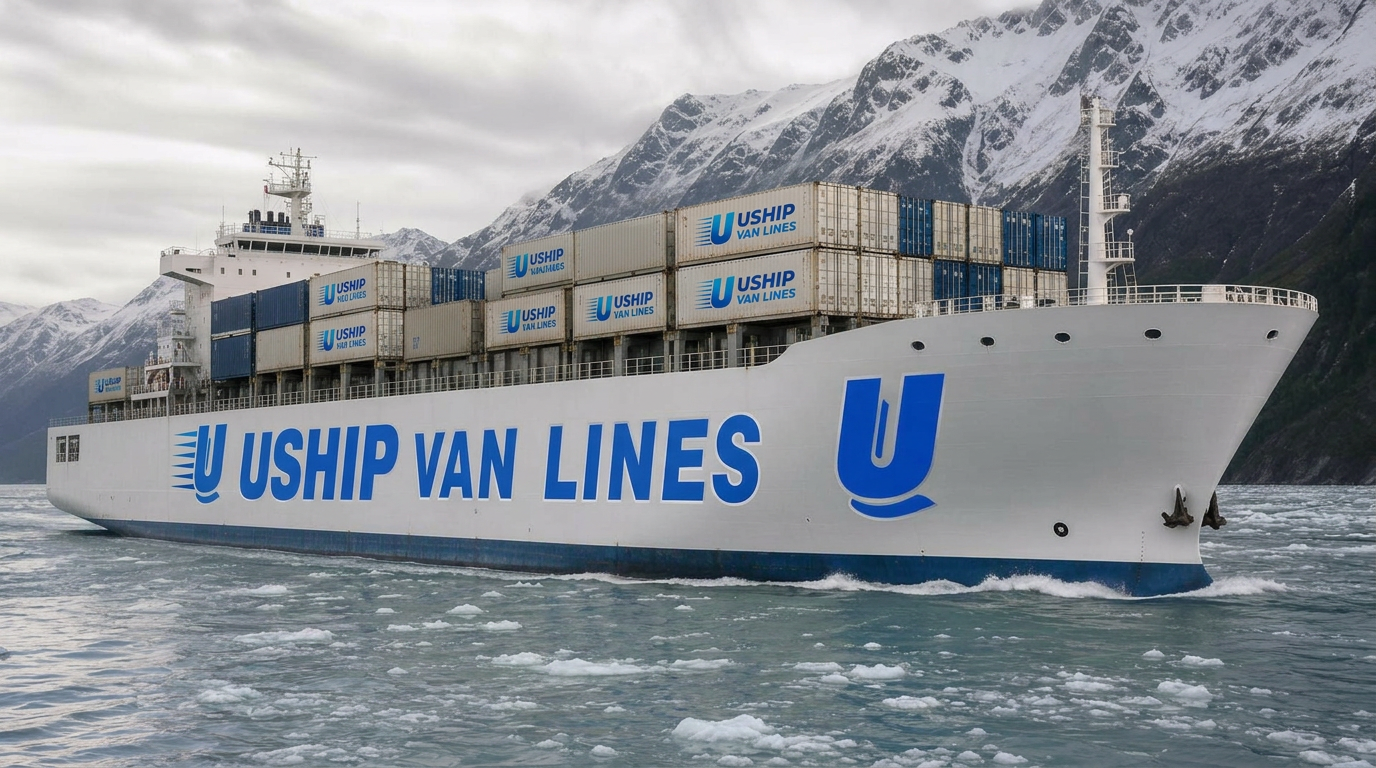
Moving from Salt Lake City to Alaska means trading mountain vistas for frontier wilderness—and navigating one of the most complex moving routes in North America. Unlike a standard long-distance move, your household goods will travel by truck through the Pacific Northwest, load onto a commercial barge in Tacoma, sail up the Inside Passage, and finally arrive at Alaska's ports for last-mile delivery to your new home in Anchorage, Fairbanks, the Mat-Su Valley, or beyond.
Best Alaska & Hawaii Movers, powered by UShip Van Lines, specializes in exactly this kind of multimodal coordination. We handle the truck-to-barge handoff, customs paperwork, port logistics, and final delivery—so you can focus on your new Alaska adventure. Ready to get started? Request a free quote today and let our team walk you through every step of your Salt Lake City to Alaska move.
Route overview
Route Overview: Salt Lake City to Alaska
Your move begins with a ground transport leg from Salt Lake City across Idaho, eastern Washington, and into the Seattle-Tacoma metro area—roughly 850 miles. From there, your shipment consolidates at our partner facilities near the Port of Tacoma, where commercial barges depart weekly (weather and season permitting) for Alaska's major ports.
The barge journey covers approximately 1,400 nautical miles through the protected waters of the Inside Passage, docking primarily at the Port of Anchorage. From Anchorage, final delivery routes fan out across southcentral Alaska: Mat-Su Valley communities like Wasilla and Palmer, the Kenai Peninsula, or further north to Fairbanks via the Parks Highway. Remote or off-road-system destinations may require additional arrangements, including freight forwarding to bush airports or seasonal barge service to coastal villages.
This route demands coordination across truck carriers, marine freight lines, port handling crews, and Alaska-based final-mile drivers. Choosing a mover with established Alaska partnerships ensures your belongings navigate each handoff smoothly and arrive intact despite the logistical complexity.
How the moving process works
The Moving Process: Step-by-Step from Salt Lake City to Alaska
-
Initial survey and quote: Your move begins with a detailed inventory—either virtual or in-home—where we assess volume, special items (pianos, ATVs, firearms), and your final Alaska destination. We'll provide a binding or binding-not-to-exceed estimate covering ground transport, barge freight, port fees, and last-mile delivery.
-
Packing and loading in Salt Lake City: Professional movers pack your household goods using heavy-duty materials designed for multimodal shipping. Fragile items get extra cushioning; furniture is wrapped and padded. The truck departs for Tacoma, typically a one- to two-day drive depending on weather and scheduling.
-
Consolidation and barge loading in Tacoma: At our Pacific Northwest hub, your shipment transfers into a 20' or 40' ocean container (or shares space in a consolidated container for smaller moves). Containers are secured, sealed, and loaded onto the next available Alaska-bound barge, usually departing once or twice weekly during peak season.
-
Ocean transit via the Inside Passage: The barge sails north through coastal British Columbia and Southeast Alaska, a journey of 5–7 days in good weather. Winter crossings can take longer due to reduced schedules and storm delays. Your shipment remains containerized and protected throughout the voyage.
-
Port arrival and customs clearance: Upon docking in Anchorage (or occasionally Whittier), containers offload and pass through any required inspections. Alaska-bound moves face fewer customs hurdles than Hawaii, but documentation must still be precise—especially for vehicles, alcohol, plants, or controlled items.
-
Last-mile delivery across Alaska: A local Alaska partner retrieves your container, schedules delivery, and transports your belongings to your final address. If you're moving to Fairbanks, Soldotna, Homer, or another community outside Anchorage, expect an additional 1–3 days for ground transport along Alaska's highway system.
-
Unloading, inspection, and setup: Our crew unloads your items, performs a condition check against the original inventory, and can assist with basic furniture placement and debris removal. Any damage claims are documented immediately and submitted to insurance carriers for resolution.
Estimated moving costs
Cost Estimate: What to Expect for a Salt Lake City to Alaska Move
A typical 2–3 bedroom household move from Salt Lake City to Anchorage generally ranges from $6,500 to $12,000, depending on volume, packing services, time of year, and final delivery location. Smaller studio or one-bedroom apartments may fall in the $4,000–$6,500 range, while larger homes (4+ bedrooms) or moves requiring expedited barge service can exceed $15,000.
Key cost drivers include:
- Total weight and cubic footage: Marine freight is priced by container space or weight. A full 20' container holds roughly 1,000–1,200 cubic feet; if your shipment fills less than half, you may share container space and pay proportionally.
- Packing and labor: Full-service packing adds $800–$2,000+ depending on the number of fragile items, artwork, and specialty crating needs.
- Barge scheduling and season: Summer and early fall see peak demand and higher rates. Winter moves may qualify for off-season discounts but face longer transit windows and weather risks.
- Final delivery distance: Anchorage-area delivery is straightforward. Fairbanks, the Kenai Peninsula, or remote locations incur additional mileage fees and may require specialized equipment (e.g., smaller trucks for narrow mountain roads).
- Vehicle shipping: Adding a car or truck to your barge shipment typically costs $1,200–$2,500 per vehicle, depending on size and roll-on/roll-off availability.
- Insurance and valuation: Basic carrier liability (60¢/lb) is included; full-value replacement coverage costs an additional 1–2% of declared shipment value.
We never guarantee prices without a formal survey. Quotes are binding estimates based on your inventory and services selected. Hidden fees are non-existent when you work with Best Alaska & Hawaii Movers—our quotes include all major line items upfront, and any changes are documented and approved before work proceeds.
Estimated transit times
Transit Time: Door-to-Door Timeline from Salt Lake City to Alaska
Plan for a 14–28 day door-to-door window from your Salt Lake City pickup date to final delivery in Alaska. This wide range reflects the multimodal nature of the route and seasonal variability.
Typical breakdown by leg:
- Salt Lake City to Tacoma (ground transport): 1–3 days, depending on dispatch timing and weather over mountain passes.
- Tacoma port wait and barge departure: 2–7 days. Summer sailings are frequent (often twice weekly); winter schedules may run every 7–10 days.
- Ocean transit to Port of Anchorage: 5–7 days under normal conditions. Winter storms or mechanical delays can extend this to 9–10 days.
- Port offload, customs, and local dispatch: 1–3 days. High-volume periods (late spring, early fall) may see brief backups.
- Final delivery within Alaska: Same-day for Anchorage metro; 1–3 additional days for Fairbanks, Mat-Su, Kenai, or other highway-accessible communities.
Remote or off-road-system locations add significant time. Bush destinations reachable only by air or seasonal barge may wait weeks for the next available transport.
For tighter timelines—job start dates, school enrollment, housing closings—communicate your hard deadlines early. We'll work with you to select the fastest-available barge and prioritize your delivery, though nature and marine schedules ultimately set the pace. Booking 6–8 weeks in advance gives you the widest choice of sailing dates and helps avoid peak-season congestion.
Regional logistics
Alaska-Specific Logistics: Ports, Paperwork, Vehicles, and Last-Mile Details
Port operations: Most Salt Lake City to Alaska shipments route through the Port of Anchorage, Alaska's primary deep-water terminal for southbound freight. Anchorage handles the lion's share of Alaska-bound household goods and vehicles. Whittier, a smaller port 60 miles southeast, is occasionally used for specialized or overflow shipments. Port fees, stevedoring (loading/unloading labor), and wharfage are bundled into your quote—no surprise charges at dockside.
Customs and inspections: Alaska is a U.S. state, so no international customs apply. However, USDA and Alaska Department of Natural Resources enforce strict rules on plants, soil, certain wood products, and invasive species. Declare all houseplants, garden tools, firewood, and outdoor gear on your inventory. Non-compliant items may be confiscated or require treatment/quarantine. Firearms and ammunition are legal to transport but must be declared and packed according to federal regulations (unloaded, locked, separate from ammo).
Vehicle shipping: Rolling your car onto the same barge as your household goods is the most cost-effective option. Vehicles must be clean (exterior free of mud/soil to pass agricultural inspection), operable (for roll-on/roll-off), and contain no personal belongings (insurance and liability reasons). Partial fuel tanks (1/4 or less) are required by marine carriers. Inoperable vehicles can ship but incur additional handling fees and require advance notice.
Last-mile delivery across Alaska: Once your container arrives in Anchorage, final delivery depends on your destination. Anchorage metro (including Eagle River, Girdwood) is straightforward. Fairbanks requires a 350-mile haul up the Parks Highway—doable year-round but weather-dependent in winter. The Mat-Su Valley (Wasilla, Palmer) is 40–60 miles north via the Glenn Highway. Kenai Peninsula towns (Soldotna, Homer, Seward) add 100–200 miles from Anchorage. Remote bush communities off the road system may require air freight, seasonal barge service, or winter ice-road access—discuss these options early in the quoting process.
Storage options: If your new Alaska home isn't ready, or you need to stage belongings during a multi-leg move, short- and long-term storage is available both in Tacoma (before barge departure) and in Anchorage (after arrival). Climate-controlled facilities protect against Alaska's temperature extremes. Storage-in-transit (SIT) is a common add-on for job relocations or housing delays.
Special items: Pianos, gun safes, hot tubs, ATVs, and snowmachines all ship regularly to Alaska but require custom crating or securing. Pool tables, artwork, antiques, and heirlooms benefit from professional packing and declared value coverage. Propane tanks, hazardous chemicals, and perishable foods cannot travel via barge—plan to dispose of, sell, or transport these items separately.
Seasonal considerations
Seasonal Considerations: Timing Your Salt Lake City to Alaska Move
Spring (April–May): Ice breakup and longer daylight signal the start of Alaska's busy season. Barge schedules ramp up, but early spring can still see lingering snow on Alaska highways and unpredictable weather in the Inside Passage. Rates begin climbing as demand increases, but inventory availability is good. Ideal for families aiming to settle before the summer rush.
Summer (June–August): Peak moving season. Barge sailings run most frequently, weather is most reliable, and Alaska's highway system is fully accessible. However, demand is at its highest—expect premium pricing, limited last-minute availability, and longer lead times for preferred delivery dates. Book 8–12 weeks ahead if possible. This is also the best window for moves to remote or off-road communities, as bush freight and air charters operate most reliably.
Fall (September–October): The shoulder season offers a sweet spot: rates soften slightly, barge schedules remain consistent, and Alaska's autumn weather is often crisp and clear. Snow can arrive in Interior Alaska (Fairbanks, Denali corridor) by mid-October, so coordinate delivery timing carefully. Off-season discounts may begin appearing in late October as winter approaches.
Winter (November–March): The slowest and most challenging season. Barge schedules reduce dramatically—some weeks see no sailings at all due to storms or reduced commercial demand. Ground transport in Alaska faces icy roads, extreme cold, and shortened daylight hours. Transit times stretch to 4–6 weeks in worst-case scenarios. On the upside, winter moves often qualify for significant discounts (20–30% off peak rates), and movers have more scheduling flexibility. Best suited for flexible timelines and budget-conscious customers willing to accept longer waits.
Year-round tip: Alaska's weather is famously unpredictable. Build buffer time into your plans—especially if your move coincides with a job start, lease expiration, or school year. Track barge departure bulletins and stay in close contact with your move coordinator as your sailing date approaches.
Why choose Best Alaska & Hawaii Movers
Why Choose Best Alaska & Hawaii Movers for Your Salt Lake City to Alaska Move
- Proven Alaska expertise: We specialize exclusively in Alaska and Hawaii moves, managing the truck-barge-truck handoffs, port coordination, and last-mile logistics that general long-distance carriers avoid or subcontract poorly.
- Transparent, all-inclusive pricing: Your quote covers ground transport, barge freight, port fees, insurance options, and final delivery. No hidden fuel surcharges, port accessorials, or surprise invoices after arrival.
- Reliable barge partnerships: We work directly with Alaska's leading marine freight lines, securing priority container space and real-time tracking throughout the ocean leg of your move.
- Flexible scheduling and storage: Whether you need expedited summer delivery or off-season cost savings, we'll match your timeline and budget. Storage-in-transit options in Tacoma and Anchorage give you breathing room when housing plans shift.
- Dedicated move coordination: A single point of contact guides you from quote to final delivery, answering questions about Alaska regulations, vehicle prep, packing tips, and delivery logistics. You'll never be handed off to a generic call center.