
Moving from Alaska to Fort Worth, TX
Relocating from Alaska to Fort Worth, TX, means navigating one of the most logistically complex moving routes in the United States. Unlike typical cross-country moves, Alaska relocations require careful coordination of barge transport from the Port of Anchorage to Tacoma, followed by overland trucking across 2,000+ miles to the Dallas–Fort Worth metroplex. Whether you're leaving Anchorage, Fairbanks, the Mat-Su Valley, or the Kenai Peninsula, understanding the multi-modal nature of this move is essential for realistic budgeting and timeline planning.
Best Alaska & Hawaii Movers, powered by UShip Van Lines, specializes in these exact long-haul Alaska routes. We handle the intricate port coordination, customs paperwork, and last-mile logistics that make Alaska moves uniquely challenging—so you can focus on settling into Fort Worth's vibrant economy, mild winters, and thriving cultural scene. Ready to start planning? Request your free, no-obligation quote today.
Route overview
Route Overview: Alaska to Fort Worth, TX
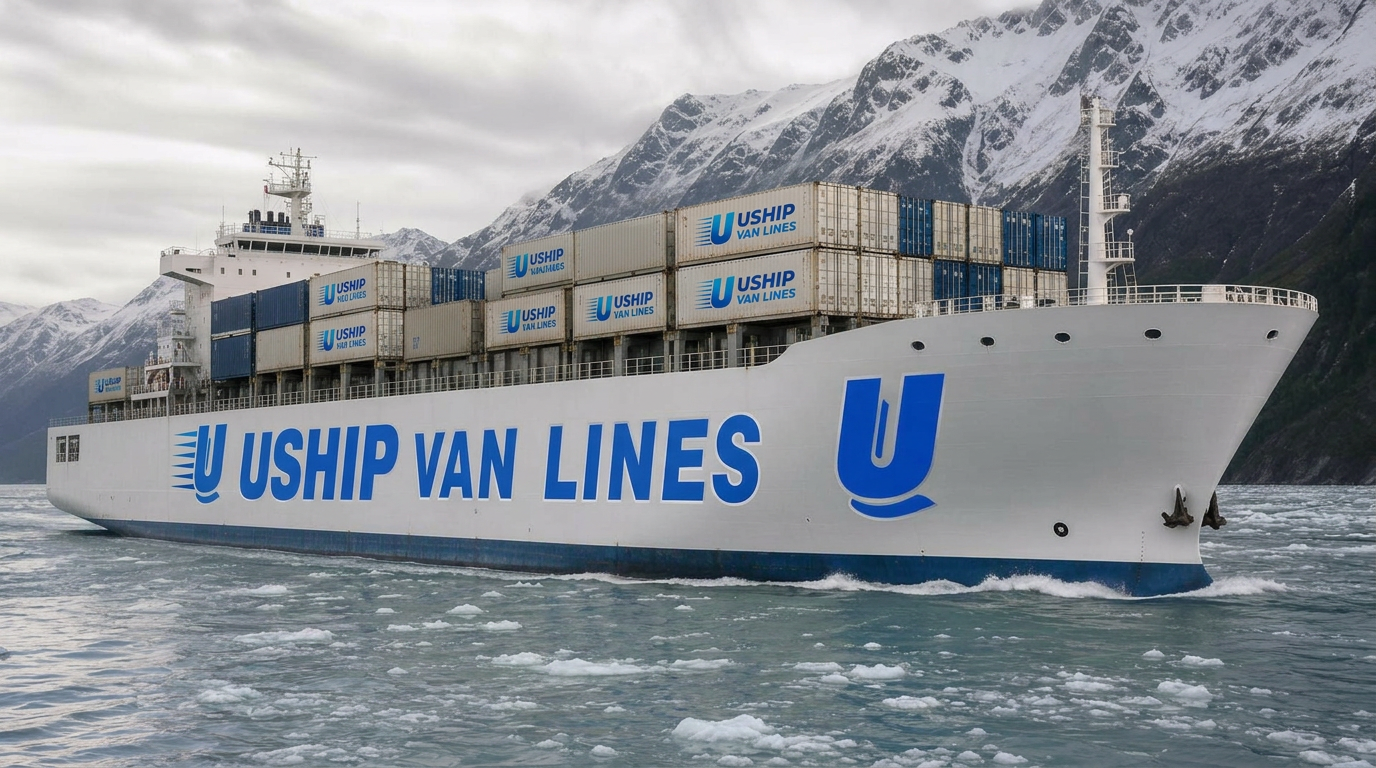
Moving from Alaska to Fort Worth involves a carefully orchestrated multi-leg journey. Your household goods will typically be picked up from your Alaska residence (Anchorage, Fairbanks, Mat-Su, Kenai, or other locations) and consolidated at the Port of Anchorage. From there, items are loaded onto a commercial barge for a 4–7 day voyage south to the Port of Tacoma, Washington. This maritime leg is the backbone of nearly all Alaska moves to the Lower 48.
Once your shipment clears Tacoma, it's transferred to long-haul trucking for the 2,100-mile overland journey to Fort Worth. This segment crosses Washington, Idaho, Montana or Wyoming, South Dakota, Nebraska, Kansas, and finally into North Texas. The entire door-to-door process—including port dwell time, customs clearance, and scheduling—typically takes 14–28 days, depending on sailing frequency, weather, and seasonal demand.
Fort Worth's accessibility via I-35 and I-20 simplifies final delivery, but the Alaska departure logistics remain the critical variable. Remote pickups from Fairbanks, the Kenai Peninsula, or bush communities add 1–3 days and require specialized last-mile carriers familiar with Alaska road conditions.
How the moving process works
The Alaska to Fort Worth Moving Process: Step-by-Step
-
Initial Survey and Quote — Your move begins with a detailed inventory review, either virtual or in-home. We assess your cubic footage, note any high-value or fragile items, and confirm your Alaska pickup location. This determines barge space requirements and helps us provide an accurate cost estimate.
-
Scheduling and Barge Booking — Alaska barge sailings operate on fixed weekly or biweekly schedules, particularly during peak season (May–September). We reserve space on the next available sailing and coordinate your pickup date to align with port cutoff times, typically 48–72 hours before departure.
-
Packing and Alaska Pickup — Professional movers arrive at your Alaska residence to pack, inventory, and load your belongings. If you're in a remote area (Fairbanks, Mat-Su, Kenai), this may involve a local moving company feeding into our Anchorage consolidation point. Everything is labeled, photographed, and tracked.
-
Port of Anchorage Containerization — Your items are loaded into a 20-foot or 40-foot shipping container at the Port of Anchorage. The container is sealed, manifested, and loaded onto the barge. You'll receive a container number and sailing confirmation.
-
Barge Transit to Tacoma — The 4–7 day ocean voyage is weather-dependent. Winter sailings (October–April) may experience delays due to Gulf of Alaska storm systems. We monitor the barge in real time and provide status updates.
-
Tacoma Port Processing and Overland Transfer — Upon arrival in Tacoma, your container is offloaded, cleared through customs (if applicable for certain items), and transferred to a long-haul truck. Port dwell time is typically 1–3 days, depending on volume and scheduling.
-
Overland Transport to Fort Worth — The truck departs Tacoma for the 2,100-mile drive to Fort Worth, typically taking 4–7 days depending on weather, driver hours-of-service regulations, and delivery scheduling. We coordinate a delivery window with you 48 hours in advance and provide tracking updates as the truck crosses state lines.
Estimated moving costs
Cost Estimate: What to Expect for Your Alaska to Fort Worth Move
A typical 2–3 bedroom household move from Alaska to Fort Worth ranges from $6,500 to $12,000, depending on volume, services, and timing. This estimate covers the full door-to-door process: Alaska pickup, port handling, barge freight, Tacoma transfer, overland trucking, and Fort Worth delivery.
Key cost drivers include:
- Cubic footage or container size — A studio or 1-bedroom may fit in a shared 20-foot container ($4,500–$6,500), while a 3–4 bedroom home often requires a dedicated 40-foot container ($9,000–$14,000).
- Pickup location in Alaska — Anchorage pickups are most cost-effective. Fairbanks, Mat-Su, Kenai, or bush locations add $500–$2,000 for last-mile transport to the port.
- Packing services — Full professional packing adds $800–$2,200. Many customers pack themselves and request labor-only loading.
- Seasonality — Peak summer moves (June–August) can run 15–25% higher due to barge demand. Off-season (October–March) offers better rates but longer, weather-sensitive timelines.
- Vehicle shipping — Cars, trucks, or ATVs shipped via barge (roll-on/roll-off) add $1,200–$2,500 per vehicle, Anchorage to Tacoma, plus Tacoma–Fort Worth overland auto transport ($800–$1,400).
- Insurance and valuation — Basic carrier liability (60¢/lb) is included. Full-value protection costs 1–2% of declared value (e.g., $100–$200 per $10,000).
We provide itemized, binding estimates with no hidden fees. Prices are never guaranteed until we complete a full inventory review, but our quotes are transparent and competitive. Request your free estimate to get started.
Estimated transit times
Transit Time: Alaska to Fort Worth Door-to-Door
Plan for 14–28 days total transit time from your Alaska residence to your new Fort Worth home. This timeline includes all legs of the journey and typical port processing periods.
Transit breakdown by leg:
- Alaska pickup to Port of Anchorage consolidation: 1–3 days (longer for Fairbanks, Kenai, or remote areas).
- Port dwell and container loading: 1–2 days (waiting for next scheduled sailing).
- Barge voyage (Anchorage to Tacoma): 4–7 days (weather-dependent; winter storms can add 1–2 days).
- Tacoma port offload and customs clearance: 1–3 days.
- Overland trucking (Tacoma to Fort Worth): 4–7 days (2,100 miles; driver hours-of-service rules limit daily mileage).
Summer moves (May–September): Expect the faster end of the range—14–21 days—thanks to frequent barge sailings and favorable weather. Peak season also means tighter scheduling, so book 4–6 weeks in advance.
Winter moves (October–April): Allow 21–28 days or more. Barge sailings are less frequent (weekly or biweekly), and Gulf of Alaska weather can delay departures or slow crossings. Overland routes through Montana and Wyoming may face snow-related delays.
We provide real-time tracking and proactive communication at every handoff point, so you always know where your belongings are and when to expect delivery in Fort Worth.
Regional logistics
Alaska-Specific Logistics: Ports, Paperwork, Vehicles & Last-Mile
Port of Anchorage and containerization: Nearly all Alaska household goods travel through the Port of Anchorage, Alaska's primary deep-water facility. Your items are loaded into standardized 20-foot or 40-foot shipping containers, sealed, and manifested. Unlike truck-only moves, you'll have a container number, sailing manifest, and bill of lading—critical documents for tracking and claims.
Barge operators and schedules: Alaska Marine Lines, Totem Ocean Trailer Express (TOTE), and other carriers operate regular barge service to Tacoma. Sailings are less frequent in winter (weekly to biweekly) and more frequent in summer (2–3 times per week). We coordinate directly with barge lines to secure space and ensure your shipment meets cutoff times.
Vehicle shipping: Cars, trucks, motorcycles, and ATVs can be shipped via roll-on/roll-off (RoRo) barge service from Anchorage to Tacoma ($1,200–$2,500), then overland auto transport from Tacoma to Fort Worth ($800–$1,400). Vehicles must be drained of fuel to ¼ tank or less, and personal items inside are prohibited. Total vehicle transit time is 10–18 days.
Customs and inspections: While Alaska to Lower 48 moves are domestic, USDA and state agricultural inspections may apply, particularly for plants, wood items, or soil. Texas has strict regulations on certain plant species. We guide you through any required declarations.
Last-mile Alaska logistics: If you're moving from Fairbanks (360 miles north of Anchorage), Mat-Su Valley (Palmer/Wasilla, 40–60 miles), or the Kenai Peninsula (100+ miles), we arrange local pickup and consolidation. Bush communities (Nome, Bethel, Kodiak, etc.) require air freight or separate barge service to Anchorage—significantly increasing cost and complexity. Always disclose your exact pickup location for accurate quoting.
Fort Worth delivery: Fort Worth's well-developed freeway system (I-35, I-20, I-30) and central location in the DFW metroplex make final delivery straightforward. Residential access is excellent, though some historic neighborhoods (Fairmount, Berkeley) have narrow streets requiring smaller delivery trucks or shuttle service.
Seasonal considerations
Seasonal Considerations: Timing Your Alaska to Fort Worth Move
Spring (April–May): Barge schedules ramp up as Alaska thaws, but weather remains unpredictable. Late-season snowstorms in Alaska and the Rockies can delay pickups and overland trucking. Rates are moderate, and availability is good. Ideal for those who want to avoid peak pricing but don't mind some weather risk.
Summer (June–August): Peak moving season. Barge sailings are most frequent (often twice weekly), and transit times are fastest. However, demand drives prices up 15–25%, and you'll need to book 4–6 weeks ahead to secure your preferred dates. Perfect weather across the entire route makes summer the most predictable window, especially for families moving with children between school years.
Fall (September–October): Shoulder season offers a sweet spot—lower rates than summer, reliable barge schedules, and generally stable weather. September is particularly attractive: kids are back in school, demand drops, and you'll see pricing closer to off-season levels with summer-like reliability. By late October, barge frequency begins to decrease.
Winter (November–March): Off-season moves mean the lowest rates of the year, but you'll trade cost savings for longer timelines and weather exposure. Barge sailings run weekly or biweekly, and Gulf of Alaska winter storms can delay departures by days. Overland routes face snow and ice, particularly through the northern plains and Rockies. If you're flexible on timing and prioritize budget, winter moves can save $1,000–$2,500—but allow an extra week in your schedule.
Pro tip: If you must move in winter, avoid late December and early January when holiday closures, reduced staffing, and severe weather converge. Late February and March offer the best winter conditions as spring approaches.
Why choose Best Alaska & Hawaii Movers
Why Choose Best Alaska & Hawaii Movers (Powered by UShip Van Lines)
-
Alaska route expertise — We specialize in Alaska and Hawaii long-haul moves, with deep knowledge of Port of Anchorage barge schedules, Tacoma port logistics, and the unique challenges of multi-modal Alaska relocations. This isn't a side service—it's our core business.
-
Full-service coordination — From your Alaska doorstep to your Fort Worth home, we manage every handoff: local pickup, port consolidation, barge booking, Tacoma transfer, overland trucking, and final delivery. One point of contact, one contract, no confusion.
-
Transparent, binding estimates — We provide itemized quotes with no hidden fees. You'll know exactly what you're paying for packing, barge freight, trucking, and insurance before you commit.
-
Real-time tracking and communication — You'll receive proactive updates at every leg: container loading, barge departure/arrival, Tacoma clearance, and truck dispatch. We use modern tracking technology and old-fashioned customer service.
-
Flexible service levels — Whether you need full-service packing, labor-only loading, or a hybrid approach, we tailor our services to your budget and timeline. We accommodate partial loads, vehicle shipping, and storage if your Fort Worth residence isn't ready.
-
Proven carrier network — Powered by UShip Van Lines, we leverage a vetted network of Alaska carriers, barge operators, and long-haul truckers who meet rigorous performance and insurance standards. Your move is protected by experienced professionals at every stage.