
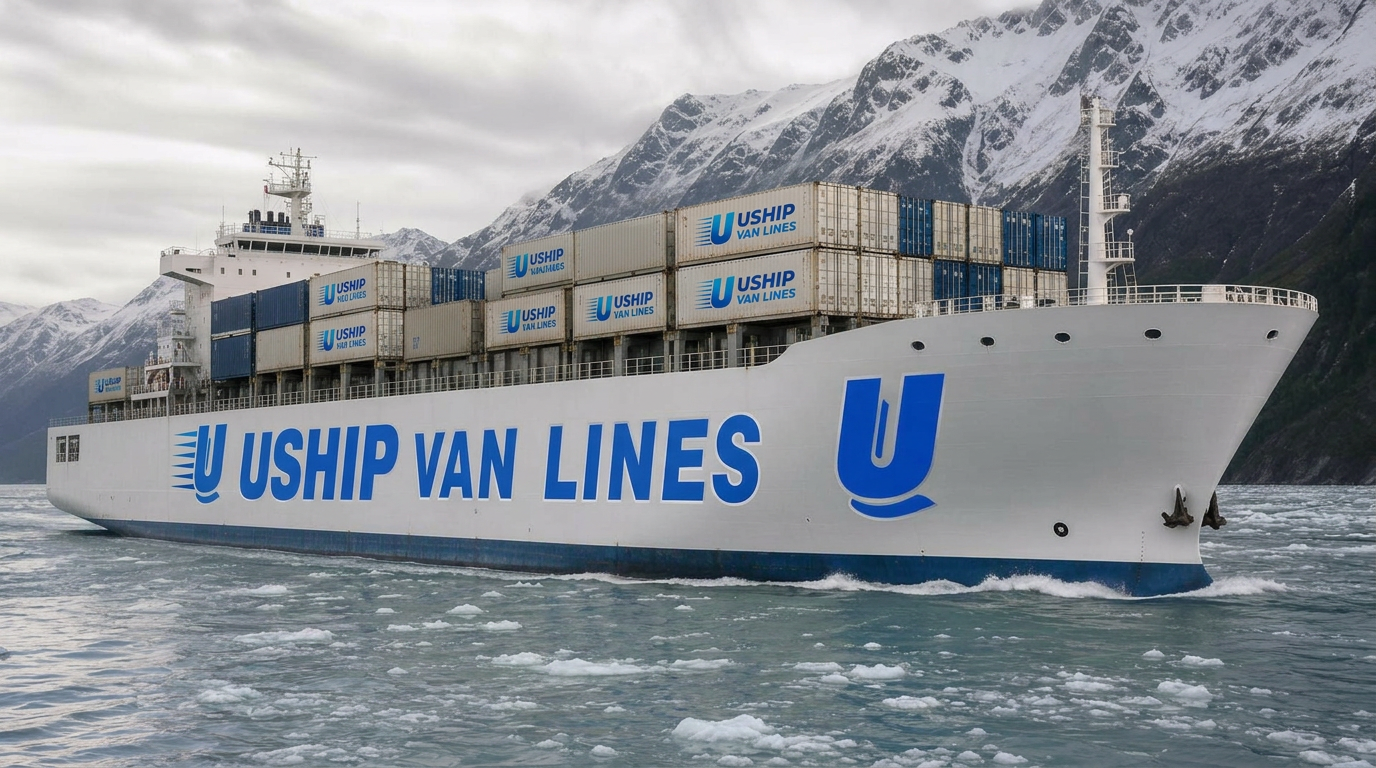
Moving from Alaska to Virginia Beach, VA
Moving from Alaska to Virginia Beach, VA means coordinating barge freight from the Last Frontier with cross-country trucking to the Tidewater region. This complex route spans roughly 3,400 road miles after your household goods arrive in Tacoma, making it one of the longer Alaska-to-Lower-48 relocations. Whether you're leaving Anchorage, Fairbanks, or a Mat-Su Valley community for Virginia Beach's oceanfront lifestyle, you'll need a mover experienced in Alaska's unique logistics.
Best Alaska & Hawaii Movers, powered by UShip Van Lines, specializes in seamless Alaska-to-East-Coast moves. We handle barge freight, customs paperwork, vehicle shipping, and the long haul to Hampton Roads. Ready to start planning your move to Virginia Beach? Request a free, no-obligation quote and speak with our Alaska logistics team today.
Route overview
The Alaska-to-Virginia-Beach Route
This route requires barge transit from Alaska ports (Anchorage, Whittier, or Kodiak) to the Port of Tacoma in Washington State, followed by a cross-country truck journey to Virginia Beach. The truck leg covers approximately 3,400 miles through Washington, Idaho, Montana, Wyoming, South Dakota, Minnesota, Wisconsin, Illinois, Indiana, Ohio, West Virginia, and finally Virginia. Total door-to-door transit averages 14–21 days depending on barge schedules and weather.
Virginia Beach sits on the Atlantic coast at the southeastern tip of Virginia, part of the Hampton Roads metropolitan area. Military families, retirees, and professionals relocate here for the moderate climate, extensive coastline, and robust defense-sector employment at Naval Station Norfolk, Joint Base Langley-Eustis, and Oceana Naval Air Station. The move from Alaska's sub-Arctic environment to Virginia's humid subtropical climate represents a dramatic lifestyle shift.
Geographically, you're trading 24-hour summer daylight and winter darkness for Tidewater's four distinct seasons. Expect hot, humid summers, mild winters with occasional snow, and hurricane season from June through November. Your Alaska winter gear will see far less use, while air conditioning becomes essential.
How the moving process works
How Your Alaska-to-Virginia-Beach Move Works
-
Free In-Home or Virtual Survey: Our team assesses your inventory in Alaska (Anchorage, Fairbanks, Juneau, Mat-Su, Kenai Peninsula, or bush communities) via video walk-through or in-person visit. We identify items requiring special handling, estimate cubic footage, and discuss your Virginia Beach delivery timeline.
-
Barge Booking and Packing: We reserve space on the next available southbound barge from Alaska to Tacoma (typically weekly departures). Professional packers arrive 1–3 days before your scheduled pickup, carefully wrapping furniture, boxing belongings, and preparing everything for the ocean voyage. Barge transit takes 5–7 days.
-
Port Receiving and Customs Clearance: Your shipment clears U.S. Customs in Tacoma (a formality for domestic Alaska-to-Lower-48 moves, but required documentation). Our warehouse team receives, inspects, and inventories your goods, then loads them onto a dedicated long-haul truck.
-
Cross-Country Transport: A professional driver transports your household goods 3,400 miles from Tacoma to Virginia Beach. This leg typically takes 5–8 days, depending on weather, route conditions, and delivery scheduling. We provide tracking updates and stay in communication throughout.
-
Vehicle Shipping (if applicable): Most Alaska movers coordinate separate vehicle transport via the same Tacoma barge route, then overland car carrier to Virginia. Vehicle shipping adds $1,800–$3,200 per car and follows a similar 14–18 day timeline.
-
Virginia Beach Delivery and Unpacking: Our crew arrives at your new Virginia Beach home within your confirmed delivery window. We unload, place furniture in designated rooms, and offer unpacking services. You inspect and sign off on the Bill of Lading, and we remove packing debris.
-
Post-Move Support: We follow up to ensure satisfaction and address any claims promptly. Our Alaska specialists remain available for questions about your next move or storage needs.
Estimated moving costs
What Does an Alaska-to-Virginia-Beach Move Cost?
For a typical 2–3 bedroom household (8,000–12,000 lbs or 1,000–1,400 cubic feet), expect to pay $8,500–$14,500 for full-service door-to-door moving from Alaska to Virginia Beach. Studio and 1-bedroom moves range $5,200–$7,800, while 4+ bedroom homes can exceed $18,000.
Key cost drivers include:
- Distance and barge freight: The Tacoma barge leg alone costs $3,000–$5,500, plus 3,400 miles of overland trucking at roughly $1.20–$1.80 per mile per shipment.
- Volume and weight: Alaska moves price by cubic footage (barge) and weight (truck). Downsizing before you move saves significantly.
- Packing services: Professional full-pack adds $800–$1,800; partial pack (fragiles, artwork, kitchen) runs $400–$900.
- Access and logistics: Difficult Alaska pickup locations (gravel roads, remote areas, stairs without elevators) or challenging Virginia Beach delivery sites (narrow streets, high-rises) add $200–$800.
- Time of year: Peak summer season (May–August) sees 15–25% higher rates due to demand and optimal barge schedules. Off-season winter moves (November–March) offer discounts but face weather delays.
- Vehicle shipping: Add $1,800–$3,200 per vehicle for barge-plus-overland transport.
- Storage: If your Virginia Beach home isn't ready, warehouse storage in Tacoma or Virginia runs $150–$350/month.
These are estimates based on industry averages. Actual costs depend on your specific inventory, services, and timing. We never guarantee prices without a formal survey and quote.
Estimated transit times
How Long Does the Move Take?
Door-to-door transit from Alaska to Virginia Beach typically requires 14–21 days, broken down as follows:
- Packing and pickup in Alaska: 1–2 days depending on home size and packing services.
- Ground transport to Alaska port (if not in Anchorage/Whittier): 1–3 days for Fairbanks, Mat-Su, Kenai, or bush pickups.
- Barge transit to Tacoma: 5–7 days on the water. Barges depart weekly (more frequently May–September), but winter schedules can be biweekly.
- Port processing and truck loading in Tacoma: 1–2 days for customs clearance, warehouse receiving, and loading onto your long-haul truck.
- Cross-country trucking to Virginia Beach: 5–8 days for the 3,400-mile journey. Drivers follow Hours of Service regulations, averaging 500–600 miles per day.
- Delivery window: Most movers provide a 2–3 day delivery window once the truck departs Tacoma.
Potential delays include severe weather (Alaska winter storms, Midwest blizzards, East Coast hurricanes), barge mechanical issues, port congestion, and summer peak-season scheduling. Winter moves can add 3–7 days due to ice, snow, and reduced barge frequency. Always build buffer time if you have firm Virginia Beach lease or closing dates.
Vehicle shipping follows a parallel timeline: 5–7 days by barge, then 7–10 days via overland car carrier to Virginia Beach, totaling 14–18 days.
Regional logistics
Alaska-Specific Logistics for Your Virginia Beach Move
Barge ports and service areas: Most Alaska moves consolidate at the Port of Anchorage or Whittier (60 miles south of Anchorage). If you're in Fairbanks, Mat-Su Valley (Wasilla, Palmer), Kenai Peninsula (Soldotna, Homer, Seward), or Juneau, your goods travel by truck or feeder barge to the main port before the Tacoma sailing. Bush communities (Bethel, Kotzebue, Nome, Kodiak, Sitka, Ketchikan) often require small-plane or local barge transport to connect with the main shipping route, adding cost and time.
Customs and documentation: Alaska-to-Lower-48 moves are domestic, but Customs and Border Protection still requires a cargo manifest and proof of residence. Your mover handles this paperwork. Keep copies of your Bill of Lading, inventory list, and photo ID accessible. Military members should provide PCS orders if applicable for potential tax exemptions.
Vehicle shipping: Cars, trucks, and motorcycles ship separately via the same Tacoma barge, then transfer to an overland car carrier for the drive to Virginia Beach. Vehicles must be clean (Alaska mud and soil restrictions), operable, and no more than ¼ tank of gas. Remove all personal items except vehicle-mounted equipment (roof racks, trailer hitches). Expect $1,800–$3,200 per vehicle, $800–$1,400 for motorcycles.
Restricted items: Barges prohibit hazardous materials (propane tanks, gasoline, paint, ammunition, cleaning chemicals), perishable food, and houseplants (USDA restrictions on soil and pests). Alaska-specific items like frozen fish, game meat, or hunting trophies require USDA/Fish & Wildlife permits and special packing. Discuss these items early with your moving consultant.
Last-mile delivery in Virginia Beach: Virginia Beach is highly accessible with I-64, US-13, and the Chesapeake Bay Bridge-Tunnel nearby. Most neighborhoods accommodate large moving trucks. Oceanfront condos, historic districts (Old Towne Virginia Beach), and gated communities may have access restrictions, elevator reservations, or HOA move-in rules. Confirm building requirements and reserve elevators 2–3 weeks before delivery.
Storage options: If your Virginia Beach home isn't ready, we offer secure warehouse storage in Tacoma (convenient if delays occur during the truck leg) or climate-controlled storage in the Hampton Roads area. Monthly rates run $150–$350 depending on volume.
Seasonal considerations
Best Times to Move from Alaska to Virginia Beach
Summer (May–August): Peak moving season offers the most frequent barge departures (often twice weekly), fastest transit, and predictable weather. Alaska's 18–24 hour daylight makes packing easier, and Virginia Beach arrivals coincide with pleasant spring-to-summer weather. Expect premium pricing (15–25% higher) and book 6–8 weeks ahead. Ideal for families moving between school years.
Fall (September–October): Shoulder season balances good weather with moderate pricing. Barge schedules remain consistent, and you'll avoid both Alaska's early winter and Virginia Beach's hurricane peak (which typically wanes by late September). Book 4–6 weeks out. Great for retirees and flexible professionals.
Winter (November–March): Off-season rates drop 10–20%, but expect longer transit times (18–25 days) due to reduced barge frequency, ice delays in Alaska ports, and potential snow closures on I-90 and I-80. Alaska's extreme darkness and cold make packing challenging. Virginia Beach winters are mild, so delivery conditions are rarely an issue. Best for budget-conscious moves with flexible timelines.
Spring (April–early May): Transition period with increasing barge schedules and warming Alaska weather. Prices begin climbing toward summer peaks. Watch for spring thaw road restrictions (freeze-thaw cycles can close some Alaska highways temporarily). Virginia Beach weather is pleasant. Book 5–7 weeks ahead.
Hurricane considerations: Virginia Beach lies in the Atlantic hurricane zone. If moving between June and November, discuss contingency plans with your mover for potential delivery delays due to coastal storms.
Why choose Best Alaska & Hawaii Movers
Why Choose Best Alaska & Hawaii Movers for Your Alaska-to-Virginia-Beach Move
-
Alaska Barge Expertise: We've coordinated hundreds of Alaska moves through the Tacoma route, managing barge schedules, port logistics, and cross-country trucking as a single seamless process. Our team understands Alaska's unique challenges—from bush community pickups to winter weather delays.
-
Transparent Pricing and Realistic Timelines: We provide detailed, written estimates with clear breakdowns of barge fees, trucking costs, packing, and accessorials. No hidden charges. We set realistic 14–21 day expectations and communicate proactively if delays occur.
-
Full-Service Coordination: One point of contact manages your entire move from Alaska packing through Virginia Beach delivery. We handle barge booking, customs paperwork, vehicle shipping, and optional storage—no need to juggle multiple vendors.
-
Powered by UShip Van Lines: Our partnership with UShip Van Lines gives us access to a nationwide carrier network, advanced tracking technology, and vetted professional drivers. You get the reliability of a large network with the personalized service of Alaska specialists.
-
Flexible Options for Every Budget: Choose full-service packing and white-glove delivery, or save money with partial packing and self-unpacking. We tailor services to your timeline, budget, and needs—whether you're a military family on PCS orders or a retiree downsizing to the Virginia coast.