
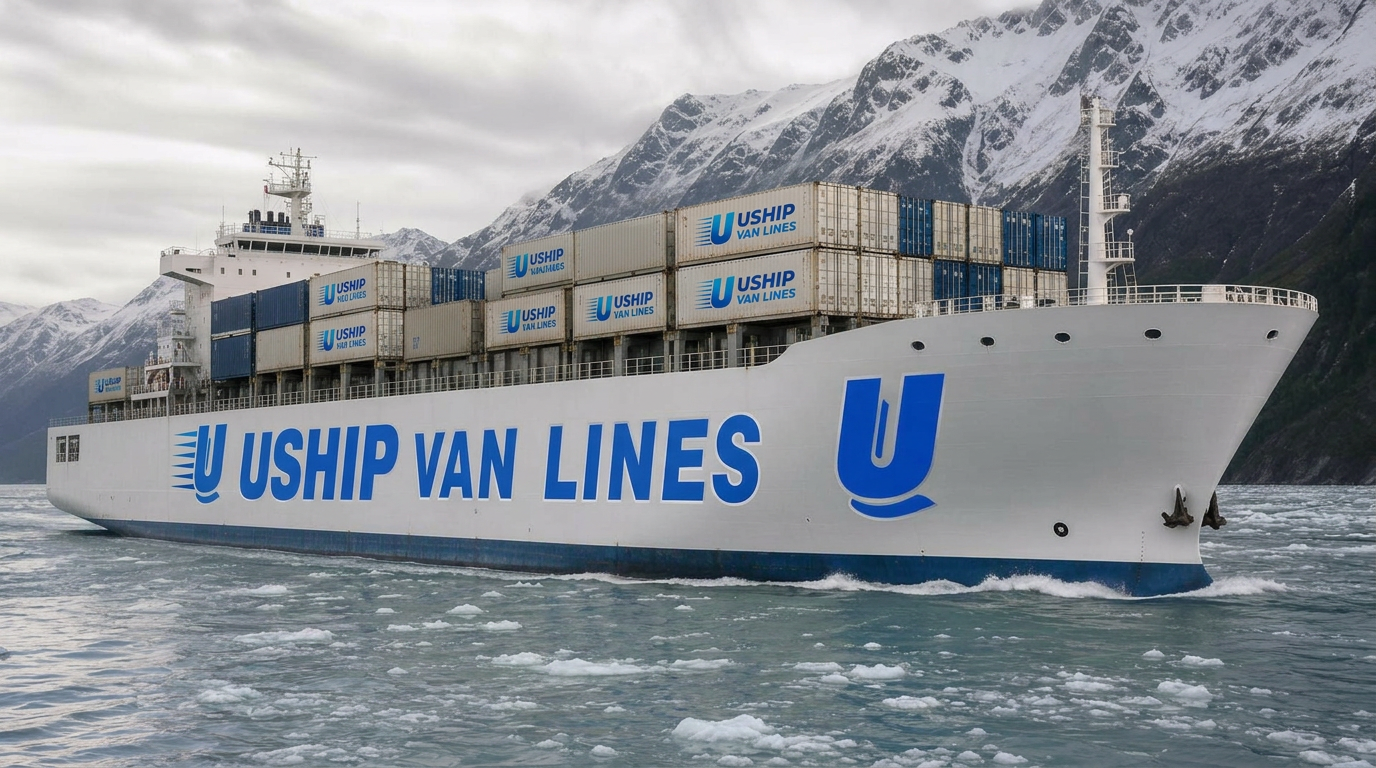
Moving from Alaska to Charlotte, NC
Relocating from Alaska to Charlotte, NC, means navigating one of the most logistically complex moving routes in the United States. Your household goods will travel by barge from Alaska to the Port of Tacoma, then overland across 2,800 miles to the Queen City—a journey that requires careful coordination, realistic timelines, and experienced handlers who understand Alaska's unique shipping challenges.
Best Alaska & Hawaii Movers, powered by UShip Van Lines, specializes in multi-modal Alaska moves. We coordinate every leg—from your door in Anchorage, Fairbanks, or beyond, through barge transit, to final delivery in Charlotte. Ready to plan your move? Request a detailed quote today and get a clear breakdown of costs, timelines, and logistics tailored to your specific route.
Route overview
Route Overview: Alaska to Charlotte, NC
Moving from Alaska to Charlotte involves three distinct transportation phases. First, your belongings are picked up from your Alaska location—whether that's Anchorage, Fairbanks, the Mat-Su Valley, Kenai Peninsula, or even bush communities requiring special access. Items are then consolidated and transported to the Port of Anchorage or Whittier, where they're loaded onto barges bound for Tacoma, Washington.
After 5–10 days at sea (depending on weather and sailing schedules), your shipment clears the Port of Tacoma and transfers to long-haul trucks for the 2,800-mile overland journey to Charlotte. This cross-country leg traverses Idaho, Wyoming, Nebraska, Iowa, Illinois, Indiana, Ohio, West Virginia, and finally North Carolina—typically taking 4–6 days of drive time plus processing.
Charlotte's growing economy, mild climate, and booming job market make it a popular destination for Alaskans seeking career opportunities and lower cost of living. The city's accessible location in the Piedmont region, moderate winters, and strong professional networks in banking, healthcare, and technology sectors offer a dramatic contrast to Alaska's remote, extreme-weather lifestyle.
How the moving process works
The Alaska to Charlotte Moving Process
1. Initial Survey and Quote A moving specialist conducts a virtual or in-person inventory of your home. For Alaska moves, accurate volume assessment is critical—barge space is sold by cubic foot, and underestimating can delay your shipment or increase costs. Expect detailed questions about oversized items, vehicles, and hazardous materials that cannot be shipped.
2. Alaska Pickup and Local Transport On your scheduled date, a crew loads your household goods into a container or truck in Alaska. If you're in Anchorage or the road system, pickup is straightforward. Bush locations or communities like Kenai, Homer, or Fairbanks may require additional staging time. Items are transported to the Port of Anchorage or Whittier for barge loading.
3. Barge Transit to Tacoma Your container is secured aboard an Alaska Marine Lines or similar barge service. Sailing schedules run weekly or biweekly depending on season, with transit taking 5–10 days. Winter sailings may face weather delays. Your goods are sealed and protected from saltwater exposure during this ocean leg.
4. Port Processing in Tacoma Once the barge docks in Tacoma, your container is offloaded and transferred to a ground terminal. This typically takes 1–3 days for customs clearance (even for domestic moves, Alaska shipments require documentation), inspection, and transfer to long-haul trucking.
5. Cross-Country Overland Transport A semi-truck hauls your shipment from Tacoma across the northern or central U.S. route to Charlotte. The 2,800-mile journey takes 4–6 days of active driving, with mandatory rest stops and potential weather delays in mountain passes or Midwest winter conditions.
6. Final Delivery in Charlotte Your moving team contacts you 24–48 hours before arrival to confirm your delivery window. Crew unloads and places items in your new Charlotte home. Inspect for damage immediately—barge and long-haul moves have more handling touchpoints than typical relocations.
7. Post-Move Documentation Complete your inventory checklist and file any damage claims within the carrier's specified timeframe (usually 9 months for interstate moves). Keep all paperwork, including bill of lading, inventory sheets, and insurance documents.
Estimated moving costs
Cost Estimates for Alaska to Charlotte Moves
A typical 2–3 bedroom household move from Alaska to Charlotte ranges from $8,500 to $16,000, depending on volume, services, and timing. Studio or 1-bedroom moves may cost $5,000–$8,000, while large 4+ bedroom homes can exceed $20,000.
Key cost drivers include:
- Shipment volume: Barge rates are calculated per cubic foot. A 2-bedroom home typically requires 800–1,200 cubic feet; a 3-bedroom home 1,200–1,800 cubic feet.
- Alaska origin point: Anchorage and road-system locations have standard rates. Fairbanks adds $800–$1,500. Bush communities requiring barge, plane, or winter ice-road access can add $2,000–$5,000+.
- Packing services: Professional packing runs $800–$2,500 depending on home size. Alaska's extreme climate makes proper packing critical—items must withstand humidity changes and temperature swings.
- Vehicle shipping: Shipping a car from Alaska to Charlotte costs $1,800–$3,200 via the same barge-to-overland route. Oversized vehicles or multiple cars increase costs.
- Storage: If your barge arrives before your Charlotte home is ready, expect $150–$400/month for climate-controlled storage in Tacoma or Charlotte.
- Timing: Peak season (May–August) sees 20–35% higher rates due to demand. Winter moves (November–March) may offer discounts but face weather risks.
- Insurance: Full-value protection adds 1–3% of shipment value. Required for high-value items.
These are estimates only—every move is unique. Request a binding quote to understand your specific costs and avoid surprises.
Estimated transit times
Realistic Transit Times: Alaska to Charlotte
Door-to-door transit from Alaska to Charlotte typically takes 21–35 days, broken down as follows:
- Alaska pickup to port staging: 1–3 days (same-day in Anchorage; up to 5 days for remote locations).
- Barge sailing to Tacoma: 5–10 days depending on weather, route, and sailing schedule. Winter storms or mechanical issues can add 2–5 days.
- Port processing and transfer: 2–4 days for offloading, customs paperwork, and truck assignment.
- Overland transport Tacoma to Charlotte: 5–7 days including drive time and rest stops. Winter weather in mountain passes or Midwest ice storms can add 2–4 days.
- Delivery scheduling and final placement: 1–2 days for coordination and unloading.
Plan for 4–5 weeks minimum. Peak season moves (June–July) may stretch to 6 weeks due to barge availability and trucking capacity. Off-season moves (October–March) can be faster but face higher weather-delay risk.
Ship only what you'll need immediately via air or parcel service. Essential documents, medications, and clothing should travel with you. Furniture and household goods can wait—your Charlotte home will be ready when they arrive.
Regional logistics
Alaska-Specific Logistics for Your Charlotte Move
Port and Barge Details: Most Alaska shipments depart from the Port of Anchorage or Whittier. Alaska Marine Lines operates the primary barge service to Tacoma, with sailings scheduled weekly in summer, less frequently in winter. Your container must arrive at the port 2–3 days before sailing for staging and loading. Late arrivals miss the sailing and wait for the next departure—potentially adding 1–2 weeks.
Documentation and Paperwork: Even though Alaska is a U.S. state, shipments require detailed customs paperwork for port clearance. Prepare a comprehensive inventory list with item descriptions and declared values. Vehicle shipments need title, registration, and keys. Missing documents can delay your shipment in Tacoma for days.
Vehicle Shipping: Cars, trucks, and ATVs can ship in the same container as household goods or separately via roll-on/roll-off barge service. Vehicles must be cleaned (Alaska soil can't enter Lower 48 without agriculture inspection), drained to ¼ tank of fuel, and emptied of personal items. Shipping a vehicle adds $1,800–$3,200 but is often cheaper than driving the Alaska Highway and shipping household goods separately.
Last-Mile Alaska Considerations: If you're moving from Fairbanks, the Mat-Su Valley, Kenai, or bush locations, plan extra time and cost for local transport to the port. Bush communities may require small plane or seasonal barge service to reach the road system. Winter ice roads offer temporary access to some remote areas but are weather-dependent.
Restricted Items: Barge transport prohibits hazardous materials—paints, propane, ammunition, gasoline, and certain cleaning products. Alaska moves also restrict perishable foods and plants (North Carolina agriculture regulations). Dispose of or ship separately.
Storage Options: If your barge arrives in Tacoma before your Charlotte home is ready, or if you need temporary storage in Alaska before pickup, expect $150–$400/month. Climate-controlled storage is recommended for electronics, wood furniture, and sensitive items making a humidity transition from dry Alaska air to humid Charlotte summers.
Insurance and Liability: Multi-modal moves have more touchpoints than typical relocations. Purchase full-value protection or supplemental insurance to cover loss or damage during barge transit, port handling, and overland transport. Standard carrier liability (60 cents per pound) is insufficient for most households.
Seasonal considerations
Seasonal Considerations for Alaska to Charlotte Moves
Spring (March–May): Shoulder season offers moderate pricing and improving weather. Barge schedules increase in frequency as ice clears. Roads in Alaska thaw, making rural pickups easier. Charlotte's spring is mild and pleasant—ideal for settling in. Book 6–8 weeks ahead.
Summer (June–August): Peak moving season with highest demand and pricing (20–35% premium). Barge sailings run most frequently, and weather is most predictable. Alaska's long daylight hours ease logistics. However, expect longer lead times—book 10–12 weeks in advance. Charlotte summers are hot and humid; plan for air conditioning setup immediately.
Fall (September–November): Excellent window for savings (10–20% below peak). Barge schedules begin tapering in late October. Weather is generally stable, though early winter storms can hit Alaska by November. Charlotte's fall is beautiful—comfortable temperatures and lower humidity. Book 6–8 weeks ahead.
Winter (December–February): Lowest rates but highest risk. Barge sailings are limited (often biweekly or monthly), and severe weather can delay ships by a week or more. Alaska roads face ice, darkness, and avalanche risks. Overland routes through Montana, Wyoming, and the Midwest encounter blizzards and road closures. Charlotte winters are mild, but occasional ice storms affect delivery schedules. Only recommended for flexible timelines and substantial savings. Book 8–10 weeks ahead to secure limited barge space.
Why choose Best Alaska & Hawaii Movers
Why Choose Best Alaska & Hawaii Movers for Your Alaska to Charlotte Move
-
Alaska Logistics Expertise: We specialize in the complex coordination required for Alaska barge moves—port scheduling, container optimization, weather contingencies, and last-mile delivery from bush locations to major cities. Our team understands Alaska's unique challenges.
-
End-to-End Coordination: One point of contact manages your entire move from Alaska pickup through barge transit, Tacoma transfer, cross-country transport, and Charlotte delivery. You won't juggle multiple carriers or track down lost shipments.
-
Transparent Pricing and Realistic Timelines: We provide detailed, binding quotes with clear breakdowns of barge costs, overland rates, and potential add-ons. No surprise fees. We set realistic 4–5 week timelines—not optimistic promises that lead to disappointment.
-
Powered by UShip Van Lines Network: Our partnership with UShip Van Lines gives you access to a vetted network of interstate carriers, competitive pricing, and quality assurance. You get specialized Alaska service backed by national moving infrastructure.
-
Comprehensive Support: From packing services and vehicle shipping to storage solutions and insurance guidance, we handle every detail. Our team helps with documentation, answers questions throughout the journey, and troubleshoots issues before they become problems.