
Moving from United States to Alaska
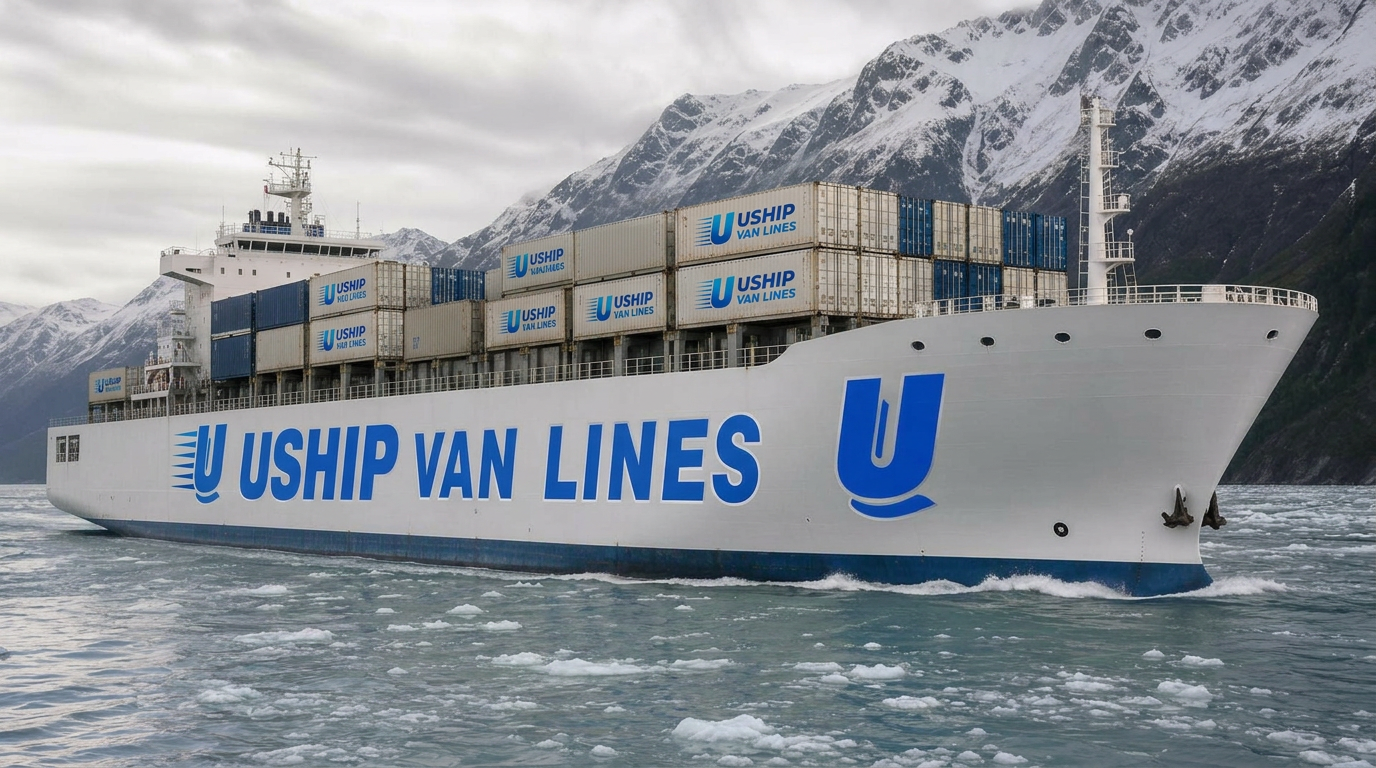
Moving from the continental United States to Alaska is unlike any other domestic relocation. Your household goods will travel by truck to the Port of Tacoma, cross the Gulf of Alaska by ocean barge, and arrive at the Port of Anchorage before final delivery to your new home—whether that's in Anchorage, Fairbanks, the Mat-Su Valley, Kenai Peninsula, or remote bush communities.
Best Alaska & Hawaii Movers, powered by UShip Van Lines, coordinates every leg of this multimodal journey. From pickup anywhere in the Lower 48 through final placement in your Alaska home, we handle the logistics so you can focus on your next chapter. Ready to start planning? Request your free personalized quote today.
Route overview
How Your Move from the Lower 48 to Alaska Works
Alaska moves require specialized freight handling that combines over-the-road trucking with oceangoing barge service. Your belongings are loaded into a container or trailer at your origin address, trucked to the Port of Tacoma (Washington), consolidated onto a northbound barge, and shipped across the Gulf of Alaska to the Port of Anchorage. From there, your goods are offloaded and delivered to your final destination by local Alaska carriers.
The Port of Anchorage serves as the primary gateway for household moves to Alaska, handling the vast majority of containerized freight from the Lower 48. Barge sailings typically run weekly during the peak summer season and every 7–10 days during winter months, though schedules vary by carrier and weather conditions.
Last-mile delivery options depend on your destination. Major road-system cities like Anchorage, Fairbanks, Wasilla, and Soldotna receive direct delivery. Remote or off-road-system communities may require additional ferry service, small-plane freight, or seasonal ice-road access, adding both time and cost to your move.
How the moving process works
Step-by-Step: Moving Your Household to Alaska
-
Request a Quote & Book Early – Contact Best Alaska & Hawaii Movers at least 6–8 weeks before your desired move date. Summer sailings (May–September) book fast; winter moves offer more flexibility but require weather contingency planning.
-
Inventory & Packing – Decide whether to pack yourself or use professional packing services. Alaska moves require sturdy boxes and moisture protection due to marine transport. Specialty items like vehicles, boats, or ATVs can often share container space.
-
Pickup & Overland Transit to Tacoma – A driver picks up your shipment anywhere in the continental U.S. and transports it to the Port of Tacoma consolidation facility, typically arriving 3–7 days before the scheduled barge sailing.
-
Barge Loading & Ocean Crossing – Your container is loaded onto a northbound barge. The Gulf of Alaska crossing takes 4–7 days depending on weather, route, and carrier. Containers remain sealed throughout the voyage.
-
Port of Anchorage Arrival & Customs Clearance – Though Alaska is a U.S. state, some freight undergoes agricultural inspection. Your shipment clears the port within 1–2 business days of arrival.
-
Last-Mile Delivery – A local Alaska carrier delivers your goods to your new address. Road-system deliveries typically occur within 2–5 days of port clearance. Remote locations require additional coordination.
-
Unloading & Placement – Professional movers unload your items and place furniture according to your instructions. Inspect everything before signing the delivery receipt and note any damage immediately.
Estimated moving costs
What Does It Cost to Move to Alaska?
Moving a typical 2–3 bedroom household from the Lower 48 to Alaska generally ranges from $4,500 to $9,500, depending on volume, origin location, destination within Alaska, and season. A 1-bedroom apartment or studio may cost $2,800–$4,200, while a 4-bedroom home can exceed $12,000.
Key cost drivers include:
- Volume and weight – Alaska moves are priced by cubic feet or linear feet of container space, plus weight surcharges for heavy items
- Origin distance from Tacoma – Longer overland hauls (East Coast, Southeast, Midwest) add $800–$2,000 to the base cost
- Final destination in Alaska – Road-system cities cost significantly less than remote communities requiring ferry, air freight, or seasonal ice-road delivery
- Packing services – Professional packing adds $800–$2,500 depending on home size and fragility of items
- Season – Peak summer moves (May–August) command 15–25% premiums due to high demand; winter moves offer better rates but longer transit windows
- Vehicle shipping – Adding a car or truck to your container runs $1,200–$2,200 depending on size and whether it shares space with household goods
- Storage – If your new Alaska home isn't ready, Anchorage-area storage costs $150–$350 per month for a typical household
Always request a detailed, written estimate. Binding quotes guarantee your price; non-binding estimates can increase if actual weight or volume exceeds the initial assessment. Best Alaska & Hawaii Movers provides transparent quotes with no hidden fees.
Estimated transit times
How Long Does a Move to Alaska Take?
Door-to-door transit from the continental U.S. to Alaska typically takes 14–28 days, broken down as follows:
- Pickup to Port of Tacoma: 3–10 days depending on your origin (West Coast origins arrive faster; East Coast and Southern states take longer)
- Port consolidation and barge loading: 1–5 days (your shipment waits for the next scheduled sailing)
- Ocean barge crossing: 4–7 days from Tacoma to Anchorage (weather can extend this by 1–2 days)
- Port clearance in Anchorage: 1–2 business days
- Final delivery to your Alaska address: 2–7 days for road-system locations; up to 2–4 weeks for remote or off-road destinations requiring ferry or air freight
Total timeline: Expect 2–3 weeks for Anchorage-area deliveries from West Coast origins, 3–4 weeks from the Midwest or East Coast, and 4–6 weeks for bush communities. Winter weather, holiday schedules, and peak summer demand can all add days to these estimates. Always build in buffer time before lease start dates or work commitments.
Regional logistics
Alaska-Specific Moving Logistics You Need to Know
Port of Tacoma & Port of Anchorage: Nearly all Lower 48–Alaska household moves funnel through these two ports. Your mover coordinates container loading, barge booking, and port documentation. No action is required from you beyond providing accurate inventory.
Vehicle Shipping: If you're driving the Alaska Highway, your vehicle won't arrive with your household goods. Many customers ship one car in the container (saving $1,500–$2,500 vs. driving) and fly to Alaska. Vehicles must be clean (no soil or debris) and less than 1/4 tank of fuel for barge transport.
Restricted & Prohibited Items: Alaska moves prohibit hazardous materials (paint, propane, aerosols), perishable food, and plants subject to agricultural inspection. Firearms are allowed but must be declared and packed according to federal guidelines. Alcohol is legal but check local delivery restrictions for dry communities.
Last-Mile Challenges: If you're moving to a remote village, bush community, or off-road location, your shipment may transfer from the Port of Anchorage to a smaller regional port, then onto a bush plane or seasonal barge. These final legs can add $2,000–$5,000 and 2–4 weeks to your move. Coordinate early with your mover.
Insurance & Valuation: Marine transport carries unique risks. Purchase full-replacement-value insurance (typically 1–2% of declared value) rather than relying on basic carrier liability of $0.60 per pound. Document high-value items with photos and appraisals.
Paperwork & Identification: Though Alaska is a U.S. state, port authorities may inspect shipments for invasive species or agricultural products. Keep a detailed inventory and be prepared to provide ID and shipment documentation if requested.
Seasonal considerations
Best Time to Move to Alaska: Seasonal Planning
Summer (May–September): Peak moving season. Barge sailings run weekly, weather is calm, and delivery windows are predictable. However, demand is high—book 8–12 weeks ahead and expect premium pricing. Ideal if you need reliable timing for a job start or school enrollment.
Fall (October–November): Shoulder season offers a sweet spot: lower rates than summer, still-frequent barge service, and fewer weather delays than winter. A good choice if you have flexible timing and want to save 10–20% on moving costs.
Winter (December–March): Off-peak season brings the lowest prices and greatest availability, but barge schedules slow to every 7–14 days. Storms in the Gulf of Alaska can delay sailings by 3–7 days. Roads in Alaska may be icy, complicating final delivery. Best for budget-conscious movers with flexible timelines and no hard deadlines.
Spring (April–early May): Transition period as barge schedules ramp up. Weather improves but can still be unpredictable. Rates begin climbing toward summer peaks. Book early if targeting a late-May or early-June delivery to avoid summer rush pricing.
Why choose Best Alaska & Hawaii Movers
Why Choose Best Alaska & Hawaii Movers for Your Alaska Relocation
- Alaska Specialists – We handle dozens of Lower 48–Alaska moves every month and know every detail of barge logistics, port processes, and last-mile delivery across all regions of the state
- Transparent Pricing – Detailed written estimates with clear breakdowns of overland trucking, barge freight, and final delivery costs—no surprise fees at delivery
- Multimodal Coordination – Powered by UShip Van Lines, we manage every leg of your move: pickup, Tacoma consolidation, barge booking, Anchorage port clearance, and final placement in your Alaska home
- Flexible Service Options – From full-service packing and vehicle shipping to container-sharing for smaller moves, we tailor solutions to your timeline and budget
- Experienced Alaska Delivery Network – Our last-mile partners know Alaska roads, weather, and remote-access logistics, ensuring safe delivery whether you're in downtown Anchorage or a roadless village