
Moving from Newton, MA to Alaska
Moving from Newton, Massachusetts to Alaska represents one of the most logistically complex residential relocations in North America. You're not just changing time zones—you're navigating a 3,500+ mile journey that combines overland trucking, ocean barge transport, and often challenging last-mile delivery across Alaska's unique terrain. Whether you're headed to Anchorage, Fairbanks, the Mat-Su Valley, or beyond, understanding the intermodal shipping process is essential.
Best Alaska & Hawaii Movers, powered by UShip Van Lines, specializes in this exact corridor. We coordinate every leg—from your Newton pickup through the Port of Tacoma staging, barge transit to Alaska ports, and final delivery to your new home. Ready to start planning? Request a detailed quote today to get accurate pricing and timeline estimates tailored to your specific move.
Route overview
Route Overview: Newton, MA to Alaska
Your household goods begin their journey with a long-haul truck pickup from your Newton home, traveling approximately 3,100 miles west to the Port of Tacoma, Washington—the primary gateway for Alaska-bound freight. This overland segment typically takes 5–7 days depending on weather and season. In Tacoma, your belongings are containerized (usually in 20-foot or 40-foot steel containers) and staged at the port facility alongside vehicles and other cargo bound for Alaska.
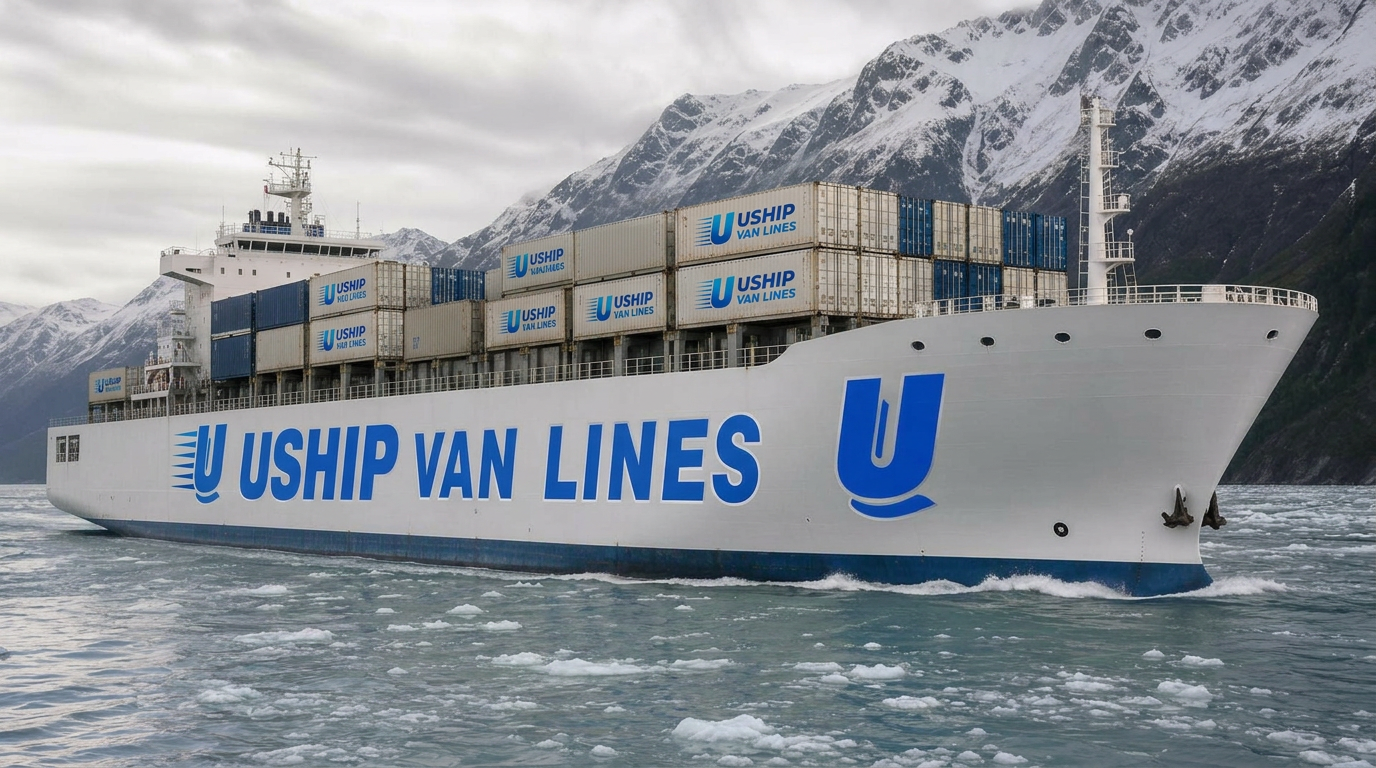
From Tacoma, containers board commercial barge services operated by carriers like Totem Ocean Trailer Express (TOTE) or Alaska Marine Lines, sailing north through the Inside Passage and Gulf of Alaska to ports including Anchorage, Whittier, or Kodiak. Barge transit adds 7–10 days depending on the specific vessel schedule and destination port. Once your container clears Alaska customs and port operations, it's loaded onto a local truck for final delivery to your street address—a process that can take 1–3 additional days in urban areas, or up to a week for rural or bush communities requiring ferry connections or seasonal road access.
This three-stage intermodal process—truck, barge, local delivery—means careful scheduling and realistic expectations are critical. Unlike a direct cross-country drive, Alaska moves depend on fixed barge sailing schedules (typically 1–2 departures per week) and weather conditions that can affect both ocean transit and last-mile delivery, especially during winter months or in remote regions.
How the moving process works
The Newton to Alaska Moving Process
1. Initial consultation and route planning
We assess your inventory, destination within Alaska, and timeline to determine optimal barge schedules and container sizing. You'll receive a detailed quote covering all three transportation legs, including any specialized handling for vehicles, fragile items, or temperature-sensitive belongings.
2. Pre-move preparation and packing
Professional packing is strongly recommended for Alaska moves due to the multiple handling points. We inventory and pack your household goods using marine-grade materials that withstand humidity and temperature fluctuations during barge transit. You'll receive detailed documentation for insurance and customs purposes.
3. Pickup and cross-country transport to Tacoma
Our long-haul carrier loads your belongings in Newton and transports them via I-90 and I-84 corridors to the Port of Tacoma. This leg takes 5–7 days under normal conditions. Your items are secured in a dedicated section of the truck to minimize shifting during the 3,100-mile journey.
4. Port staging and containerization
At the Tacoma facility, your household goods are loaded into weather-tight shipping containers. Each container is sealed, documented, and scheduled for the next available Alaska-bound barge. This staging process typically takes 2–5 days, depending on sailing schedules and cargo volume.
5. Barge transit to Alaska ports
Your container sails north, typically arriving at the Port of Anchorage (via Whittier) or directly to Anchorage's container terminal. Transit time is 7–10 days. Containers are secured below deck and protected from marine weather, though some temperature variation is normal.
6. Port clearance and unloading
Upon arrival, containers clear Alaska port authority inspections and are unloaded to a staging yard. This process adds 1–3 days. If you're shipping a vehicle alongside household goods, it will be offloaded and processed separately.
7. Final delivery to your Alaska address
A local Alaska carrier transports your container to your new home, where our crew unloads and places items according to your instructions. Urban deliveries (Anchorage, Fairbanks, Juneau) typically occur within 1–2 days of port clearance. Rural or off-road-system deliveries may require additional arrangements, including transfers to smaller vehicles, barge connections to island communities, or coordination with seasonal road access.
Estimated moving costs
Cost Expectations for a Newton to Alaska Move
A typical 2–3 bedroom household move from Newton to Alaska generally ranges from $8,500 to $16,000, with most families spending around $11,000–$13,000 for full-service door-to-door transport. This estimate assumes approximately 8,000–12,000 pounds of household goods and includes all three transportation legs: overland trucking to Tacoma, barge freight to Alaska, and last-mile delivery.
Key cost drivers include:
-
Distance within Alaska: Anchorage and Wasilla deliveries are most economical. Fairbanks adds $800–$1,500 due to the additional 360-mile haul. Remote communities requiring ferry access, bush plane cargo, or seasonal ice road transport can add $2,000–$5,000 or more.
-
Volume and weight: Container sizing matters. A partial container (shared space) costs less but offers less schedule flexibility. A dedicated 20-foot container (holds ~3 bedrooms) costs more upfront but provides exclusive use and often faster transit.
-
Season and schedule: Summer months (May–August) see premium pricing due to high demand from families moving before the school year. Off-season moves (September–April) may save 10–15%, though winter weather can extend timelines.
-
Vehicle shipping: Adding a car or truck to your barge shipment costs $1,500–$3,000 depending on vehicle size and destination port. Vehicles travel in the same container system but require separate processing.
-
Packing and specialty items: Full-service packing adds $1,200–$2,500. Specialty items like pianos, gun safes, hot tubs, or fine art require custom crating and add to costs. Disassembly/reassembly of complex furniture is typically included in full-service quotes.
-
Storage needs: If your Alaska housing isn't ready upon barge arrival, short-term storage in Anchorage costs $150–$300 per month for a typical household.
We provide detailed, binding estimates after a virtual or in-home survey of your belongings. Pricing is transparent with no hidden port fees or fuel surcharges added after the fact. Keep in mind that quoted prices are estimates based on declared inventory—actual costs are determined by final weight and services rendered.
Estimated transit times
How Long Does the Move Take?
Door-to-door transit from Newton to Alaska typically requires 18–28 days, broken down as follows:
Newton to Port of Tacoma: 5–7 days
Cross-country trucking from Massachusetts to Washington State covers roughly 3,100 miles. Weather delays (winter storms in the Rockies, mountain pass closures) can extend this leg by 1–2 days during November–March.
Port staging and containerization: 2–5 days
Your goods are unloaded, inventoried, and loaded into marine containers at the Tacoma facility. Timing depends on barge sailing schedules—if you just miss a departure, you may wait several additional days for the next vessel.
Barge transit to Alaska: 7–10 days
Ocean freight from Tacoma to Anchorage-area ports (typically via Whittier) takes a full week to ten days. Sailing schedules are fixed, usually 1–2 departures per week depending on season. Summer sees more frequent service; winter may have reduced schedules.
Port clearance and local delivery: 2–5 days
Once your container arrives in Alaska, it must clear port inspections and be scheduled for local trucking. Anchorage and Eagle River deliveries are fastest (1–2 days). Fairbanks adds 1–2 days for the Interior haul. Remote communities can add a week or more if ferry connections or seasonal access roads are involved.
Total realistic timeline: 3–4 weeks for most urban Alaska destinations, with 4–6 weeks recommended if your delivery address is off the main road system or if you're moving during winter months when weather can disrupt any leg of the journey.
We provide tracking updates at each milestone—truck departure from Newton, arrival in Tacoma, barge departure, Alaska port arrival, and final delivery scheduling. Build in buffer time on both ends; avoid scheduling your Newton move-out and Alaska move-in dates back-to-back without at least a three-week cushion.
Regional logistics
Alaska-Specific Moving Logistics
Port and route details:
Most Newton-to-Alaska moves route through the Port of Tacoma to either the Port of Anchorage (via Whittier) or directly to Anchorage's container terminal. If you're moving to Southeast Alaska (Juneau, Ketchikan, Sitka), shipments may route through the Port of Seattle or transfer in Anchorage for smaller barge service down the Inside Passage. Mat-Su Valley deliveries (Wasilla, Palmer) are straightforward from Anchorage. Kenai Peninsula destinations go via Anchorage with a 1–2 hour final truck segment. Fairbanks and Interior Alaska require an additional 6–8 hour drive north from Anchorage.
Vehicle shipping:
Shipping your car or truck via barge alongside household goods is common and cost-effective. Vehicles must be steam-cleaned (undercarriage and engine) to meet Alaska agricultural inspection standards—failure to do so results in rejection at the port and added fees. Fuel tanks must be under 1/4 full. No personal items can be inside the vehicle during transport (insurance and liability reasons). We coordinate vehicle pickup from Newton simultaneously with your household goods, with both traveling together to Tacoma and sharing barge space to Alaska.
Firearms and restricted items:
Alaska has permissive gun laws, but transport requires compliance with federal interstate regulations. Firearms must be unloaded, cased, and declared on inventory. Ammunition is restricted on barges—you may need to ship separately or purchase upon arrival. Propane tanks, certain chemicals, and lithium batteries have barge restrictions. We provide a prohibited items list during your quote consultation.
Customs and documentation:
While Alaska is a U.S. state, barge freight often travels through Canadian waters or makes Canadian port calls, triggering customs documentation requirements. You'll need to provide identification, a detailed household goods inventory, and occasionally proof of residency or employment in Alaska. We handle all paperwork, but be prepared to provide supporting documents. Active-duty military members moving on PCS orders have streamlined processes.
Last-mile challenges:
Alaska's "last-mile" delivery is unlike anywhere else. Anchorage, Fairbanks, Juneau, and major towns have paved road access and straightforward delivery. Rural areas may require:
- Ferry connections: Southeast Alaska islands, Prince William Sound communities, Aleutian Chain. Coordinate barge arrival with Alaska Marine Highway schedules.
- Seasonal road access: Many bush communities have winter ice roads or summer barge-only access. Timing is critical.
- Air cargo transfer: Villages off the road system may require freight to be broken down and flown in via cargo plane—expensive and limited by weight/size.
- Storage contingencies: If your Alaska home isn't ready or weather delays delivery, we offer secure storage in Anchorage at daily or monthly rates.
Our Alaska network includes local partners in every major region, ensuring we can deliver to your door regardless of how remote. We've moved families to Kotzebue, Bethel, Nome, Kodiak, and dozens of smaller communities—always with advance planning for the unique logistics each location demands.
Seasonal considerations
Best Times to Move from Newton to Alaska
Spring (April–May):
Barge schedules ramp up as the shipping season intensifies. Weather in the Lower 48 improves, reducing cross-country trucking delays. Alaska begins thawing, making last-mile deliveries to rural areas more feasible as seasonal roads reopen. Pricing is moderate—not yet peak summer rates. This is an excellent window if you're flexible and want to arrive as Alaska's long daylight season begins.
Summer (June–August):
Peak moving season to Alaska. Families relocate before the school year, military PCS orders surge, and seasonal workers arrive. Barge capacity is maximized with frequent sailings, but expect premium pricing and less scheduling flexibility. Book 8–12 weeks in advance. Weather is optimal for both cross-country trucking and Alaska deliveries, including to remote areas. If you're moving to bush Alaska or an island community, summer offers the most reliable ferry and air cargo connections.
Fall (September–October):
Demand drops after Labor Day, often yielding 10–15% cost savings. Barge schedules remain robust through early October. Weather is unpredictable—early snows can hit the Rockies and Alaska simultaneously, potentially delaying trucking and last-mile delivery. This is a strategic window for budget-conscious movers willing to accept some weather risk. Freeze-up begins in late October, complicating deliveries to communities reliant on river barge access.
Winter (November–March):
Off-peak season with the lowest pricing, but significant logistical challenges. Barge schedules reduce frequency (sometimes one sailing per week or less). Cross-country trucking faces mountain pass closures, blizzards, and ice. Alaska last-mile deliveries can be delayed by weeks in extreme cold or if your destination requires ice road access that hasn't fully formed. Some remote communities become entirely inaccessible until spring. Only recommended if you have extreme flexibility and secure storage options at both ends. Many movers schedule winter moves but plan move-in dates for early spring upon arrival.
Alaska-specific note: The Port of Anchorage and Whittier operate year-round, but rural delivery logistics vary dramatically by season. If you're moving to the North Slope, Aleutian Chain, or Southeast Alaska islands, consult with us early about seasonal access windows—some locations have 2–3 month periods when household goods simply cannot be delivered by ground or water.
Why choose Best Alaska & Hawaii Movers
Why Best Alaska & Hawaii Movers for Your Newton to Alaska Move
-
Alaska-specific expertise: We exclusively focus on Alaska and Hawaii relocations, not general cross-country moving. Our team understands barge schedules, port operations, Alaska delivery challenges, and seasonal logistics that general movers simply don't encounter. Powered by UShip Van Lines, we combine national trucking reach with deep Alaska ground knowledge.
-
End-to-end coordination: You work with a single point of contact from Newton pickup through Alaska delivery. We manage the truck carrier, port logistics, barge booking, customs paperwork, and final delivery crew—no handoffs to unknown subcontractors or miscommunication between legs.
-
Transparent, binding estimates: Our quotes include all three transportation legs, port fees, and standard delivery services. No surprise fuel surcharges or "port handling fees" added after the fact. What we quote is what you pay, adjusted only if your actual inventory differs from the estimate.
-
Real-time tracking and communication: You'll receive updates at every milestone—truck arrival in Tacoma, barge departure, Alaska port arrival, and delivery scheduling. We proactively communicate delays due to weather or port congestion, so you're never left guessing where your belongings are.
-
Insurance and claims support: Full-value protection coverage is available for high-value items. In the rare event of damage or loss, we handle claims directly with carriers and insurers—no finger-pointing between trucking, barge, and delivery companies.
-
Flexible scheduling for Alaska realities: We build realistic timelines that account for barge schedules, weather windows, and last-mile logistics. If your Alaska housing is delayed, we offer storage solutions. If you need expedited service, we identify the fastest available barge sailing and prioritize your container.