
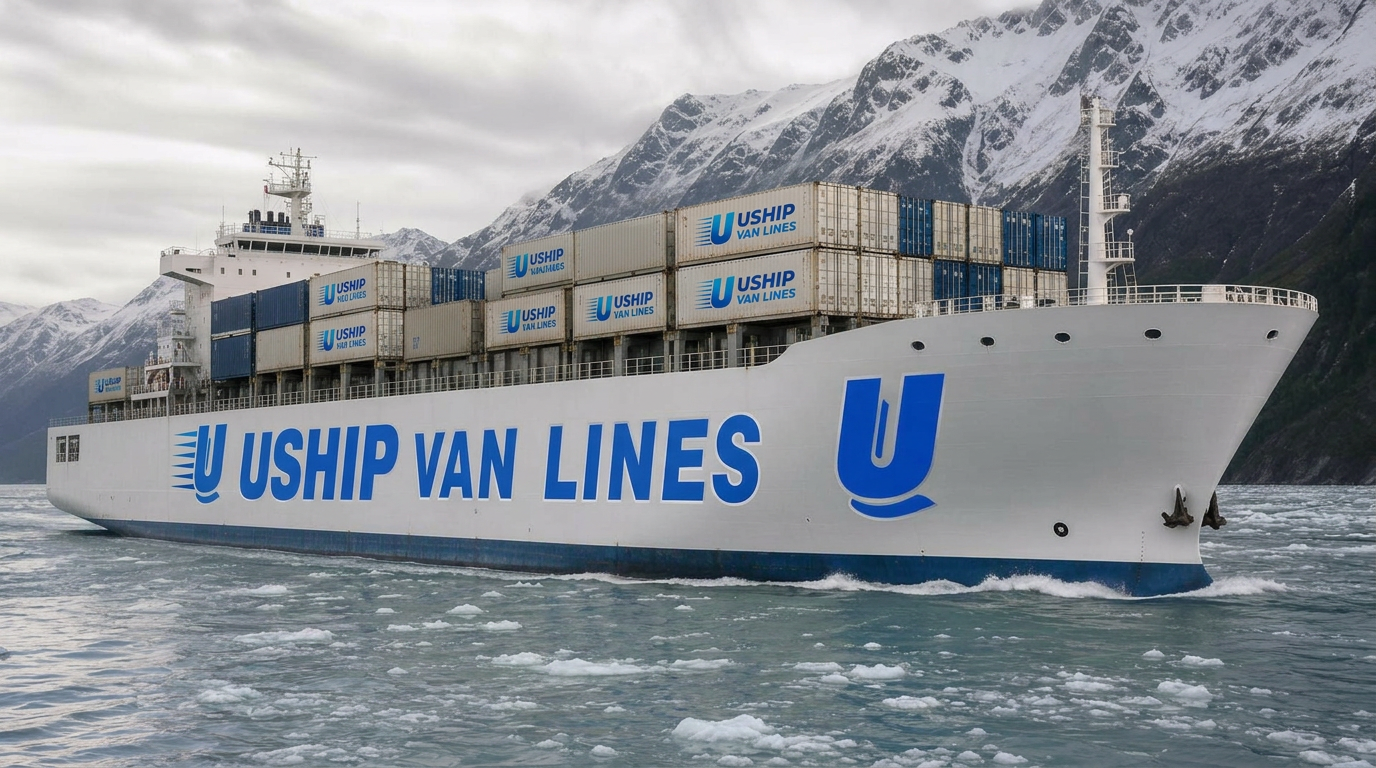
Moving from Oklahoma City, OK to Alaska
Relocating from Oklahoma City to Alaska represents one of the most logistically complex domestic moves you can undertake. This isn't a standard cross-country haul—your belongings will travel over 3,000 miles through multiple transportation modes, including highway freight, port handling, and ocean barge to reach destinations like Anchorage, Fairbanks, or the Kenai Peninsula.
Best Alaska & Hawaii Movers, powered by UShip Van Lines, specializes in these challenging long-distance routes. We coordinate every leg of your Oklahoma-to-Alaska move with experienced partners who understand barge schedules, customs paperwork, and last-mile delivery across America's largest state. Ready to start planning? Request a free quote and speak with a move coordinator who knows this route inside out.
Route overview
Understanding the Oklahoma City to Alaska Moving Route
Your household goods begin their journey in Oklahoma City, traveling northwest approximately 2,300 miles by truck to the Port of Tacoma, Washington. This cross-country leg typically takes 3–5 days depending on weather and scheduling. Once consolidated at the port facility, your shipment joins other Alaska-bound freight aboard weekly or bi-weekly barge services operated by carriers like TOTE Maritime or Span Alaska.
The marine leg from Tacoma to the Port of Anchorage covers roughly 1,450 nautical miles and requires 5–7 days of ocean transit. After clearing the port in Anchorage, your belongings are transferred to Alaska-based trucking partners for final delivery. If you're moving to Anchorage proper, delivery can occur within 1–2 days of port arrival. Destinations like Fairbanks (365 miles north), the Mat-Su Valley, or Kenai Peninsula communities add 1–3 additional days for highway transport.
This multi-modal approach is the industry standard for Alaska moves. Air freight exists but costs 4–6 times more and remains impractical for full household relocations. The barge system provides reliable, cost-effective service, though it requires patience and flexible scheduling windows compared to Lower 48 moves.
How the moving process works
Step-by-Step: Your Oklahoma City to Alaska Move
-
Initial consultation and survey (6–8 weeks before move date): Connect with our move coordinator to discuss your inventory, destination within Alaska, and preferred timeline. We'll provide a detailed cost estimate based on your home size, shipment weight, and any vehicle transport needs. Early booking is critical—summer moves often fill up by April.
-
Pre-move planning and documentation (4–6 weeks out): Finalize your moving date and receive your bill of lading. If shipping a vehicle separately, complete Alaska DMV pre-registration paperwork. Confirm your Alaska delivery address and coordinate any temporary housing if your new home isn't immediately ready. This is also the time to purge items that aren't worth shipping—Alaska's isolation makes strategic downsizing valuable.
-
Packing and Oklahoma City pickup (moving day): Professional packers arrive at your Oklahoma City home, typically requiring 1–2 days for a full-service pack of a 2–3 bedroom residence. Everything is inventoried, wrapped, and loaded into a 53-foot trailer. You'll receive itemized documentation and tracking information before the truck departs for Tacoma.
-
Cross-country transit to Tacoma (3–5 days): Your shipment travels via Interstate 40 west to Albuquerque, then north through Utah and Idaho to Washington. The truck delivers to a consolidation warehouse near the Port of Tacoma, where your goods are transferred to marine-certified containers or trailers that will ride the barge deck.
-
Barge transit Tacoma to Anchorage (5–7 days): Your container loads onto the next available Alaska-bound barge, departing weekly during peak season (May–September) and every 10–14 days during winter months. The vessel navigates the Inside Passage and Gulf of Alaska before docking at the Port of Anchorage. Weather delays of 1–2 days can occur during fall and winter storms.
-
Port clearance and Alaska transfer (1–2 days): Once docked, containers are offloaded and processed through port facilities. Your shipment is matched with Alaska-based trucking partners who specialize in last-mile delivery across the state. If you're shipping a vehicle, it clears separately and can often be retrieved within 24 hours of port arrival.
-
Final delivery and unpacking (1–3 days after port arrival): For Anchorage deliveries, expect your goods within 1–2 days of barge arrival. Fairbanks, Mat-Su, or Kenai destinations require additional highway time. Our delivery team will unload, place furniture, and remove packing materials. Inspect everything carefully and note any damage on the delivery receipt—this documentation is essential for insurance claims.
Estimated moving costs
What Does an Oklahoma City to Alaska Move Cost?
A typical 2-bedroom apartment move (approximately 5,000–7,000 pounds) from Oklahoma City to Anchorage generally costs $6,500–$9,500 for full-service door-to-door transport. A 3-bedroom home (8,000–11,000 pounds) typically ranges $9,500–$14,000. These estimates include packing materials, loading, cross-country truck transport, barge freight, port handling, and Alaska delivery.
Several factors significantly impact your final cost. Shipment weight is the primary driver—marine freight is priced per hundred pounds (CWT), and every additional 1,000 pounds adds roughly $400–$600 to your total. Seasonal timing matters considerably; summer moves (June–August) cost 15–25% more due to peak demand from families relocating before the school year. Final destination within Alaska adds costs—Fairbanks deliveries run $800–$1,500 more than Anchorage due to the 7–8 hour highway haul. Vehicle shipping adds $1,800–$2,800 per car if using the same barge route.
Additional services increase costs but may be worthwhile. Full-service packing adds $800–$1,800 depending on home size. Storage in Tacoma or Anchorage costs $150–$300 per month if you need to delay delivery. Valuation coverage beyond the standard $0.60/pound typically costs 1–2% of declared value. Expedited barge booking during peak season can add $500–$1,000 but guarantees space on your preferred sailing.
We never guarantee prices without a detailed inventory assessment. Every move is unique, and Alaska's complex logistics mean accurate estimates require professional evaluation of your specific situation. Request a free quote to receive a binding estimate based on your actual household goods and timeline.
Estimated transit times
Realistic Timeline: Oklahoma City to Alaska Door-to-Door
Plan for a total transit time of 14–21 days from pickup in Oklahoma City to delivery in Anchorage during peak season (May–September). Winter moves (October–April) often extend to 18–28 days due to less frequent barge sailings and weather-related delays.
Here's how the timeline breaks down by segment. Oklahoma City to Tacoma: 3–5 days by truck covering 2,300 miles. Tacoma warehouse consolidation: 2–5 days waiting for the next Alaska-bound barge, depending on sailing schedules and how closely your pickup aligns with departure dates. Barge transit: 5–7 days on the water from Tacoma to Anchorage, occasionally extending to 8–9 days during storm events. Port processing in Anchorage: 1–2 days for offloading and customs clearance. Final delivery: Same day to 3 days depending on your destination—Anchorage proper delivers quickest, while Fairbanks, Kenai, or Mat-Su locations add highway transit time.
For destinations beyond Anchorage, add these increments: Fairbanks (365 miles north): 1–2 additional days. Kenai Peninsula communities (Soldotna, Homer): 1–2 days. Mat-Su Valley (Wasilla, Palmer): 1 day. Remote bush communities requiring smaller aircraft or seasonal road access: 3–10 additional days and significantly higher costs.
The longest waits typically occur at the Tacoma consolidation phase. If you miss a sailing by one day, you may wait another week (summer) or two weeks (winter) for the next barge. This is why flexible delivery windows and early booking (6–8 weeks advance) are critical for Alaska moves. Build buffer time into your relocation plans—don't schedule your Oklahoma lease end and Alaska lease start with zero margin.
Regional logistics
Alaska-Specific Moving Logistics and Requirements
Port operations and paperwork: While Alaska is part of the United States and requires no customs clearance for household goods, port documentation is still extensive. You'll need a detailed inventory list, proof of residence (Alaska driver's license, employment letter, or lease agreement), and proper insurance documentation. Vehicle shipments require separate paperwork including Alaska DMV notification, title, registration, and current insurance cards. The Port of Anchorage processes thousands of containers monthly; proper documentation prevents costly delays.
Vehicle shipping considerations: Most families relocate at least one vehicle to Alaska. You can drive the Alaska Highway (a 2,200-mile journey from the Lower 48 taking 5–7 days), but many choose to ship vehicles via the same barge system. Vehicles must be clean (Alaska requires inspection for invasive species), operable (or declared as inoperable with fees applying), and no more than 1/4 tank of fuel. Shipping a standard sedan costs $1,800–$2,400; trucks and SUVs run $2,200–$2,800. If you ship a vehicle, you'll retrieve it from the port yourself or pay for delivery service.
Last-mile Alaska delivery challenges: Alaska's size and infrastructure create unique final-delivery considerations. Anchorage and the immediate Matanuska-Susitna Valley are straightforward. Fairbanks requires a 7–8 hour drive north on the Parks Highway—winter road closures can delay delivery by 1–3 days. Kenai Peninsula communities are accessible year-round but add distance and ferry costs in some cases. Remote bush communities not connected to the road system require small aircraft or seasonal ice road access, multiplying costs and transit time significantly. Confirm your exact delivery address and accessibility with your coordinator during the estimate phase.
Storage options in Alaska: If your new home isn't ready when your shipment arrives, storage is available both at the Anchorage port area and at local facilities. Port storage costs $150–$250 per month but must be arranged in advance and carries time limits. Long-term storage is better handled by Anchorage-area warehouses ($200–$400/month for a 3-bedroom household). Some families deliberately build storage time into their move if traveling Alaska during the summer before settling into permanent housing.
Alaska Address and Mail: Register your Alaska address with USPS as early as possible. Alaska's addressing system can be complex—many homes use mile markers rather than street addresses, and rural areas use post office boxes exclusively. Confirm your exact address format to ensure delivery drivers can locate your new home. GPS coordinates are sometimes helpful for remote properties.
Seasonal considerations
Timing Your Move: Seasonal Factors for the Alaska Route
Summer (June–August) represents peak moving season for Alaska relocations. Barge sailings run weekly, transit times are most predictable, and weather delays are rare. However, demand drives prices up 15–25%, and booking windows fill by April for July–August moves. Highway conditions across the Lower 48 and Alaska are optimal. If you have school-age children or need to start a job by a specific date, summer's reliability justifies the premium cost. Book by early April at the latest.
Spring (April–May) and early fall (September) offer the best balance of reliability and cost. Barge schedules transition from winter frequency to summer weekly service (or vice versa). Prices are 10–15% lower than peak summer, and availability is better. Weather is generally cooperative, though late-season snowstorms in Alaska can cause 1–2 day delays in April or September. These shoulder seasons work well if you have flexibility and want to avoid peak pricing.
Winter (October–March) presents the most challenging conditions but offers the lowest prices—often 20–30% below summer rates. Barge sailings reduce to every 10–14 days, significantly extending the consolidation wait in Tacoma. Gulf of Alaska storms can delay sailings by 2–4 days, and highway conditions in both the Lower 48 and Alaska Interior (particularly the route to Fairbanks) can add time or require waiting for road clearance. Winter moves work best for experienced Alaska residents who understand the state's seasonal realities and have flexible timelines. Not recommended for first-time Alaska movers.
Specific barge schedule considerations: TOTE Maritime and Span Alaska publish seasonal sailing schedules 3–4 months in advance. Summer departures from Tacoma typically occur every Wednesday and Saturday. Winter schedules reduce to once or twice weekly. Your move coordinator will align your Oklahoma pickup date to connect with the optimal sailing, but understand that 2–5 days of warehouse time in Tacoma is standard and unavoidable.
Why choose Best Alaska & Hawaii Movers
Why Best Alaska & Hawaii Movers for Your Oklahoma City to Alaska Relocation
-
Specialized Alaska route expertise: We focus exclusively on Alaska and Hawaii moves, not general cross-country relocations. Our network includes vetted partners who handle the Tacoma consolidation, barge booking, and Alaska last-mile delivery every week. We know the barge schedules, seasonal patterns, and Alaska-specific requirements that generalist movers miss.
-
Transparent, realistic timelines: We never promise 7-day Alaska deliveries or guaranteed sailing dates. You'll receive honest estimates that account for barge schedules, consolidation time, and seasonal factors. Our tracking system provides updates at every leg—Oklahoma pickup, Tacoma arrival, barge loading, Anchorage port arrival, and final delivery dispatch.
-
Coordinated vehicle and household shipping: Shipping a car and household goods separately often creates confusion and extra costs. We coordinate both shipments on the same barge when possible, simplifying your logistics and often reducing combined costs by $300–$600 through consolidated port handling.
-
Alaska destination knowledge: Our coordinators know the difference between delivering to downtown Anchorage versus a remote Mat-Su property accessible only during dry weather. We ask the right questions during your estimate to prevent surprises at delivery time—access roads, seasonal restrictions, ferry requirements, and winter considerations are all factored into your plan.
-
Powered by UShip Van Lines infrastructure: Best Alaska & Hawaii Movers leverages UShip Van Lines' nationwide carrier network for the Oklahoma-to-Tacoma leg, ensuring reliable pickup and cross-country transport. This partnership combines specialized Alaska expertise with robust Lower 48 logistics capabilities, giving you the best of both worlds.