
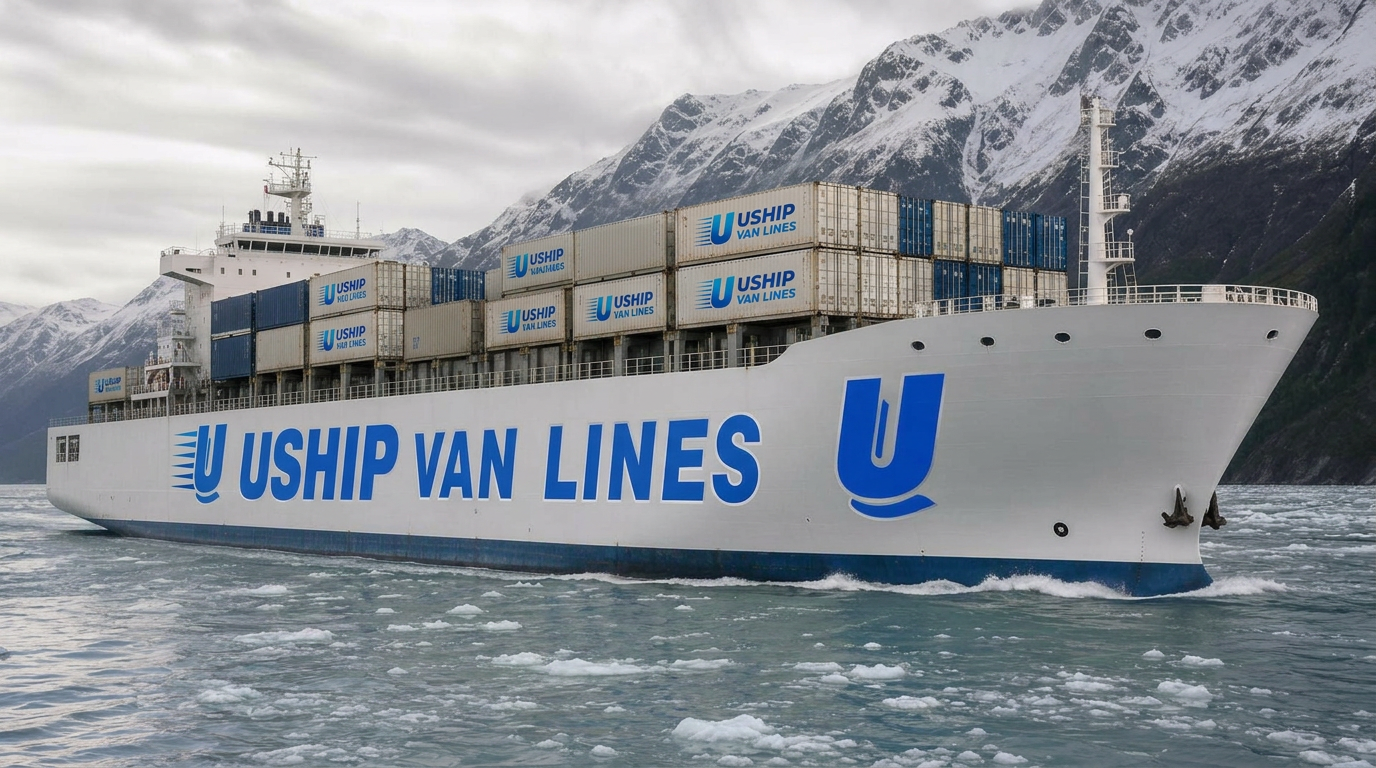
Moving from New Brunswick, NJ to Alaska
Moving from New Brunswick, NJ to Alaska represents one of the most logistically complex relocations in North America. Your household goods will travel approximately 4,200 miles, crossing the continental United States by truck before boarding a marine barge in Tacoma, WA for the journey through the Inside Passage to the Port of Anchorage. This multi-modal move requires specialized coordination, realistic timeline expectations, and an experienced partner who understands both continental logistics and Alaska's unique delivery challenges.
Best Alaska & Hawaii Movers, powered by UShip Van Lines, specializes in these cross-country-to-Alaska relocations. We manage the entire process—from pickup at your New Brunswick residence through final delivery to Anchorage, Fairbanks, the Mat-Su Valley, Kenai Peninsula, or even remote bush communities. Ready to start planning? Request a free, detailed quote today to understand exactly what your move will entail.
Route overview
The New Brunswick to Alaska Moving Route
Your belongings begin their journey in New Brunswick, located in central New Jersey along the Raritan River. This college town offers straightforward truck access via Route 1, I-287, and the New Jersey Turnpike, making the initial pickup efficient. From New Brunswick, your shipment travels west across the United States on Interstate highways—typically I-80 through Pennsylvania, Ohio, Indiana, Illinois, Iowa, Nebraska, Wyoming, and into the Pacific Northwest.
The continental leg terminates in Tacoma, Washington, where your goods transfer to a marine shipping facility. Tacoma serves as the primary barge consolidation point for Alaska-bound freight. Your household items are loaded into a shipping container (typically 20-foot or 40-foot) or onto pallets, then placed aboard a northbound barge. The vessel sails through Puget Sound, navigates the protected waters of the Inside Passage along the British Columbia coast, crosses the Gulf of Alaska, and docks at the Port of Anchorage.
From Anchorage's port facilities, your shipment clears customs if necessary, then moves to final delivery. If you're settling in Anchorage proper, delivery happens within days of port arrival. Destinations like Fairbanks (365 miles north), the Mat-Su Valley communities of Wasilla and Palmer, or the Kenai Peninsula require additional trucking over Alaska highways. Remote bush locations may require air freight or seasonal barge service, adding complexity and cost.
How the moving process works
How Your New Brunswick to Alaska Move Works: Step by Step
-
Free Quote and Planning Consultation — Contact Best Alaska & Hawaii Movers for a detailed estimate. We'll assess your inventory (typically via video survey), confirm your Alaska destination, discuss any vehicle shipping needs, and explain the multi-leg timeline. This is when you'll learn about barge sailing schedules and plan your move dates accordingly.
-
Truck Pickup in New Brunswick — On your scheduled pickup date, professional movers arrive at your New Jersey home. They'll inventory items, protect furniture with pads and shrink wrap, and load everything into a long-distance moving truck. Because Alaska moves are time-sensitive relative to barge schedules, punctual pickup is critical.
-
Cross-Country Transit to Tacoma — Your shipment travels approximately 2,800 miles to Tacoma, WA. This leg typically takes 5–7 days depending on routing, weather, and any intermediate consolidation stops. Your goods arrive at a Tacoma transfer facility where they're prepared for marine shipping.
-
Container Loading and Barge Departure — At the Tacoma port, your household goods are loaded into a sealed container or secured on pallets. Barges to Alaska operate on weekly or biweekly schedules depending on season. Once loaded, the vessel departs for the 4–7 day northbound voyage, weather permitting.
-
Marine Transit to Anchorage — The barge sails approximately 1,400 nautical miles through the Inside Passage and Gulf of Alaska. This leg is subject to weather delays, especially during winter months when Gulf storms can postpone sailings or slow transit.
-
Port of Anchorage Arrival and Clearance — Upon docking in Anchorage, containers are offloaded and moved to a staging area. If you're shipping any restricted items or if customs paperwork is required, clearance happens here. Most domestic household moves clear quickly, but factor 1–2 days for processing.
-
Final Delivery to Your Alaska Address — Once cleared, your goods transfer to a local Alaska delivery truck. If you're in Anchorage, delivery can happen within 1–3 days of port arrival. Fairbanks deliveries add 1–2 days for the drive up the Parks Highway. Mat-Su and Kenai destinations follow similar timelines. Upon arrival, movers unload, place items in rooms, and collect final signatures.
Estimated moving costs
What a New Brunswick to Alaska Move Actually Costs
For a typical 2–3 bedroom household (approximately 7,000–10,000 pounds), expect total moving costs between $8,500 and $14,000. Smaller 1-bedroom or studio moves may range from $5,000–$7,500, while larger 4-bedroom homes with full basements and garages can exceed $16,000–$20,000. These figures reflect the full door-to-door service including truck pickup in New Jersey, cross-country haul, marine barge shipping, port handling, and final Alaska delivery.
Key cost drivers include:
- Weight and volume — Alaska moves price primarily by weight and space. Every pound counts because you're paying for truck fuel across 2,800 miles plus ocean freight rates charged per hundred-weight or cubic foot.
- Barge schedules and seasonality — Summer peak season (May–September) sees higher barge rates due to demand. Winter sailings may offer lower marine rates but come with weather delay risks that can add storage costs.
- Final Alaska destination — Anchorage delivery is most economical. Fairbanks adds $800–$1,500 for the additional 730-mile round-trip haul. Remote bush communities requiring air freight or seasonal barge service can add $2,000–$5,000 or more.
- Vehicle shipping — If you're shipping a car or truck to Alaska, add $1,800–$2,800 per vehicle. Vehicles typically ship via roll-on/roll-off (RoRo) barge service or inside containers.
- Packing services — Professional packing of your entire home adds $1,200–$2,500 depending on home size and fragility of contents. Partial packing (kitchen, fragiles only) costs $400–$800.
- Insurance coverage — Standard carrier liability covers $0.60 per pound per item. Full-value protection costs approximately 1–2% of declared shipment value and is strongly recommended for Alaska's long-distance, multi-modal moves.
- Storage — If barge timing doesn't align with your move-out and move-in dates, temporary storage in Tacoma or Anchorage costs $150–$400 per month depending on volume.
We never guarantee prices without a detailed inventory review. Request a formal quote to receive a binding or not-to-exceed estimate based on your specific circumstances.
Estimated transit times
Realistic Transit Times: New Brunswick to Alaska Door-to-Door
Plan for a total door-to-door transit time of 18–28 days under normal conditions. This timeline breaks down as follows:
- Truck pickup to Tacoma arrival: 5–7 days for the 2,800-mile cross-country haul.
- Tacoma port processing and barge loading: 2–5 days depending on when your shipment arrives relative to the next scheduled sailing. If you miss a sailing by one day, you may wait another week for the next departure.
- Barge transit Tacoma to Anchorage: 4–7 days on the water. Faster sailings occur in calm summer weather; winter Gulf of Alaska storms can extend this to 8–10 days.
- Port of Anchorage offloading and clearance: 1–3 days for container offload, customs (if applicable), and transfer to local delivery carrier.
- Final delivery in Alaska: 1–3 days for Anchorage; 2–4 days for Fairbanks, Mat-Su, or Kenai.
Winter and weather considerations: November through March, Gulf storms can delay barge sailings by 3–7 days. Occasionally, severe weather postpones departures by two weeks. If you're moving during winter, build extra buffer time into your housing transition plans. Summer moves (May–September) offer the most predictable schedules but compete for space on barges due to peak moving season demand.
Expedited options are limited. Unlike continental moves where you can pay for guaranteed delivery dates, Alaska barge shipping operates on fixed schedules dictated by vessel availability and weather windows. The best way to
Regional logistics
Alaska-Specific Logistics You Must Understand
Port of Anchorage operations: Anchorage is Alaska's primary deep-water port and handles the majority of household goods shipments. The port operates year-round but at reduced capacity in winter. Your container will offload at one of the port's terminals, clear any inspections, then transfer to a local cartage company for final delivery. Port labor strikes are rare but have occurred; such events can delay offloads by days or weeks.
Vehicle shipping: Most relocators ship at least one vehicle to Alaska. Cars and trucks travel on the same barge as your household goods or on dedicated vehicle carriers. Vehicles must be clean (Alaska requires undercarriage cleaning to prevent invasive species), drained to ¼ tank of fuel, and free of personal items except floor mats and car seats. Expect vehicle transit on a similar timeline to household goods: 18–25 days New Jersey to Anchorage. Upon arrival, you'll retrieve your vehicle from the port facility after clearing a quick inspection.
Restricted and prohibited items: Alaska's agriculture inspection is stringent. Fresh produce, soil, plants in soil, firewood, and certain outdoor equipment may be refused or require treatment. Hazardous materials (propane, ammunition, gasoline, paint, aerosols) cannot ship on barges. Plan to dispose of or consume these before your move. Best Alaska & Hawaii Movers will provide a detailed prohibited items list during your quote consultation.
Last-mile delivery challenges: If your final destination is outside Anchorage, understand the road network. Fairbanks connects via the Parks Highway (AK-3), a well-maintained 365-mile route that's drivable year-round but subject to winter closures during blizzards. The Mat-Su Valley (Wasilla, Palmer) and Kenai Peninsula (Soldotna, Homer) are accessible via the Glenn and Seward Highways, respectively. Bush communities not on the road system—places like Bethel, Kotzebue, Nome, Barrow (Utqiaġvik)—require air freight or seasonal barge service, dramatically increasing costs and complexity. Discuss these logistics in detail if you're moving off the road system.
Storage options: If your Alaska housing isn't ready when your shipment arrives, storage is available in Anchorage. Climate-controlled options exist but are limited and expensive. Plan your move to minimize storage time. Some customers store temporarily in Tacoma if barge schedules don't align with housing availability; this can be more cost-effective than Alaska storage.
Documentation: U.S. citizens moving domestically to Alaska don't require customs declarations, but you'll sign a detailed inventory and bill of lading. Keep these documents accessible throughout the move. If you're shipping high-value items (art, antiques, electronics over $5,000), photograph and document them for insurance purposes.
Seasonal considerations
Season-by-Season Moving Considerations for Alaska
Spring (April–May): Barge schedules ramp up as daylight returns and weather improves. This is an excellent window for moves—you'll avoid the summer peak pricing but benefit from increasingly reliable sailing schedules. Ice breakup in Anchorage's port typically completes by late April. Alaska roads are in decent condition, though Mat-Su and Interior areas may still experience frost heaves and mud as permafrost thaws.
Summer (June–August): Peak moving season to Alaska. Families with school-age children relocate during summer break, driving up demand for barge space and raising rates 15–25%. Barges sail most frequently (often weekly), and weather delays are rare. Road conditions are excellent for final delivery to Fairbanks and remote areas. Book 6–8 weeks in advance to secure space. Despite higher costs, summer offers the smoothest, most predictable experience.
Fall (September–October): The "shoulder season" offers good value. Barge demand drops after Labor Day, sometimes yielding lower rates. Weather is still relatively stable in September, though Gulf of Alaska storms increase in October. Fall is ideal if you have flexible move dates and want to save 10–20% compared to summer. Be prepared for the possibility of weather delays as winter approaches.
Winter (November–March): The most challenging—and sometimes most affordable—season. Barge sailings reduce in frequency (sometimes biweekly or less). Gulf of Alaska winter storms routinely delay departures and extend transit times. However, marine shipping rates can drop 20–30% due to low demand. If you're moving in winter, plan for 25–35 day transit times and have contingency housing in both New Jersey and Alaska. Road deliveries to Fairbanks and remote areas face snow, ice, and extreme cold (as low as -40°F), which may delay final delivery by several days. Winter moves work best for flexible, cost-conscious relocators willing to tolerate uncertainty.
Why choose Best Alaska & Hawaii Movers
Why Choose Best Alaska & Hawaii Movers (Powered by UShip Van Lines)
-
Alaska specialization: We focus exclusively on Alaska and Hawaii moves, which means we understand barge schedules, port operations, Alaska road networks, and the seasonal variables that general moving companies miss. Our team coordinates every leg—truck, port transfer, marine shipping, and final Alaska delivery—under one contract.
-
Transparent, realistic pricing: We provide detailed, itemized quotes that reflect actual costs. You'll see separate line items for truck transport, barge freight, port handling, and final delivery. No surprise fees, no hidden fuel surcharges added after the fact. Our estimates are binding or not-to-exceed, so you can budget confidently.
-
Proven multi-modal coordination: Moving to Alaska isn't a simple point-A-to-point-B truck route. It requires coordination between long-haul trucking companies, marine shipping lines, port stevedores, and Alaska-based delivery carriers. We manage these handoffs daily and have established relationships with every provider in the chain, reducing delays and miscommunications.
-
Flexible scheduling aligned with your needs: We work backward from your desired Alaska arrival date and your New Jersey move-out date to identify the optimal barge sailing. If you have flexibility, we'll recommend the most cost-effective and reliable sailing window. If your dates are fixed, we'll coordinate logistics to meet them.
-
Comprehensive support and communication: From your first quote inquiry through final delivery, you'll have a dedicated move coordinator who tracks your shipment at every stage. We proactively communicate barge departure confirmations, estimated port arrival dates, and delivery appointments. You're never left wondering where your belongings are.