
Moving from Middletown, CT to Alaska
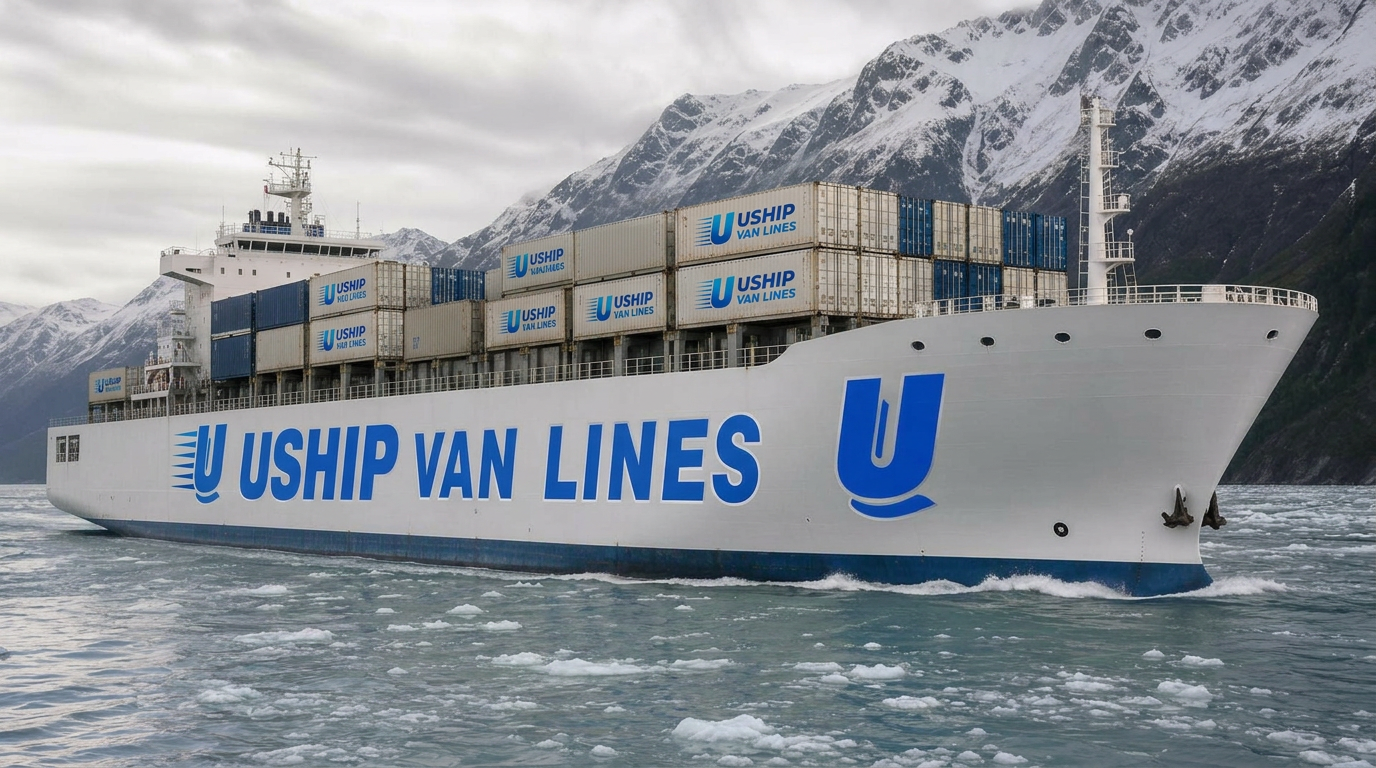
Moving from Middletown, CT to Alaska represents one of the most logistically complex residential relocations in North America. Your belongings will travel approximately 3,800 miles from central Connecticut through a multi-modal journey involving long-haul trucking to the Pacific Northwest, maritime barge transport, and final delivery across Alaska's challenging terrain.
Best Alaska & Hawaii Movers, powered by UShip Van Lines, specializes in coordinating these intricate cross-continental moves with transparent pricing and real-time tracking. Whether you're relocating to Anchorage for work, retiring to the Mat-Su Valley, or starting fresh in Fairbanks, we handle every logistics detail from your Middletown doorstep to your new Alaska home. Request a detailed quote today to start planning your move with confidence.
Route overview
Route Overview: Middletown, CT to Alaska
Your household goods depart Middletown via long-haul truck, traveling westward across the continental United States to Tacoma, Washington—the primary consolidation hub for Alaska-bound freight. This overland segment covers roughly 2,900 miles through multiple states and typically takes 5–7 days depending on weather and routing.
From Tacoma's port facilities, your shipment transfers to oceangoing barges operated by carriers like TOTE Maritime Alaska or Alaska Marine Lines. These vessels sail approximately 1,500 nautical miles through the Inside Passage and Gulf of Alaska to the Port of Anchorage, Alaska's primary cargo gateway. Barge sailings run on published weekly or bi-weekly schedules, with voyage duration of 4–7 days depending on weather conditions and intermediate stops.
Upon arrival in Anchorage, your goods clear customs and transfer to Alaska-based carriers for final delivery. If you're moving to Anchorage or nearby communities (Eagle River, Wasilla, Palmer), last-mile delivery is straightforward. Destinations like Fairbanks, Kenai Peninsula, or bush communities require additional truck or air freight coordination, potentially adding 1–5 days to your total timeline.
How the moving process works
The Moving Process: What to Expect
-
Initial Survey and Quote (Week 1): Schedule a virtual or in-home assessment of your Middletown residence. We'll inventory your belongings, discuss special items (vehicles, firearms, artwork), and provide a detailed cost breakdown covering truck transport, barge fees, insurance, and Alaska delivery. Book early—Alaska moves require 4–8 weeks lead time during peak summer season.
-
Pre-Move Preparation (Weeks 2–4): Purge items that won't make the journey (plants, perishables, hazardous materials are prohibited on barges). Gather documentation for vehicle shipping if applicable. Coordinate utility disconnections in Middletown and new connections in Alaska. Consider traveling with irreplaceable items and 2–3 weeks of essential belongings, as your shipment may arrive after you do.
-
Packing and Loading (Day 1–2): Professional crews pack and load your household in Middletown. Items receive protective wrapping, containerization, and detailed inventory documentation. Your shipment consolidates with other Alaska-bound freight for efficient transport. All goods are photographed and tagged for tracking through each leg of the journey.
-
Continental Transit to Tacoma (Days 3–9): Your shipment travels cross-country to Tacoma, WA. You'll receive GPS tracking updates as the truck crosses state lines. The carrier coordinates arrival timing with barge sailing schedules to minimize warehouse storage time and associated fees.
-
Barge Loading and Sailing (Days 10–16): At Tacoma port, your containerized goods transfer to the Alaska-bound barge. Barge schedules are weather-dependent—summer offers frequent sailings (2–3 per week), while winter may have reduced frequency. The 1,500-nautical-mile voyage through Pacific waters takes 4–7 days under normal conditions.
-
Alaska Port Arrival and Customs (Days 17–19): Your shipment arrives at the Port of Anchorage and clears U.S. domestic customs inspection (Alaska is a domestic destination but follows unique protocols). Containers off-load to bonded warehouses for final mile assignment. Any delays here typically stem from port congestion during peak summer months.
-
Last-Mile Delivery (Days 20–23): Alaska-based carriers complete final delivery to your new address. For Anchorage/Mat-Su deliveries, this happens within 1–2 days of port clearance. Fairbanks deliveries add 2–3 days due to the 360-mile drive. Remote destinations may require scheduled delivery windows. Unloading and setup complete your move.
Estimated moving costs
Cost Estimate: Middletown, CT to Alaska
A typical 2–3 bedroom household moving from Middletown to Alaska costs $8,500–$14,500 for full-service door-to-door transport. This range reflects approximately 7,000–10,000 pounds of household goods—the average weight for a mid-sized home.
Key cost drivers include:
- Volume and weight: Charged per hundredweight (CWT) or cubic foot. Larger homes (4+ bedrooms) can exceed $18,000. Downsized 1-bedroom apartments may cost $5,500–$7,500.
- Barge transport fees: Maritime freight is the largest single cost component, typically $3,500–$6,000 depending on volume and sailing season.
- Overland trucking: Middletown to Tacoma long-haul adds $2,500–$4,000 based on route and fuel costs.
- Final delivery location: Anchorage/Mat-Su delivery is standard. Fairbanks adds $800–$1,500. Kenai Peninsula, Kodiak, or bush communities require specialty transport, adding $1,200–$3,500+.
- Packing services: Full professional packing adds $1,200–$2,500. Self-packing reduces costs but increases your liability for damage.
- Seasonal timing: Summer peak (May–August) commands premium pricing—15–25% higher than winter shoulder season (September–April).
- Vehicle shipping: Adding a vehicle costs $1,800–$3,200 depending on size. Vehicles ship in RORO (roll-on/roll-off) format or enclosed containers.
- Insurance coverage: Basic carrier liability covers $0.60/pound. Full-value replacement insurance adds 1–3% of shipment value.
Storage fees apply if your Alaska residence isn't ready—expect $150–$350 per week for warehouse holding in Anchorage. Request a detailed, itemized quote to understand your specific costs. Prices quoted here are estimates only; actual costs depend on your inventory, services selected, and current market rates.
Estimated transit times
Transit Time: Door-to-Door Timeline
Plan for 20–35 days total transit time from pickup in Middletown to delivery at your Alaska destination. This timeline breaks down by leg:
Overland to Tacoma: 5–7 days for the 2,900-mile truck journey across the continental U.S. Winter weather (snow in mountain passes) or traffic delays can add 1–3 days.
Port staging: 1–5 days waiting for the next scheduled barge sailing. Summer offers frequent departures; winter sailings may require longer waits. Booking during peak season often means tighter connections.
Barge voyage: 4–7 days for the ocean crossing from Tacoma to Anchorage. Rough seas or storm delays occasionally extend this to 8–10 days, though carriers build contingency into schedules.
Port clearance and last-mile: 3–5 days from barge arrival to final delivery in Anchorage/Mat-Su. Fairbanks adds 2–3 days. Remote or seasonal-road communities may add a week or more depending on access conditions.
Expedited options: While you cannot speed up barge sailing itself, booking a dedicated truck (rather than consolidated freight) to Tacoma can shave 2–3 days off front-end transit. Expect to pay 20–30% more for expedited overland service.
Buffer for safety: Always add 7–10 days of buffer to your estimated delivery date. Weather, port congestion, and customs can cause unpredictable delays. Ship essential items separately and plan temporary lodging/storage accordingly.
Regional logistics
Alaska-Specific Moving Logistics
Port and Barge Operations: Your shipment routes through the Port of Anchorage, Alaska's primary cargo gateway handling 95% of consumer goods entering the state. Unlike Lower 48 moves, there are no roads connecting Alaska to Middletown—maritime transport is mandatory. Barges accept household goods in containers or as palletized/blanketed freight. TOTE Maritime Alaska and Alaska Marine Lines operate the primary services, with published sailing schedules typically posted 60 days in advance.
Prohibited and Restricted Items: Alaska barge operators prohibit hazardous materials (paints, solvents, propane tanks, aerosols), perishables, and plants. Firearms are legal to ship but require special ATF documentation and locked cases. Alcohol shipments face Alaska state regulations (limited quantities, proper labeling). Discuss any unusual items during your quote—rules are stricter than standard Lower 48 moves.
Vehicle Shipping: Most Alaska movers ship at least one vehicle. Cars, trucks, and SUVs travel on the same barges as household goods, either driven on/off (RORO) or in enclosed containers. Cost runs $1,800–$3,200 from Tacoma. Your vehicle must be clean (Alaska agriculture inspection), registered, and contain less than 1/4 tank of fuel. Middletown-to-Tacoma vehicle transport adds another $1,200–$1,800 if you're not driving yourself. Many families drive from CT to Tacoma, exploring the country en route, then fly from Seattle to Alaska while their vehicle sails.
Customs and Documentation: Although Alaska is a U.S. state, shipments pass through customs-like inspection at Anchorage port. You'll need detailed inventory lists, ownership documentation for expensive items, and firearms paperwork if applicable. Your moving company handles most documentation, but expect to provide identification, destination address confirmation, and contact information for delivery coordination.
Last-Mile Delivery Challenges: Anchorage and Mat-Su Valley (Wasilla, Palmer) deliveries are straightforward on paved roads year-round. Fairbanks requires a 360-mile drive up the Parks Highway—reliable but weather-dependent in winter. Kenai Peninsula (Soldotna, Homer) adds ferry or extended truck routes. Remote communities (Bethel, Kotzebue, Nome) may require air freight for the final leg, dramatically increasing costs ($2–$8 per pound). Bush Alaska deliveries often wait for seasonal barge service or winter ice roads. Confirm your final destination's access during your quote consultation.
Storage Options: If your Alaska home isn't ready, warehousing is available in Anchorage. Costs run $150–$350 per week depending on volume. Some movers offer 30–60 days of free storage as part of full-service packages. Storage in Tacoma (before barge sailing) is cheaper but adds complexity to scheduling. Many Alaska newcomers arrange short-term furnished rentals or extended-stay hotels rather than paying for storage.
Seasonal considerations
Seasonal Considerations for Your Alaska Move
Summer Peak Season (May–August): The most popular—and expensive—time to move to Alaska. Long daylight hours, minimal snow, and ice-free roads make delivery logistics straightforward. Barge sailings run 2–3 times weekly with the most reliable schedules. However, expect 20–30% premium pricing, longer booking lead times (8–12 weeks recommended), and potential port congestion in Anchorage. If you have school-age children or need to start a job, summer's predictability often justifies the higher cost.
Fall Shoulder Season (September–October): An excellent value window. Pricing drops 15–20% as demand wanes, yet weather remains generally cooperative through early October. Barge frequency reduces slightly but schedules stay reliable. Roads to interior Alaska (Fairbanks, Denali area) are still accessible before heavy snow. Book 6–8 weeks ahead. This is the sweet spot for budget-conscious movers with flexible timing.
Winter Season (November–March): Lowest pricing—sometimes 25–35% below summer peaks—but with real logistical challenges. Barge sailings reduce to weekly or bi-weekly. Severe storms can delay sailings by 3–7 days. Overland trucking faces snow/ice hazards through mountain passes (Cascade Range, Rockies). Interior Alaska deliveries may be delayed by road closures or require winter-equipped carriers. If you're moving to remote areas served only by seasonal roads, winter delivery may be impossible until spring thaw. Best for Anchorage/Mat-Su moves with flexible timelines and tolerance for delays.
Spring Thaw (April–Early May): Unpredictable but potentially cost-effective. Pricing starts climbing as season ramps up, but hasn't hit peak. The challenge: "breakup" season brings muddy, damaged roads in rural Alaska. Frost heaves and flooding can make some areas temporarily inaccessible. Barge schedules increase through April. If you're moving to Anchorage or coastal areas, this works well. Interior or bush destinations may face access issues.
Why choose Best Alaska & Hawaii Movers
Why Choose Best Alaska & Hawaii Movers
-
Alaska Specialists, Not Generalists: Unlike van lines that treat Alaska as an afterthought, we've built our business around the unique logistics of non-contiguous moves. We maintain established relationships with barge operators, Alaska-based carriers, and port logistics coordinators—ensuring your shipment moves smoothly through every handoff rather than getting lost in the system.
-
Transparent, Itemized Pricing: Alaska moves involve multiple carriers and transfer points, creating opportunities for hidden fees. We provide detailed quotes breaking down trucking, barge, last-mile, and accessorial charges. You'll know exactly what you're paying for, with no surprise fees at delivery.
-
End-to-End Coordination: Managing a Middletown-to-Alaska move requires coordinating truck dispatch, barge booking, port clearance, and final delivery—often across 4–6 different companies. We serve as your single point of contact, tracking your shipment through every leg and proactively managing delays or issues so you don't have to chase down multiple carriers.
-
Flexible Scheduling Around Barge Sailings: We monitor barge schedules continuously and book your shipment on sailings that match your timeline and budget. Need to hit a specific delivery window for a job start date? We'll work backward from your deadline to schedule pickup, transit, and sailing accordingly.
-
Powered by UShip Van Lines' Network: Our partnership with UShip Van Lines gives you access to vetted, professional carriers nationwide for the Middletown pickup and transcontinental haul, while our Alaska-focused expertise handles the maritime and last-mile complexity. You get the best of both worlds: nationwide reach with Alaska specialization.