
Moving from Middletown, OH to Alaska
Relocating from Middletown, Ohio to Alaska represents one of the most dramatic geographical shifts you can make—trading the familiar Midwest for glaciers, midnight sun, and frontier living. This 3,500+ mile journey requires specialized logistics: your belongings travel by truck to the Pacific Northwest, load onto a commercial barge for the voyage north, then complete last-mile delivery to your final Alaska destination.
Whether you're moving to Anchorage for a job opportunity, settling in the Mat-Su Valley for homesteading, or transferring to Fairbanks for military duty, understanding the Alaska shipping process helps you plan effectively. Best Alaska & Hawaii Movers, powered by UShip Van Lines, coordinates every leg of this complex move. Request your free quote today to see how we simplify long-distance Alaska relocations.
Route overview
Route Overview: Middletown to Alaska
Your household goods depart Middletown and travel approximately 2,300 miles west to Tacoma, Washington—the primary barge port serving Alaska. This overland leg typically takes 5–7 days, following I-70 west through Indiana and Illinois, then I-80 through Nebraska and Wyoming, before connecting to I-90 through Montana, Idaho, and into Washington state.
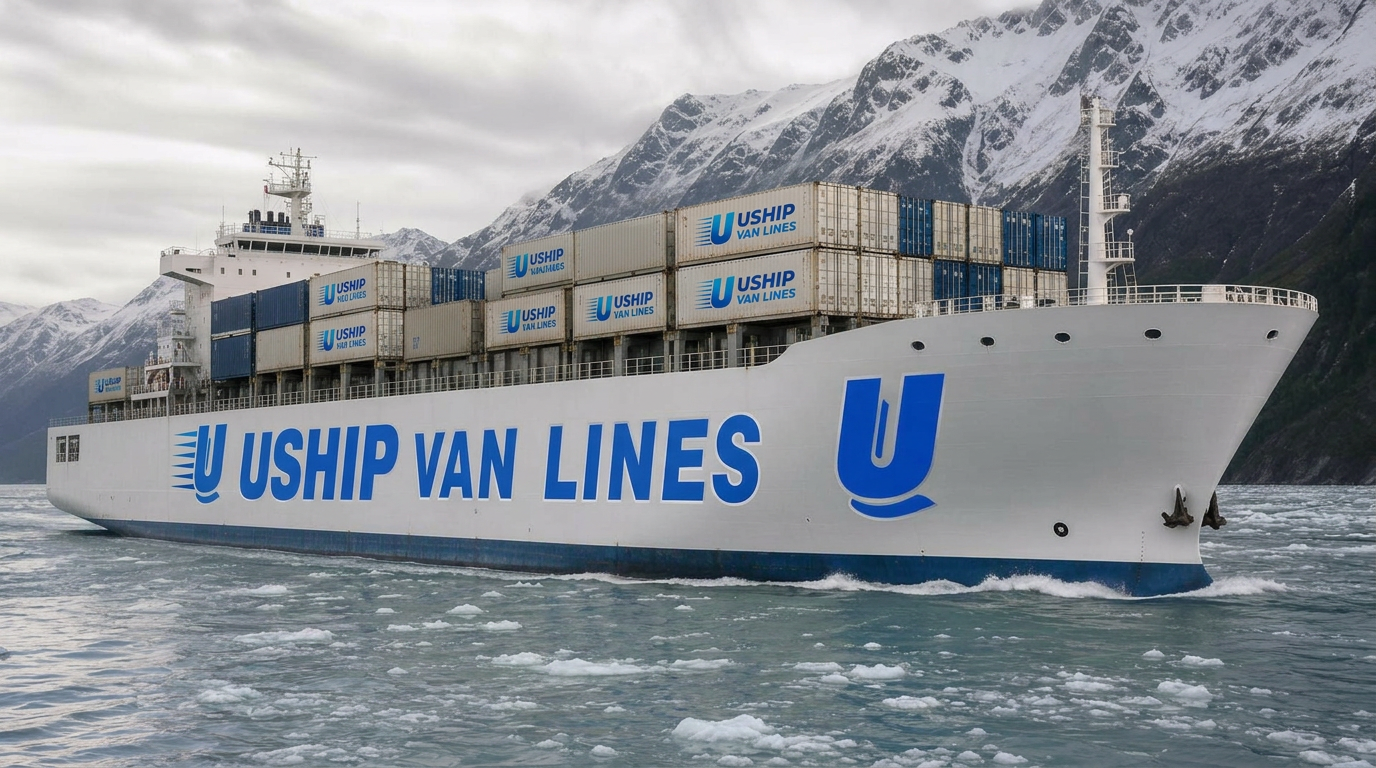
From Tacoma's Port, your shipment loads onto a commercial barge operated by carriers like TOTE Maritime or Alaska Marine Lines, sailing 1,400+ nautical miles through the Inside Passage to the Port of Anchorage. This ocean voyage takes 5–8 days depending on weather, routing, and port schedules. Once cleared through customs (even from a U.S. origin, Alaska requires agricultural inspections), your goods transfer to local Alaska carriers for final delivery.
Last-mile delivery timelines vary dramatically by destination: Anchorage and Mat-Su Valley locations may receive goods within 1–3 days post-barge arrival, Fairbanks adds 2–4 days for the 360-mile interior haul, and Kenai Peninsula or bush communities may require additional coordination, seasonal road access, or even air cargo for truly remote areas.
How the moving process works
The Moving Process: Step-by-Step from Middletown to Alaska
-
Pre-Move Survey & Quote (4–8 weeks before) – Schedule an in-home or virtual walkthrough so we can assess your cubic footage, identify items requiring special handling, and provide a detailed cost estimate. Book early—Alaska moves require port scheduling and limited barge space.
-
Packing & Loading in Middletown (Move Day) – Our crew inventories and loads your belongings into a 53-foot trailer, securing items for the long cross-country haul. You'll receive a detailed inventory list and bill of lading. Professional packing services are strongly recommended for Alaska moves due to the multi-leg handling.
-
Overland Transit to Tacoma (5–7 Days) – Your shipment travels I-70/I-80/I-90 to the Tacoma consolidation terminal. Goods may transfer between trailers for optimal barge loading—this is normal and tracked throughout.
-
Barge Loading & Maritime Shipping (5–8 Days at Sea) – At the Port of Tacoma, your goods transfer into marine containers or roll-on/roll-off (RoRo) configuration, then sail north via the Inside Passage. Barge schedules run weekly in summer, less frequently October–April.
-
Port of Anchorage Arrival & Clearance (1–3 Days) – Upon arrival, shipments clear USDA agricultural inspection (no soil-contaminated items, restricted plants). Delays here are rare but possible if documentation issues arise.
-
Last-Mile Delivery to Final Destination (1–5 Days) – Alaska-based carriers complete final delivery. Anchorage/Wasilla deliveries happen quickly; Fairbanks, Kenai, or Soldotna add transit time. Remote locations may require freight forwarding or seasonal planning.
-
Unloading & Walkthrough – Crew unloads and places items in your new home. Inspect for damage immediately and note any issues on delivery paperwork—maritime moves have specific claims windows.
Estimated moving costs
Cost Estimate: What to Expect for Your Middletown to Alaska Move
A typical 2–3 bedroom household (7,000–10,000 lbs, roughly 1,000–1,400 cubic feet) from Middletown to Anchorage generally ranges $8,500–$14,000 for full-service moving. Fairbanks or other interior/remote destinations add $1,200–$2,800 to base costs.
Key cost drivers include:
- Volume and weight – Alaska pricing often uses cubic feet or liner feet in containers; the more space you consume, the higher the rate
- Packing services – Professional packing adds $800–$2,200 but protects your belongings through multiple handling points and sea transit
- Barge season – Peak summer moves (May–August) cost 10–20% more due to high demand and limited container space
- Last-mile complexity – Anchorage deliveries are most economical; Fairbanks adds interior freight; Kenai, Homer, or bush locations increase costs significantly
- Vehicle shipping – Adding a car via RoRo barge typically costs $1,800–$3,200 Tacoma to Anchorage
- Storage – If your destination housing isn't ready, Anchorage-area storage runs $150–$300/month for a typical load
- Insurance valuation – Basic coverage (60¢/lb) is included; full-value protection costs 1–2% of declared value but recommended for Alaska's multi-modal transport
These are estimates only and not guaranteed prices. Your actual cost depends on inventory details, service level, timing, and final destination. Request a binding quote for accurate pricing tailored to your specific move.
Estimated transit times
Transit Time: Door-to-Door Timeline
Plan for 14–21 days total from pickup in Middletown to delivery in Anchorage under normal conditions. Interior and remote Alaska destinations extend this timeline.
Typical breakdown:
- Middletown to Tacoma overland: 5–7 days (2,300 road miles)
- Port staging and barge loading: 1–4 days (depends on barge schedule alignment)
- Tacoma to Anchorage by sea: 5–8 days sailing time
- Port clearance in Anchorage: 1–2 days (USDA inspection, container unloading)
- Anchorage last-mile delivery: 1–2 days
- Fairbanks delivery: Add 2–4 days beyond Anchorage arrival
- Kenai Peninsula, Soldotna, Homer: Add 2–5 days depending on ferry/road schedules
- Bush communities (Kodiak, Bethel, Kotzebue, etc.): Add 5–14+ days for air cargo or seasonal barge connections
Seasonal variables matter: Winter moves (November–March) may see delays from Midwest snowstorms, Cascade mountain pass closures, or reduced barge frequencies. Summer moves face port congestion but more frequent sailings. Always build a 3–5 day buffer for unexpected weather or logistical holds, especially if coordinating with housing closings or job start dates.
Regional logistics
Alaska-Specific Logistics: What Makes This Move Unique
Port and Barge Operations Tacoma serves as the primary Lower 48 gateway for Alaska freight. Your goods consolidate with other shipments at the port terminal, then load into 20-foot or 40-foot marine containers or via RoRo (roll-on/roll-off) for vehicles and palletized freight. Barge carriers like TOTE Maritime and Alaska Marine Lines operate on published schedules, but weather and port congestion can shift sailing dates by 1–3 days.
Customs and Agricultural Inspections Even though Alaska is a U.S. state, all arriving goods pass through USDA inspection to protect against invasive species. Prohibited items include: soil or plants with soil, firewood, certain seeds, and fresh produce. Ensure your inventory doesn't include these to avoid clearance delays or disposal fees. This inspection happens at the Port of Anchorage and typically clears within 24–48 hours.
Vehicle Shipping If shipping a car, truck, or SUV, it typically travels the same barge route via RoRo service. Vehicles must be clean (undercarriage wash required to remove dirt/mud), operable, and under 1/4 tank of fuel. Cost is separate from household goods—expect $1,800–$3,200 Tacoma to Anchorage. Personal items can stay inside (up to 100 lbs in many cases), but document everything for insurance.
Last-Mile Delivery Challenges Anchorage, Eagle River, and Mat-Su Valley (Wasilla, Palmer) have straightforward truck access. Fairbanks requires a 360-mile haul north on the Parks Highway—reliable but adding 2–4 days. Kenai Peninsula destinations (Soldotna, Kenai, Homer) may involve ferry coordination or seasonal road conditions. Bush Alaska (off the road system) requires air cargo or seasonal barge service—adding weeks and significant cost.
Storage Options If your Alaska housing isn't ready upon barge arrival, short-term storage in Anchorage is available. Costs run $150–$300/month for typical household loads. Coordinate storage in advance to avoid port demurrage fees, which accrue if containers sit too long post-arrival.
Documentation Keep digital and physical copies of your bill of lading, inventory list, and insurance paperwork. Alaska moves involve multiple carriers (overland, maritime, last-mile), so clear documentation helps resolve any discrepancies quickly.
Seasonal considerations
Seasonal Considerations: Timing Your Middletown to Alaska Move
Summer (May–August): Peak Season This is the busiest—and most expensive—time for Alaska moves. Barge schedules run weekly, weather is most predictable, and Alaska roads are fully accessible. Expect premium pricing (10–20% higher), limited availability, and longer booking lead times (6–8 weeks recommended). Upside: fastest transits and easiest last-mile delivery, especially to remote areas.
Fall (September–October): Shoulder Season Barge frequencies begin tapering, but weather remains generally cooperative. Pricing moderates slightly. Early snowfall in Alaska's interior (Fairbanks, Denali corridor) can complicate late October deliveries. Good balance of cost and reliability if your timeline is flexible.
Winter (November–March): Off-Peak Barge sailings reduce to every 10–14 days, and maritime weather can cause delays. However, pricing drops 15–25% compared to summer, and availability opens up. Interior Alaska roads remain passable (they're built for winter), but severe cold snaps (-30°F to -50°F in Fairbanks) can complicate unloading. Many Alaskans move during winter to save money—just plan extra buffer time.
Spring (April–May): Transition Season Barge schedules ramp back up, prices begin climbing, and Alaska experiences "breakup"—when ice melts and dirt roads turn muddy. If moving to rural areas, confirm road conditions. April is often the sweet spot: improving barge availability, moderate pricing, and Anchorage area fully accessible.
Agricultural inspection is year-round: USDA checks all shipments for soil, invasive species, and restricted plants regardless of season. Avoid packing potted plants with soil, firewood, or outdoor equipment with caked dirt to prevent clearance delays.
Why choose Best Alaska & Hawaii Movers
Why Choose Best Alaska & Hawaii Movers for Your Middletown to Alaska Move
-
Alaska Specialists, Not Generalists – We focus exclusively on Alaska and Hawaii relocations, so we understand barge schedules, port protocols, USDA inspections, and last-mile challenges that general long-distance movers don't encounter.
-
Powered by UShip Van Lines – Our partnership with UShip Van Lines gives you access to a vetted carrier network, transparent pricing, and nationwide reach, while we provide Alaska-specific expertise and coordination.
-
End-to-End Coordination – You get one point of contact managing the overland haul, barge booking, port clearance, and Alaska delivery—no juggling multiple companies or tracking down shipments across carriers.
-
Transparent Pricing & Realistic Timelines – We provide detailed quotes showing each leg's cost and honest transit estimates. No surprises, no hidden fees, no overpromising delivery dates that can't be met.
-
Flexible Service Levels – Whether you want full-service packing and white-glove delivery or a cost-saving partial pack and standard unload, we tailor service to your budget and needs.
-
Claims Support Across Modes – If damage occurs, we help you navigate claims whether it happened on the highway, at sea, or during last-mile delivery—advocating on your behalf through the process.