
Moving from Miami, FL to Alaska
Moving from Miami, FL to Alaska represents one of the most dramatic relocations in the United States—trading tropical beaches and palm trees for glaciers, wilderness, and the midnight sun. This 4,400+ mile journey requires specialized expertise in long-haul trucking, ocean barge shipping through Tacoma or Seattle, and Alaska's unique last-mile delivery challenges.
Best Alaska & Hawaii Movers, powered by UShip Van Lines, coordinates every phase of your Miami-to-Alaska relocation with transparent pricing and real-time tracking. Whether you're moving to Anchorage, Fairbanks, the Mat-Su Valley, or remote communities, our team handles the complex logistics so you can focus on your new Arctic adventure. Request your personalized quote today to lock in capacity and pricing.
Route overview
How Miami to Alaska Moves Work
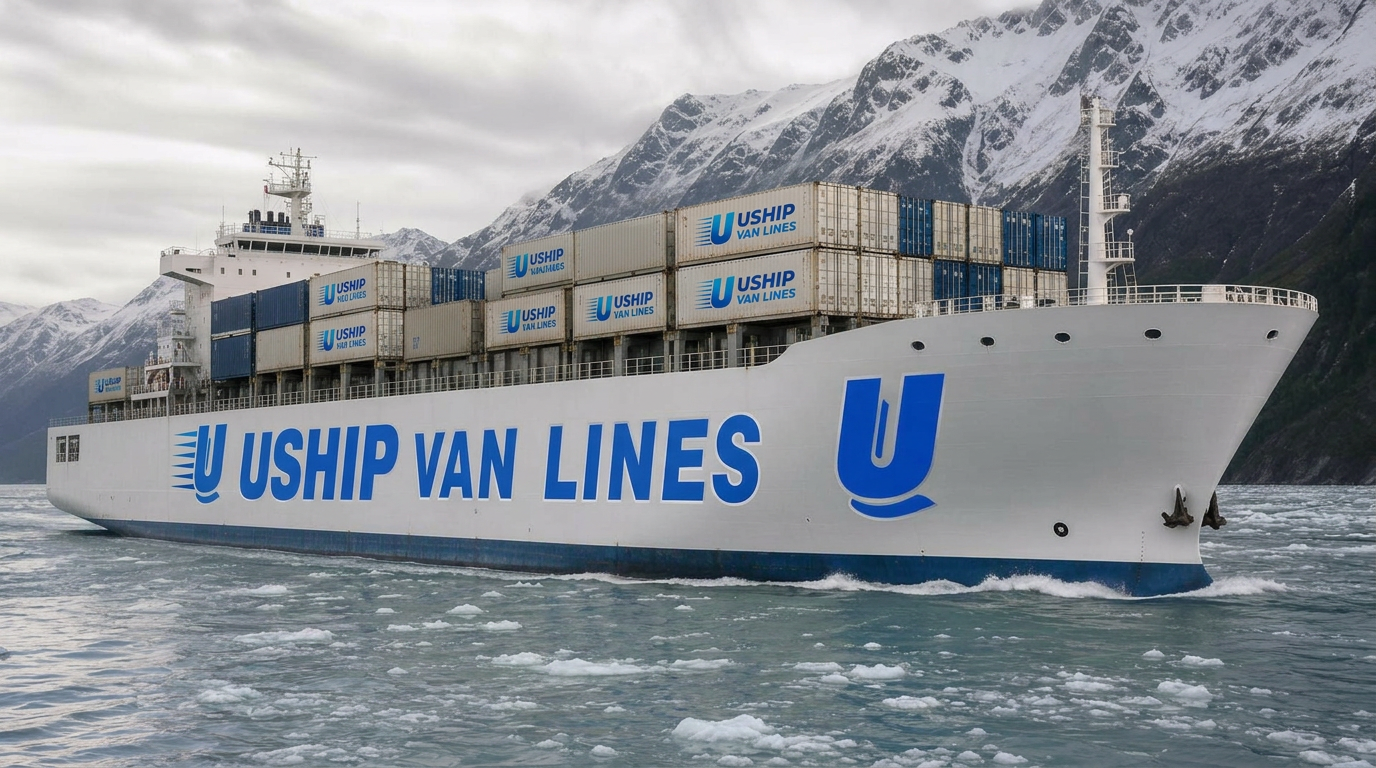
Your belongings travel from Miami via temperature-controlled truck to our consolidation hub, then cross-country to the Pacific Northwest (typically Tacoma, WA). From there, your household goods load onto Alaska Marine Highway barges or commercial freight vessels for the 1,500-mile voyage through the Inside Passage to Alaska ports—primarily Anchorage, but also Whittier and other terminals.
This route demands specialized knowledge of USDA restrictions (Hawaii's stringent agricultural rules don't apply to Alaska, but certain items still require documentation), coordination with seasonal barge schedules that fluctuate dramatically between summer and winter, and partnerships with Alaska-based carriers for final delivery. Unlike Hawaii moves, Alaska shipments face ice conditions, limited sailing windows in shoulder seasons, and road closures that can add days to delivery.
Miami's humid subtropical climate means proper climate-controlled storage becomes critical during the 7–14 day cross-country leg, protecting electronics, wooden furniture, and documents from moisture damage before the marine segment even begins.
How the moving process works
Step-by-Step: Miami to Alaska Moving Process
-
Initial survey and inventory (30–45 days before) — We conduct a virtual or in-home assessment of your Miami residence, noting high-value items, outdoor furniture exposed to humidity, and anything requiring special Alaska documentation (firearms, certain food items). You'll receive a detailed quote breaking down trucking, barge, and last-mile costs.
-
Pre-move preparation (2–3 weeks before) — We provide Alaska-specific packing guidance: waterproof wrapping for the marine leg, climate considerations for items like wine or artwork, and weight reduction strategies (Alaska costs rise steeply per pound). You'll decide whether to ship vehicles separately or include them in your household goods shipment.
-
Miami pickup and continental transport (Days 1–7) — Our crew loads your belongings in Miami, typically into a 53-foot trailer. The truck crosses the southern states via I-10, then north through California or up through the Midwest and Montana, reaching the Pacific Northwest in 5–7 days depending on weather and routing.
-
Tacoma consolidation and barge loading (Days 8–10) — Your shipment transfers to our Tacoma partner facility, where it's consolidated with other Alaska-bound goods, wrapped for marine transport, and loaded into weather-resistant containers. Documentation clears customs and USDA inspection points here.
-
Ocean barge transit (Days 11–18) — Barges sail roughly weekly in summer, less frequently October–April. The voyage from Tacoma to Anchorage takes 4–7 days depending on weather, stops at intermediate ports (Ketchikan, Juneau, Cordova), and sea conditions in the Gulf of Alaska.
-
Alaska port offload and customs clearance (Days 19–20) — Your container is offloaded in Anchorage (or Whittier if winter ice closes Anchorage), clears any final inspections, and transfers to our Alaska delivery partners who specialize in the state's road conditions.
-
Final delivery and setup (Day 21+) — Our Alaska team delivers to your new address, whether that's downtown Anchorage, a homestead in Wasilla, or Fairbanks. For remote bush communities without road access, we coordinate float plane or small barge transfers at additional cost, quoted separately.
Estimated moving costs
What Does a Miami to Alaska Move Cost?
A typical 2–3 bedroom household move from Miami to Anchorage ranges $7,000–$14,000, with most families landing around $9,500–$11,000. Studio or 1-bedroom moves start around $4,500–$6,500, while 4+ bedroom homes can exceed $16,000–$22,000.
Key cost drivers:
- Distance and weight — Miami to Tacoma alone is 3,300+ miles; barge charges are per-pound or per-cubic-foot, making this one of the costliest domestic routes.
- Barge schedule and seasonality — Summer peak season (May–August) carries 15–25% premiums due to Alaska's construction season and tourism-driven capacity crunches. Winter moves save money but risk weather delays.
- Last-mile complexity — Anchorage delivery is straightforward; Fairbanks adds 6–8 hours of driving and $800–$1,500. Bush locations (Bethel, Nome, Kotzebue) require air freight at $2–$4 per pound.
- Vehicle shipping — Cars ship separately via roll-on/roll-off barge from Tacoma ($1,200–$2,200 per vehicle). Including them in household goods containers costs more but protects classic or luxury vehicles.
- Packing services — Full-service packing in Miami's humidity adds $1,200–$2,800 but ensures marine-grade protection.
- Storage — If barge schedules don't align with your Miami lease end, Tacoma storage runs $150–$350/month.
We provide written, itemized quotes with no hidden fees. Costs are estimates based on current fuel surcharges, barge line rates, and Alaska carrier availability—final pricing locks when you book.
Estimated transit times
How Long Does Miami to Alaska Take?
Total door-to-door: 14–21 days for Anchorage delivery, with possible extensions for weather, barge delays, or remote destinations.
Breakdown by segment:
- Miami to Tacoma (truck): 5–7 days — Cross-country routes via I-10 and I-5 or northern routes through Montana; winter snow in the Rockies or Cascades can add 1–2 days.
- Tacoma staging and container loading: 1–3 days — Consolidation, waterproofing, and waiting for the next scheduled sailing.
- Barge transit Tacoma to Anchorage: 4–7 days — Direct sailings take 4–5 days; vessels stopping in Southeast Alaska (Ketchikan, Juneau, Sitka) take 6–7 days. Winter storms in the Gulf of Alaska occasionally delay sailings by 24–48 hours.
- Port offload and Alaska delivery: 2–4 days — Anchorage port operations, final customs clearance, and delivery to your address. Fairbanks adds 1–2 days; Kenai Peninsula or Mat-Su Valley typically same-day from port.
Expedited options: Summer sailings are more frequent, allowing faster connections. Winter moves (November–March) may wait 7–10 days for the next barge, pushing total time to 21–28 days. We provide real-time tracking from Miami pickup through final delivery.
Regional logistics
Alaska-Specific Moving Logistics from Miami
Port and routing: Your shipment consolidates in Tacoma, WA, the primary gateway for Alaska freight. Barges sail to the Port of Anchorage (seasonal, ice-dependent), Whittier (year-round deep-water port 60 miles from Anchorage), or Southeast Alaska ports. We select routing based on your final destination and sailing availability.
Documentation and restrictions: Alaska doesn't enforce Hawaii's strict agricultural inspections, but USDA still restricts certain plants, soil, and untreated wood. Firearms are legal to transport (unlike Hawaii) but require declaration and secure packing. Hazardous materials (propane, ammunition, gasoline) cannot ship via barge—plan to purchase in Alaska or transport personally.
Vehicle shipping: Most customers ship vehicles separately via roll-on/roll-off barge from Tacoma ($1,200–$2,200 per car, 7–14 days). Alternatively, vehicles can go in enclosed containers with household goods (more expensive, better protection). Miami-registered vehicles must re-register in Alaska within 30 days; plan for inspections and title transfers.
Last-mile delivery challenges: Anchorage, Fairbanks, and Mat-Su Valley are fully road-accessible year-round. Kenai Peninsula and Southeast Alaska (Juneau, Sitka) require barges or ferries—coordinate with your moving consultant. Bush Alaska (Nome, Bethel, Kotzebue, Barrow) has no road connections; freight goes by small plane at $2–$4/lb or seasonal barge to village.
Climate considerations: Your Miami belongings—outdoor furniture, electronics, humidity-sensitive items—require marine-grade wrapping and climate-controlled storage pre-barge. Alaska's extreme cold and dry air can crack wood, warp instruments, and damage electronics if improperly packed.
Insurance: Alaska moves carry higher risk due to marine transport and remote delivery. We recommend full replacement-value coverage ($15–$25 per $1,000 of declared value) rather than basic 60¢/lb liability.
Seasonal considerations
Best Time to Move from Miami to Alaska
Summer (May–August): Peak season for Alaska moves. Barge sailings run weekly, roads are dry and accessible, and Fairbanks/Interior Alaska destinations are easiest to reach. Expect 15–25% higher costs and book 6–8 weeks ahead to secure capacity. Miami's hurricane season (June–November) can disrupt pickup schedules—monitor forecasts closely.
Fall (September–October): Shoulder season offers moderate pricing and reliable barge service, though frequency drops to every 10–14 days by late October. Early snow can close alpine passes (Thompson, Mentasta) on the Alaska Highway, adding delivery time. Miami weather remains cooperative for packing and loading.
Winter (November–March): Lowest rates, but significant challenges. Barge sailings reduce to biweekly or monthly; ice can close the Port of Anchorage, rerouting shipments to Whittier (adding cost and time). The Alaska Highway requires winter tires and experiences frequent closures. Miami's mild winter makes pickup easy, but cross-country trucking faces Midwest and Rockies snowstorms. Budget 21–30 days total transit.
Spring (April–early May): Transitional period. Barge schedules increase as ice clears, but "breakup" season makes Alaska roads treacherous with mud and frost heaves. Excellent pricing and moderate timelines if you can accept delivery flexibility. Miami's dry season provides ideal packing conditions.
Hurricane and wildfire considerations: Miami hurricane season overlaps with Alaska wildfire season (June–August). Both can cause delays—maintain flexibility in your moving dates and consider comprehensive insurance coverage.
Why choose Best Alaska & Hawaii Movers
Why Choose Best Alaska & Hawaii Movers for Your Miami to Alaska Move
-
Alaska specialists, not generalists — We focus exclusively on Alaska and Hawaii routes, maintaining partnerships with Alaska-based carriers, barge lines, and bush freight operators. We understand Anchorage port operations, Alaska Highway conditions, and remote community logistics that national van lines simply don't encounter.
-
Transparent, itemized pricing — Your quote breaks down Miami pickup, cross-country transport, barge fees, Alaska delivery, and any storage or special services. No surprise fuel surcharges or "brokerage fees" at delivery—what we quote is what you pay, with adjustments only for weight overages or scope changes you approve.
-
End-to-end tracking and communication — Powered by UShip Van Lines' technology platform, you receive real-time updates when your truck departs Miami, arrives in Tacoma, loads onto the barge, clears Anchorage port, and is out for delivery. Our Miami and Alaska coordinators communicate proactively about weather delays or schedule changes.
-
Consolidated expertise, personalized service — As part of the UShip Van Lines network, we combine national logistics infrastructure with boutique customer service. Your dedicated moving coordinator manages your file from quote to delivery, speaking your language and answering Alaska-specific questions (housing markets, winterization, vehicle registration).
-
Flexible solutions for complex moves — Whether you need Tacoma storage while house-hunting in Anchorage, partial-load pricing for a 1-bedroom condo, vehicle shipping coordination, or bush Alaska air freight, we customize solutions rather than forcing you into rigid packages.