
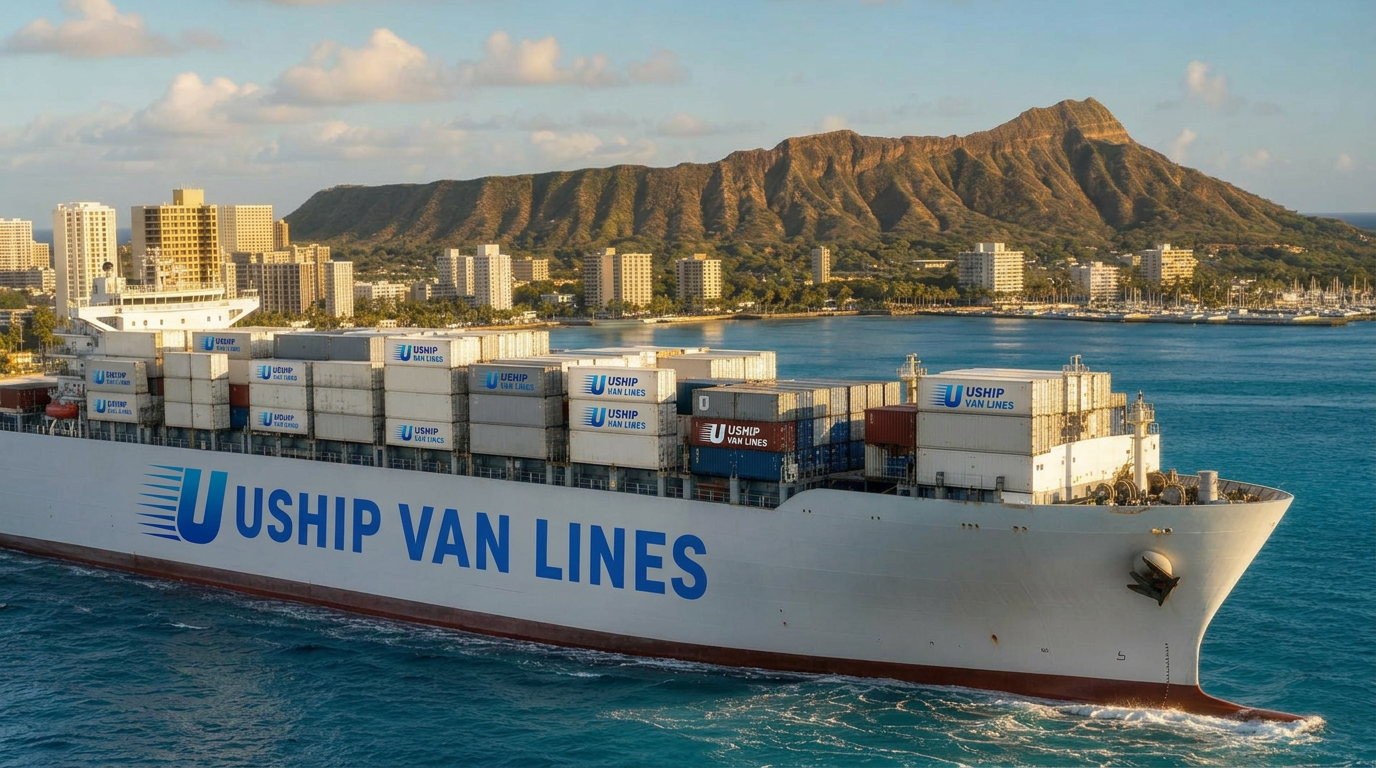
Moving from Miami, FL to Hawaii
Moving from Miami to Hawaii replaces mainland highways with ocean container shipping—a coast-to-coast relocation that first crosses the continental U.S., then traverses 2,500 miles of Pacific Ocean. Your household goods travel by truck from South Florida to West Coast ports (Long Beach or Oakland), load onto Matson or Pasha container vessels, and arrive in Honolulu before final delivery to your island destination.
Best Alaska & Hawaii Movers, powered by UShip Van Lines, coordinates every leg of this complex journey—from Miami pickup through West Coast consolidation, ocean transit, Hawaiian port clearance, and last-mile delivery to Oahu, Maui, Kauai, or the Big Island. Ready to start your island move? Request a detailed quote today and get a transparent breakdown of costs, timelines, and logistics tailored to your Miami–Hawaii route.
Route overview
Miami to Hawaii: Cross-Continental and Trans-Pacific Logistics
The Miami–Hawaii corridor combines two distinct shipping phases: a 2,700-mile overland haul across the southern United States (typically I-10 through Texas, Arizona, and Southern California), followed by 7–14 days of ocean container transit from Long Beach or Oakland to Honolulu. Unlike direct interstate moves, your belongings spend time in West Coast consolidation warehouses where movers transfer household goods from long-haul trucks into 20-foot or 40-foot steel containers built for Pacific crossings.
Once in Honolulu, items clear U.S. Customs and Agriculture inspections (Hawaii enforces strict quarantine rules on soil, plants, and certain woods) before final delivery. If your destination is a neighbor island—Maui's Kahului, Kauai's Nawiliwili, or Hilo/Kona on the Big Island—goods transfer to inter-island barges (Young Brothers) for an additional 1–3 days, then truck to your door. This layered process demands careful coordination, which is why specialized Hawaii movers outperform general long-distance carriers unfamiliar with Pacific shipping protocols.
Miami's humid subtropical climate and Hawaii's tropical environment both favor moisture-resistant packing, but the real challenge is the cross-country temperature swing: your shipment endures desert heat in Arizona before Pacific humidity. Professional movers use climate-controlled warehousing at West Coast hubs and marine-grade wrapping (shrink-wrap, moisture barriers) to protect furniture, electronics, and sensitive items during the 3–5 week door-to-door journey.
How the moving process works
How Your Miami–Hawaii Move Works: Step by Step
-
Free virtual survey and quote
Schedule a video walkthrough of your Miami home so estimators can catalog belongings, note high-value items (pianos, artwork), and provide a binding or not-to-exceed quote covering overland transport, ocean container space, port fees, and island delivery. -
Pre-move inspection and prohibited-item review
Hawaii bans certain plants, soil, untreated wood, and live animals (except with advance quarantine permits). Your move coordinator reviews the state's agriculture restrictions and advises on disposing of or donating prohibited goods before packing day. -
Professional packing and Miami pickup
Crews arrive in Miami with marine-grade materials—double-walled cartons, bubble wrap, furniture pads, and shrink-wrap. They disassemble beds and large furniture, crate fragile items, and load a 53-foot truck for the cross-country leg. -
Overland haul to Long Beach or Oakland
Your driver follows I-10 west through Jacksonville, Houston, Tucson, and Los Angeles (or I-80 north to Oakland), typically completing the 2,700–3,000-mile run in 4–6 days. Goods arrive at a West Coast consolidation warehouse near the port. -
Container loading and ocean booking
Warehouse teams transfer your items into a shared 40-foot container (partial loads) or dedicate a 20-foot container (full loads for large homes). The container is sealed, trucked to the port terminal, and loaded onto the next available Matson or Pasha sailing—typically weekly departures. -
7–14 day Pacific crossing to Honolulu
Vessels steam directly from California to Honolulu, with transit times varying by service (Matson's express CLX route in 7–8 days; slower services in 10–14 days). Your shipment clears U.S. Customs and Agriculture upon arrival at Sand Island terminal. -
Island delivery or inter-island barge
Oahu deliveries happen within 1–3 days of port clearance. For neighbor islands, containers transfer to Young Brothers barges for 1–3 additional days, then final truck delivery to Maui, Kauai, or Big Island addresses. Crews unload, reassemble furniture, and remove packing debris.
Estimated moving costs
What a Miami–Hawaii Move Costs
A typical 2-bedroom apartment (approximately 4,000–6,000 pounds) runs $6,500–$9,500 all-in; a 3-bedroom house (7,000–10,000 pounds) typically falls between $9,500–$14,000. Four-bedroom homes or full container loads can exceed $15,000–$20,000. These estimates include Miami pickup, cross-country trucking, West Coast warehousing, ocean container space, Honolulu port fees, and final island delivery.
Key cost drivers:
- Volume and weight – Hawaii shipping charges by cubic feet and pounds; decluttering before you pack saves hundreds or thousands.
- Container type – Shared (consolidated) containers cost less than dedicated 20-foot containers; full 40-foot containers suit large estates.
- Destination island – Oahu delivery is cheapest; Maui, Kauai, and Big Island add $800–$1,500 for inter-island barge and trucking.
- Packing services – Full professional packing (Miami crew packs everything) adds $1,200–$2,500; partial packing (fragiles only) or self-pack reduces labor costs.
- Vehicle shipping – Cars, motorcycles, or boats ship separately via RORO (roll-on/roll-off) auto carriers; expect $1,400–$2,200 per vehicle Miami–Honolulu.
- Storage – If your Hawaii home isn't ready, West Coast or Honolulu storage runs $150–$400/month for typical household volumes.
- Season – Summer (May–August) sees peak demand and 10–15% premiums; fall and winter offer better availability and pricing.
Never accept a quote without a detailed line-item breakdown. Reputable Hawaii movers itemize trucking, ocean freight, port fees, fuel surcharges, and delivery separately so you understand every dollar. Request your customized Miami–Hawaii estimate now—no obligation, no hidden fees.
Estimated transit times
Realistic Door-to-Door Timelines
Plan for 21–35 days from Miami pickup to final delivery on your Hawaiian island. Here's the typical breakdown:
- Miami to West Coast warehouse: 4–6 days overland (2,700+ miles via I-10).
- Warehouse consolidation and container loading: 2–7 days, depending on sailing schedules and container fill rates.
- Ocean transit (Long Beach/Oakland → Honolulu): 7–14 days; Matson CLX express routes in 7–8 days, slower sailings 10–14 days.
- Honolulu port clearance (Customs/Agriculture): 1–3 days for inspection and release.
- Oahu final delivery: 1–2 days after clearance.
- Neighbor island barge and delivery: Add 3–6 days for Maui, Kauai, or Big Island (1–3 days barge + 1–2 days trucking).
Expedited options: If you need faster service, dedicated containers on express sailings can shave 5–7 days off total transit, but expect premium pricing (15–25% more). Peak-season delays: Summer and early fall can add 3–7 days due to port congestion, container shortages, and vessel schedule changes—book early and build buffer time into your move calendar.
Regional logistics
Hawaii-Specific Logistics You Must Understand
Ports and shipping lines: Matson Navigation and Pasha Hawaii dominate mainland–Hawaii ocean freight, sailing weekly from Long Beach (San Pedro) and Oakland. Your mover books space on these carriers; you won't interact with the steamship line directly. Honolulu's Sand Island terminal handles 90% of household-goods containers.
Agriculture and Customs inspections: Even though Hawaii is a U.S. state, it enforces strict biosecurity. Inspectors open containers and check for soil, live plants, untreated wood, certain seeds, and prohibited fruits. Items flagged for violation are destroyed or require fumigation ($$). Pre-move prep: wash gardening tools, discard potted plants, avoid packing firewood or untreated rattan. Pets (dogs, cats) require separate health certificates, microchips, rabies titers, and a 5-day-or-direct-release quarantine program—start paperwork 4+ months before your move.
Vehicle shipping: Cars ship separately via Matson or Pasha RORO services. You drop off your vehicle at a Miami auto terminal (or pay for door pickup); it trucks to Long Beach/Oakland, rolls onto a car carrier, and arrives Honolulu 10–18 days later. Register your car in Hawaii within 30 days (safety inspection, emissions test not required but safety check is). Motorcycles, RVs, and boats follow similar RORO or container processes.
Neighbor island delivery: If your final address is on Maui, Kauai, or the Big Island, your container transfers from Honolulu to Young Brothers inter-island barges. Barge schedules run 2–4 times weekly per island; delays happen during rough surf (winter swells). Confirm your mover includes inter-island fees in the quote and coordinates barge bookings—missed sailings add costly storage days in Honolulu.
Delivery access: Many Hawaiian neighborhoods feature narrow streets, steep driveways, and tight condo parking. Full 53-foot trucks can't always reach your door; movers use smaller shuttles (26-foot box trucks) for final delivery, especially in Honolulu high-rises or rural Big Island subdivisions. Discuss access during your virtual survey to avoid surprise shuttle fees.
Seasonal considerations
Best (and Worst) Times to Move Miami–Hawaii
Summer (June–August): Peak season for Hawaii moves; families relocate before the school year, driving up demand for containers and trucks. Expect 10–15% higher rates, tighter booking windows (reserve 6–8 weeks ahead), and occasional delays at West Coast ports. Miami's summer humidity demands extra moisture protection during packing.
Fall (September–November): Hurricane season affects both Miami and Hawaii (June–November Pacific, June–November Atlantic). While direct hits are rare, tropical storms can delay Miami pickups or Honolulu port operations. September–October offers shoulder-season pricing (5–10% below summer) and better availability, but monitor weather forecasts closely and consider trip insurance.
Winter (December–February): Off-peak for moving but popular for arriving in Hawaii. Rates drop 10–20%, container space opens up, and West Coast ports run smoother. Miami winters are dry and mild—ideal packing conditions. However, holiday weeks (late December, early January) see skeleton crews and slower port clearances; avoid moves spanning Christmas or New Year's if possible.
Spring (March–May): Sweet spot for Miami–Hawaii moves. Weather is stable in both locations, rates remain moderate, and container availability is high. April–May bookings often secure the best balance of price, speed, and service. Military PCS season (May–June) starts tightening capacity, so finalize contracts by late March for summer arrivals.
Why choose Best Alaska & Hawaii Movers
Why Best Alaska & Hawaii Movers for Your Miami–Hawaii Relocation
- Dedicated non-contiguous expertise – We specialize exclusively in Alaska and Hawaii moves, managing West Coast port logistics, ocean carrier relationships, and island delivery networks that general long-distance movers can't match.
- Single-source accountability – One contract, one point of contact from Miami pickup through Honolulu (or neighbor island) delivery; no handoffs to third-party ocean brokers or local agents who dodge responsibility when problems arise.
- Transparent, itemized pricing – Every quote breaks down trucking, ocean freight, port fees, fuel surcharges, and delivery costs separately; you'll never wonder where your money goes or face surprise charges at destination.
- Proactive communication – Real-time shipment tracking, sailing confirmations, port-clearance updates, and delivery appointment calls keep you informed at every milestone across this 3–5 week journey.
- Marine-grade packing and claims support – Our crews use moisture barriers, reinforced cartons, and custom crating designed for Pacific crossings; in the rare event of damage, UShip Van Lines' cargo insurance and claims team responds fast with documentation and settlements.