
Moving from Lubbock, TX to Alaska
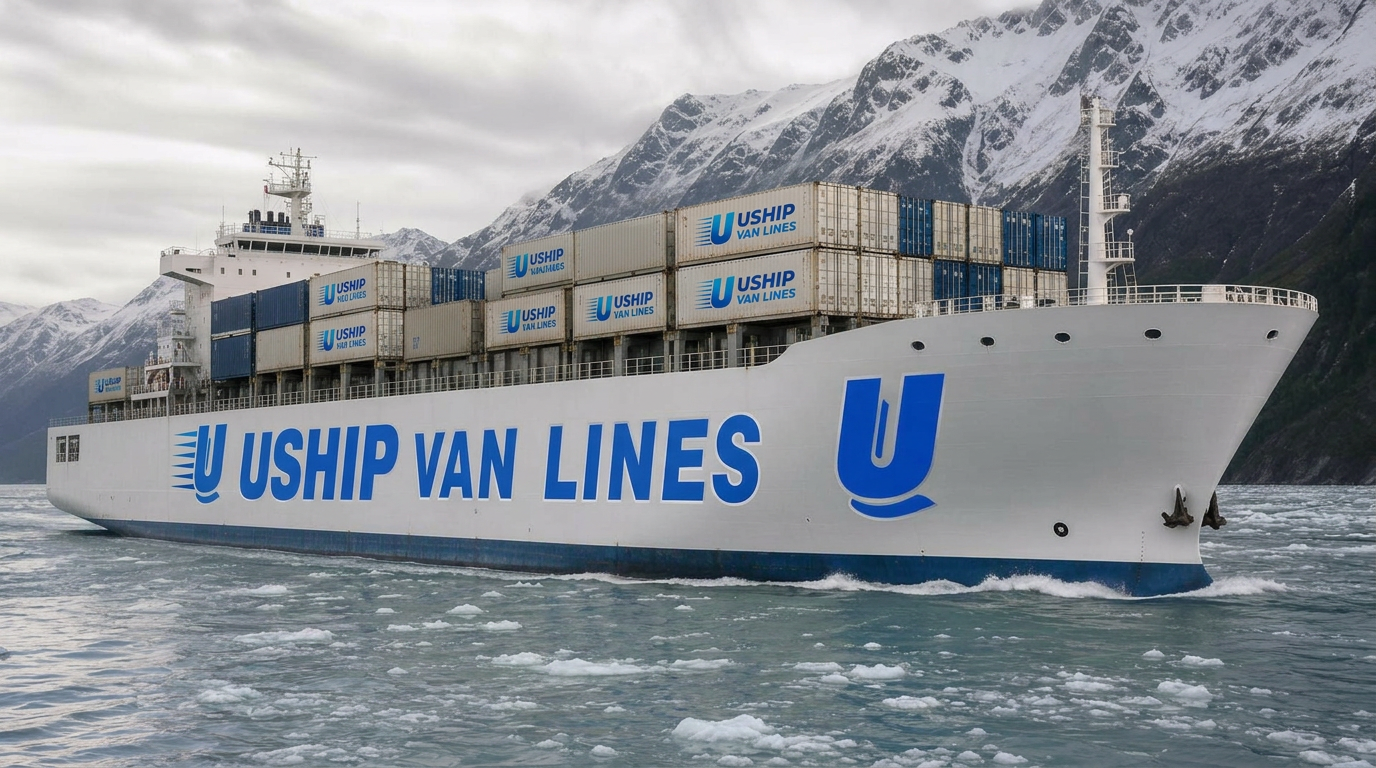
Moving from the flat plains of Lubbock, Texas to America's Last Frontier represents one of the most dramatic relocations you can make. This isn't a typical long-distance move—it requires barge transportation, multi-modal coordination, and specialized knowledge of Alaska's unique delivery challenges.
Best Alaska & Hawaii Movers, powered by UShip Van Lines, manages the entire journey from your Lubbock doorstep through the Port of Tacoma and onto Alaska's barge system, ensuring your household goods arrive safely whether you're heading to Anchorage, Fairbanks, the Mat-Su Valley, or beyond. Ready to start planning your Alaska adventure? Request a customized moving quote tailored to your specific route and timeline.
Route overview
Understanding the Lubbock to Alaska Moving Route
Your belongings will travel approximately 3,400 miles from Lubbock to Anchorage, covering three distinct transportation phases. The first leg involves ground transportation from Lubbock across Texas, Oklahoma, Kansas, Colorado, Wyoming, Idaho, and Washington to the Port of Tacoma—roughly 2,000 miles of overland trucking. From Tacoma, your household goods are loaded onto a commercial barge for the 1,400-mile ocean voyage through the Inside Passage to the Port of Anchorage, a journey that typically takes 5–7 days depending on weather and sailing schedules.
The final leg involves last-mile delivery from the Anchorage port to your new Alaska home. If you're moving to Fairbanks, the Mat-Su Valley, Kenai Peninsula, or other road-accessible communities, this means additional trucking. For off-road-system destinations, bush delivery via small plane or local barge may be required. This multi-modal complexity is why choosing an experienced Alaska moving specialist makes all the difference—coordinating between trucking companies, barge operators, and local Alaska delivery services requires specific expertise that standard moving companies simply don't have.
The logistics become even more critical when you're leaving West Texas, where most national moving companies have limited experience with Alaska-bound shipments. Best Alaska & Hawaii Movers maintains established partnerships throughout this supply chain, from Lubbock pickup through final Alaska delivery, ensuring nothing falls through the cracks during your cross-continental relocation.
How the moving process works
How Your Lubbock to Alaska Move Works: Step-by-Step
-
Initial survey and quote: We conduct a virtual or in-home assessment of your Lubbock residence to catalog your belongings, discuss timeline requirements, and identify any special-handling items. This assessment accounts for Alaska-specific considerations like whether you're shipping vehicles, need climate-controlled storage, or have restricted items that cannot be barged to Alaska.
-
Scheduling around barge sailings: Alaska barge schedules typically run weekly during summer months (May–September) and bi-weekly during winter. We coordinate your Lubbock pickup date to align with available barge sailings from Tacoma, building in the 5–7 day overland transit time from Texas to Washington plus dock receiving windows.
-
Professional packing and loading in Lubbock: Our crew arrives at your Lubbock home to pack (if you've chosen full-service packing) and load your belongings into a dedicated truck or container. Everything is secured for the long overland journey to Tacoma, with special attention to items that will later transition to ocean freight.
-
Overland transportation to Port of Tacoma: Your shipment travels via Interstate 27 to Amarillo, then I-25 north through Denver and I-90 west through the Rockies to Seattle/Tacoma. This leg typically takes 3–5 days of active driving time, though we build in buffer days for weather, inspections, and driver rest requirements.
-
Containerization and barge loading: At the Tacoma port facility, your household goods are transferred into ocean-worthy containers (or remain in the truck trailer if using a RORO—roll-on/roll-off—barge service). The container is loaded onto the next available Alaska-bound barge, and you receive sailing confirmation with the vessel name and expected arrival date.
-
Ocean transit to Port of Anchorage: The barge sails north through Puget Sound, the Inside Passage along the British Columbia and Southeast Alaska coasts, and across the Gulf of Alaska to Anchorage. Transit time is typically 5–7 days, though weather delays can add 1–3 days during winter months.
-
Alaska port processing and final delivery: Once the barge docks in Anchorage, your container is offloaded and cleared through port processing (usually 1–2 business days). We then schedule your final delivery, whether that's within Anchorage, up the Parks Highway to Fairbanks, down to the Kenai Peninsula, or to another road-accessible Alaska community. Total door-to-door timeline from Lubbock is typically 14–21 days during summer, 18–28 days during winter months.
Estimated moving costs
What to Expect: Moving Costs from Lubbock to Alaska
A typical 2–3 bedroom household move from Lubbock, TX to Anchorage, Alaska generally ranges from $8,500 to $14,500, depending on shipment volume, service level, and seasonal timing. A smaller 1-bedroom apartment or studio might cost $5,500–$7,500, while a large 4-bedroom home could reach $16,000–$22,000 or more.
Several factors drive costs for this specific route. The overland distance from Lubbock to Tacoma (approximately 2,000 miles) represents significant trucking expense—you're crossing six states and multiple mountain ranges. Barge freight charges are calculated by cubic feet or container size; a 20-foot container typically costs $2,500–$4,000 from Tacoma to Anchorage, while a 40-foot container runs $4,500–$7,000. Last-mile delivery within Alaska adds $800–$2,500 depending on your final destination (Anchorage delivery is least expensive; Fairbanks, Kenai, or Mat-Su locations cost more).
Seasonal pricing variations are significant for Alaska moves. Summer months (May–September) see premium pricing due to high demand—most people move to Alaska during the warmer months when road conditions are better and settling in is easier. Winter moves (October–April) may offer 15–25% discounts on labor and barge rates, but you'll face potential weather delays and more challenging delivery conditions. If your timeline is flexible, moving during shoulder seasons (late April/early May or September/early October) can offer moderate pricing with reasonable weather.
Additional cost factors include packing services (add $1,200–$2,800 for professional packing of a 2–3 bedroom home), vehicle shipping via RORO barge ($1,500–$2,500 per vehicle from Tacoma to Anchorage), specialty item handling for pianos or gun safes, and insurance coverage beyond basic carrier liability. If you need storage—common when Alaska housing isn't ready or you're waiting for a specific barge sailing—expect $150–$350 per month for a climate-controlled unit in Tacoma or Anchorage.
We never guarantee prices without a detailed inventory assessment, as every move is unique. Request a personalized quote that accounts for your specific volume, service needs, and preferred timeline to get accurate cost projections for your Lubbock to Alaska relocation.
Estimated transit times
Realistic Timeline: How Long Does a Lubbock to Alaska Move Take?
Door-to-door transit from Lubbock, TX to Anchorage, Alaska typically takes 14–21 days during summer months and 18–28 days during winter, though various factors can extend this timeframe. Understanding the breakdown helps you plan arrival dates and temporary housing needs.
Lubbock to Tacoma overland transit accounts for 3–5 days of active driving time, covering approximately 2,000 miles through six states. Professional drivers must comply with federal hours-of-service regulations (maximum 11 hours driving per day, mandatory rest periods), and mountain weather—particularly through Colorado and Wyoming—can cause delays during winter months. We typically build in 5–7 calendar days for this leg to account for inspections, fuel stops, and weather buffer.
Port processing in Tacoma requires 1–3 days depending on when your shipment arrives relative to barge sailing schedules. If your truck arrives just after a barge departs, you may wait 3–7 days for the next scheduled Alaska sailing during winter (when sailings are less frequent) or 1–3 days during summer weekly sailing schedules.
Barge transit from Tacoma to Anchorage takes 5–7 days under normal conditions. The voyage covers approximately 1,400 nautical miles through protected Inside Passage waters (relatively calm) and then across the Gulf of Alaska (potentially rough, especially September–April). Winter storms can add 1–3 days to sailing times when vessels must reduce speed or take shelter.
Anchorage port offloading and processing requires 1–2 business days after the barge docks. Your container must be craned off the vessel, moved to the yard, and cleared for pickup—a process that involves port authority procedures and carrier documentation.
Final delivery to your Alaska destination adds 0–3 days depending on location. Anchorage deliveries can often happen same-day or next-day after port release. Fairbanks adds 1–2 days (358 miles north via the Parks Highway). Kenai Peninsula, Mat-Su Valley, or other road-system communities add 1–2 days. Off-road-system locations requiring bush plane or local barge service can add a week or more, depending on weather and service availability.
For planning purposes, we recommend assuming 3 weeks (21 days) from your Lubbock pickup date to Alaska delivery during summer, and 4 weeks (28 days) during winter months. If you have firm deadlines—such as a job start date or housing lease beginning—discuss expedited options during your quote consultation, though these come with premium costs.
Regional logistics
Alaska-Specific Moving Logistics You Need to Know
Port operations and barge schedules form the backbone of your move. Tacoma serves as the primary departure port for Alaska-bound household goods, with regular service to the Port of Anchorage operated by commercial barge lines. Unlike Lower 48 moves where you have daily truck departure options, Alaska moves are constrained by barge sailing schedules—typically weekly during May–September, bi-weekly or less frequent October–April. This means your Lubbock pickup date must be carefully coordinated to align with barge sailings, accounting for the 5–7 days of overland transit to Tacoma plus port receiving windows.
Container types and loading methods vary based on shipment size and service level. Smaller moves (studio to 1-bedroom) might be consolidated with other shipments in shared containers to reduce costs. Full-service moves for 2+ bedroom homes typically use dedicated 20-foot or 40-foot containers. Some carriers offer RORO (roll-on/roll-off) service where your goods remain in the truck trailer that's driven directly onto the barge—this can speed loading/unloading but offers less protection from salt air during the ocean voyage. For valuable or climate-sensitive items, fully enclosed containers provide better protection.
Vehicle shipping is a common add-on for Alaska moves, and Tacoma-to-Anchorage RORO barge service makes this relatively straightforward. Costs run $1,500–$2,500 per vehicle, with specific requirements: vehicles must be steam-cleaned to USDA standards (removing all dirt and organic material to prevent invasive species), operable (able to drive on/off the barge), and contain no personal items (carriers won't transport household goods inside vehicles). You can drive your car from Lubbock to Tacoma and drop it at the port facility, or we can arrange transport for both your vehicle and household goods. Keep in mind Alaska requires vehicle registration within 30 days of establishing residency.
Restricted and prohibited items for Alaska barge transport include hazardous materials (paint, propane, gasoline, aerosols), perishable foods, plants (subject to strict Alaska agricultural inspections), and ammunition (requires special handling and licensing). Many movers won't transport firearms, though some allow them if properly declared, unloaded, and secured. If you're bringing plants, check Alaska Department of Natural Resources restrictions—many species are prohibited to protect Alaska's unique ecosystems. Prescription medications, important documents, and valuables should travel with you rather than in the shipment.
Last-mile delivery challenges vary dramatically by Alaska destination. Anchorage delivery is straightforward—your container is trucked directly from the port to your new home, usually within 1–2 days of barge arrival. Fairbanks requires a 6-hour drive north on the Parks Highway, adding cost and 1–2 days. Mat-Su Valley (Wasilla, Palmer), Kenai Peninsula (Soldotna, Homer, Seward), and other road-system communities are accessible but require additional trucking coordination. Off-road-system communities (bush Alaska) present serious challenges: your goods must be transferred to small aircraft or local barge/ferry service, dramatically increasing costs and transit time. If you're moving to a bush location, discuss logistics early—some items may be impractical to transport, and you might need a hybrid approach (essentials via air freight, bulk items via summer barge).
Storage options are often necessary for Alaska moves due to barge scheduling constraints or housing delays. Tacoma warehousing (climate-controlled) costs $150–$250 per month and allows us to hold your shipment until the optimal barge sailing. Anchorage storage ($200–$350 per month) is useful if your Alaska housing isn't ready when the barge arrives. Some movers include short-term storage (30–60 days) in their pricing; confirm what's included in your quote.
Insurance and liability deserve special attention for multi-modal moves. Standard carrier liability (60 cents per pound) provides minimal protection—a 50-pound TV damaged in transit would only recover $30. Full-value protection costs 1–2% of declared shipment value but covers replacement cost. For Alaska moves involving ocean transport, verify that coverage extends through all transit phases (overland trucking, port handling, barge voyage, Alaska delivery). Marine insurance riders may be required for complete protection. Document your shipment's condition with photos/video before packing, and consider homeowner's or renter's insurance riders for high-value items.
Seasonal considerations
Seasonal Planning for Your Lubbock to Alaska Move
Summer (May–September) is peak moving season for Alaska relocations, and for good reason. Barge schedules run weekly, road conditions are optimal throughout the route (including Alaska highway delivery), and settling into your new Alaska home is far easier in 60–70°F temperatures than winter's subzero cold. The Lubbock to Tacoma drive is straightforward during summer, with minimal weather concerns beyond occasional thunderstorms on the High Plains. However, summer demand means premium pricing—expect costs 20–30% higher than winter rates—and you'll need to book 6–8 weeks in advance to secure your preferred dates. Summer also brings the most reliable delivery timelines, as weather rarely causes delays during these months.
Fall (September–October) offers a sweet spot for flexible movers. Early September still enjoys summer-like conditions and weekly barge sailings, but demand drops after Labor Day, bringing modest price reductions. By late September and October, you'll face transitional weather—early snow is possible in the Rockies and Alaska, and Gulf of Alaska storms become more common, potentially adding 1–2 days to barge transit times. Barge schedules begin shifting to bi-weekly service in October. If you can handle the possibility of weather delays and don't mind arriving in Alaska as winter sets in, fall moves can save 10–15% compared to peak summer rates.
Winter (November–March) presents the greatest cost savings—sometimes 20–25% below summer pricing—but comes with significant logistical challenges. Barge schedules run bi-weekly at best, and severe storms can delay sailings by several days. The Lubbock to Tacoma drive crosses multiple mountain passes (Colorado Rockies, Wyoming high country, Washington Cascades) where winter storms, ice, and chain requirements can add days to transit time. Alaska delivery becomes more complicated: Fairbanks sees temperatures reaching -40°F, making unloading difficult, and some remote deliveries may be impossible until spring thaw. However, if you're committed to an off-season move and have flexible timelines, winter can be economical—just build in extra buffer time and prepare for potential delays.
Spring (April–early May) marks the transition back to peak season. April can still bring winter weather to mountain passes and Alaska, but conditions improve rapidly. Barge schedules ramp up toward weekly summer service by mid-May. Pricing starts rising in April and reaches summer levels by late May. For budget-conscious movers willing to risk some weather uncertainty, early-to-mid April offers a compromise: moderate pricing, improving conditions, and arriving in Alaska just as the state emerges from winter darkness into 18+ hours of daily sunlight.
Regardless of season, West Texas weather is generally mild and predictable, so your Lubbock pickup date is rarely constrained by local weather. The seasonal considerations focus primarily on the mountain crossings, barge reliability, and Alaska delivery conditions at your final destination.
Why choose Best Alaska & Hawaii Movers
Why Choose Best Alaska & Hawaii Movers for Your Lubbock to Alaska Relocation
-
Specialized Alaska expertise: Unlike general long-distance movers, we focus exclusively on Alaska and Hawaii relocations, giving us deep knowledge of barge schedules, port operations, Alaska delivery logistics, and seasonal considerations that make or break remote moves. We coordinate every phase of your multi-modal journey with proven partners from Lubbock pickup through final Alaska delivery.
-
Transparent, realistic pricing: We provide detailed quotes that break down overland trucking, barge freight, last-mile delivery, and optional services—no hidden fees or surprise charges. You'll understand exactly what you're paying for and why Alaska moves cost more than typical long-distance relocations, with clear explanations of cost drivers you can control (timing, packing level, shipment volume).
-
Powered by UShip Van Lines' network: Our partnership with UShip Van Lines gives us access to vetted, professional carriers throughout the logistics chain while maintaining the personalized service of an Alaska specialist. You get national infrastructure with local expertise—the best of both worlds for complex interstate-to-Alaska relocations.
-
End-to-end coordination: From your initial quote through final delivery, a dedicated move coordinator manages your shipment, communicating barge sailing confirmations, arrival updates, and delivery scheduling. You'll never wonder where your belongings are or who to contact with questions—we own the entire process and handle coordination with trucking companies, port facilities, barge operators, and Alaska delivery teams.
-
Flexible service levels: Whether you need full-service packing, loading, and unpacking or prefer a cost-saving hybrid approach where you pack and we transport, we tailor service levels to your budget and preferences. We also accommodate partial loads, vehicle shipping, storage needs, and special handling requirements that standard movers often refuse for Alaska-bound shipments.