
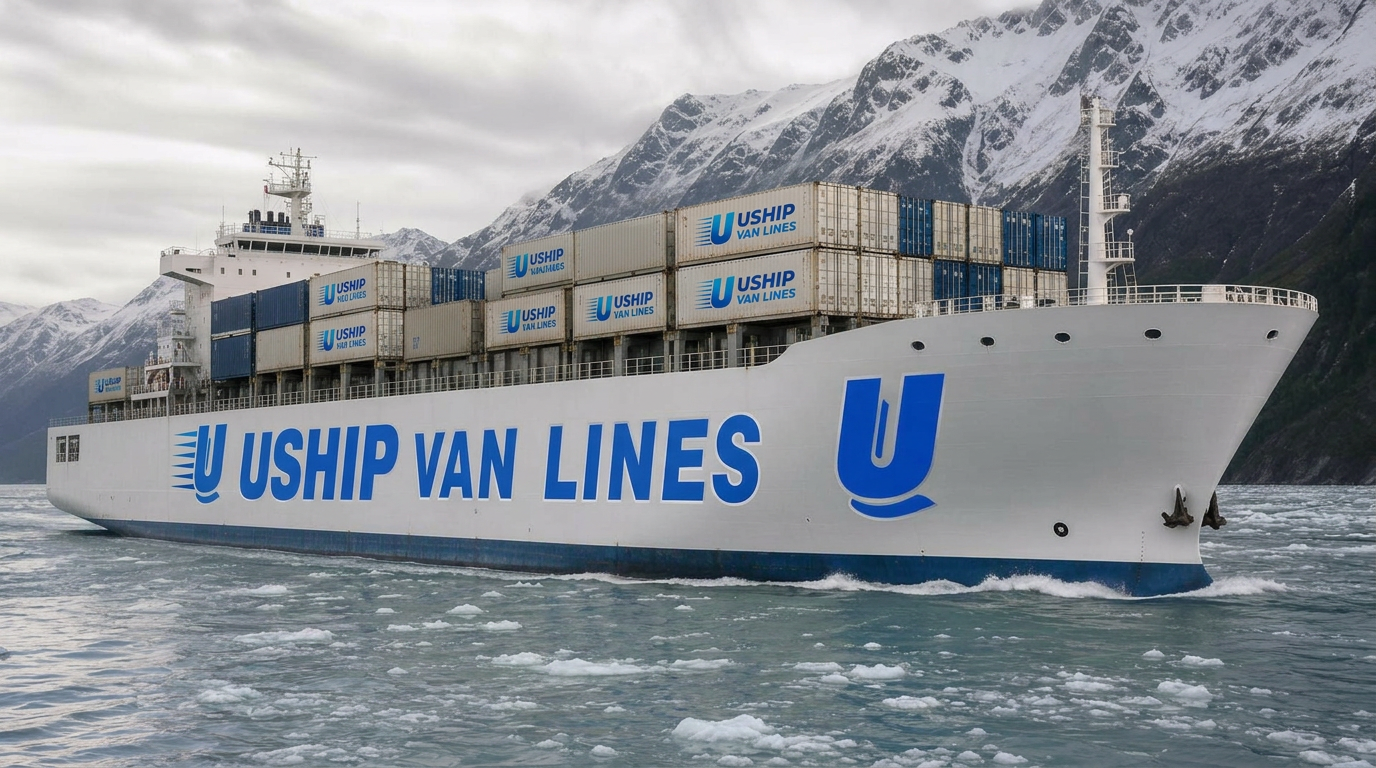
Moving from Alaska to Lubbock, TX
Moving from Alaska to Lubbock, TX involves coordinating ocean barge freight, cross-country trucking, and strict timelines across 3,400+ miles. Whether you're relocating from Anchorage, Fairbanks, or the Mat-Su Valley to the heart of West Texas, this move requires specialized logistics partners who understand Alaska's unique shipping constraints and Lower 48 delivery expectations.
Best Alaska & Hawaii Movers, powered by UShip Van Lines, manages the entire chain—barge booking from Alaska ports, freight transfer at Pacific Northwest terminals, highway transport through the Mountain West and Great Plains, and final delivery to Lubbock. Request a free quote to receive a detailed estimate tailored to your inventory, timeline, and pickup location.
Route overview
Alaska to Lubbock Route Overview
The Alaska-to-Lubbock corridor connects America's Last Frontier with the rapidly growing Texas South Plains region. Household goods travel by ocean barge from ports like Anchorage, Whittier, or Kodiak to Tacoma or Seattle, then transfer to 53-foot dry van trailers for the 1,900-mile overland haul through Idaho, Utah, Colorado, and the Texas Panhandle.
Lubbock sits at the crossroads of I-27 and US-84, making final delivery straightforward once your shipment reaches Texas. The city's dry climate, affordable cost of living, and proximity to Texas Tech University attract Alaska families seeking warmer winters and lower expenses. Unlike moves to Houston or Dallas, Lubbock's smaller footprint means less traffic congestion and easier scheduling for delivery windows.
End-to-end transit typically spans 18–28 days, with barge sailing frequency, weather in the Gulf of Alaska, and seasonal demand all influencing your timeline. Alaska-originating moves require advance planning—most movers recommend booking 6–8 weeks ahead during summer peak season.
How the moving process works
How the Alaska to Lubbock Moving Process Works
-
In-Home or Virtual Survey: Your move coordinator evaluates your household volume (typically measured in cubic feet or weight), discusses fragile items, vehicles, and any storage needs. This drives your binding or not-to-exceed quote.
-
Barge Booking & Port Selection: We reserve space on the next available Alaska Marine Lines, TOTE, or Samson Tug & Barge sailing from your nearest port (Anchorage, Whittier, Kodiak, or Seward). Barge schedules run weekly in summer, bi-weekly in winter.
-
Origin Packing & Loading: Professional crews pack your belongings using marine-grade materials, load into a 20-foot or 40-foot container or lift van, and deliver the sealed unit to the Alaska port for vessel loading.
-
Ocean Transit to Tacoma/Seattle: The barge sails south through the Inside Passage and Gulf of Alaska (4–7 days sailing time), docks at the Lower 48 terminal, and your container is offloaded and staged.
-
Freight Transfer & Highway Dispatch: The container is unloaded or the lift van is transferred onto a long-haul tractor-trailer. Drivers cross Washington, Idaho, Utah, and Colorado before entering the Texas Panhandle via I-25 or US-87.
-
Final Delivery in Lubbock: The truck arrives at your Lubbock residence, crews unload and place items room-by-room, and you inspect for any shipping damage (rare but documented on delivery receipts).
-
Vehicle Shipping (Optional): Cars and trucks can ride the same barge in roll-on/roll-off (RoRo) slots or ship separately via dedicated auto carriers, arriving 10–14 days after household goods.
Estimated moving costs
What Does Moving from Alaska to Lubbock Cost?
A typical 2-bedroom apartment move (approximately 5,000–7,000 lbs or 700–900 cubic feet) from Anchorage to Lubbock ranges between $6,800 and $10,500, while a full 3–4 bedroom home (10,000–14,000 lbs) can run $11,000–$17,500. These estimates include barge freight, port handling, long-haul trucking, basic liability coverage, and standard delivery.
Key cost drivers:
- Barge freight rates: Charged per cubic foot or per container; summer peak (May–August) costs 15–25% more than winter.
- Pickup location: Bush communities (Kenai, Homer, Soldotna) requiring ferry or air-barge connections add $800–$2,000 in last-mile charges.
- Packing services: Full-service packing averages $800–$1,800 depending on fragility and volume; DIY packing saves money but shifts liability.
- Insurance: Basic carrier liability covers $0.60/lb; full-replacement valuation costs 1–2% of declared value.
- Storage: If your Lubbock home isn't ready, warehouse storage in Tacoma or Texas runs $150–$400/month.
- Vehicle shipping: Alaska-to-Texas auto transport adds $1,400–$2,200 per car (RoRo barge + overland).
- Seasonality: Winter moves (October–March) may qualify for 10–15% discounts due to lower demand.
We never guarantee final prices without a detailed survey—fuel surcharges, port fees, and accessorial charges (stairs, long carry, shuttle) adjust totals. Request a written, itemized quote for the most accurate budget.
Estimated transit times
How Long Does Alaska to Lubbock Take?
Door-to-door delivery typically requires 18–28 calendar days from your Alaska pickup date to Lubbock unloading. Here's the breakdown:
- Alaska pickup to port delivery: 1–3 days (same-day in Anchorage; up to 3 days from Fairbanks or Mat-Su with port drayage).
- Port dwell time: 1–4 days waiting for the next scheduled barge departure.
- Barge sailing (Alaska to Tacoma/Seattle): 4–7 days depending on vessel route and weather.
- Port offload & transfer: 2–4 days for container destuffing, customs paperwork (if applicable), and highway trailer loading.
- Overland trucking (Tacoma to Lubbock): 4–6 days for the 1,900-mile haul, including mandatory driver rest breaks.
- Delivery coordination: 1–2 days scheduling your Lubbock delivery window.
Factors that extend timelines:
- Winter storms: November–February Gulf of Alaska weather can delay sailings 2–5 days.
- Barge frequency: Winter bi-weekly schedules mean you may wait an extra week if you miss a cutoff.
- Holidays: Thanksgiving, Christmas, and New Year closures pause operations for 2–4 days.
- Peak season congestion: June–August port backlogs in Tacoma can add 3–5 days to transfer times.
Express options are rarely available for Alaska moves—plan on the full 3–4 weeks and schedule your Lubbock lease or closing date accordingly.
Regional logistics
Alaska-Specific Moving Logistics to Lubbock
Port Access & Drayage:
Most Alaska moves funnel through the Port of Anchorage (ANC), Alaska's largest deep-water terminal with weekly barge service. Whittier serves as an alternate for southcentral Alaska, and Kodiak handles island departures. If you're in Fairbanks or the Mat-Su Valley, your container is trucked 4–6 hours to Anchorage before barge loading. Bush communities (Nome, Bethel, Kotzebue) require air-barge or seasonal sealift—add 1–2 weeks and significant cost.
Customs & Documentation:
Alaska-to-Lower 48 moves are domestic and require no customs clearance, but barge manifests must list all items. Restricted goods include hazardous materials (propane, ammunition, gasoline), certain plants, and perishables. Your mover handles all port paperwork; you'll sign a detailed inventory and bill of lading.
Vehicle Shipping:
Cars can roll onto the same barge in RoRo berths or ship via dedicated auto carriers. RoRo requires you to drain fuel to ¼ tank, remove personal items, and deliver the vehicle to the port. The car sails to Tacoma, then drives or ships overland to Lubbock. Total transit: 12–18 days. Expect $1,400–$2,200 per vehicle.
Storage Options:
If your Lubbock home isn't ready, your container can stay in Anchorage, Tacoma, or Lubbock-area storage. Tacoma warehousing is common (covered, climate-neutral) at $150–$300/month for short-term holds. Lubbock's dry climate suits long-term storage if needed.
Military & Government Moves:
Joint Base Elmendorf-Richardson (JBER) personnel frequently transfer to Dyess Air Force Base or Reese Technology Center in Lubbock. DITY (Do-It-Yourself) moves and government-contracted shipments follow the same barge+truck routing; we coordinate TMO paperwork and weight tickets for reimbursement.
Last-Mile Challenges:
Lubbock has excellent highway access (I-27, US-62/82), but some newer subdivisions east of town have narrow streets. Large 53-foot semis may require shuttle trucks for final delivery. West Lubbock neighborhoods near Texas Tech are easier for full-size rigs.
Seasonal considerations
Best Time to Move from Alaska to Lubbock
Summer (May–August):
Peak moving season in Alaska, driven by military PCS cycles, university schedules, and optimal weather. Barge space books solid 4–6 weeks in advance, and rates climb 15–25%. The Gulf of Alaska is calmest, reducing storm-related delays. Lubbock summers are scorching (95–105°F), so plan for climate-shock and ensure temperature-sensitive items (candles, electronics, artwork) are packed appropriately.
Fall (September–October):
Shoulder season offers moderate pricing and decent availability. Barge frequency begins tapering to bi-weekly by late October. Alaska weather turns wet and chilly, while Lubbock enjoys mild, pleasant conditions—ideal for unloading and settling in. Book 4–5 weeks ahead.
Winter (November–February):
Lowest demand and best pricing (10–15% discounts common), but barge schedules drop to every 10–14 days and Gulf of Alaska storms frequently delay sailings. Alaska roads can be icy, complicating pickups in Fairbanks or Mat-Su. Lubbock winters are dry and mild (40s–60s°F), making delivery easy. Ideal for flexible timelines and cost-conscious movers.
Spring (March–April):
Rates begin climbing as summer approaches. Barge schedules ramp back to weekly by mid-April. Alaska breakup season (melting snow, muddy roads) can complicate rural pickups. Lubbock springs bring occasional dust storms and severe thunderstorms—coordinate delivery to avoid March–April storm windows if possible.
Why choose Best Alaska & Hawaii Movers
Why Choose Best Alaska & Hawaii Movers for Your Alaska-to-Lubbock Relocation
- Alaska-Specialized Expertise: We manage barge schedules, port logistics, and last-mile Alaska pickups daily—rural Fairbanks to downtown Anchorage, we've moved them all.
- Single-Source Accountability: One contract, one coordinator, one point of contact from your Alaska front door to your Lubbock driveway—no handoffs to third-party brokers mid-move.
- Transparent, Itemized Quotes: Written estimates break down barge freight, trucking, insurance, and accessorial fees—no hidden charges at delivery.
- Nationwide Trucking Network (Powered by UShip Van Lines): Our Lower 48 partners run regular Tacoma-to-Texas lanes, ensuring your shipment doesn't sit in a warehouse waiting for backhaul.
- Flexible Storage & Timing: Need to store in Tacoma while your Lubbock home closes? We offer short-term warehousing at competitive rates and flexible delivery windows.
- Real-Time Tracking & Communication: GPS-enabled trucking, barge sailing updates, and proactive notifications keep you informed every step of the 3,400-mile journey.