
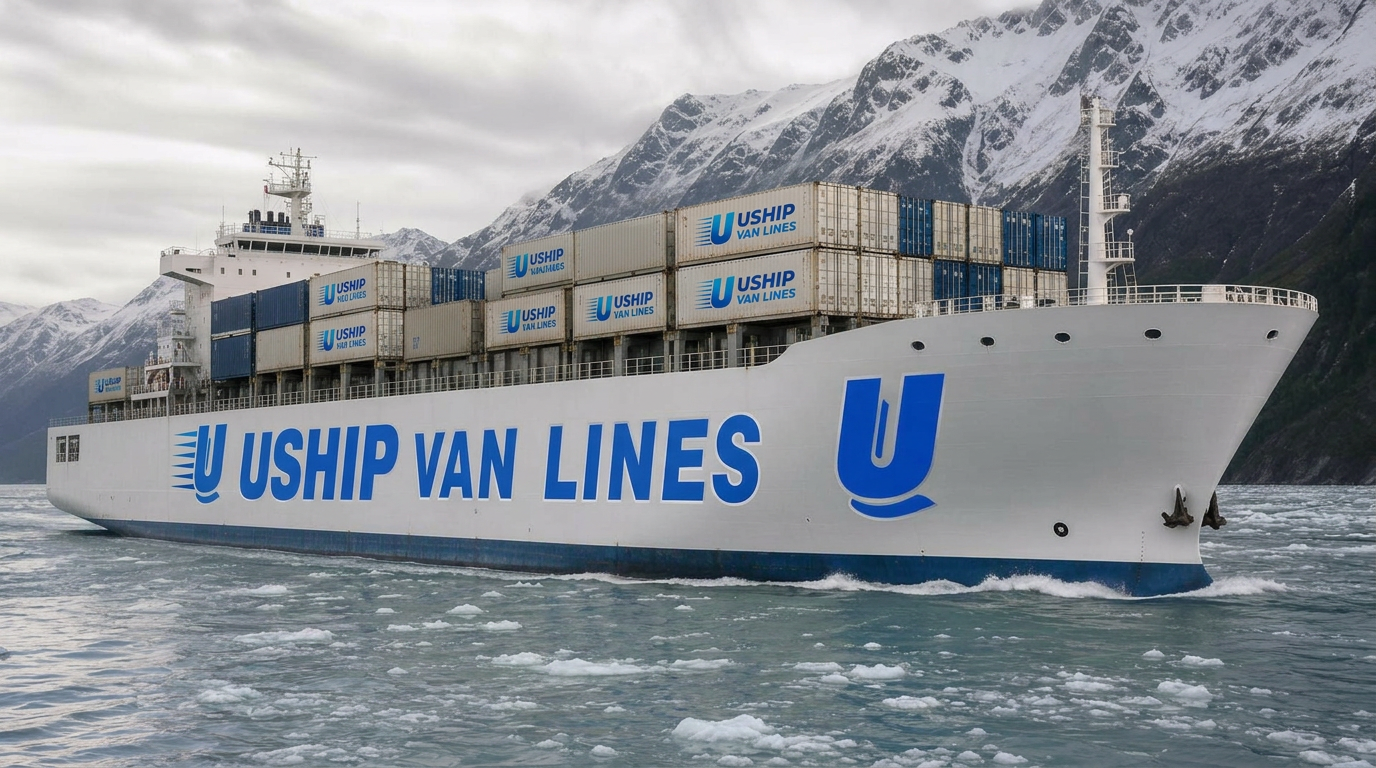
Moving from Kenosha, WI to Alaska
Relocating from Kenosha's lakefront communities to Alaska's wilderness is an adventure that requires specialized moving expertise. Unlike standard continental moves, shipping household goods to the Last Frontier involves coordinated truck transport to Pacific ports, ocean barge loading, and final delivery across Alaska's unique terrain—whether you're heading to Anchorage, Fairbanks, the Mat-Su Valley, or beyond.
Best Alaska & Hawaii Movers, powered by UShip Van Lines, specializes in Wisconsin-to-Alaska relocations with transparent pricing and experienced logistics coordination. We handle every phase from your Kenosha doorstep to your new Alaska home, managing the complex barge scheduling and last-mile delivery that makes these moves different. Ready to start planning? Request your free detailed quote today.
Route overview
Route Overview: Kenosha to Alaska
Your household goods travel approximately 2,300 miles overland from Kenosha through the northern tier or mountain west to Tacoma, Washington—the primary consolidation hub for Alaska-bound freight. Professional movers load your belongings in Kenosha, typically securing items for both highway transport and the unique motion of ocean barge transit.
From Tacoma's port facilities, consolidated shipments board Alaska Marine Highway barges or commercial freight vessels bound for the Port of Anchorage, the state's main receiving terminal. This saltwater leg covers roughly 1,400 nautical miles through the Inside Passage or coastal Gulf of Alaska routes, with sailing schedules dictated by weather windows and commercial shipping calendars.
Once your shipment clears Anchorage customs and port handling, last-mile carriers distribute goods throughout Alaska's road-accessible regions—from the Kenai Peninsula to Fairbanks and Mat-Su communities. Remote or off-road-system destinations require additional bush plane or seasonal ice road logistics, adding complexity and cost but opening Alaska's full geography to Wisconsin transplants.
How the moving process works
The Moving Process: Step-by-Step
-
Free In-Home or Virtual Survey – Schedule an assessment of your Kenosha home's inventory. Experienced estimators identify items requiring special crating (electronics, artwork, fragile furnishings) and calculate cubic footage for accurate barge space allocation and pricing.
-
Book Your Barge Space Early – Alaska barge capacity fills quickly during peak summer months. Secure your sailing date 8–12 weeks in advance, especially for May–September moves. Your coordinator reserves truck pickup dates to align with confirmed vessel schedules from Tacoma.
-
Professional Packing and Loading in Kenosha – Crew arrives at your Wisconsin address with marine-grade packing materials. Items are wrapped, boxed, and loaded into the truck using securement methods designed for both highway travel and ocean movement—extra strapping, moisture barriers, and vibration protection.
-
Overland Transport to Tacoma Port – Your shipment travels cross-country to Washington, typically taking 4–6 days. At the Tacoma consolidation warehouse, goods are transferred to shipping containers or barge trailers, staged with other Alaska-bound loads for efficient vessel loading.
-
Ocean Barge Transit – The vessel departs Tacoma on its scheduled sailing, navigating northwest coastal waters to Anchorage over 5–10 days depending on route and weather. Shipments remain climate-controlled when possible, though temperature fluctuations are normal for barge freight.
-
Port Clearance and Alaska Distribution – Upon arrival at the Port of Anchorage, containers are offloaded and go through basic customs documentation (even though domestic). Your goods transfer to Alaska-based carriers for final delivery throughout the state's road network.
-
Delivery to Your Alaska Home – Local movers bring your shipment to your new address, whether in urban Anchorage, rural Wasilla, or Fairbanks. Crew unloads, places furniture, and removes packing debris. Inspect items carefully and note any damage on delivery paperwork for insurance purposes.
-
Vehicle Shipping (If Needed) – Many Kenosha families drive one vehicle north via the Alaska Highway and ship a second car. Vehicle transport follows similar barge routing from Tacoma, with cars loaded into enclosed or open-deck containers for the ocean leg and driven off at Anchorage auto terminals.
Estimated moving costs
Cost Estimates for Kenosha to Alaska Moves
A typical 2-bedroom apartment or small home move from Kenosha to Alaska generally ranges from $6,500 to $10,500, while a 3-bedroom house commonly costs $10,000 to $16,000. These estimates reflect full-service packing, overland transport to Tacoma, barge shipping to Anchorage, and standard delivery within the Anchorage-Wasilla-Kenai road corridor. Actual pricing depends on precise weight/volume, service level, season, and final destination.
Key Cost Drivers:
-
Shipment Volume and Weight – Barge freight is priced by cubic feet or hundredweight (CWT). A 3-bedroom home averages 800–1,200 cubic feet; larger inventories or dense items (books, tools, pianos) increase costs proportionally.
-
Packing Services – Full-service packing adds $800–$2,000+ depending on home size and fragility of contents. DIY packing saves money but transfers liability risk for inadequately protected items during ocean transit.
-
Sailing Season – Summer peak season (May–September) commands premium rates due to high demand and optimal weather. Off-peak winter moves can save 15–25% but face limited barge schedules and harsher conditions.
-
Final Delivery Distance – Deliveries beyond the Anchorage-Mat-Su-Kenai triangle incur per-mile surcharges. Fairbanks adds $500–$1,200; remote communities on seasonal roads or requiring barge/plane transfers add significantly more.
-
Vehicle Shipping – Adding a car to your barge shipment costs $1,800–$3,500 depending on vehicle size and whether you choose open or enclosed container transport.
-
Storage and Timing Gaps – If your barge arrival date and home availability don't align, short-term storage in Anchorage warehouses costs $150–$400 per month for typical household volumes.
Request a detailed written estimate that breaks down each cost component. Reputable Alaska movers provide binding or not-to-exceed quotes based on accurate surveys, protecting you from surprise charges at delivery.
Estimated transit times
Transit Time: Door-to-Door Timeline
Expect 2.5 to 4 weeks total for your household goods to travel from Kenosha to an Alaska destination on the road system. This timeline includes all three legs of the journey: Wisconsin pickup to Tacoma port, ocean barge sailing, and Alaska last-mile delivery.
Detailed Breakdown:
-
Kenosha Pickup to Tacoma Port – 4–6 days for the 2,300-mile truck journey across the northern U.S. or mountain routes. Weather delays (winter blizzards, mountain passes) can add 1–2 days during certain seasons.
-
Port Consolidation and Staging – 2–5 days at the Tacoma warehouse while your shipment is combined with other Alaska loads, containerized, and queued for the next scheduled barge departure. Peak season moves with pre-booked space experience shorter waits.
-
Barge Transit Tacoma to Anchorage – 5–10 days on the water depending on the specific vessel, route (Inside Passage vs. outer Gulf), and weather conditions. Direct sailings take 5–7 days; routes with intermediate port calls extend to 10 days.
-
Port Processing in Anchorage – 1–3 days for offloading, customs clearance (minimal for domestic shipments), and transfer to Alaska-based delivery trucks. Efficient port operations and pre-arranged carrier pickup minimize this window.
-
Final Alaska Delivery – Same-day to 3 days depending on destination. Anchorage/Eagle River deliveries often occur the day your shipment clears the port. Fairbanks, Kenai, or Soldotna add 1–2 days. Remote locations require custom scheduling.
Variables That Affect Timing:
Winter moves face unpredictable weather delays—both for overland trucking through mountain passes and for barge sailings subject to Gulf of Alaska storms. Summer offers the most reliable schedules but also the highest demand, so booking early ensures you hit your target dates. Build flexibility into your relocation timeline, especially if coordinating home closings or job start dates.
Regional logistics
Alaska-Specific Moving Logistics
Port and Barge Operations:
The Port of Anchorage serves as Alaska's primary freight gateway, handling the vast majority of consumer goods entering the state. Your shipment arrives here via Tacoma Marine Terminals, the West Coast's main Alaska consolidation hub. Unlike standard trucking, barge freight operates on fixed sailing schedules published weeks in advance—you must coordinate your entire move timeline around these departure dates.
Shipments travel in either shared freight containers (consolidated with other households to fill capacity) or, for very large moves, dedicated containers. Marine containers are built to withstand saltwater exposure, stacked loading, and the constant motion of ocean transit—your movers use extra securement methods accordingly.
Documentation and Regulations:
Even though Alaska is a U.S. state, shipments passing through Canadian waters (Inside Passage route) require basic customs documentation. Reputable movers handle this paperwork as part of their service. You'll need a detailed inventory list and should keep receipts for high-value items. Prohibited items for barge shipping include hazardous materials (paints, propane, ammunition), perishable foods, and plants subject to agricultural restrictions.
Alaska has strict rules about importing firewood and untreated wood products due to invasive pest concerns. If you're bringing wooden furniture or lumber, ensure it's kiln-dried or commercially manufactured to avoid quarantine or rejection.
Vehicle Shipping:
Many Kenosha families ship one vehicle via barge while driving another up the Alaska Highway—a bucket-list road trip through Canada. Vehicle shipping from Tacoma to Anchorage costs $1,800–$3,500 depending on car size and transport method (open deck vs. enclosed container). Cars must be cleaned (exterior and interior) before loading, carry less than a quarter tank of fuel, and have no personal items inside except emergency supplies.
Vehicle transport timelines mirror household goods: 5–10 days on the barge, plus processing time at Anchorage auto terminals. You'll need vehicle registration, insurance proof, and a valid driver's license to reclaim your car.
Last-Mile Delivery Across Alaska:
Alaska's road network is limited compared to the Lower 48. The main system connects Anchorage, Mat-Su Valley (Wasilla, Palmer), Kenai Peninsula, and Fairbanks, with seasonal routes to some Interior communities. Standard delivery fees cover this corridor; destinations beyond face significant surcharges.
Remote communities not on the road system (Southeast Alaska islands, Aleutian Chain, North Slope, bush villages) require additional barge service, bush plane cargo flights, or seasonal ice road access. These moves demand specialized logistics, extended timelines, and substantially higher costs—discuss feasibility and pricing upfront if your destination is off the highway grid.
Storage Options:
Timing gaps between barge arrival and home readiness are common. Anchorage-area storage facilities charge $150–$400 monthly for typical household volumes. Climate-controlled units protect temperature-sensitive items during Alaska's winter cold or rare summer heat. Some moving companies include short-term storage in their package pricing; clarify these terms before booking.
Seasonal considerations
Seasonal Considerations for Alaska Moves
Spring (March–May): Shoulder season with moderate demand and improving weather. Early spring still faces occasional snow in the Rockies and unpredictable Gulf storms, but barge schedules ramp up as operators prepare for summer peak. Pricing sits between winter lows and summer highs—a sweet spot for budget-conscious movers. Book 6–8 weeks ahead.
Summer (June–August): Peak moving season for Alaska with maximum barge frequency, best weather, and highest demand. Families relocate during school breaks; military transfers concentrate in summer months. Expect premium pricing (15–25% above off-peak) and limited last-minute availability. The upside: fastest transit times, minimal weather delays, and easiest settling-in weather for unpacking and exploring your new Alaska community. Reserve space 10–14 weeks in advance.
Fall (September–November): Demand tapers after Labor Day, bringing better pricing and more flexible scheduling. September offers pleasant weather and reliable barge service; October and November see reduced sailing frequency as operators scale back for winter. Good value for those with flexible timelines, though delivery into Alaska as winter arrives means preparing your new home for heating, snow removal, and winter access.
Winter (December–February): Off-peak season with the lowest rates (20–30% below summer) but the most logistical challenges. Barge schedules drop to minimal frequency—sometimes only 1–2 sailings per month. Overland trucking from Kenosha faces blizzards, icy mountain passes, and potential multi-day weather holds. Alaska delivery roads can be treacherous; remote areas may be inaccessible. Best for adventurous movers with extended timelines, empty homes waiting in Alaska, and willingness to adapt to weather-driven schedule shifts. Budget extra time and have contingency lodging plans.
Why choose Best Alaska & Hawaii Movers
Why Choose Best Alaska & Hawaii Movers
-
Alaska-Specific Expertise – We specialize exclusively in moves to and from Alaska and Hawaii, giving us deep knowledge of barge schedules, port logistics, and Alaska's unique delivery challenges that general moving companies lack. Our team understands Kenosha-to-Alaska routing inside and out.
-
Transparent, Detailed Pricing – Receive itemized quotes that break down every cost component—packing, trucking, barge freight, delivery—with no hidden fees or surprise charges. We explain what drives your price and offer options to fit different budgets and service levels.
-
End-to-End Coordination – From your Kenosha home survey through final delivery in Alaska, one dedicated coordinator manages your entire move. We handle truck dispatch, barge booking, port paperwork, and last-mile scheduling so you're never navigating handoffs between multiple vendors.
-
Powered by UShip Van Lines' Network – Our partnership with UShip Van Lines connects you to vetted, experienced carriers and the purchasing power of a large logistics network, ensuring competitive rates and reliable service across all three move phases.
-
Flexible Service Levels – Choose full-service packing and white-glove delivery, or save money with partial packing and DIY options. We tailor service to your needs, timeline, and budget without forcing one-size-fits-all packages.
-
Proactive Communication – Receive regular updates as your shipment moves from Kenosha to Tacoma, loads onto the barge, crosses to Anchorage, and reaches your Alaska destination. Track your move's progress and get quick answers to questions throughout the journey.